Exclusion Zone 1. Chernobyl.
Kyiv Region, Ukraine, August 2008
Google Maps, Yandex.Maps
Thanks to the team of Pripyat.com for organising this trip.
Most of the information known to the general public about the Chernobyl Exclusion Zone can be divided into three categories: “old wives' tales,” “tabloid sensationalism,” and “urban legends.” Among the things I've heard are both widely circulated scary stories (“it's impossible to be in the Zone without a special hazmat suit, or you'll drop dead of radiation sickness instantly,” “you won't be able to have children,” or “there are two-headed calves, four-eyed dogs, and other mutants roaming around”) and sophisticated examples of tabloid nonsense (“criminals from all over the former USSR have set up a micro-state there living by inmate codes, where even the army is afraid to go because they are armed to the teeth and shoot at helicopters”).
Today, there is plenty of information available about Chernobyl, but usually only those who are specifically interested in the topic possess it. The rest continue to believe whatever they read or heard somewhere, without giving a second thought to its credibility.
The Exclusion Zone is a restricted area covering 2,044 square kilometres, established after the accident at the Chernobyl Nuclear Power Plant in 1986 to evacuate people from the contaminated territories. The territory is directly subordinate to the Ministry of Emergency Situations of Ukraine and is a secure facility that requires a special permit to enter and move around. There are checkpoints at all entrances, the most famous of which is “Dityatki,” located on the road from Kyiv. Upon entry, everyone's documents and permits are checked. A separate pass is also required for each vehicle.
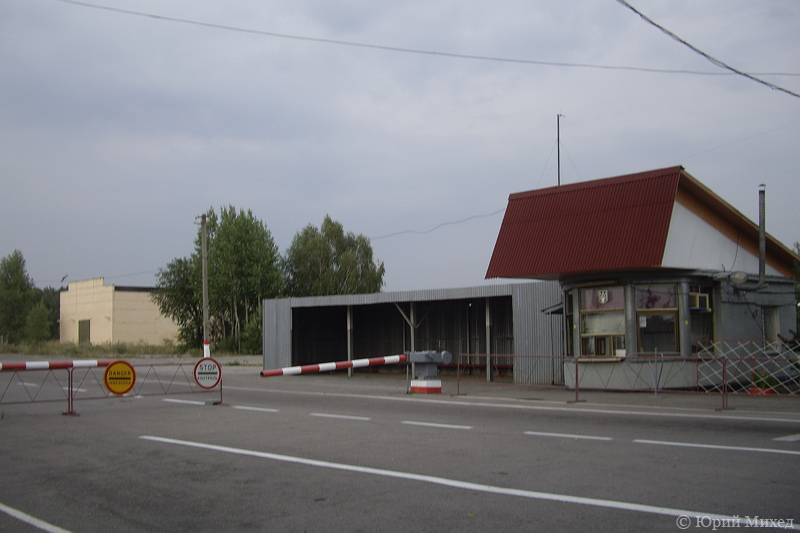
Many people work in the zone, but only a small number of elderly citizens who refused to leave their homes reside there permanently.
Before the accident, the town of Chernobyl itself was just a small district centre in the north of the Kyiv region. It had little to do with the nuclear power plant—it was only called the Chernobyl plant because it was located in the Chernobyl district. Nevertheless, it was this very name that became infamous worldwide.
At first glance, Chernobyl looks like a completely ordinary town.
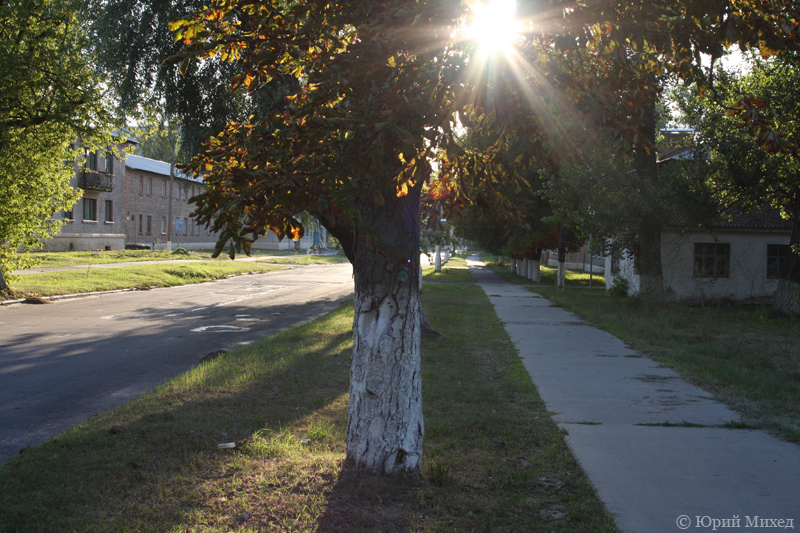
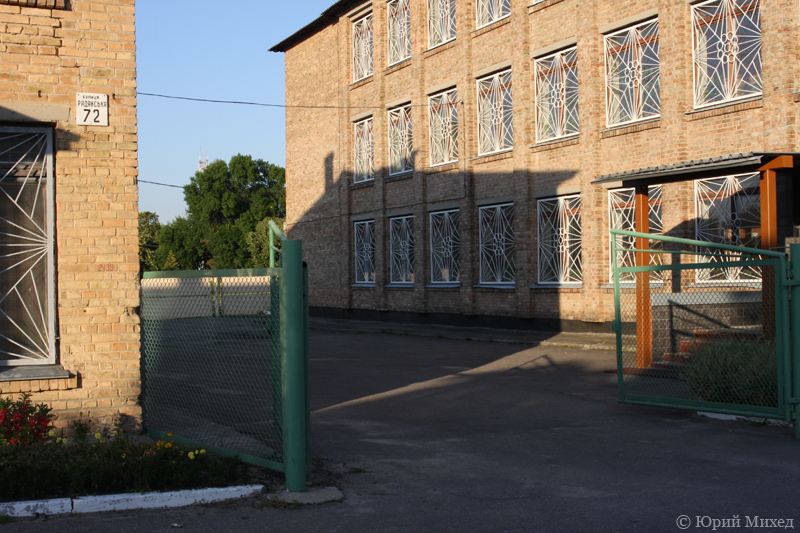
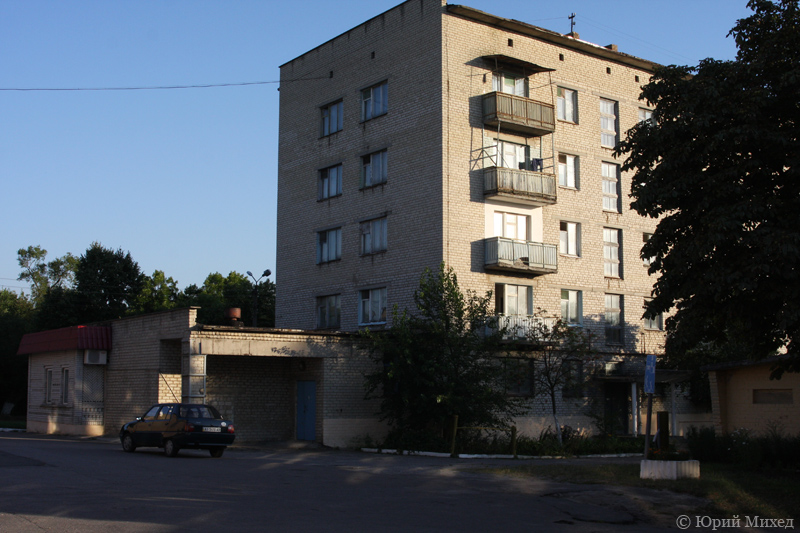
It has ordinary houses where people live.
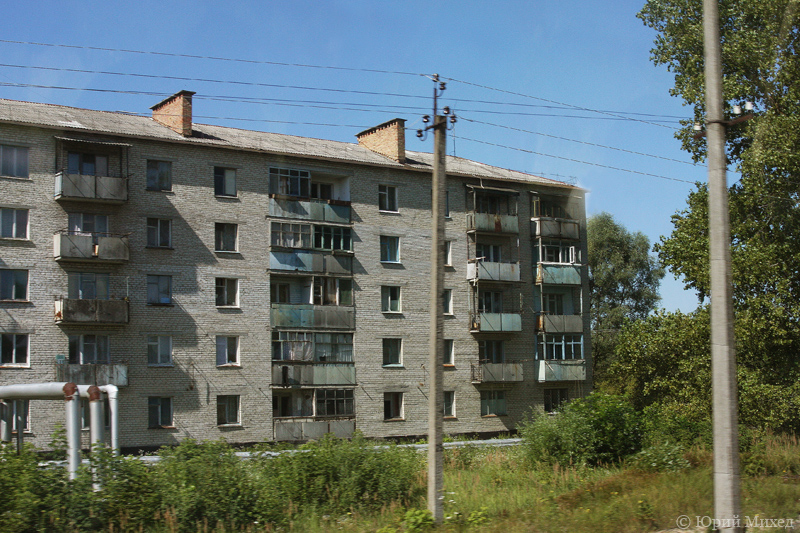
Ordinary enterprises.
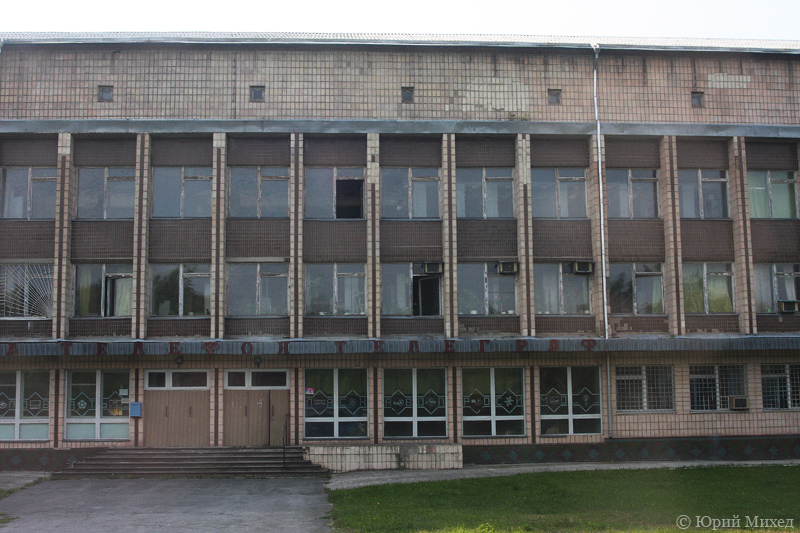
Ordinary administrative buildings (there is no post, phone, or telegraph office here—a display hangs on the building's window showing the background radiation levels in various former settlements of the Zone, and letters to Chernobyl are sent using the postal code of the neighbouring Ivankiv district).
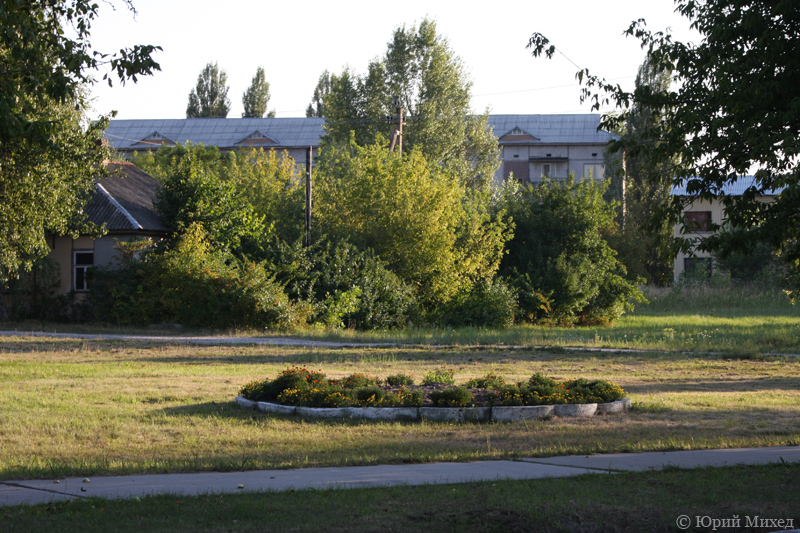
Ordinary alleys and flower beds.
And ordinary stores where people go for a beer in the evening.
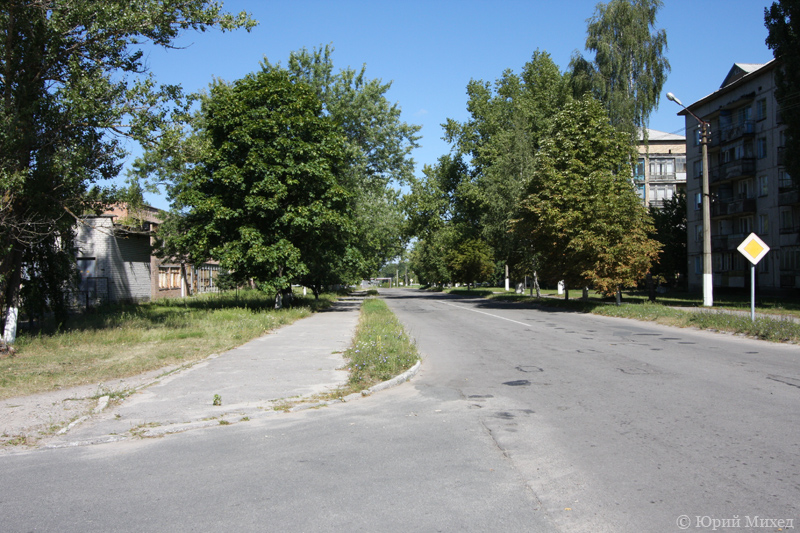
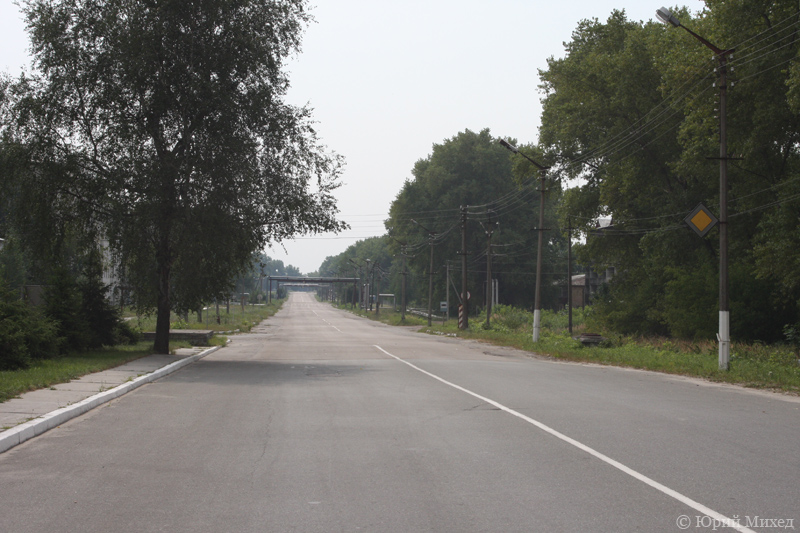
But this feeling quickly fades. Soon you begin to realise that although the town is alive, it is only partially so. The streets are not overgrown with grass, but they are very deserted.
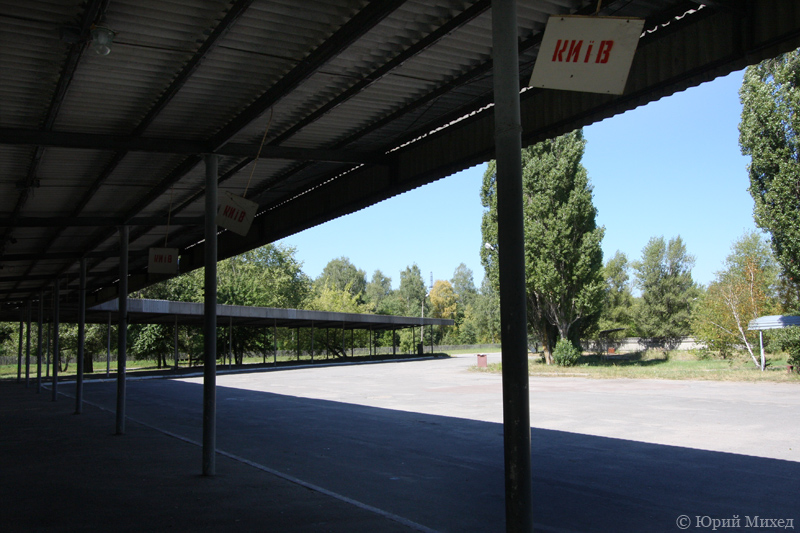
The town's bus station is empty too. Rare buses run from here only to Kyiv. There are almost no cars.
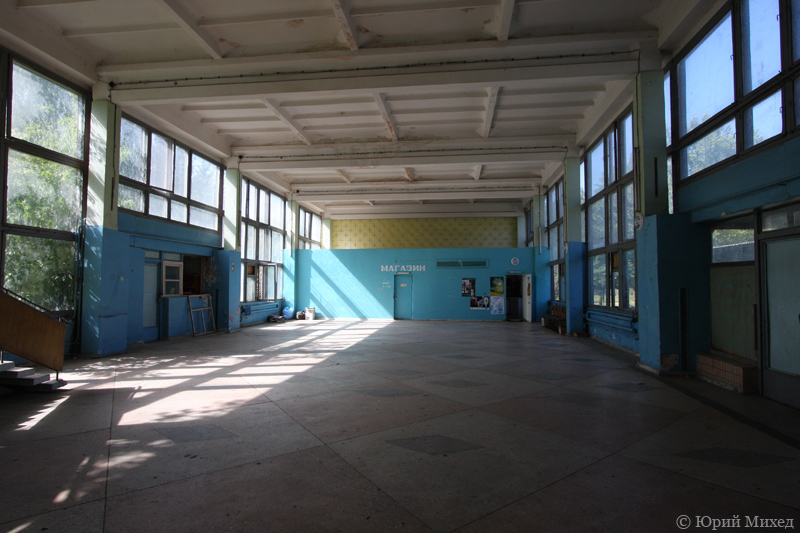
And such a large waiting room is no longer needed.
Children do not play in the yards.
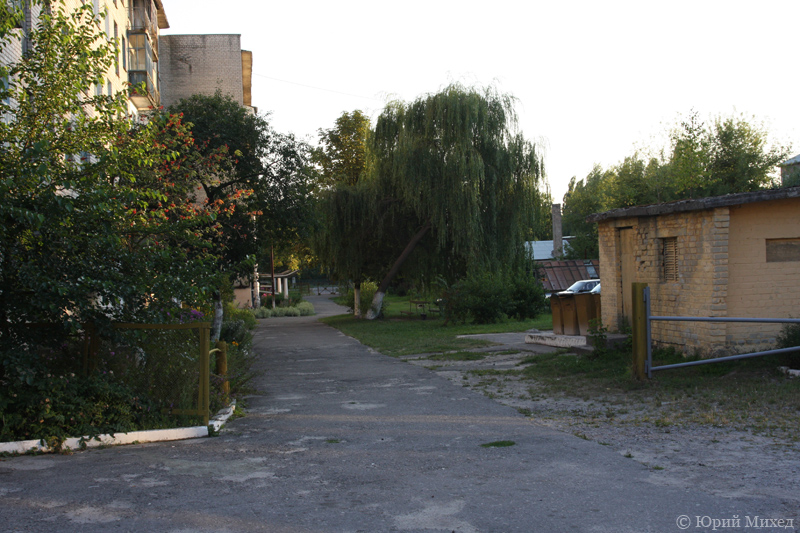
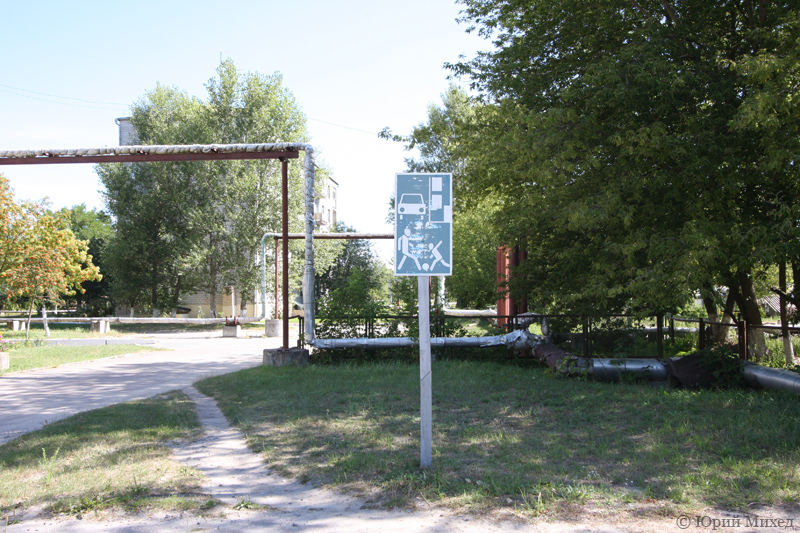
The “residential zone” sign looks somewhat out of place.
There are no advertisements for mobile operators, shops, or bars on the streets.
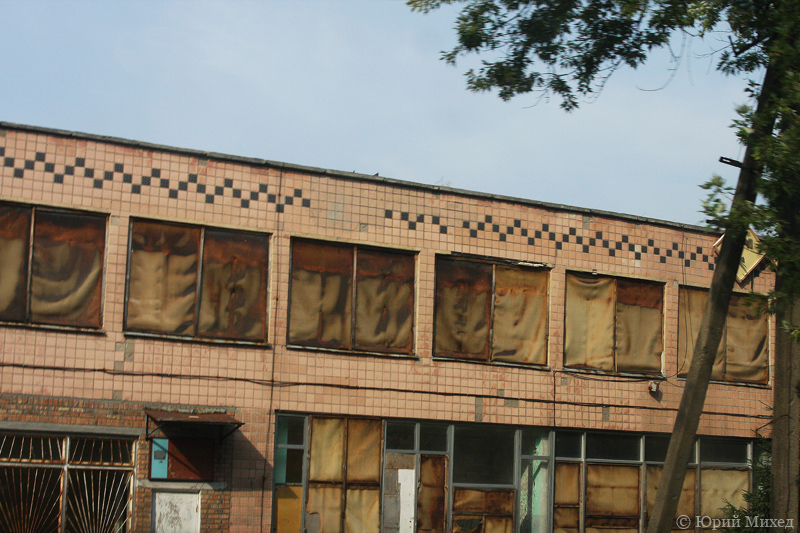
Many buildings are abandoned.
Others, like the former synagogue (before the war, seventy per cent of the town's population was Jewish), are occupied by offices whose activities are somehow connected to the Zone or radiation.
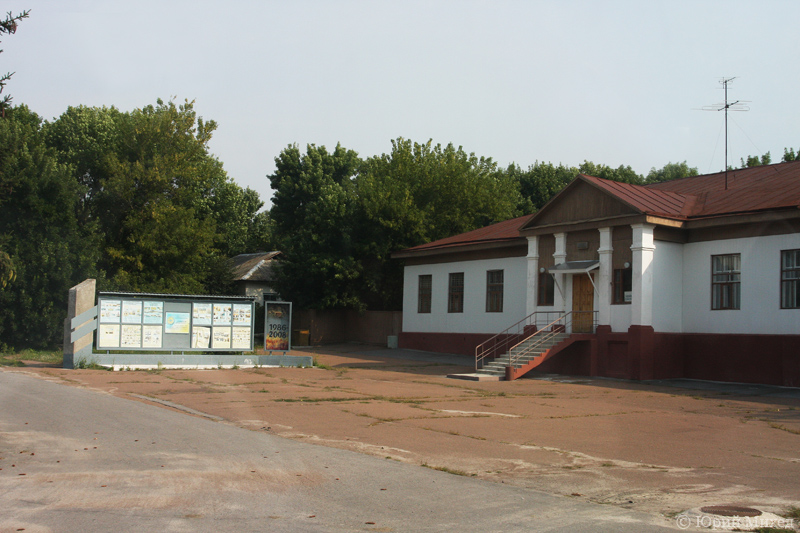
The eternal flame does not burn in the World War II Park of Glory. However, the park corresponds much more to the image that was originally intended for it—it is quiet and solemn here, free of trash and drunk youngsters so common in “normal” towns.
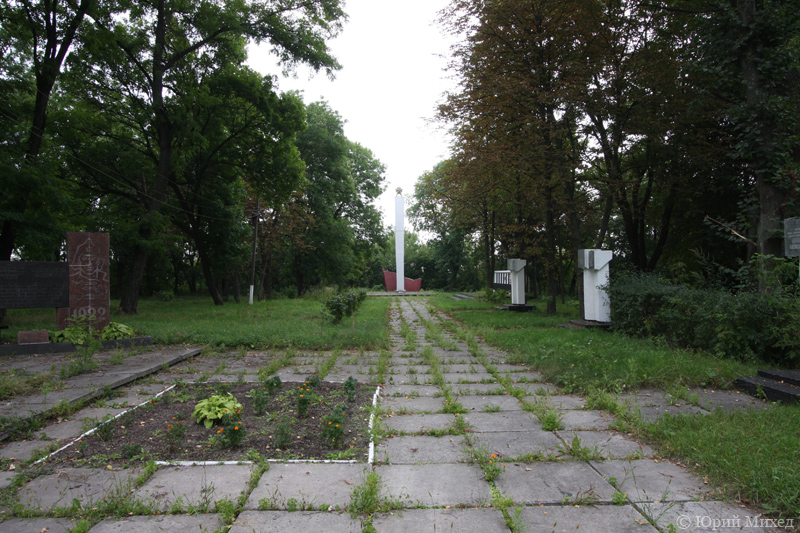
Most of the residents, about fifteen thousand who lived here before the accident, left the town. Nevertheless, unlike most other settlements, Chernobyl was not completely abandoned. It houses the administration of the Zone and various enterprises and centres associated with it in one way or another. Apartment buildings were converted into dormitories, and the zone workers, of whom there are about eight thousand, live in Chernobyl on a shift basis—two weeks at home, two weeks in the Zone.
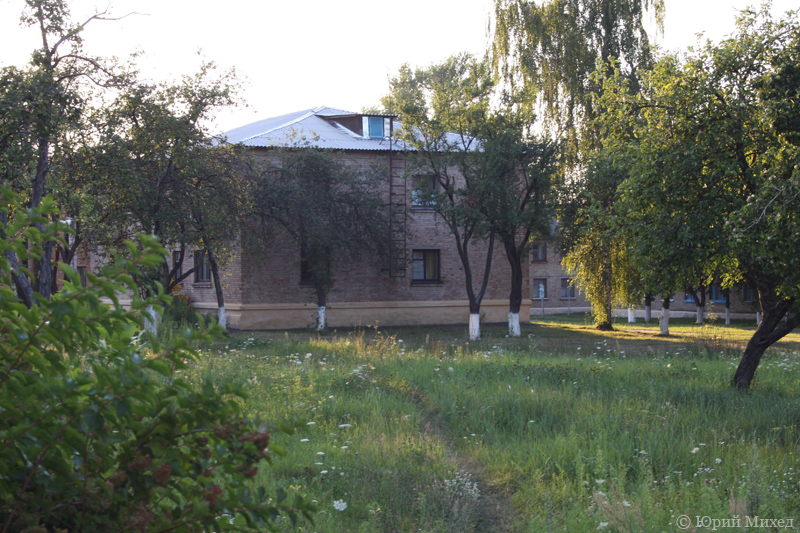
Only a few people who refused to abandon their homes continue to reside permanently in this restricted settlement.
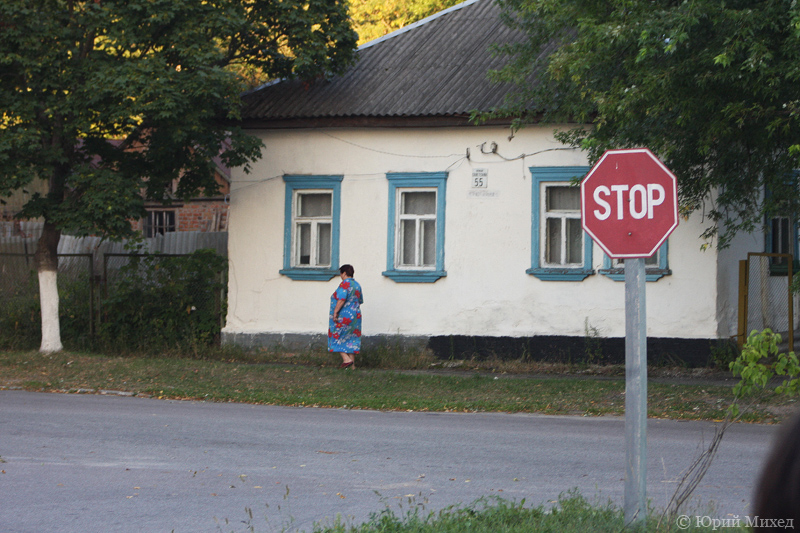
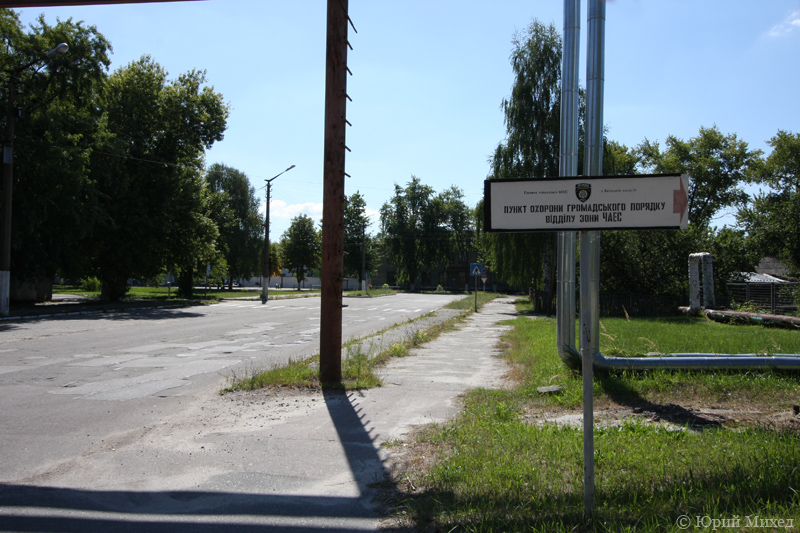
An outsider without a pass is strictly forbidden to just walk the streets. The local Department of Internal Affairs maintains order. Truth be told, there is virtually no crime in the Zone—they mostly catch homeless people who have snuck in looking to settle in abandoned houses, and looters wanting to profit from whatever is left, especially scrap metal (when there is good money to be made, radiation doesn't scare them).
The primary clothing of the Zone's inhabitants is camouflage. The people are usually men aged between 35 and 60.
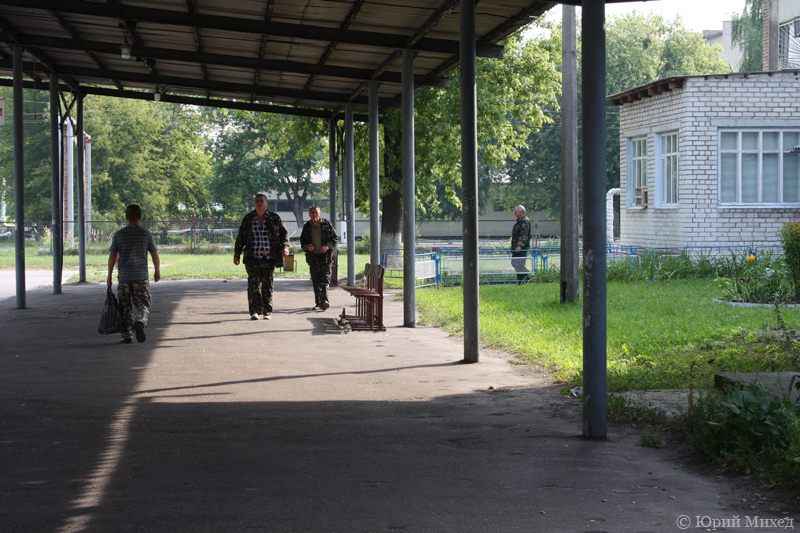
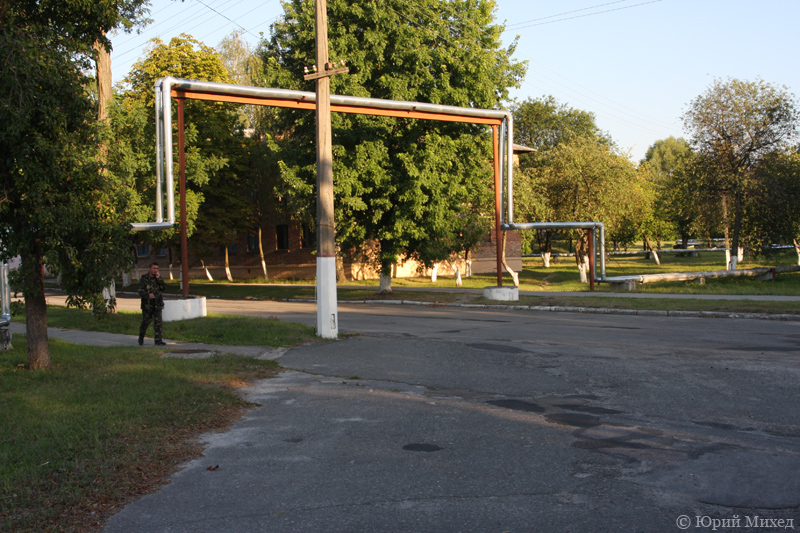
Like everywhere else, radiation is distributed unevenly. There are places where the dosimeter shows 80 microroentgens, and there are completely clean spots. To avoid digging into the soil contaminated with radionuclides, the water supply and sewage systems in the town were installed above ground.
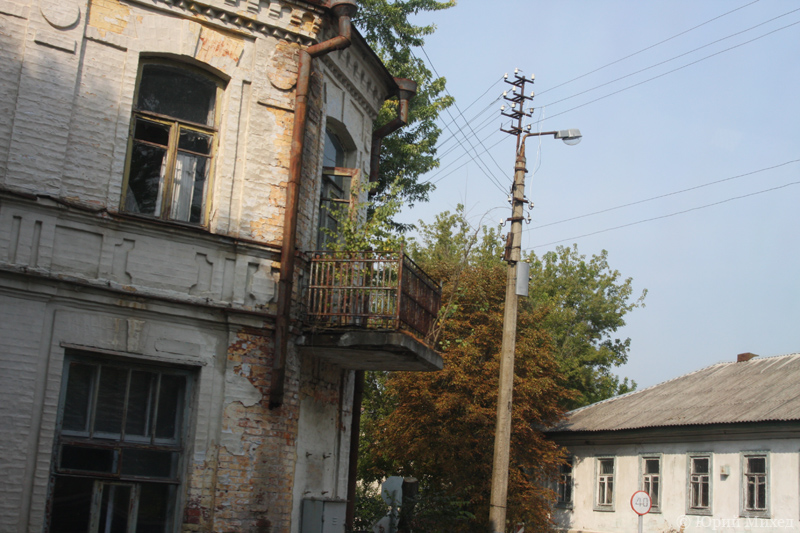
The outskirts of Chernobyl are dead; the old buildings have long been abandoned.
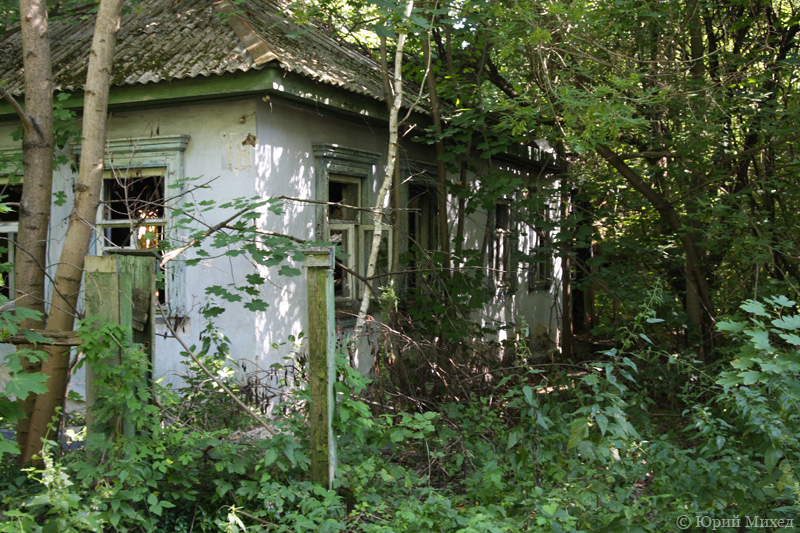
Private houses with crooked fences and empty windows are overgrown with grass.
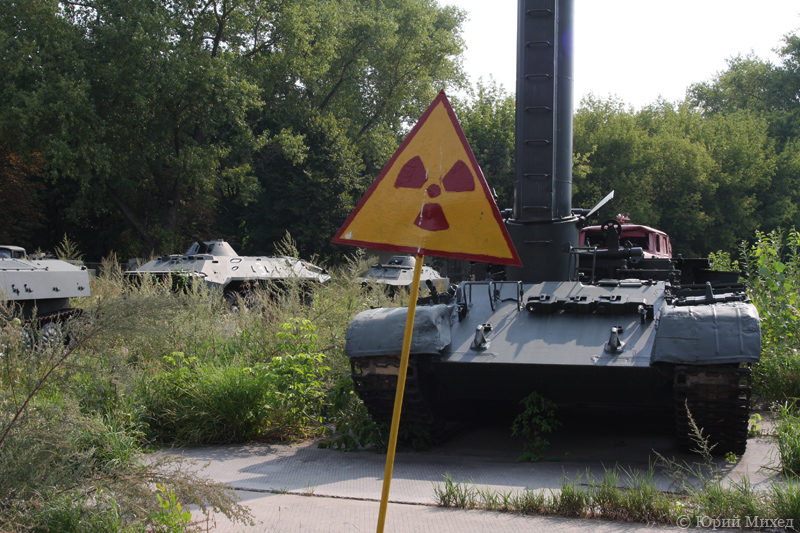
Next to the Park of Glory, there is a memorial for the equipment that participated in the liquidation of the accident's consequences.
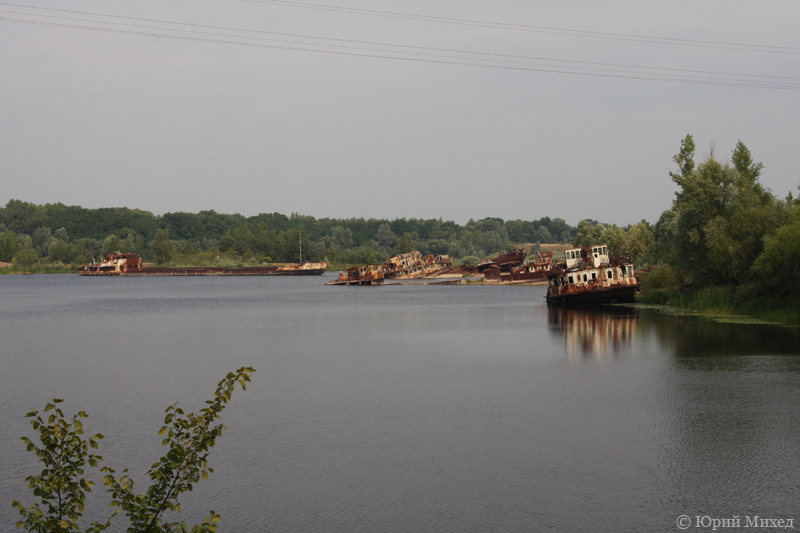
The contaminated ships and barges gathered in the bay have rusted through and sunk. There used to be a great many of them, but most were cut up for scrap metal.
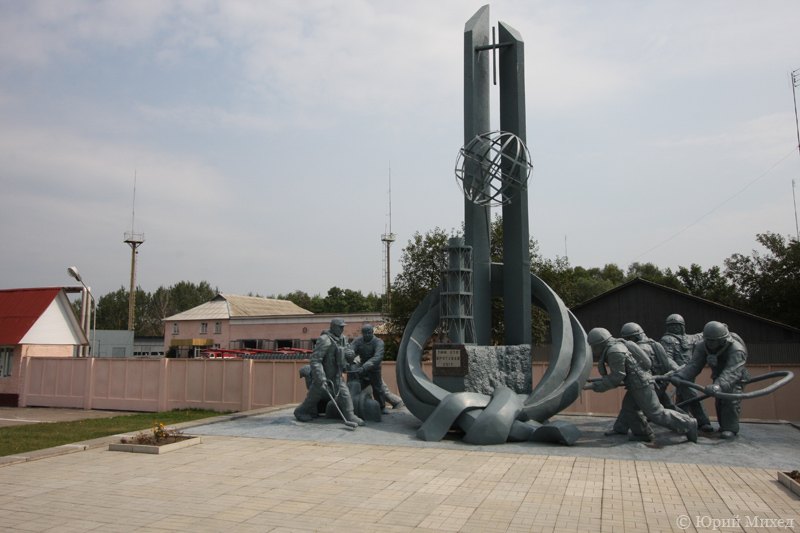
Near the fire station stands a monument to the first liquidators who gave their lives.
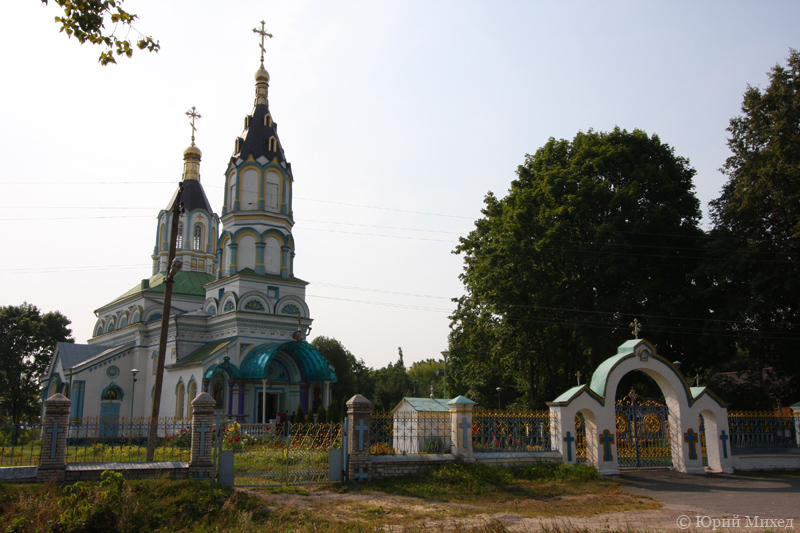
And in the local church, they pray for the peace of their souls.
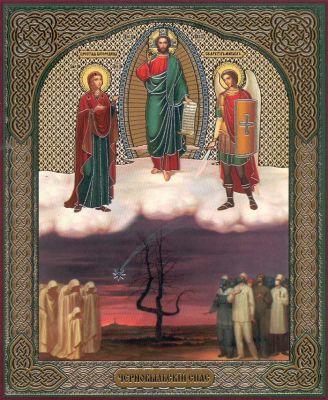
In the church, I bought an icon called “The Chernobyl Saviour.” The symbolism of this icon is quite interesting. The cross-shaped tree depicted in the centre is the so-called “Chernobyl Pine.” During World War II, this centuries-old tree was used by the Nazis to execute partisans, after which it became a monument. Following the accident, it died, finding itself in the zone of the heaviest contamination, but it was not destroyed like the rest of the forest. The dead pine stood until the nineties. When it fell, it was sawed up and left in one of the sheds of the abandoned village of Novošepelyči.
The star falling onto the nuclear power plant is a reference to Chapter 8, verses 10–11 of the Book of Revelation of John the Evangelist (the Apocalypse): “The third angel sounded his trumpet, and a great star, blazing like a torch, fell from the sky on a third of the rivers and on the springs of water—the name of the star is Wormwood. A third of the waters turned bitter, and many people died from the waters that had become bitter.” The word “чорнобиль”, which gave the town its name, translates from Ukrainian precisely as “wormwood.” Although this version can be criticised objectively, it nevertheless leaves a powerful sensation of a fulfilled ominous prophecy, which is why it was included in this icon.