Exclusion Zone 3. Pripyat
Kyiv oblast, Ukraine, August 2008
Google Maps, Yandex.Maps
Thanks to the team of the Pripyat.com website for organising the trip.
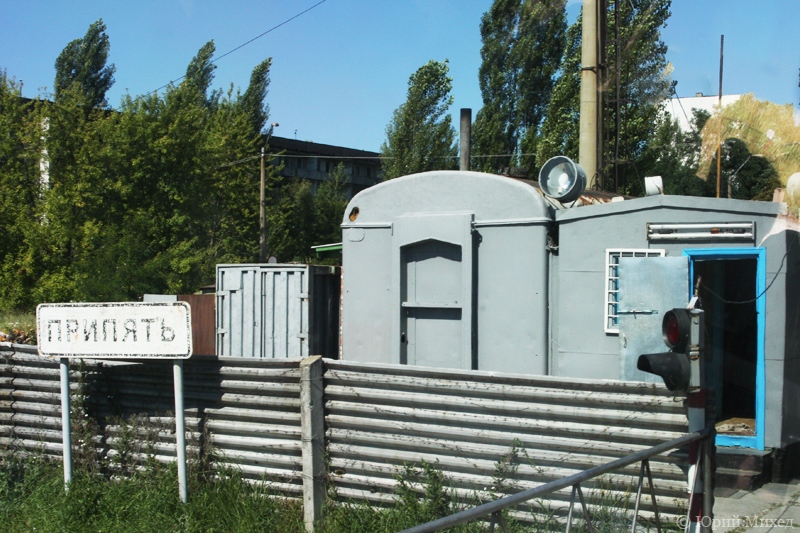
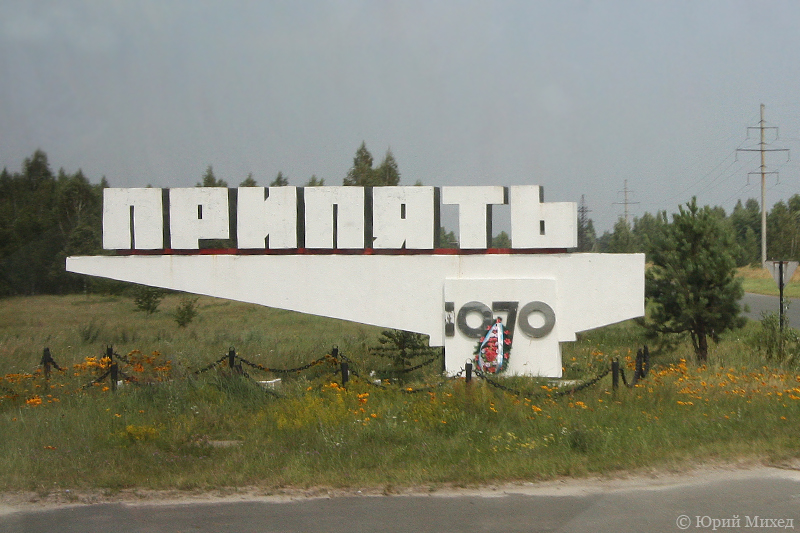
Today's Pripyat begins with yet another checkpoint—the third one today—located right behind a faded sign marking the entrance to the settlement. A policeman in riot gear thoroughly checks our documents once again.
I have happened to hear a misconception that before the accident, Pripyat had the status of a ZATO (closed administrative-territorial entity). This is not true—until 26 April 1986, entry into the town was completely free. The barbed-wire fence along the perimeter was built only after the accident to reduce the problem of looting. Getting into the town today bypassing this post is impossible, but it doesn't save it from looters—money and the patronage of the right people matter more today than laws or the concept of morality.
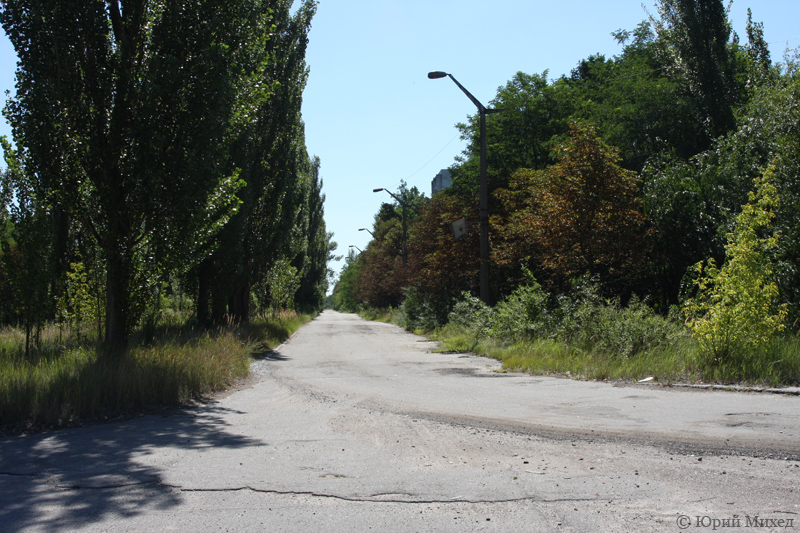
Once upon a time, the main avenue served as the grand entrance to the town, bearing, like the main avenue of any Soviet town, the name of Lenin. Because of the dense wall of trees that have grown along the road, we have to drive very slowly.
The street leads to the town square. The bus stops, the guides remind us once again about the extreme undesirability of consuming food outside of it, about clothing requirements, and finally give the command to disembark. A thought pops up in my head, typical of the first minutes of arriving at a place you've heard and thought a lot about, which you've seen many times in pictures, but where you've never been before. "I'm here."
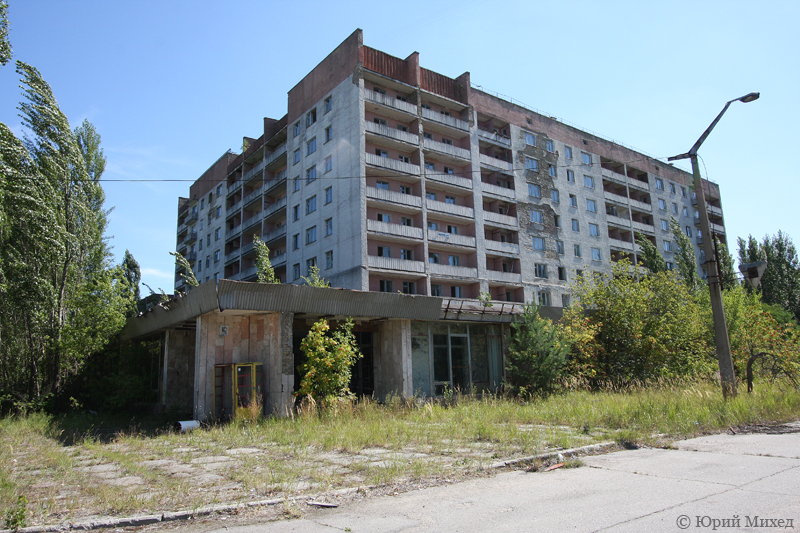
Here it is, the famous "white house" where the bosses lived, and those yellow-and-red Soviet telephone boxes, which have probably survived only here.
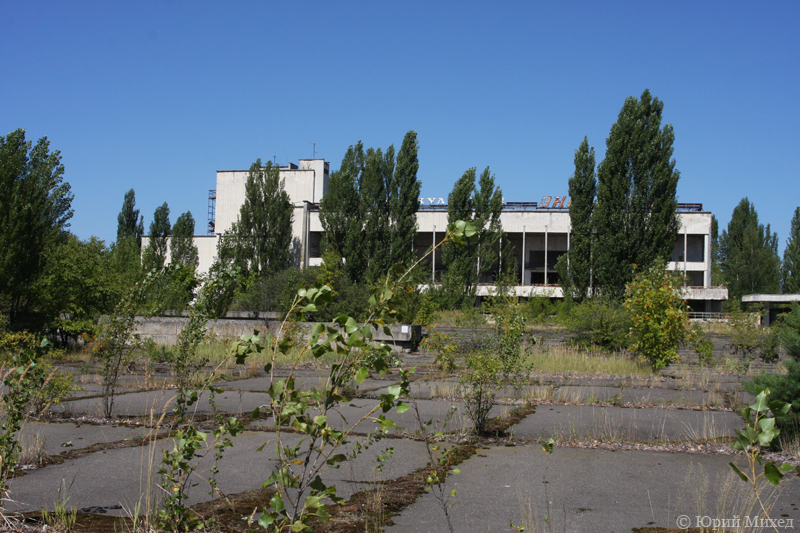
And across the square is that very palace of culture. Grass grows between the slabs, and trees break through. In the flowerbeds of the "town of flowers", as Pripyat was once called, tall poplars have already grown.
Here I should make a brief digression. I have already used the phrase "that very" or "those very" three times, which indicates that many readers will be able to do the same. The accessibility of tours to the Zone for ordinary people has led to the fact that many internet users have already seen detailed photo reports from the abandoned town at least once. Given that the emotions of those arriving here for the first time are usually identical, as are the tour routes, one can assume that these reports tend to be extremely similar to each other, not only in thoughts but also in camera angles.
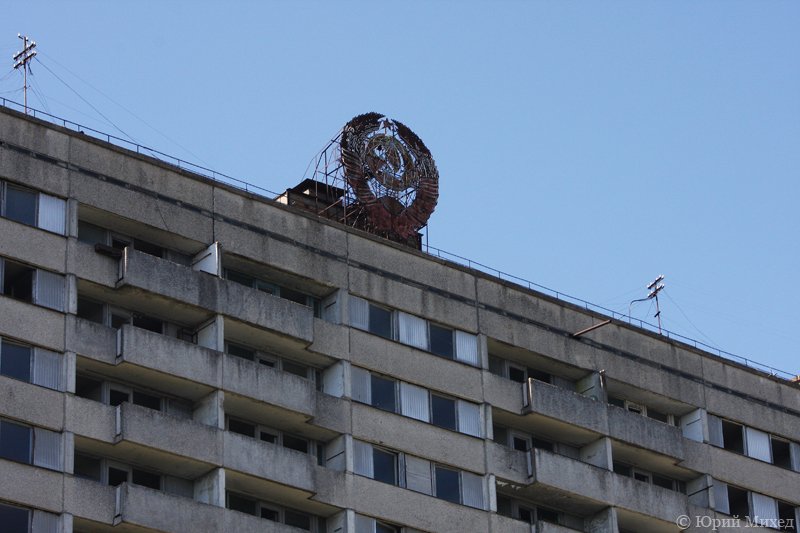
I don't want to delve into discussions about a "preserved monument of the Soviet era" and accompany them with a photo of the rusted coat of arms on the roof of the high-rise building that overlooks the square from the west side (but I couldn't resist including it here). I will simply show what I saw in order and share my impressions.
We split into three groups (two of them are led by Planca and Moloch, and ours by Serhiy from the Ministry of Emergency Situations) and head off in different directions. Our group goes west along Kurchatov Street, past the town department store.
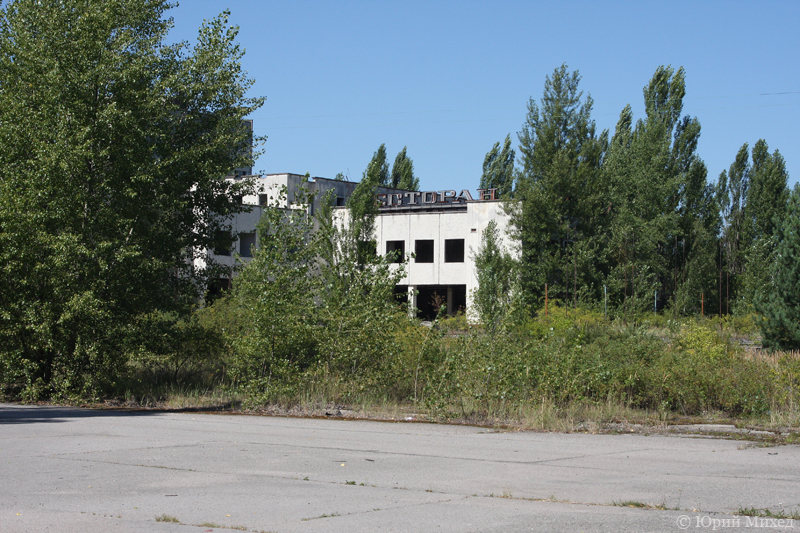
The first thing we come across on our way is some kind of grocery shop.
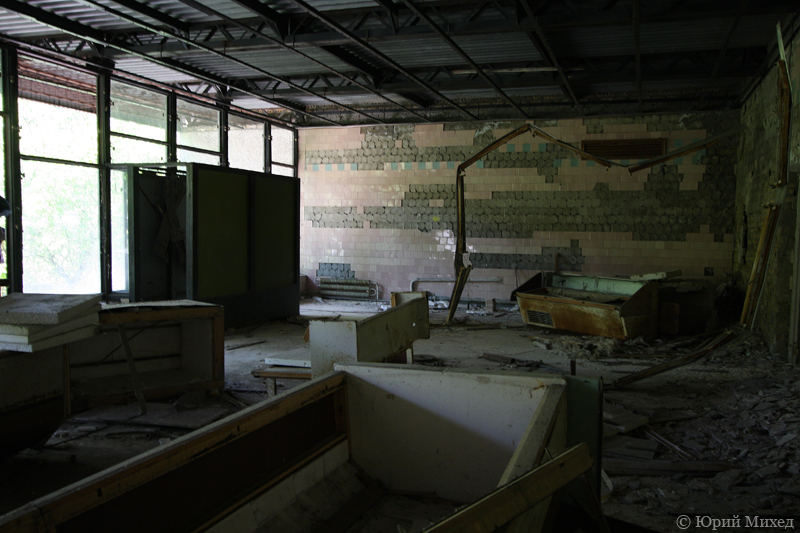
Inside are smashed freezer counters and scales (one feels tempted to add: "exactly like the ones in any grocery department back then").
At the back, near the doors where the delivery van used to pull up, a painted silhouette catches the eye—the work of a certain group of artists who realised their strange "artistic concept" in this way; such graffiti can be found everywhere in Pripyat. The artists' actions were rightly classified as vandalism (as the writer Alexander Esaulov noted in "The Faculty of Universal Love", it is akin to drawing on tombstones), for which they were permanently banned from entering the zone.
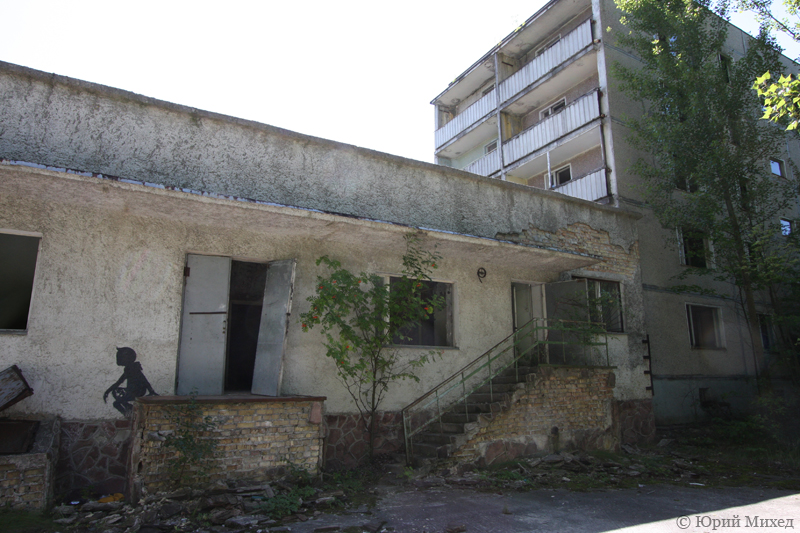
And, in my humble opinion, deservedly so.
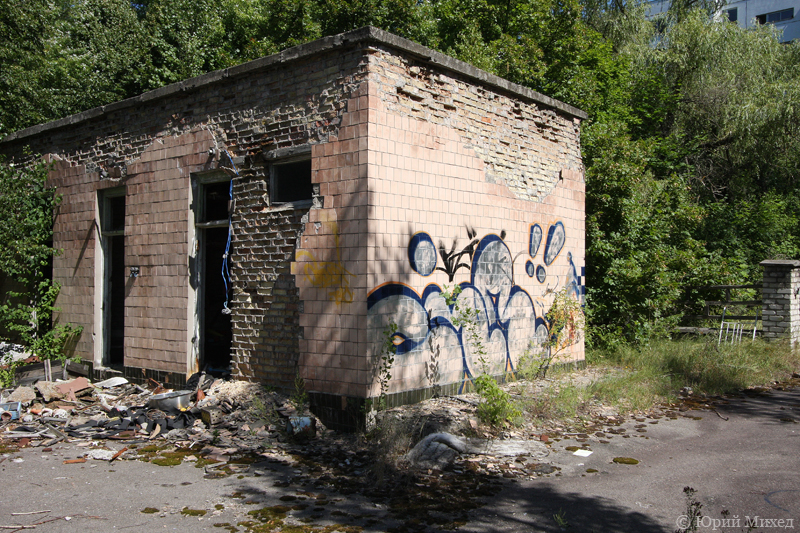
We are on the grounds of a kindergarten.
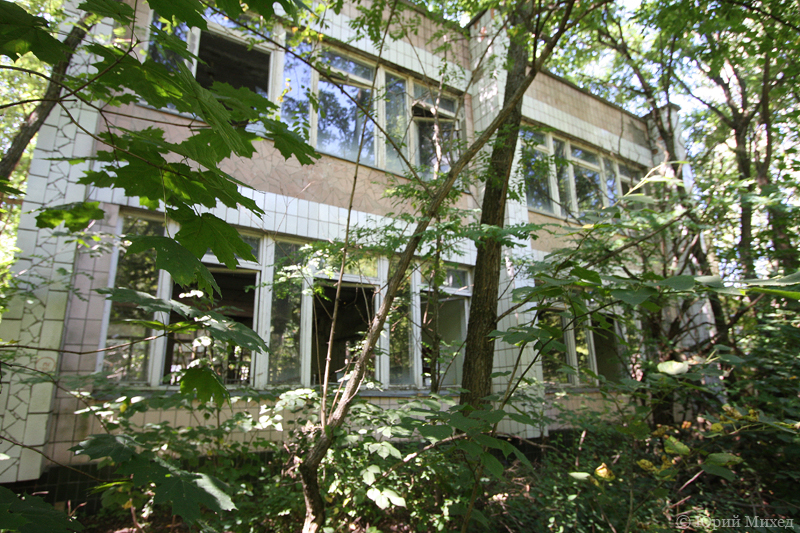
Kindergartens are particularly loved by photographers visiting the Zone—after all, you can't think of a more eloquent post-apocalyptic subject than abandoned toys and dolls. To make it more atmospheric, the shot is often "staged" beforehand—the scattered gas masks and baby dolls lying on the street, which you have probably seen in other people's pictures, are the work of their hands.
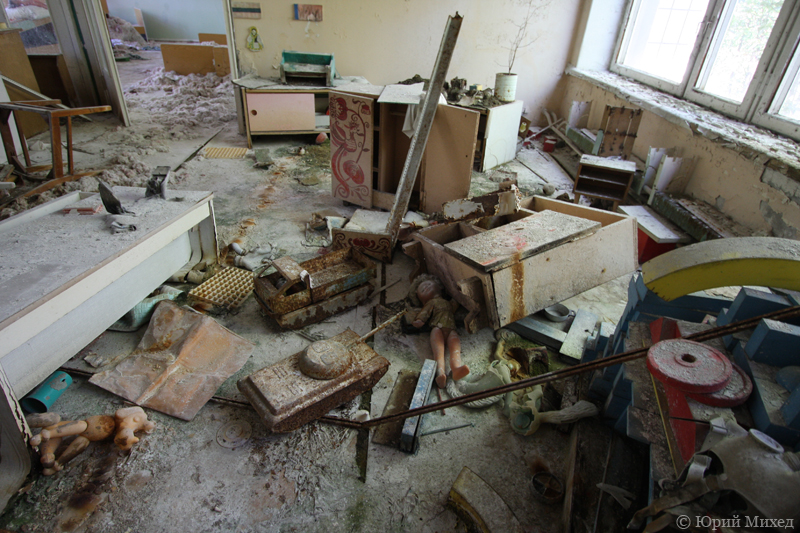
In the kindergarten, Stephen King's novella "The Langoliers" came to mind, where the characters find themselves in an abandoned yesterday.
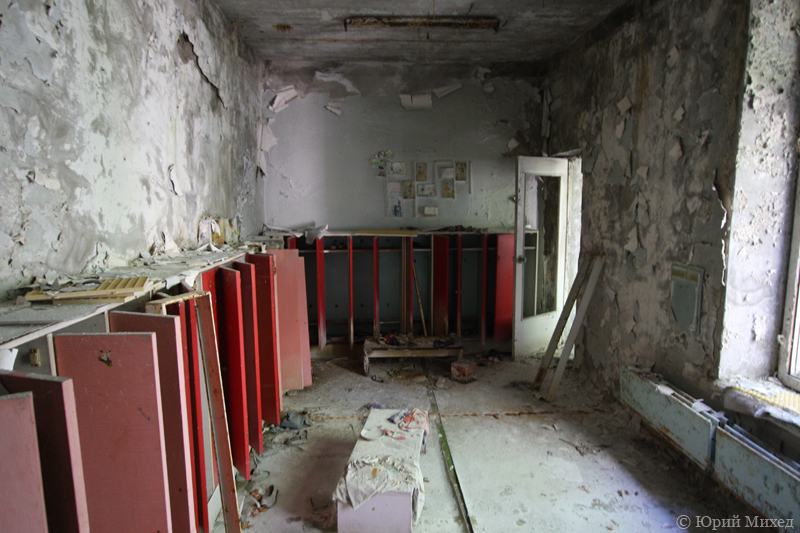
We were all born and grew up in the USSR, a country where everything was standardised. For many years we went to identically built and decorated kindergartens and schools, saw the same visual aids and posters, played with the same toys (I even found a few toy cars exactly like the ones I had in my childhood), and read the same books.
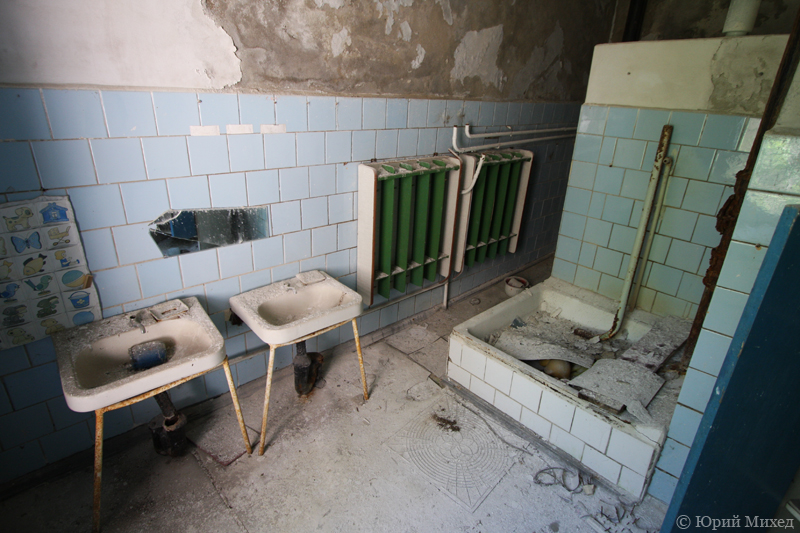
Now none of this exists anymore, and what remains has changed beyond recognition. But in Pripyat, just like the characters in that King book, it's as if you return to the past. And you immediately see that the yesterday left behind, in the form we remember it, does not exist either in this or in other dimensions. It collapsed along with that strange country.
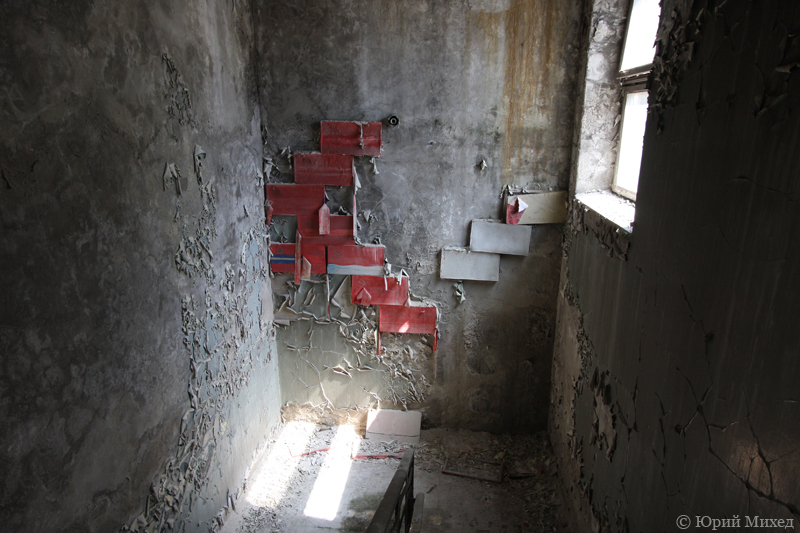
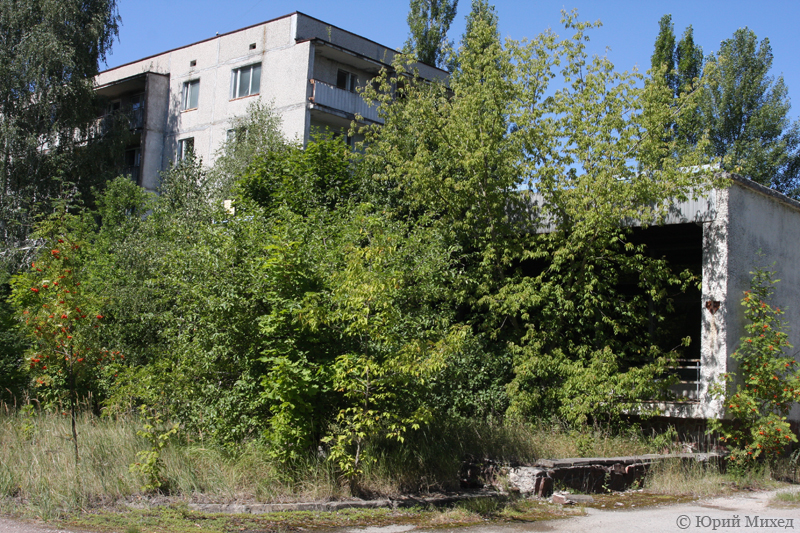
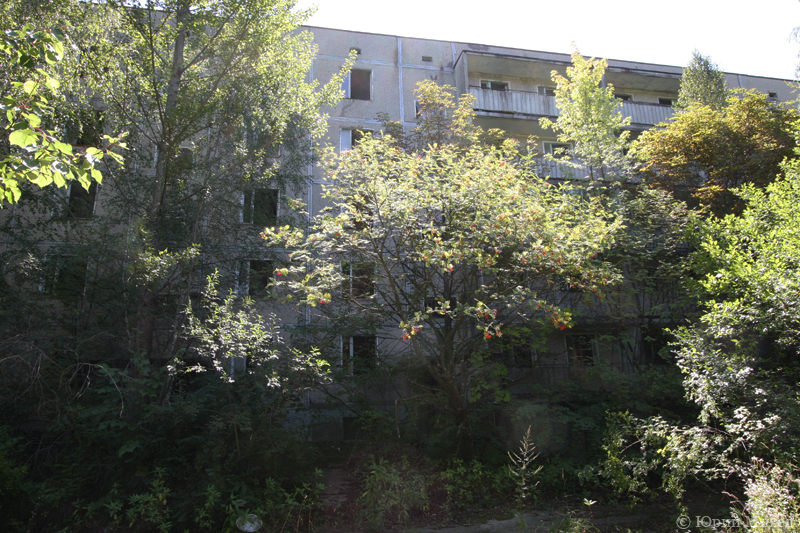
We move on. Behind the trees, the empty windows of panel blocks and the entrances of residential buildings hidden in the thickets of bushes can be discerned.
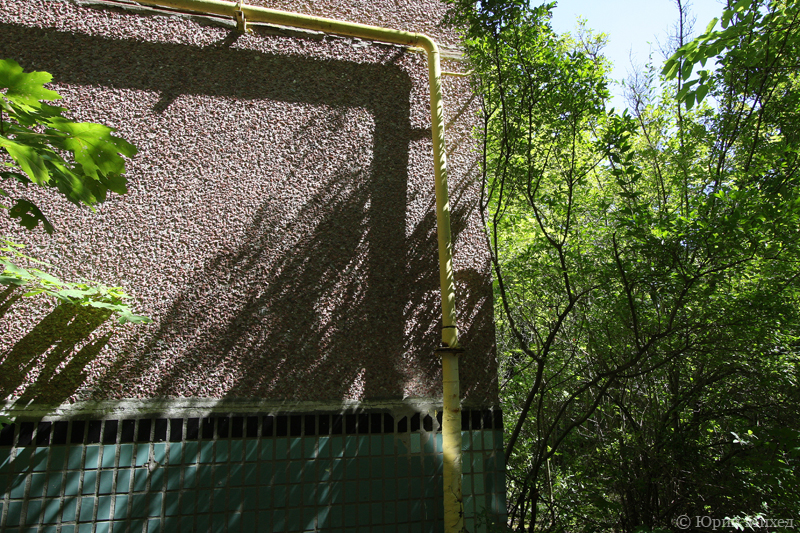
Gas supply infrastructure.
Jungle of the Polesia type.
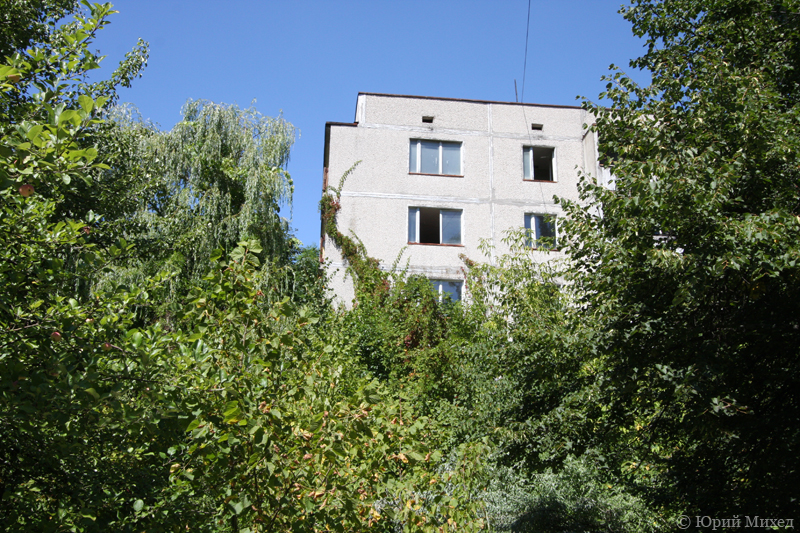
This lush vegetation greatly masks the feeling of the town's abandonment. A walk through Pripyat in summer is more like a walk through a forest—you are surrounded by thickets on all sides, and wading through them to the accompaniment of birdsong, you stumble upon various objects from time to time. There was a playground in this birch grove.
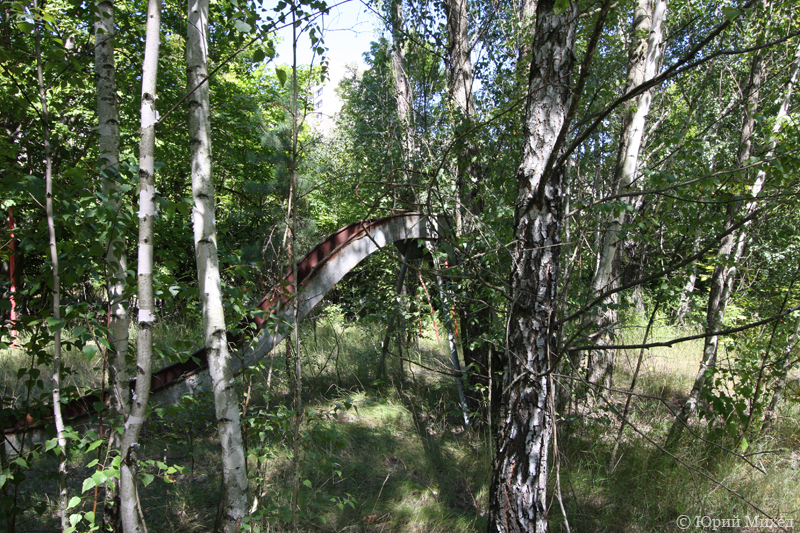
But one can imagine what a sinister impression the dead town leaves in the cold season, when the trees lose their leaves. Winter silence reigns, and silent concrete structures look at you from everywhere. That is a real post-apocalypse.
Meanwhile, we approach the side entrance of one of the schools.
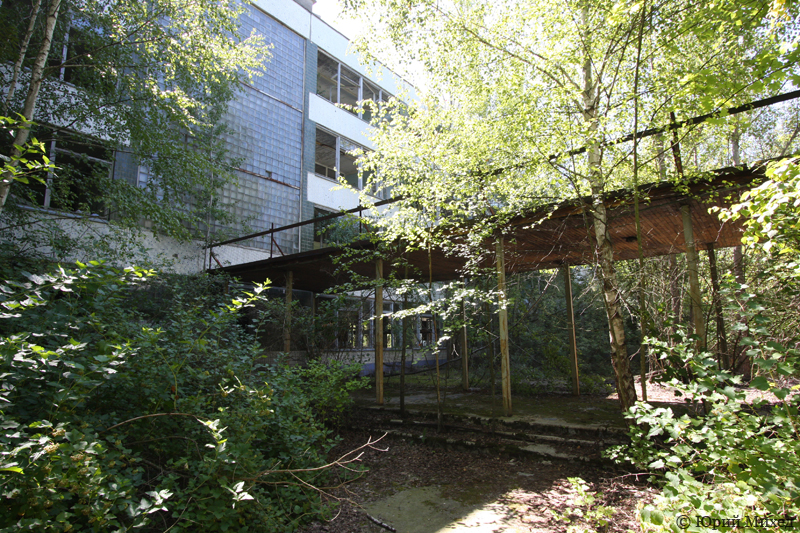
Trees are sprouting in the corridors, their seeds carried here by the winds. And again, a familiar layout. Further down are the toilets. Female, male, and between them—the cleaner's utility room.
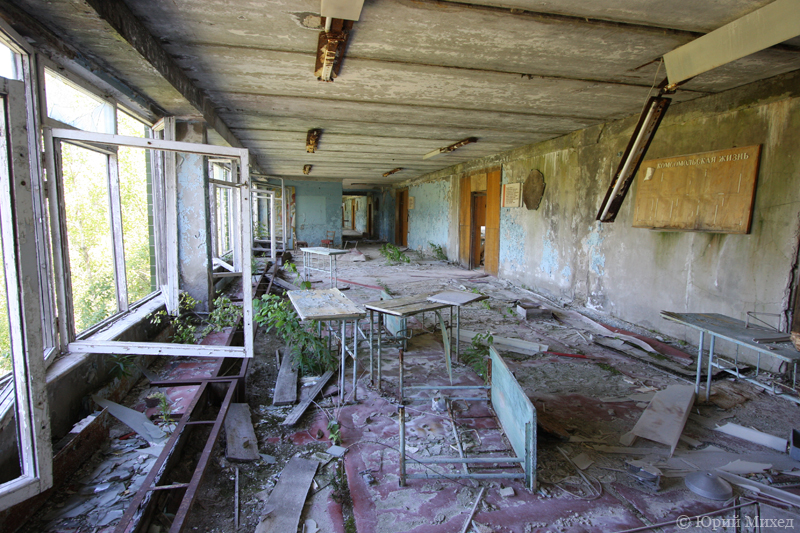
Some classroom. On the blackboards, one can often see phone numbers and contact details of Pripyat residents who studied at this school and are now looking for their classmates.
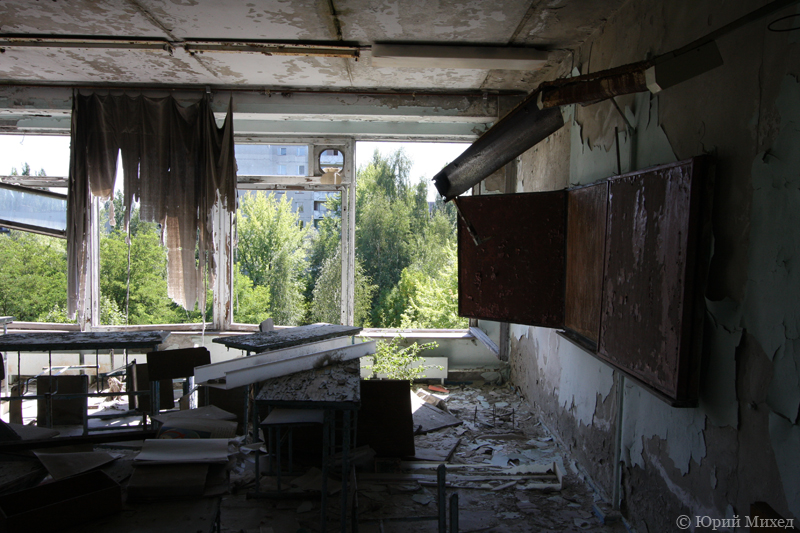
The struggle for peace and friendship of peoples in the English classroom.
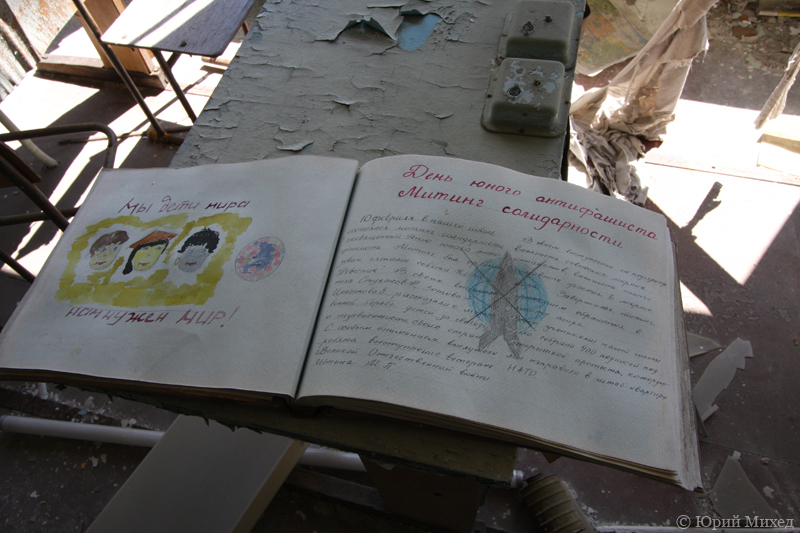
In the Lenin room, distinctly anime-style pioneers salute from a poster on the wall.
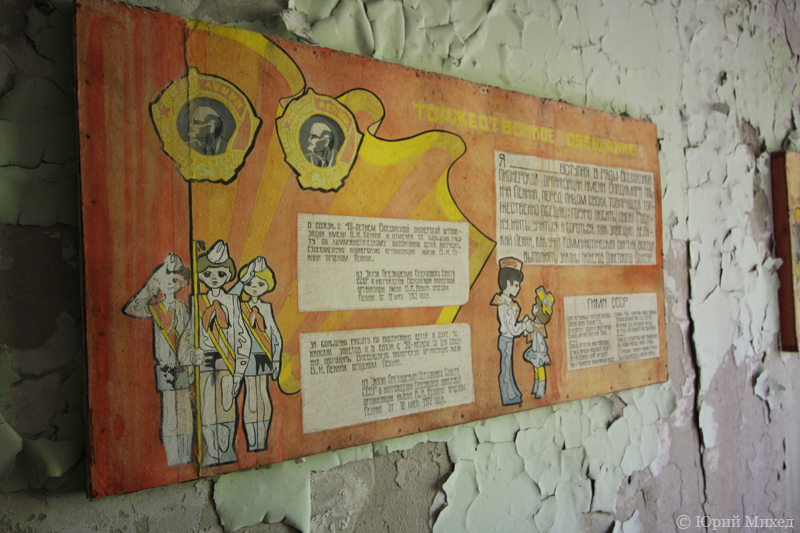
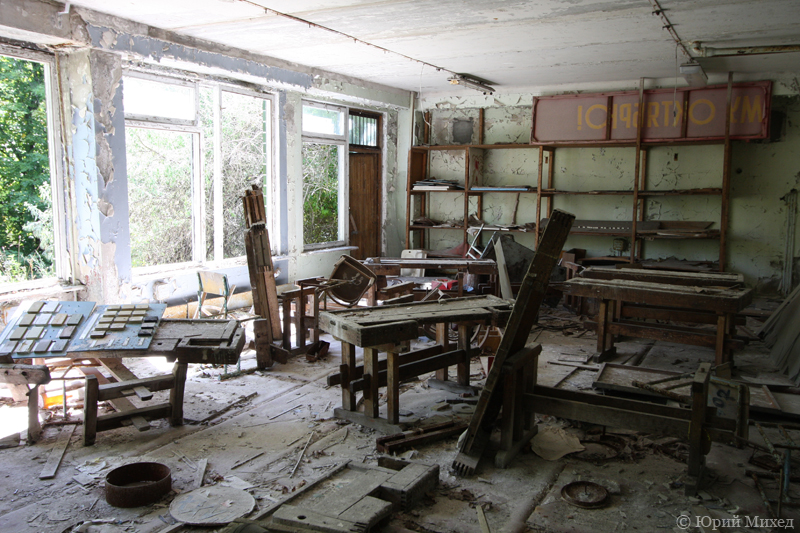
Workbenches and a wall chart with wood samples in the woodwork classroom.
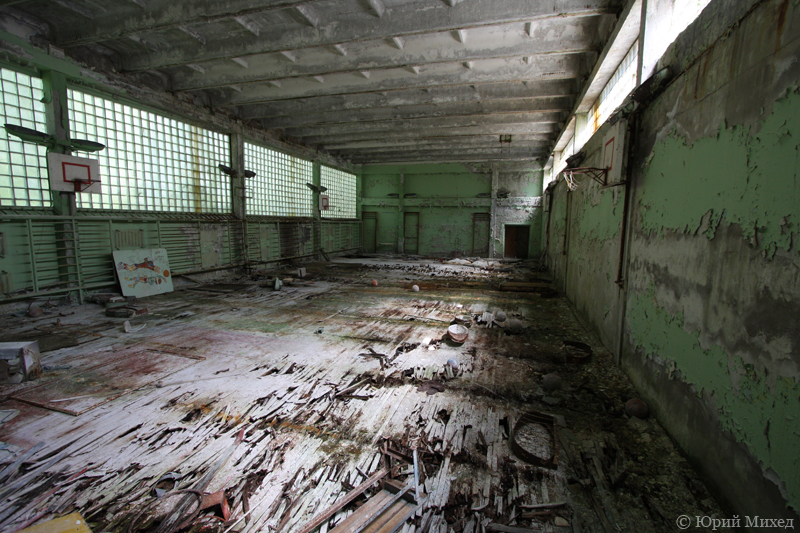
A gymnasium with a floor rotted from dampness.
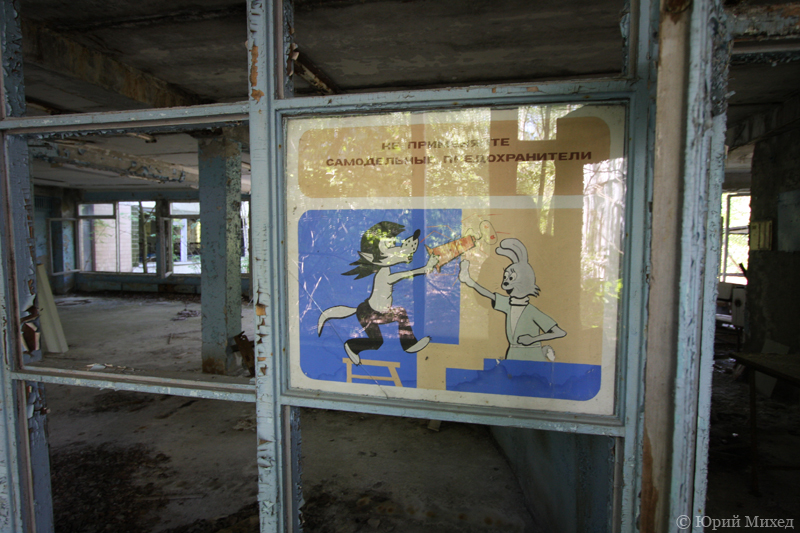
The Wolf from "Nu, pogodi!" uses homemade fuses.
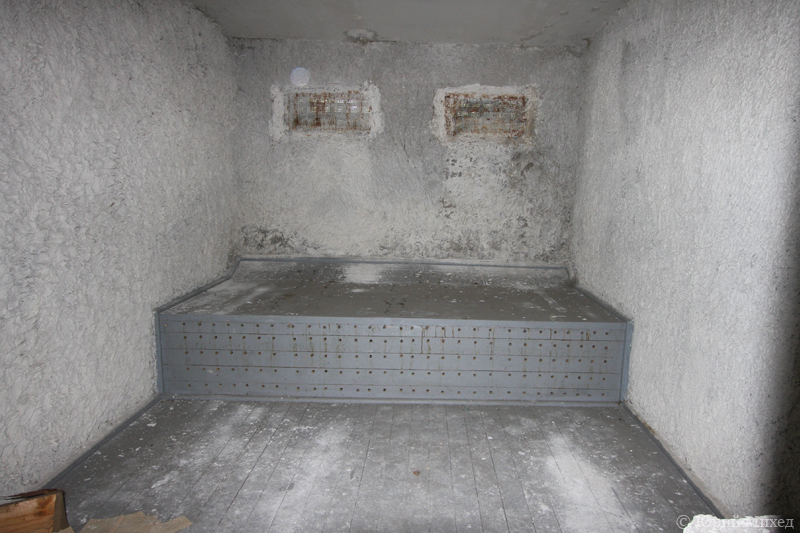
In Pripyat, I managed to look inside many ordinary institutions that I hadn't had the chance to visit in normal life. For example, the police station (pictured is the so-called "monkey house" holding cell, where newly detained troublemakers are put).
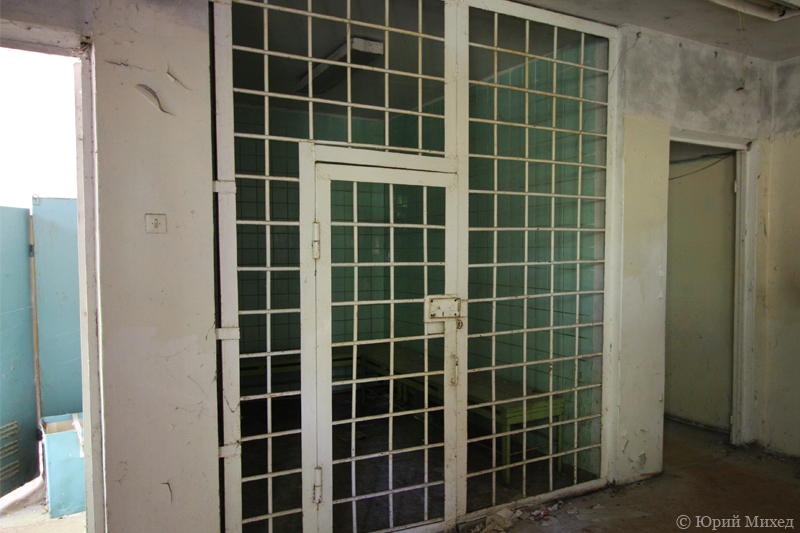
Or inside a remand cell with bunks and a slop bucket hole (a regular hole, like in a station toilet, with a low partition—it is not visible here).
The south-western outskirts of the town are industrial. Right behind the police station is some kind of cargo vehicle depot.
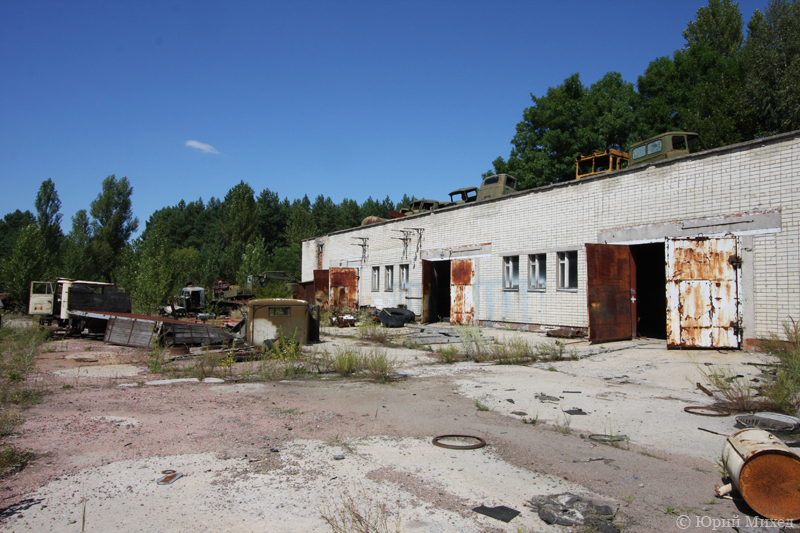
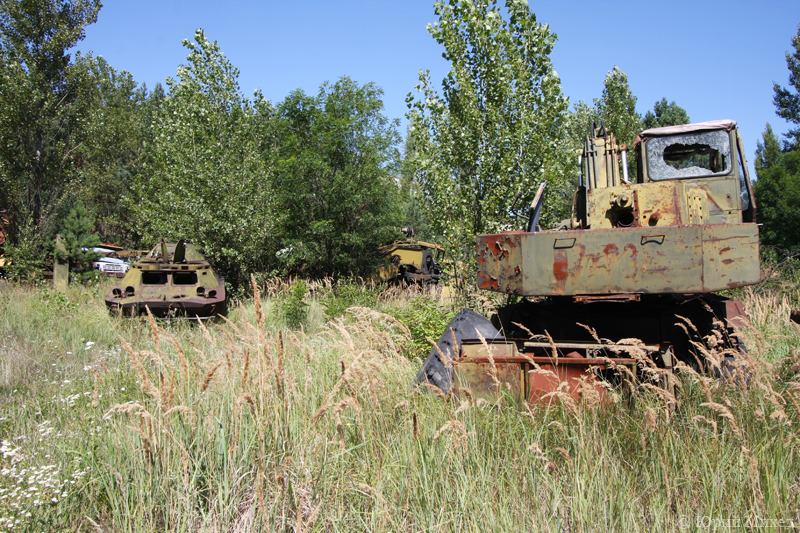
A lot of unburied machinery. It is radioactive, though not too heavily.
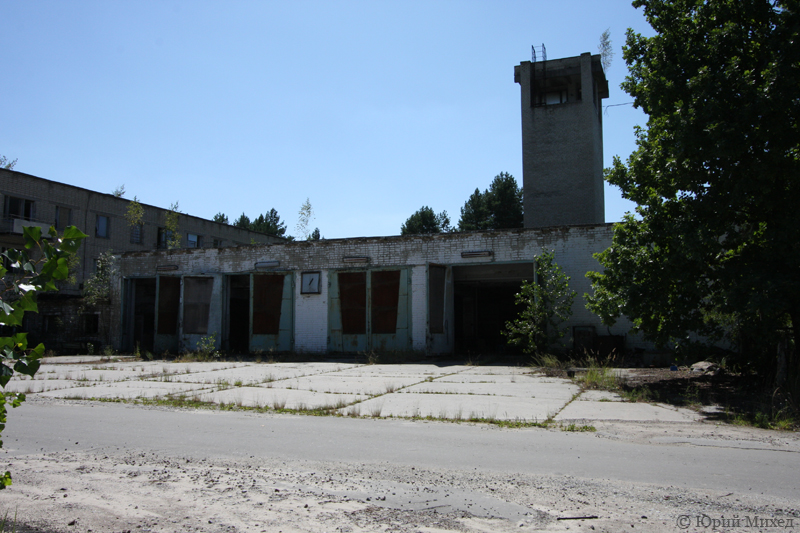
The town fire station.
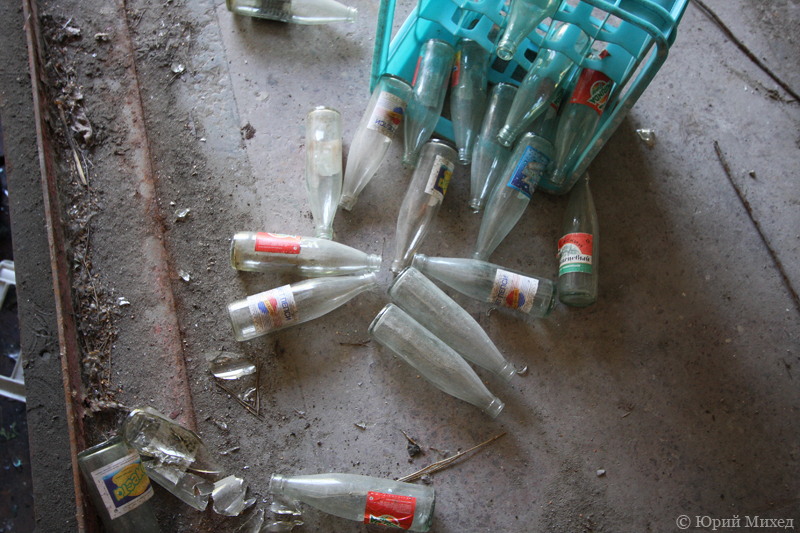
These bottles were found inside it. The fact that diet Pepsi-Cola and other drinks of the company were also produced in the USSR was a revelation to me.
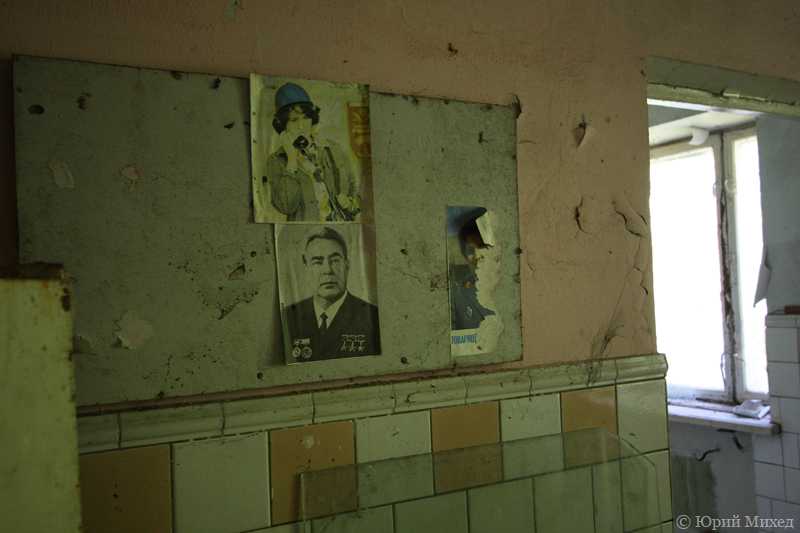
Dear Leonid Ilyich and other figures.
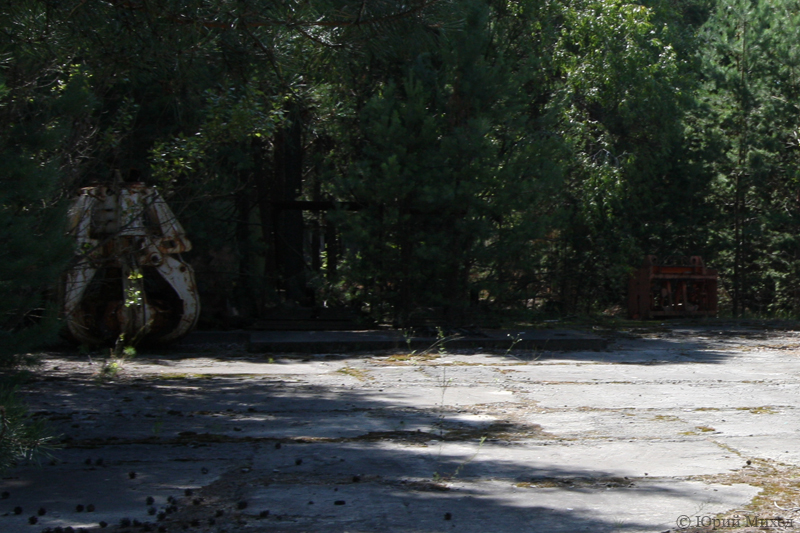
Not far from the "Jupiter" factory is the "dirtiest" object found in the zone—a grapple bucket that somehow escaped burial. My household dosimeter, designed for a maximum of 10 milliroentgens per hour (500 times above normal), went off the scale. But for this very reason, the un-decontaminated bucket has long since become a Pripyat "landmark", a must-visit for every tour. Owners of more powerful counters on the Pripyat.com forums reported a figure of 13 milliroentgens. That is 650 times above normal.
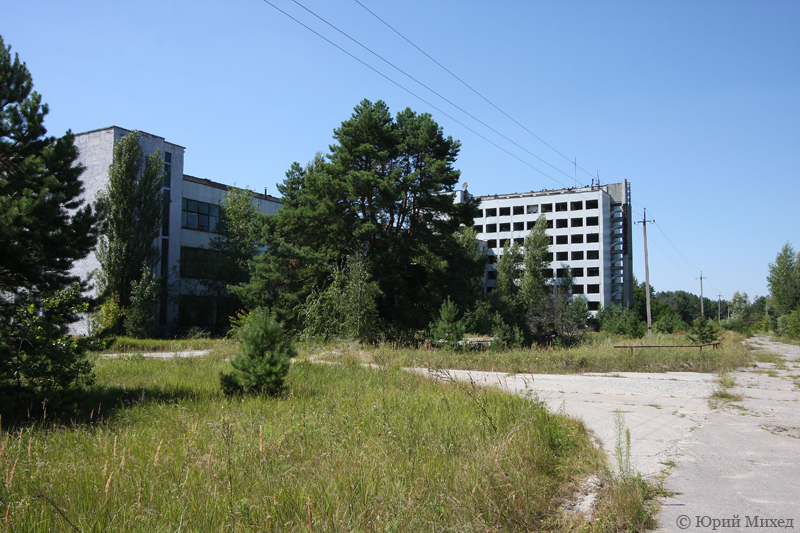
And here is "Jupiter" itself. We enter the territory, which is surrounded by a high concrete fence, through a hole in the rusty gates.
We come across that very Japanese radio-controlled tractor that was supposed to clear debris near the fourth power unit, but quickly failed due to high radiation fields, as a result of which soldiers had to clear the lethally radioactive fragments of the reactor core manually.
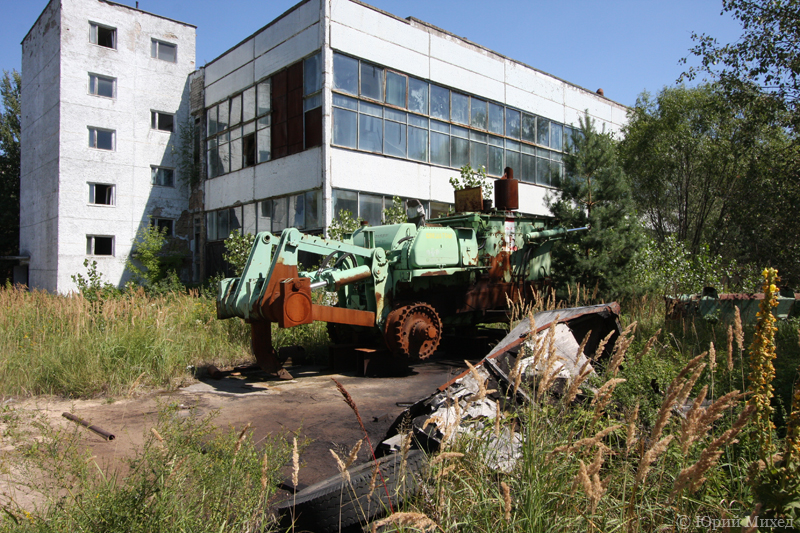
The trashed workshops and corridors strongly resemble levels of some shooter game. A monster is about to jump out from around the corner.
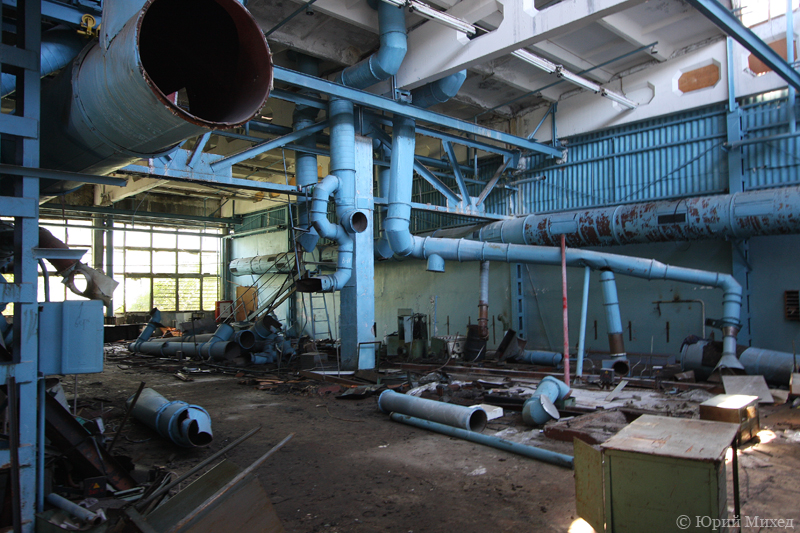
"For appearance's sake", the enterprise produced tape recorders of the same name, but its main purpose was classified—it manufactured something for the defence industry. That is why the factory continued to operate after the accident and was closed only in the mid-nineties. Now the factory premises, like everything else in Pripyat, are trashed and plundered.
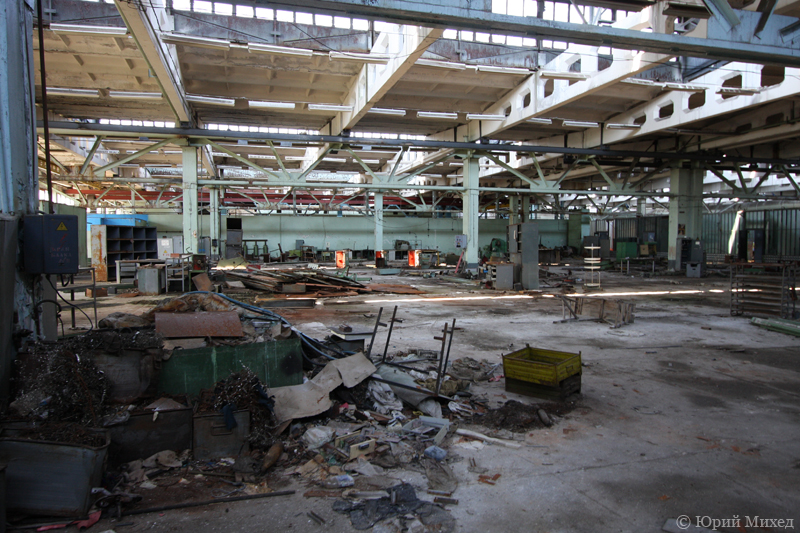
Admittedly, not completely plundered—at the exit, we meet Moloch's group. From the conversation between him and our guide, it is clear that looters are currently operating somewhere on the outskirts of the factory. The guides decide that nothing can be done in this case (otherwise it is unclear how it would all end today).
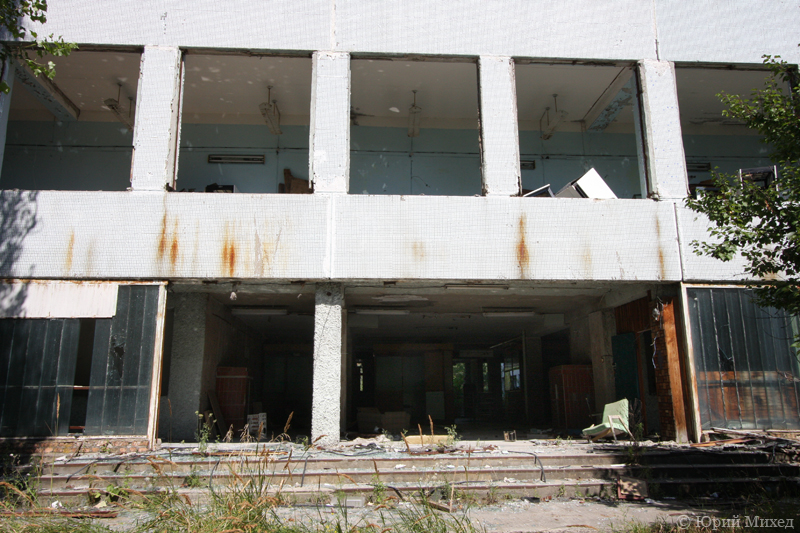
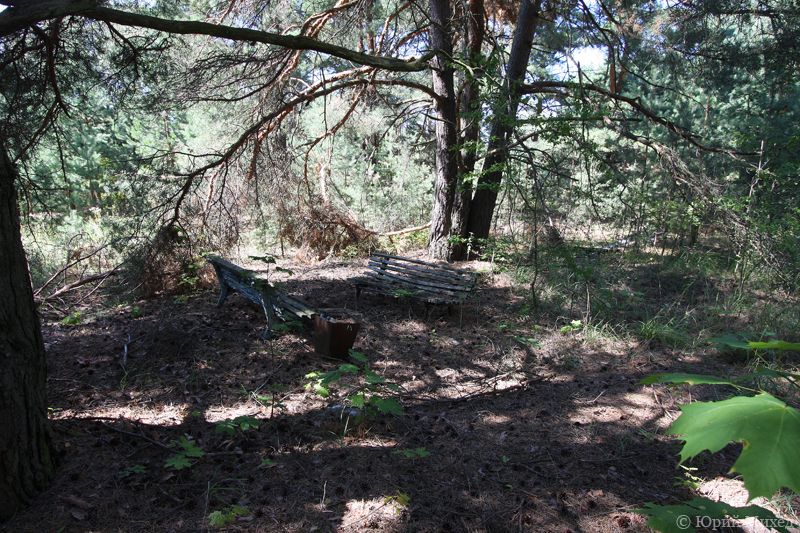
We return to the town through a primeval coniferous thicket.
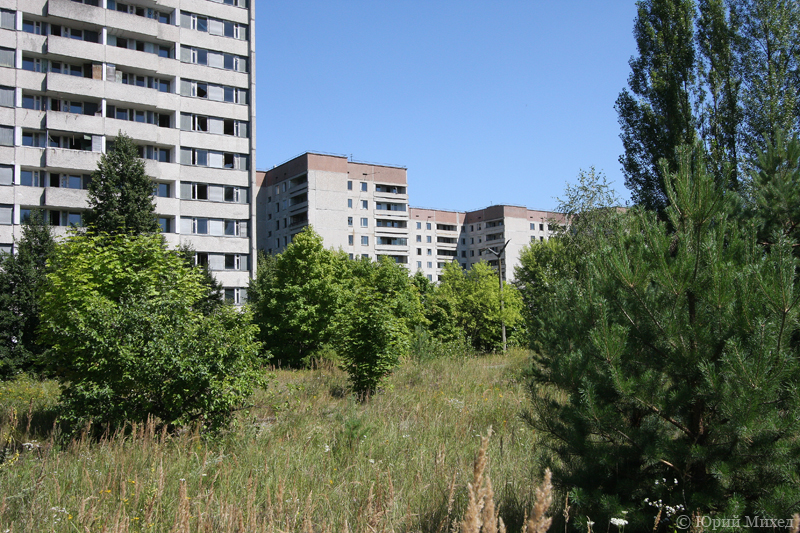
From a certain distance, Pripyat could be mistaken for an ordinary suburban district.
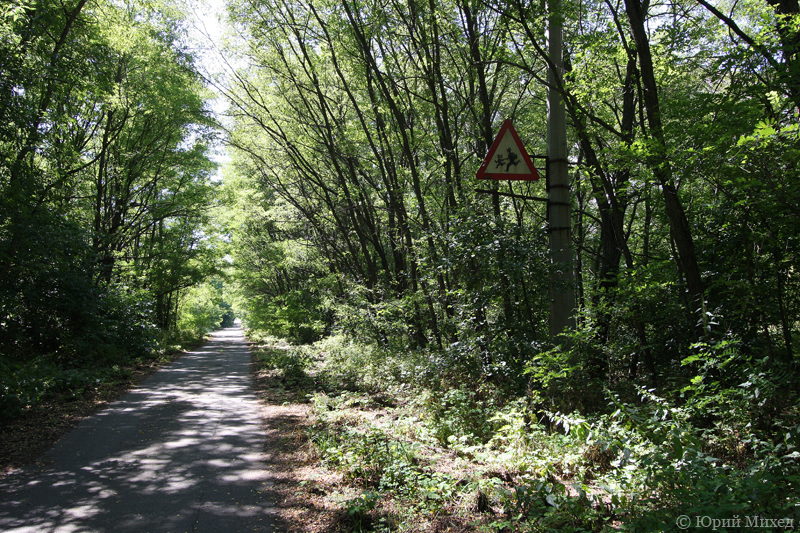
We are walking along a major street—Sportivnaya. The asphalt appears as a narrow strip in the centre, the rest of the road is covered by earth washed up by the rains. Fresh tracks are visible on it—it's clear that wild boars managed to dig around here this morning. Due to the disappearance of the "human factor", populations of wild animals have recovered in the Zone, some of which (wolves or those same boars) pose a threat to humans.
Mutant animals, which ordinary people like to talk about, do not exist in reality—if a two-headed boar is born somewhere, it won't live long. Natural selection immediately weeds out deformities.
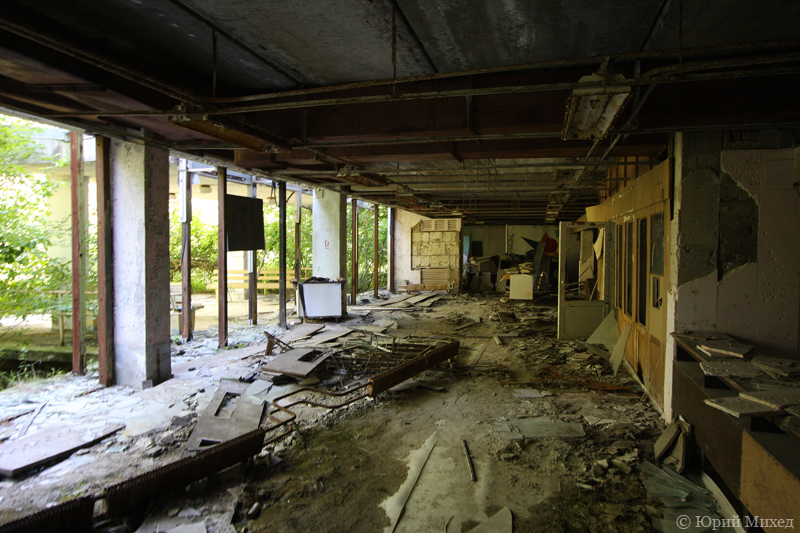
Along this street is the "Lazurny" sports palace, the clock on the roof of which has been showing five to twelve for many years. Like the "Jupiter" factory, it functioned for a long time after the disaster.
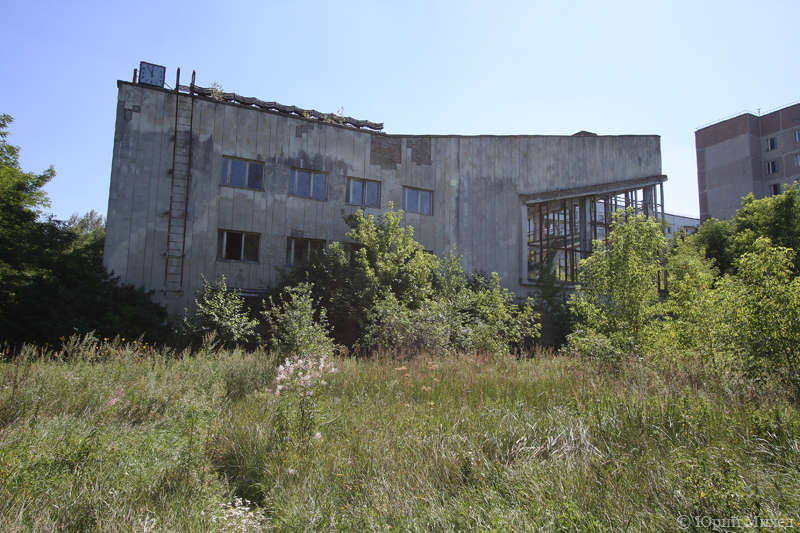
This is evidenced by a special, linoleum-like material that covers all floors and stairs. It does not accumulate radiation and was laid to protect the workers who rested here.
Today the swimming pool is empty and littered with fallen plaster and broken glass (no looter could pass by such large windows).
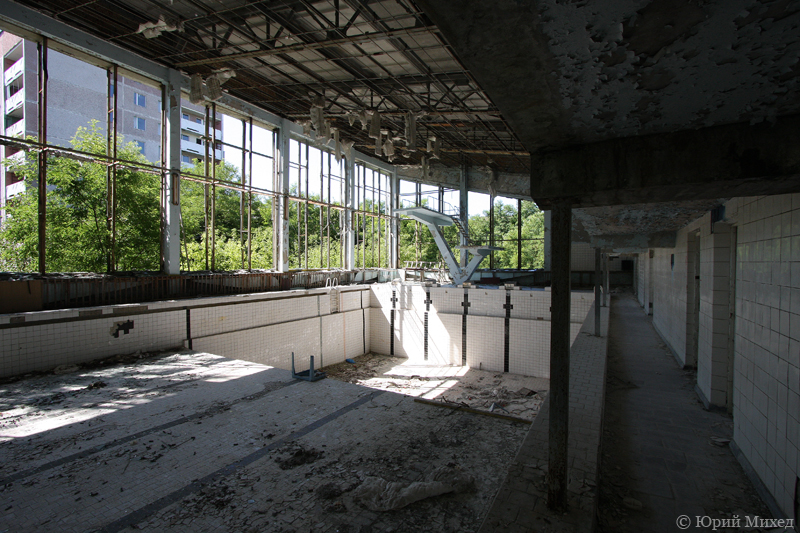
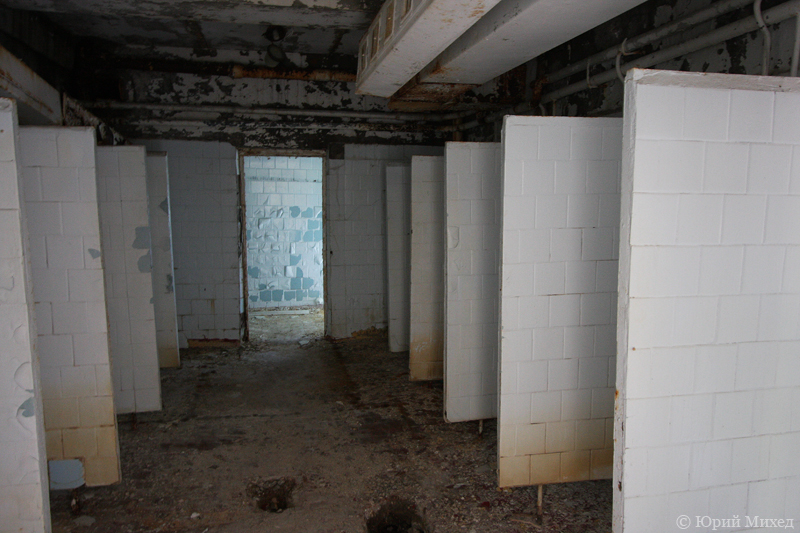
In my childhood, when I went for swimming lessons, one question always bothered me—what does a swimming pool look like from below, especially under the shallow end? I couldn't find out here—I started to go down, but it was impossible to see anything in the pitch darkness. I went into the shower room, but there was nothing unusual there.
There are no, or at least very few, Khrushchev-era apartment blocks in Pripyat. The town was built up with later, improved series of standard residential buildings.
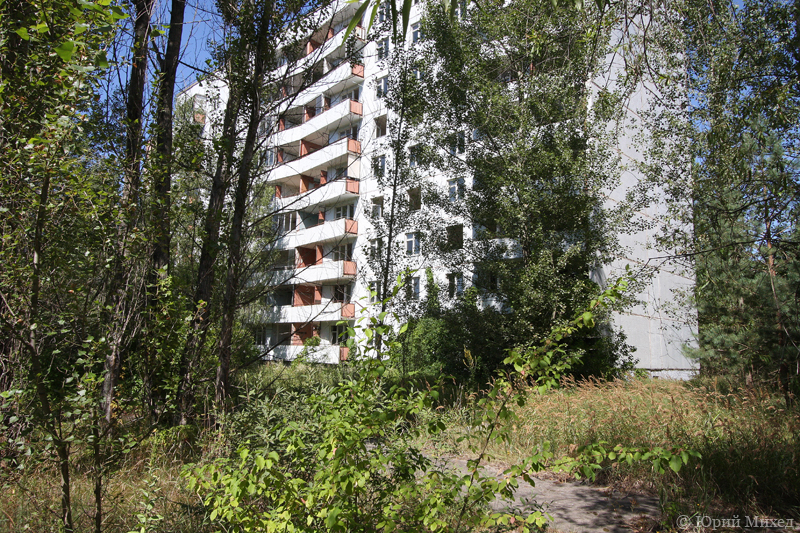
And it is they that leave the strongest impression. After all, such houses were in every town, and almost each of us can identify with them. In our minds, they are inseparable from other attributes of a residential area—children in sandboxes, cars, old ladies on benches, washing hanging on balconies. But the high-rise buildings here, with their blackening windows, are frighteningly empty, and impenetrable thickets stand like a wall in the yards.
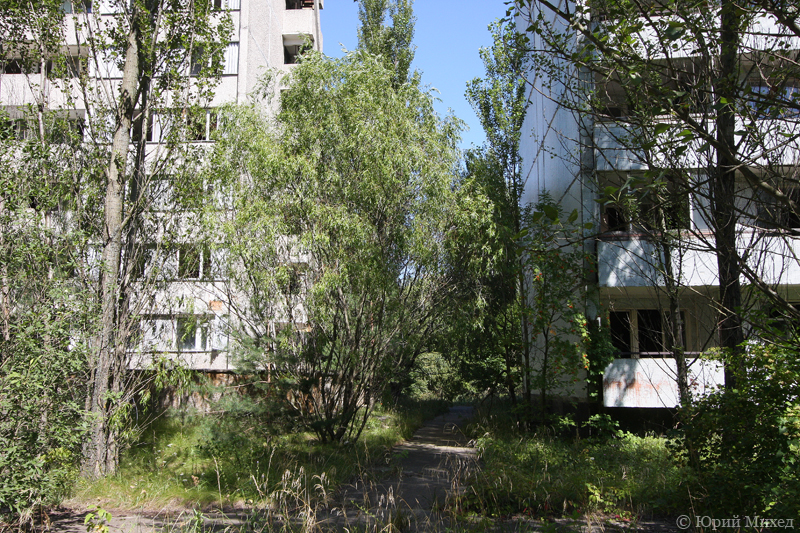
We enter one of these buildings, a sixteen-storey block on Heroiv Stalingrada Street.
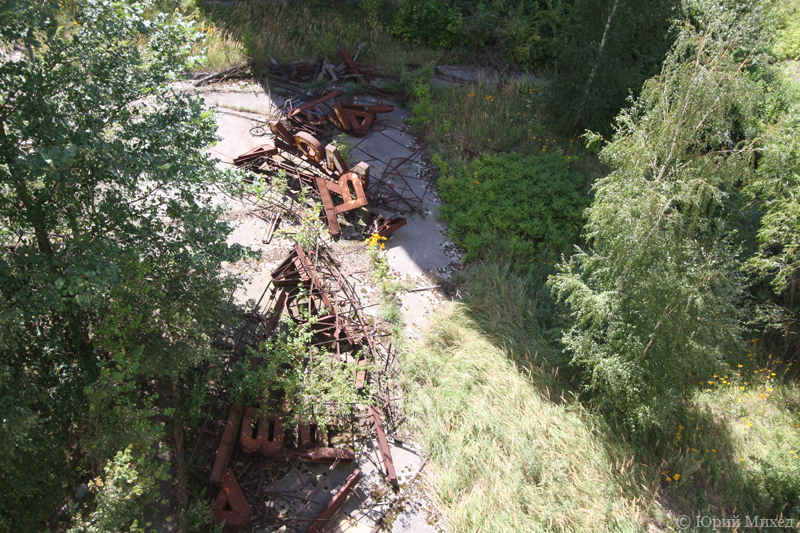
Giant iron letters are scattered in front of the entrance—once they formed a large slogan on the roof, but it wasn't possible to understand which one exactly (at first I thought of "Let the atom be a worker, not a soldier", but there is no letter "Я").
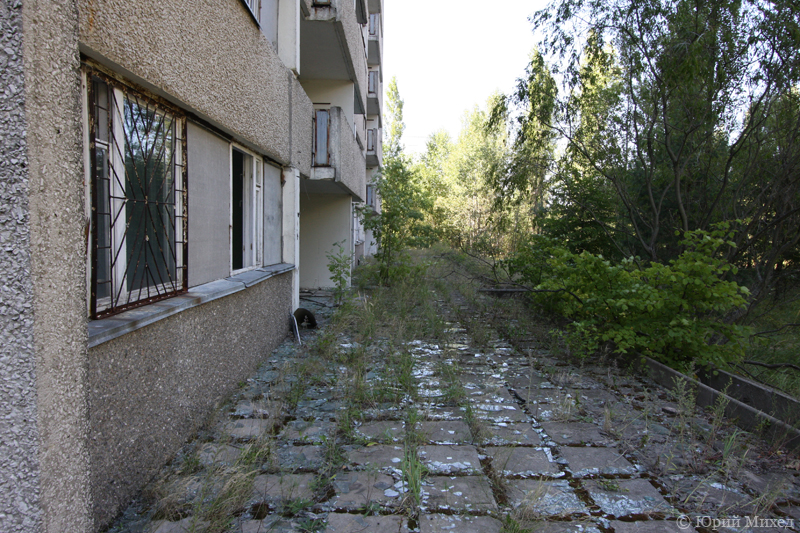
These buildings have a strange layout—anyone could look into the windows of the ground floor.
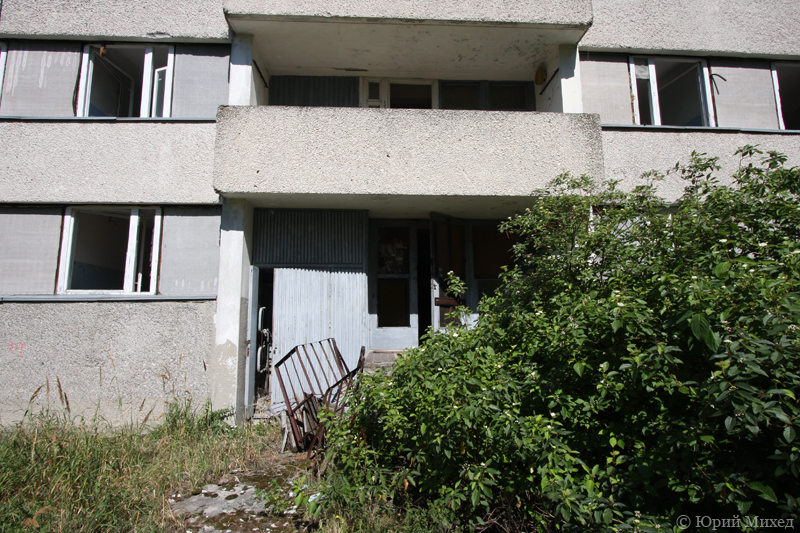
This entrance is no different from thousands of similar entrances across the entire former Soviet Union. Except that traces of looting activity are noticeable—vandalism, rubbish, and railings stolen for scrap metal.
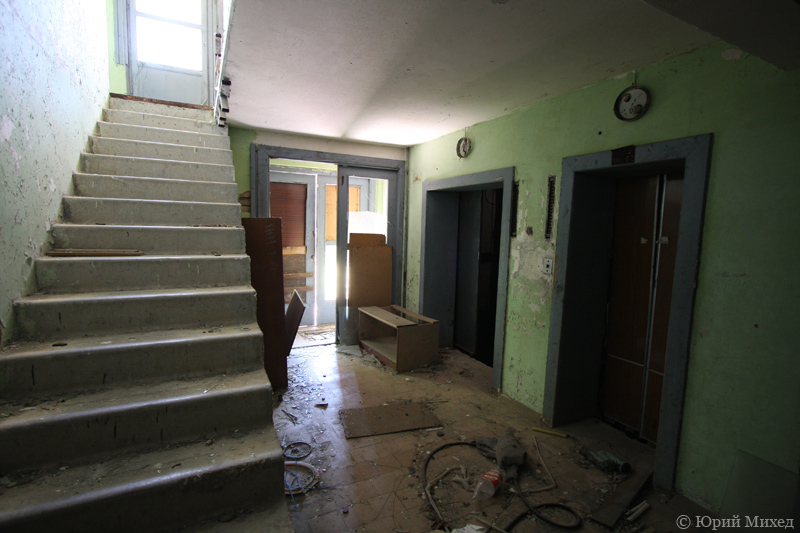
The same boxes, doors, and glass panes were in your house too.
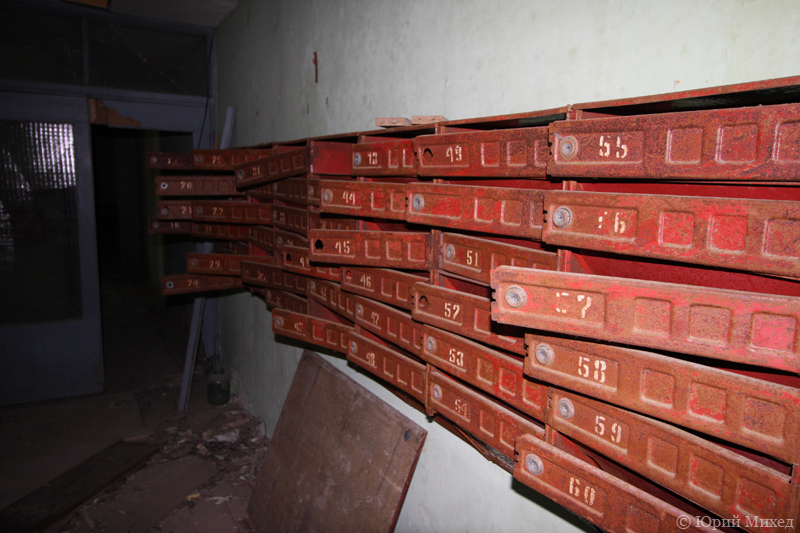
Someone's inscriptions have survived on the walls—in those days there were no combination locks or entry phones to prevent hooligans from immortalising the name of a girl they liked.
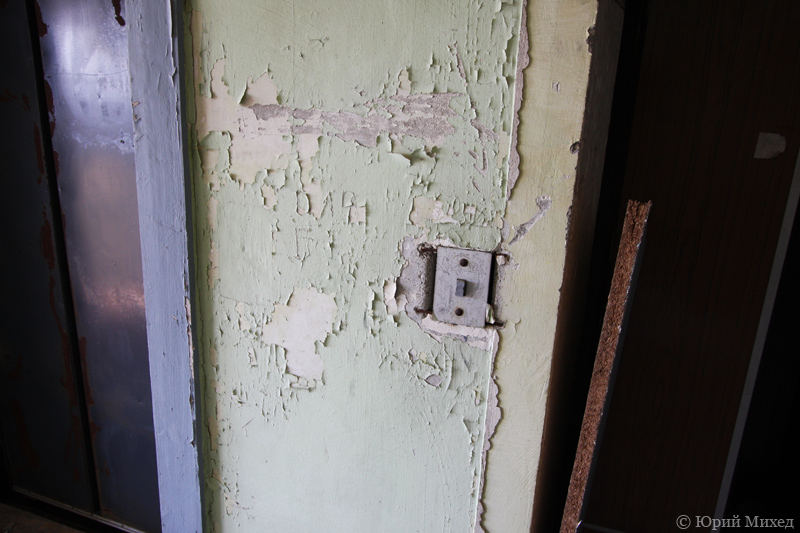
You walk through empty floors, enter abandoned flats. In many places, you can find left-behind furniture sets, gas cookers, books, personal belongings, photographs. The walls are bare almost everywhere—the wallpaper peeled off from the damp and lies on the floor. A strange thought about the housing issue comes to mind—people cannot afford housing for years, yet here an entire town stands empty. But it is impossible to live in—it is abandoned and no longer belongs to people. Ghosts of a flourishing Pripyat dwell within the silent walls, its life cut short in April 1986.
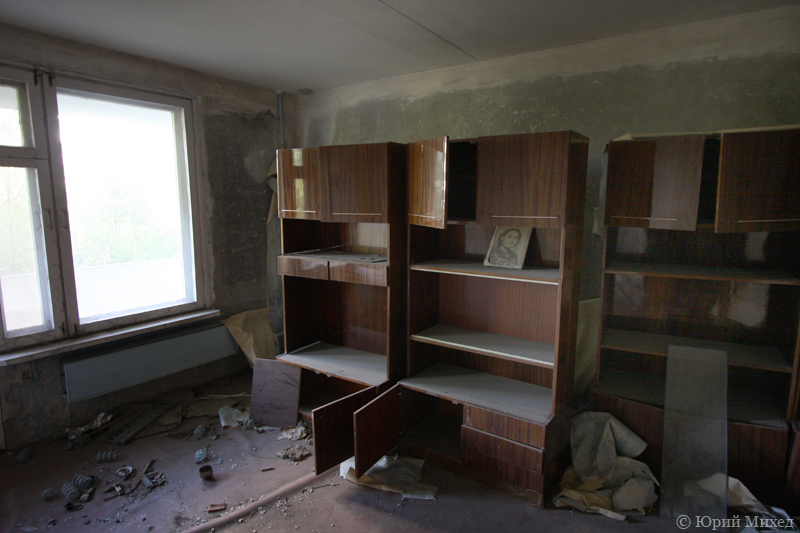
Just a kitchen.
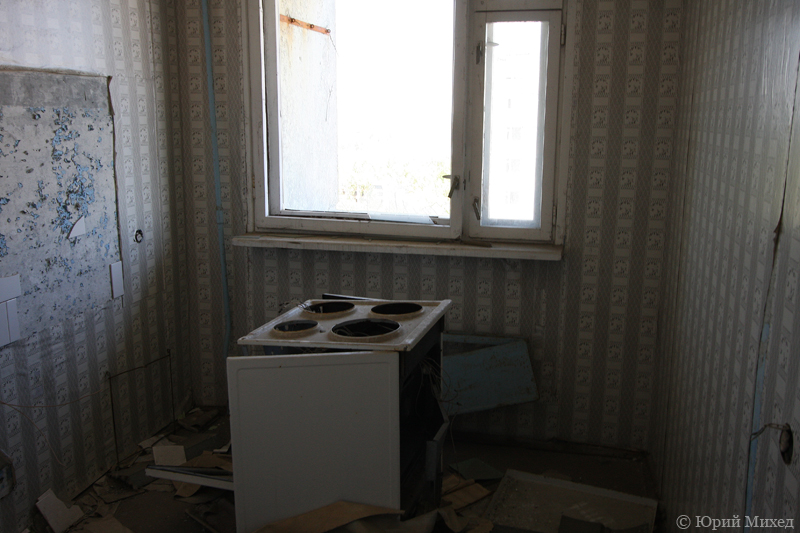
To avoid raising panic, people were not told that they would never return to their homes. "This is a temporary evacuation." But not a single flat in Pripyat has remained with its household intact—liquidators opened and treated every single room without exception. And after them came countless waves of looters wishing to profit from the abandoned property. It is because of them that everything in this town is turned upside down. Even today, when there seems to be nothing left to steal, people with an atrophied conscience continue to ravage Pripyat, cutting out radiators, entrance railings, and taps from bathrooms.
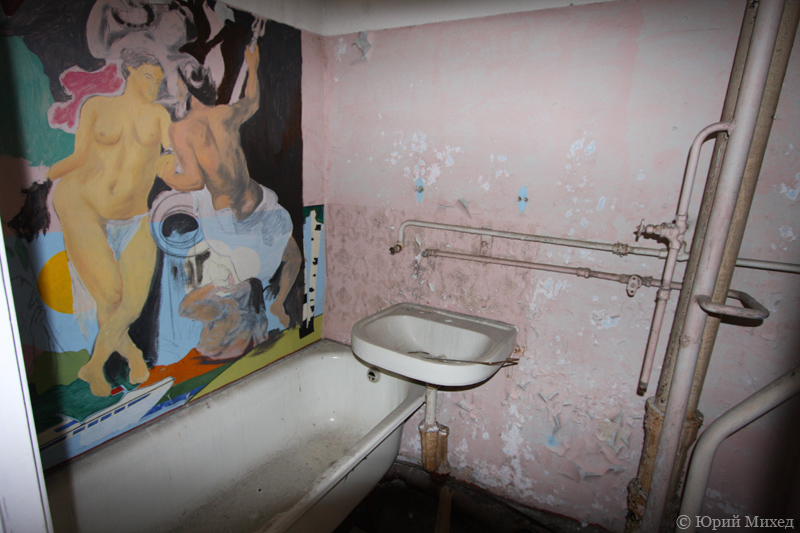
To reach the roof, you need to walk up two hundred and twenty-one steps. I go up, looking into some flats and into the lift shaft along the way. High up!
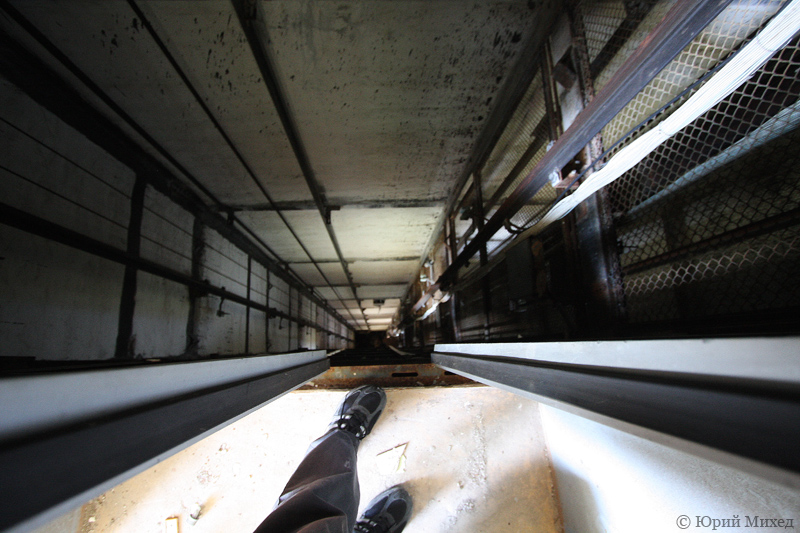
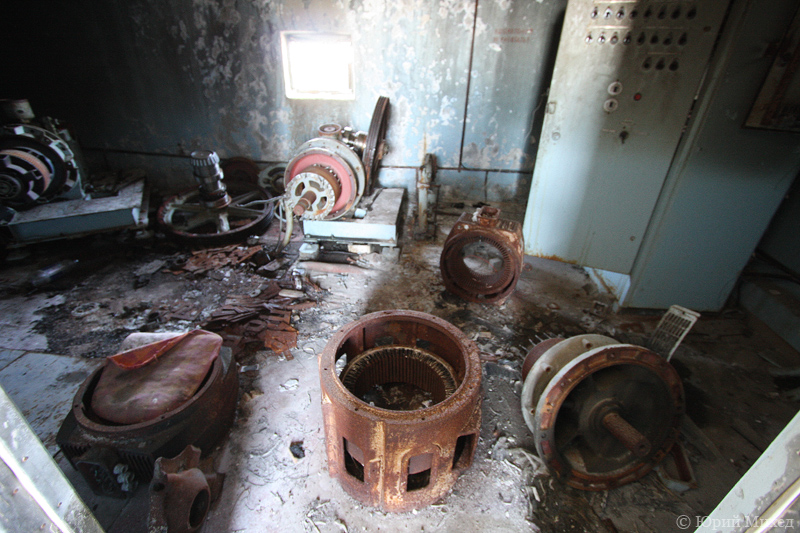
For the first time, the entrance to the lift plant room is not blocked by a padlock.
And here is the roof. The whole town is in full view. The day is clear, and the station, which first gave life to the town and then took it away, is clearly visible from here. The dosimeter shows that the roof is quite radioactive—the radioactive fallout was absorbed into the hot bitumen. The tar immediately sticks to your shoes.
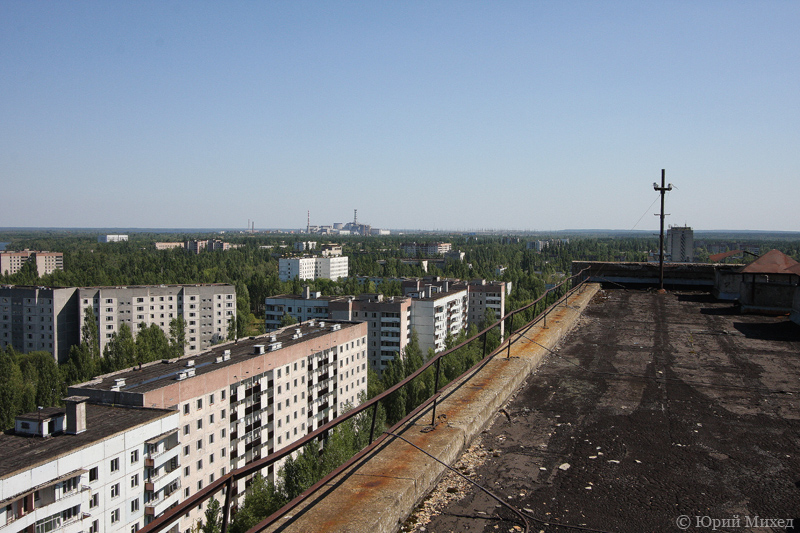
As I said above, on the streets of Pripyat the feeling of the town's abandonment is greatly masked by thick vegetation. But from above, the scale can be fully appreciated.
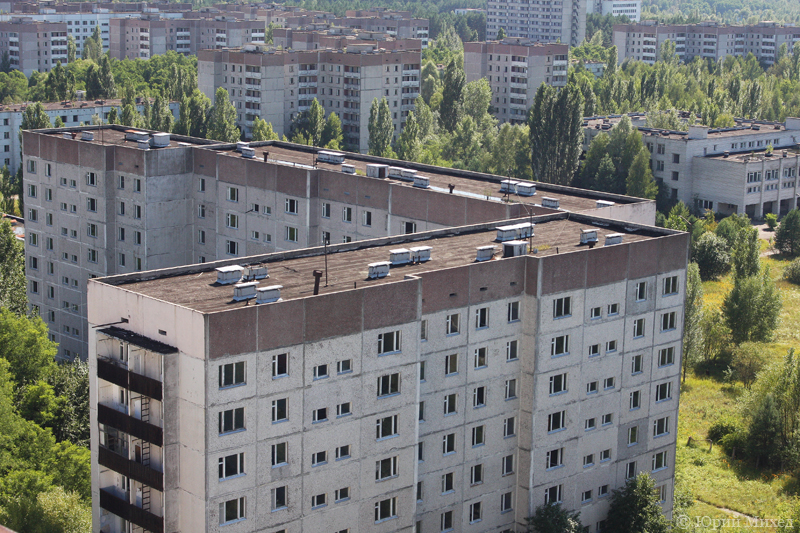
And for many kilometres around stretch the forests, standing like a wall on the winding banks of the river flowing through Polesia. Somewhere inside them hide abandoned villages and arable lands overgrown with tall grass and scrub. They are beautiful places, after all. Beyond the grey-blue haze, Belarus is already visible—the border, which does not exist for radiation, is just under nine kilometres away.
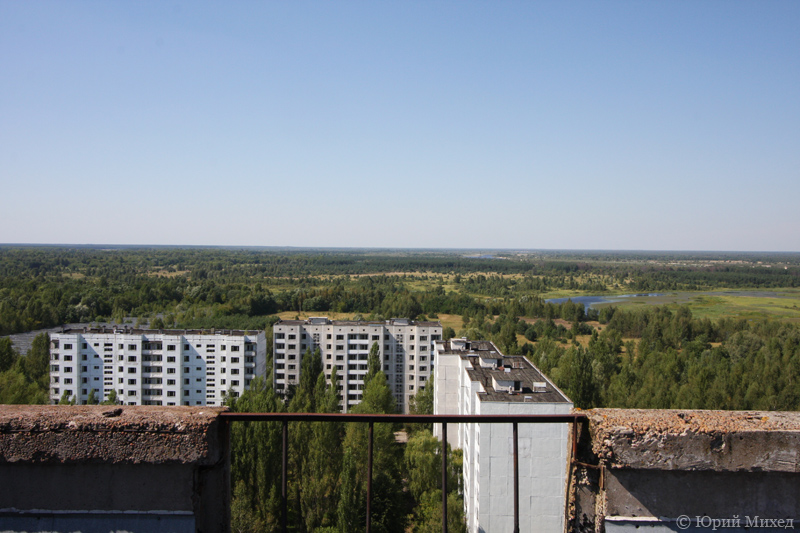
Along with the station, Pripyat was meant to grow significantly in size, reaching right up to the banks of the river whose name it bore. This house was possibly being built for the personnel of the fifth power unit.
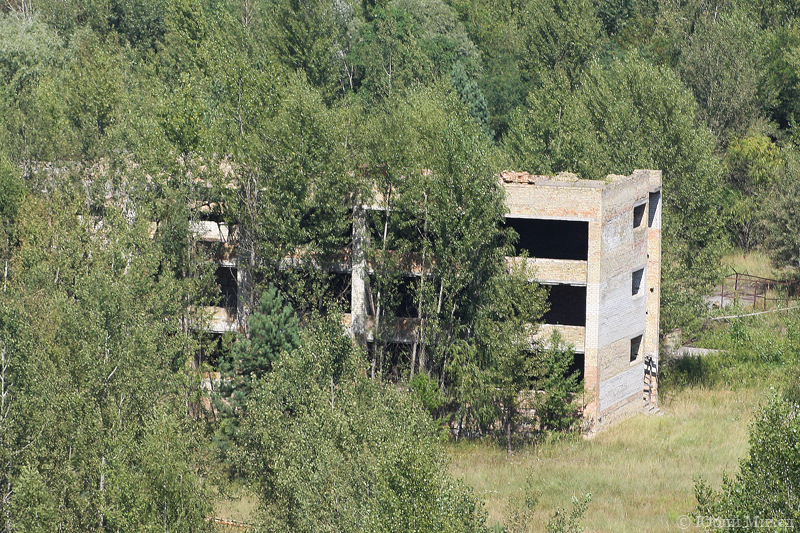
We go back down and wade through the overgrown alleys again.
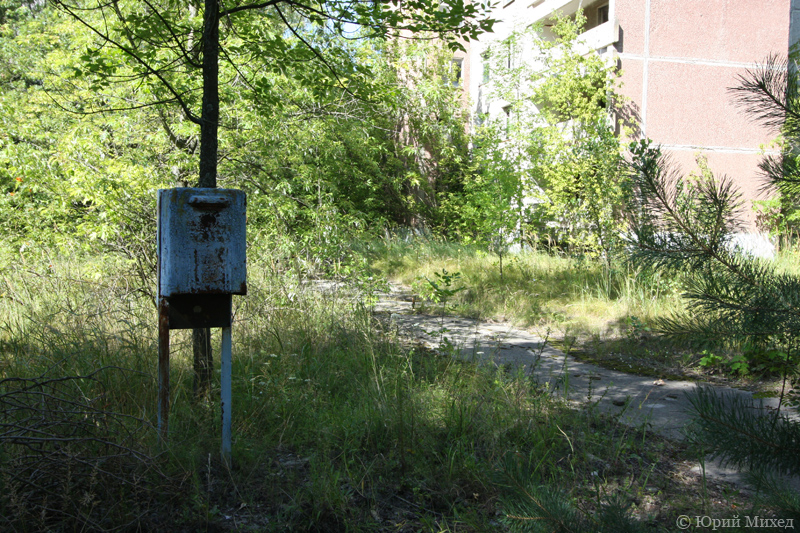
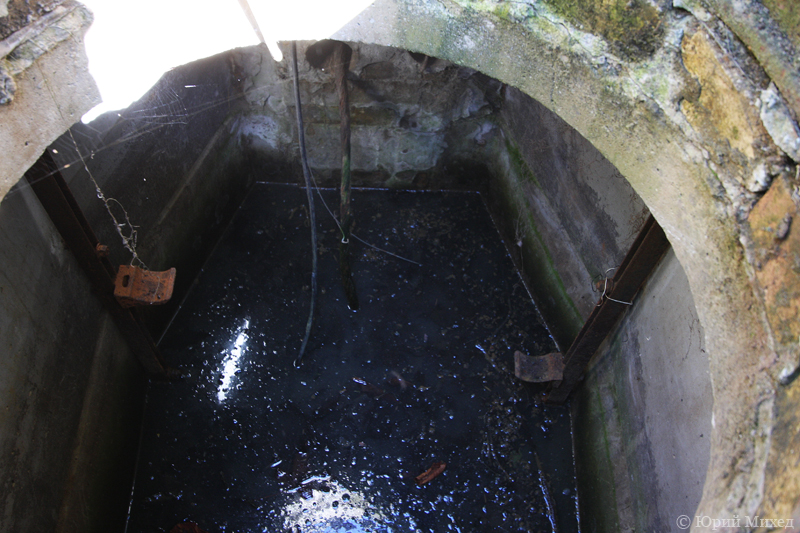
One must walk along the streets here with great caution, if only to avoid falling into an open manhole. The underground infrastructure is flooded with water, which nobody pumps out anymore.
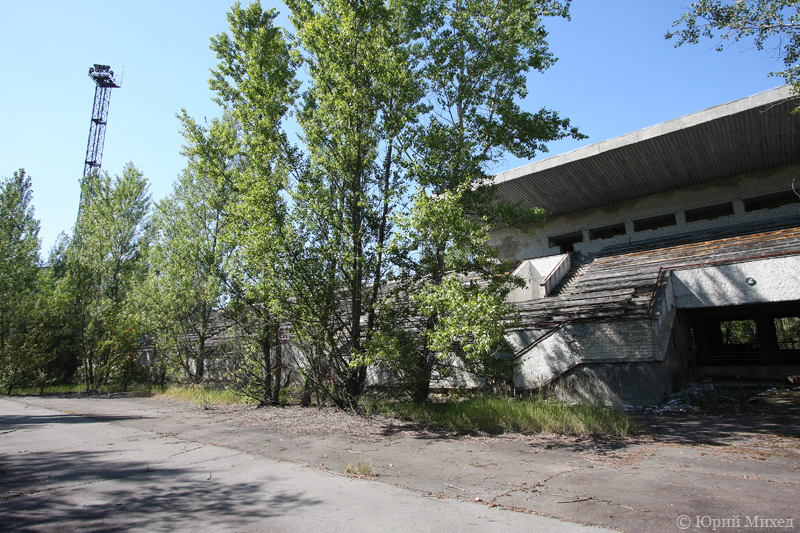
We come out to the town stadium.
Football teams used to come out of these gates, and the milk cans stored paint that was used to apply sports markings.
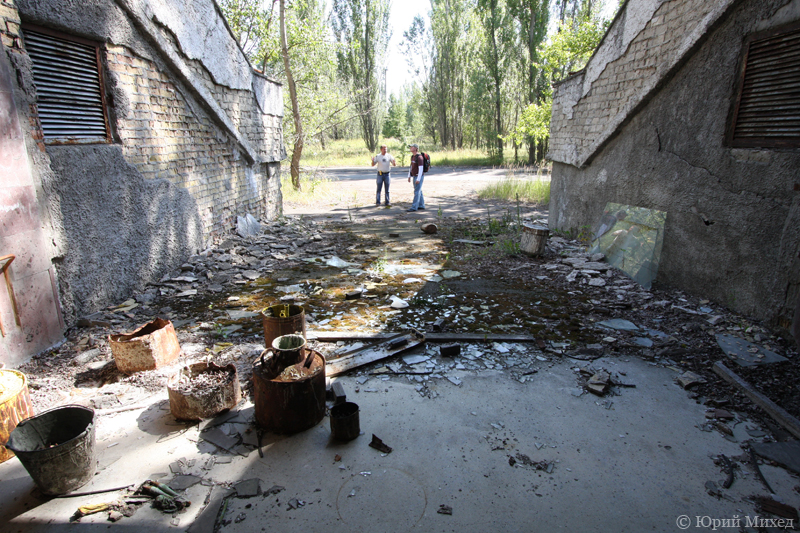
You can't play football anymore. The stadium is right there ahead.
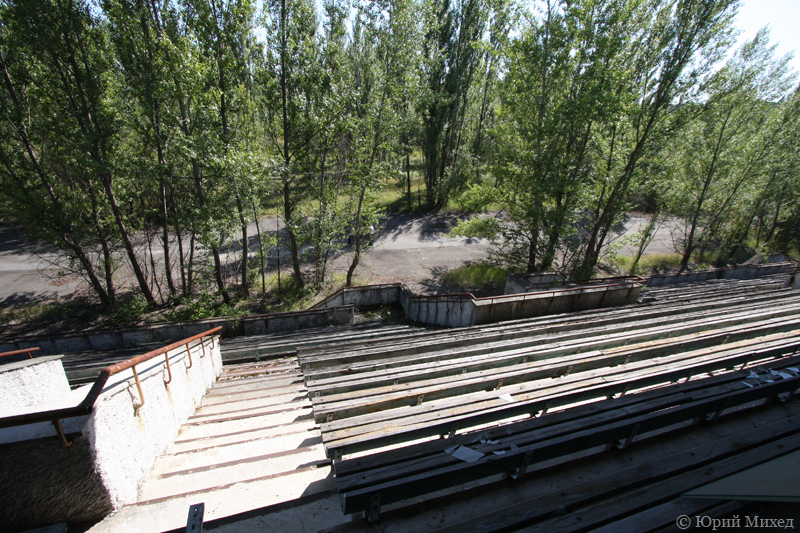
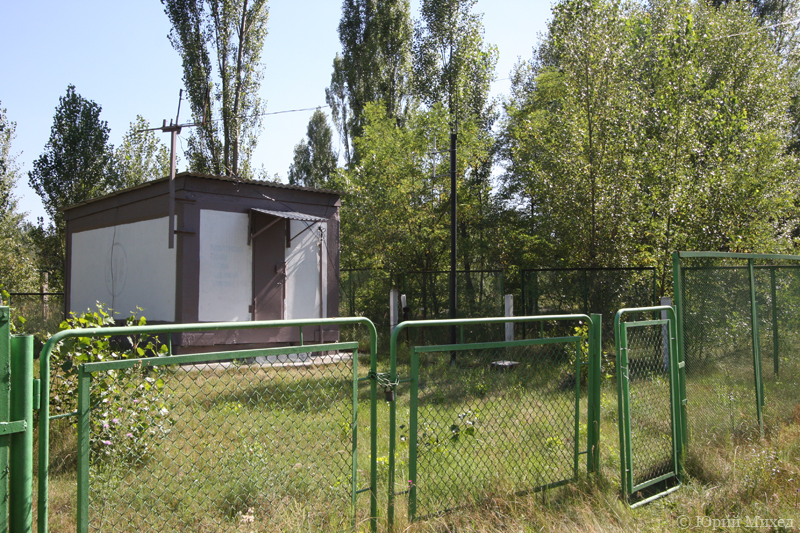
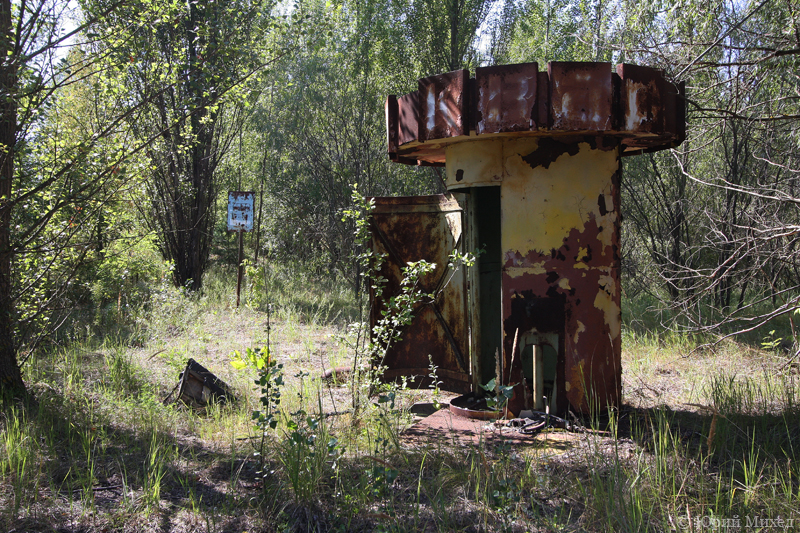
Near the stadium is the only non-abandoned structure in Pripyat. Inside this booth, measurements of various parameters are taken, including the radiation background in the town, and the data is immediately transmitted to Chernobyl. Interestingly, there is still electricity in all "settlements" of the Zone.
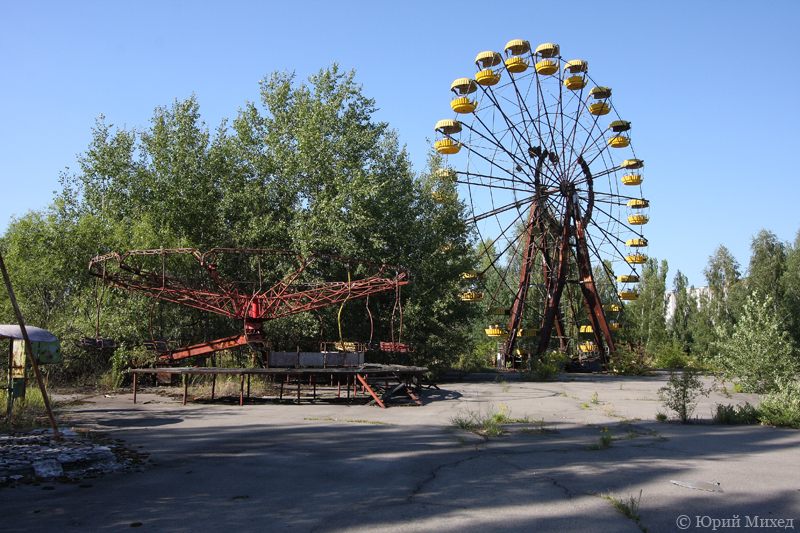
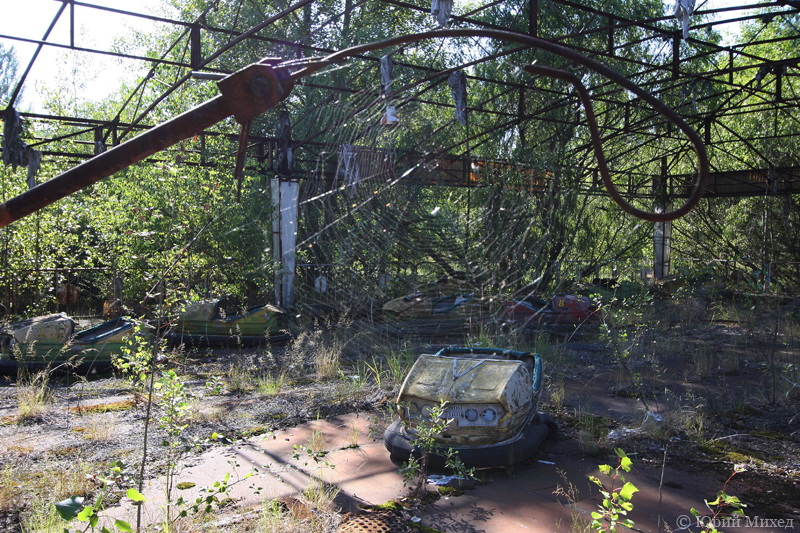
Right behind the stadium is the Pripyat amusement park. Nobody managed to go on the rides, as the opening of the park was scheduled for the first of May 1986.
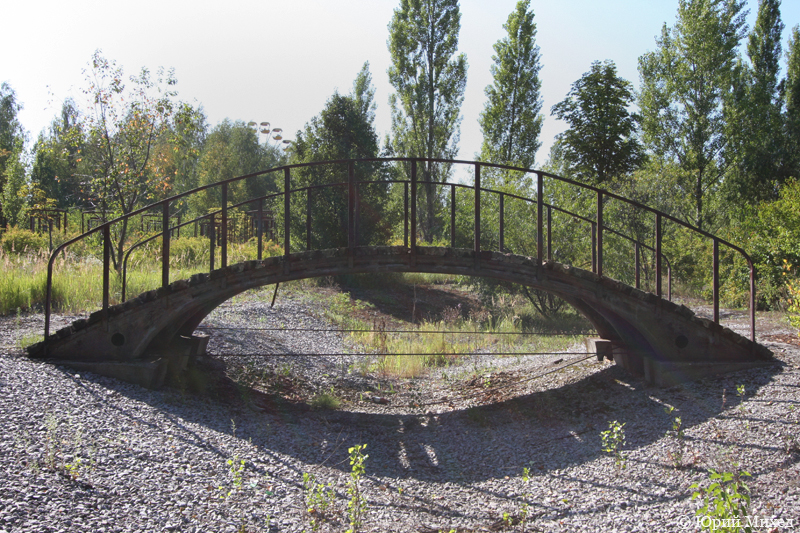
It was supposed to be very beautiful—with small water canals.
The frozen "dodgems". Apart from it, the "Ferris Wheel", and the "Orbita", other rides didn't manage to be built.
Along the road leading to the river terminal stands a fence with barbed wire—the eastern border of the town passes here. In many places, the fence is torn.
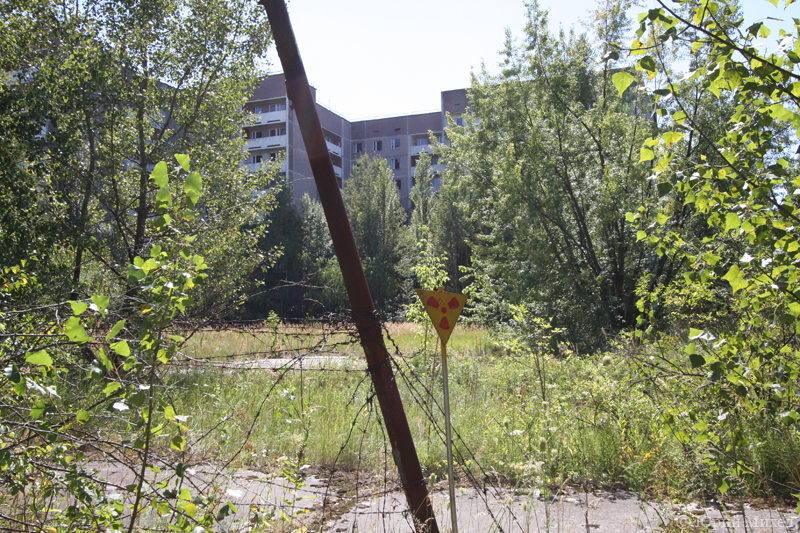
The question arises—is it possible to sneak into Pripyat without a pass, bypassing the fences and checkpoints? Yes, but only theoretically. After all, a car is out of the question—you will be spotted immediately. The remaining option is to go on foot through the forests. You won't be able to cover several dozen kilometres in a day, so you'll have to spend the night (when pitching a tent, don't forget that contamination in certain places can be up to 1,000 curies per square kilometre). And even if you are not eaten by the numerous wolves, you will certainly be noticed by one of the self-settlers or zone workers, who will immediately report it to the proper authorities. After that, you will certainly be caught and severely punished for trespassing on a restricted territory. I think nobody has any doubts left that stories about stalkers supposedly walking around the Zone are nothing more than tall tales. I take my words back, it turns out they are no longer tall tales.
Meanwhile, we are at the "River Terminal" bus stop.
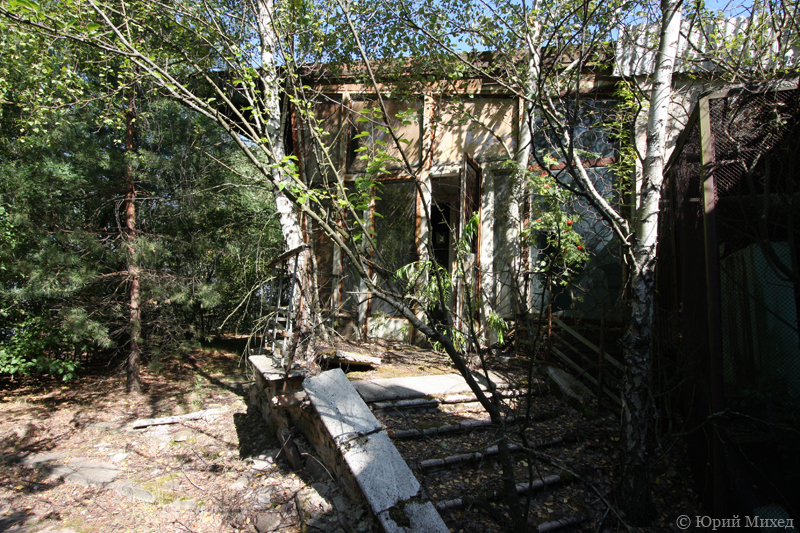
It is difficult to convey the general view of the river terminal in a photograph. The vegetation near the river is so lush that it almost completely hides this building. On the left is some pavilion, apparently an administrative department.
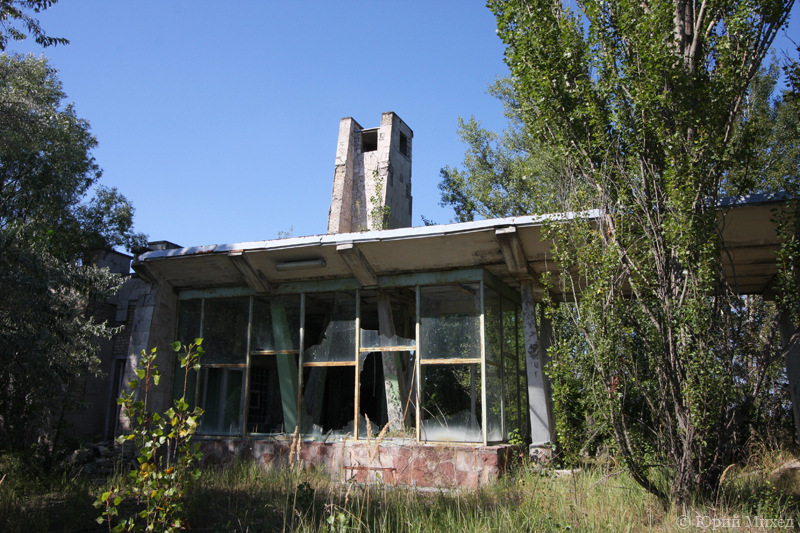
On the right is the barely discernible terminal building.
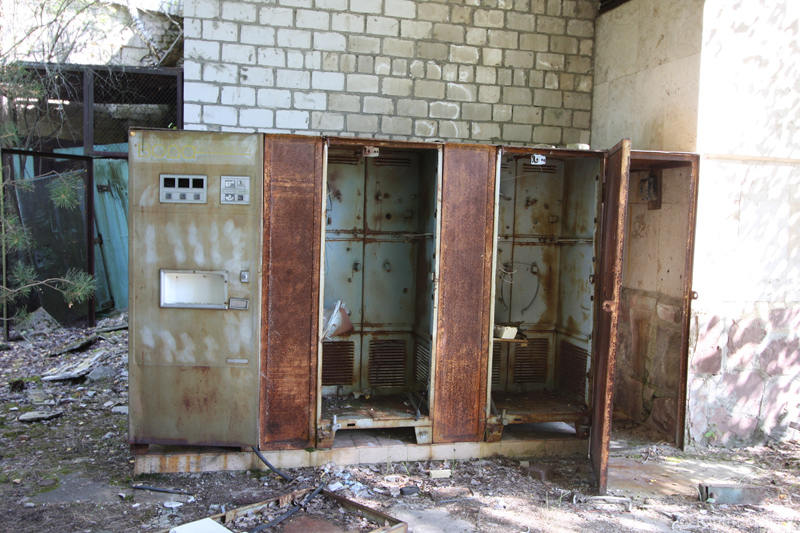
Classic fizzy water vending machines are still standing here.
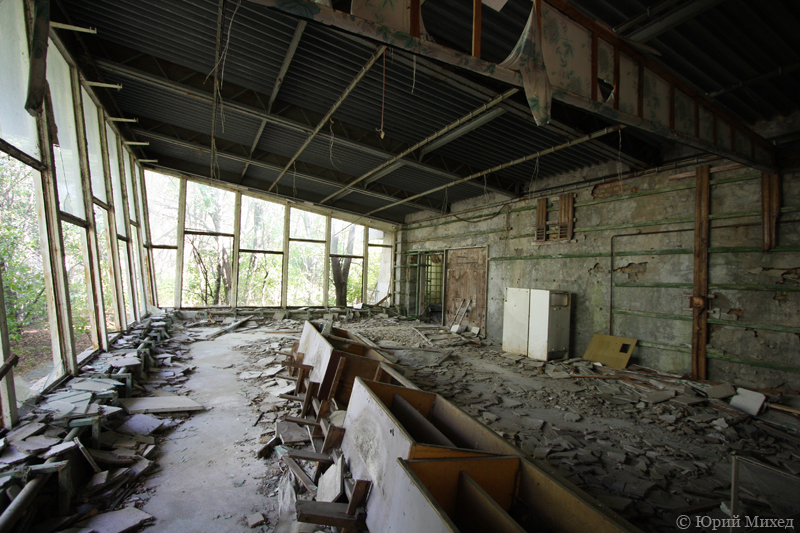
From the waiting hall, there used to be a beautiful view of the bay and the "Raketa" hydrofoils arriving from Kyiv.
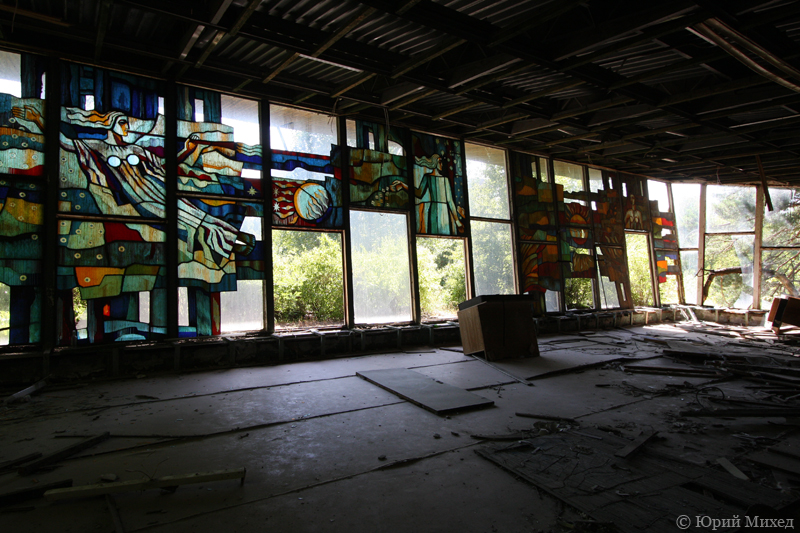
On the other side is the "Pripyat" cafe, whose glass mosaic is known to everyone who has ever looked at photos from the Zone.
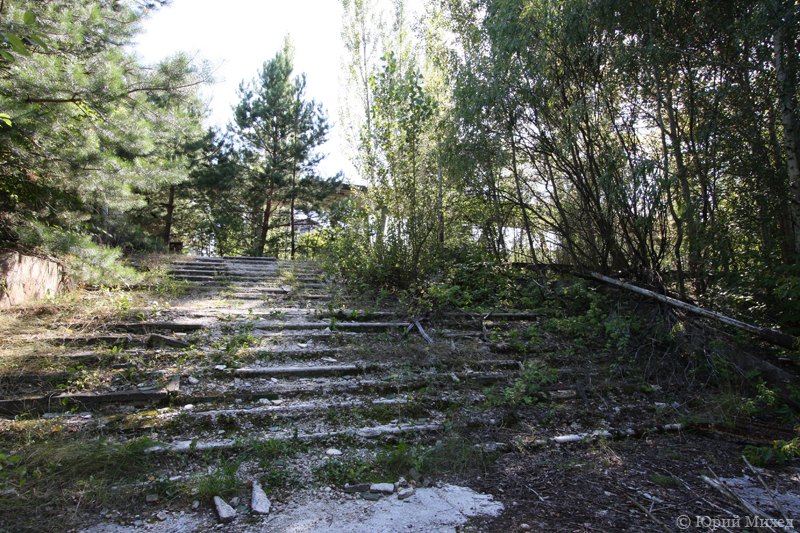
Down the half-ruined steps we descend to the water. The name is still discernible on the landing stage. A few cranes can be seen in the distance. Like the barges in Chernobyl, they sank because of rusted hulls.
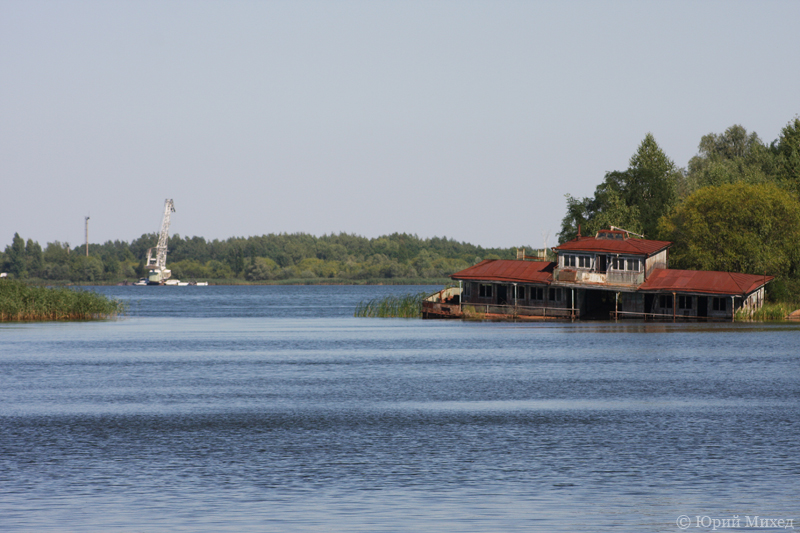
The river terminal is not very welcoming nowadays.
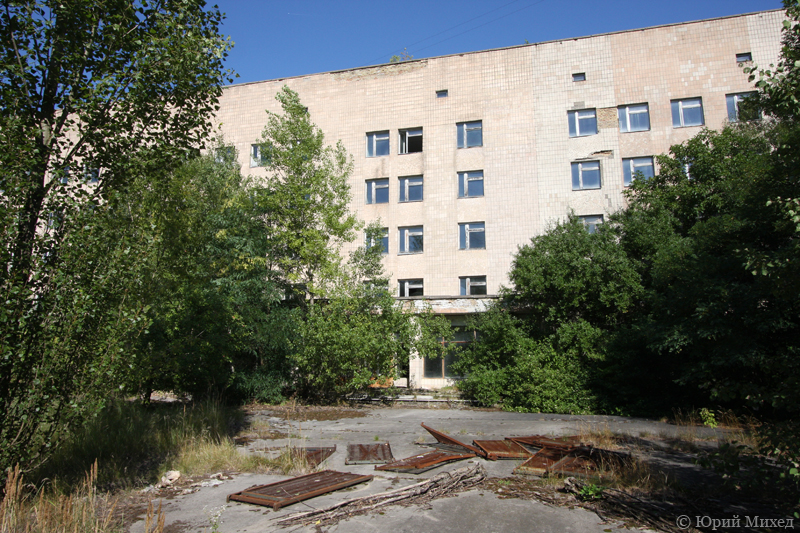
The size of the town hospital testifies to the importance of the atomgrad's status. On twenty-six April eighty-six, it was exactly here that ambulances arriving from the station stopped. The people inside them were already doomed.
The hospital reception. In this part of the tour, fatigue began to make itself felt. Let me remind you that in the ten-kilometre zone, it is forbidden to walk without long clothes, as well as to consume food or drink outside decontaminated premises. And without preparation, walking all day in a jacket in the heat and without a sip of water is extremely difficult.
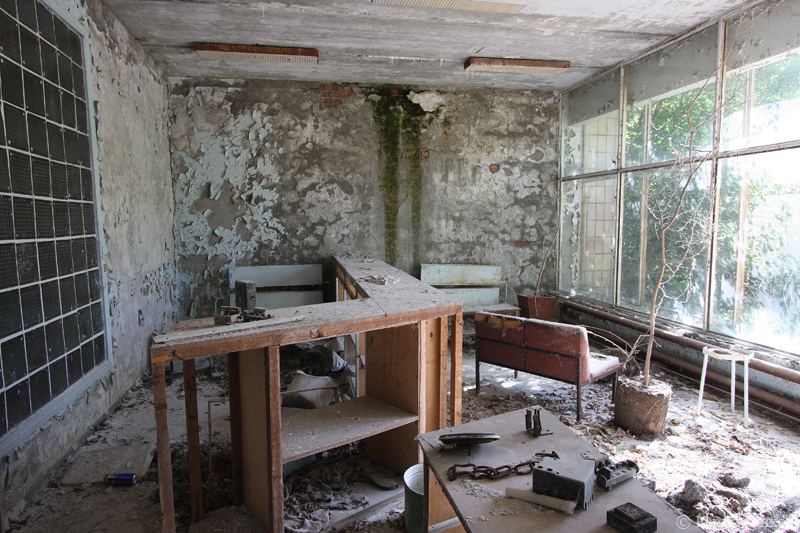
Therefore, the inspection of the hospital was not particularly thorough—I didn't feel like going to the upper floors anymore.
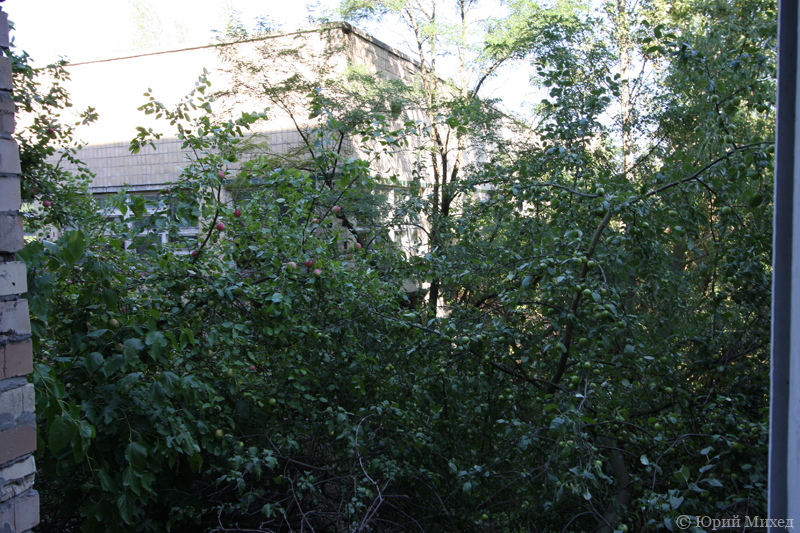
Apple trees in the courtyard are laden with fruit (I'm so thirsty, a little more and I would have eaten one).
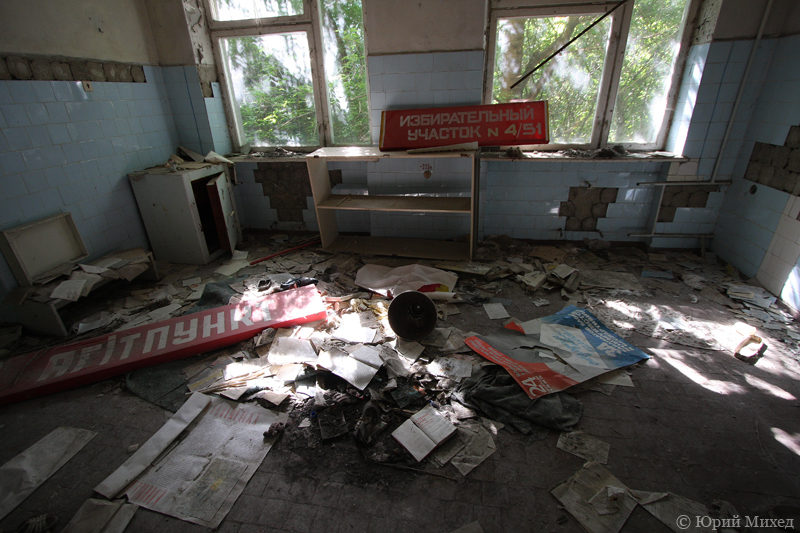
One of the polling stations was located in this building.
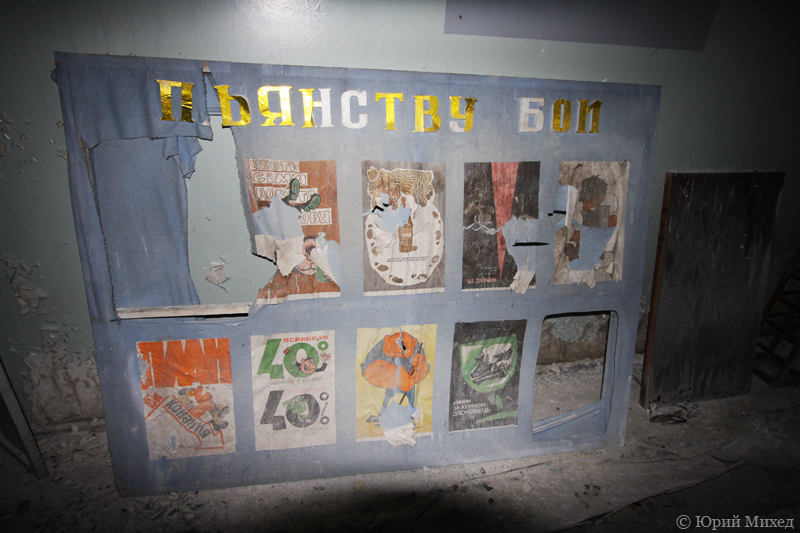
Gorbachev's anti-alcohol campaign was in full swing.
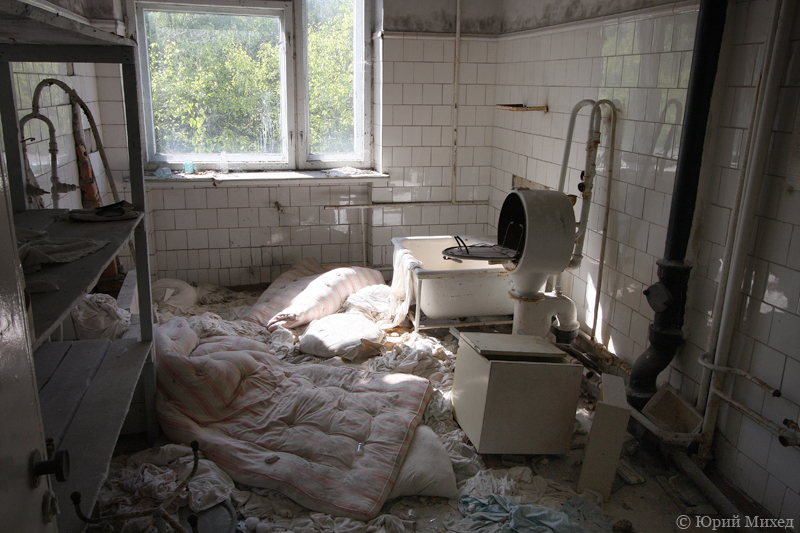
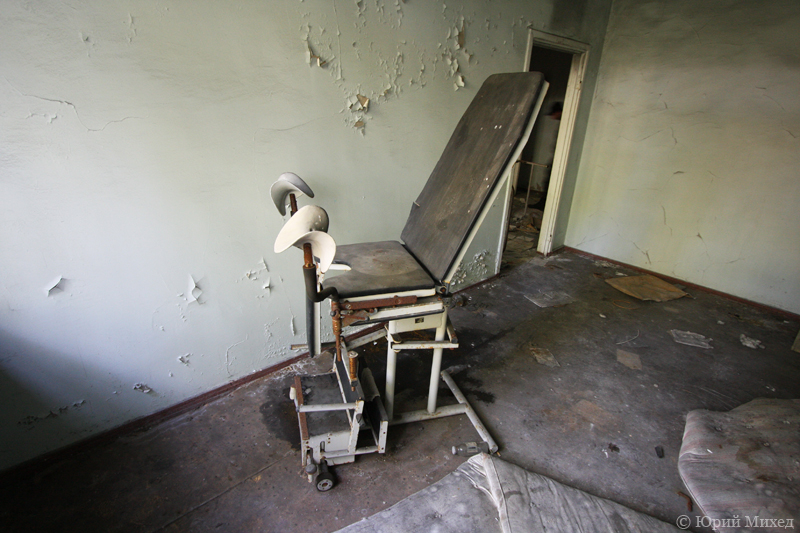
Gynaecological examination room. For the first time, I found out what this notorious chair looks like.
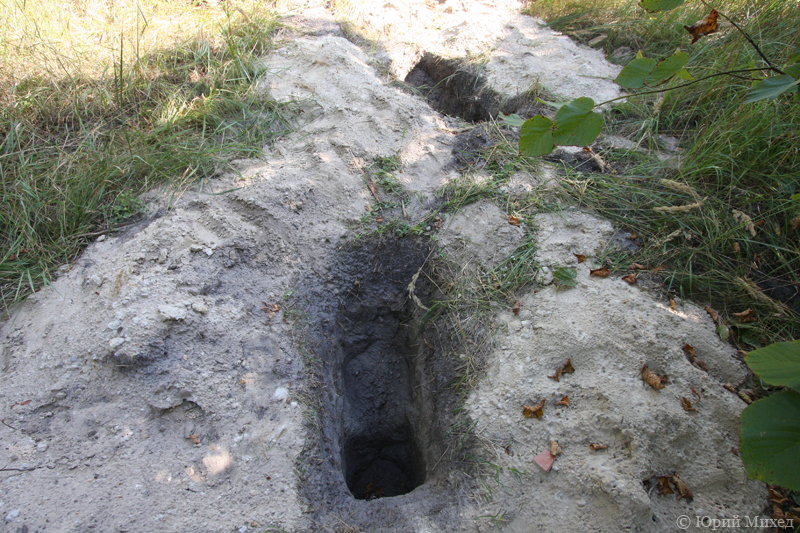
Again, traces of someone's "activity". For what kind of money would you agree to look for metal in such soil?
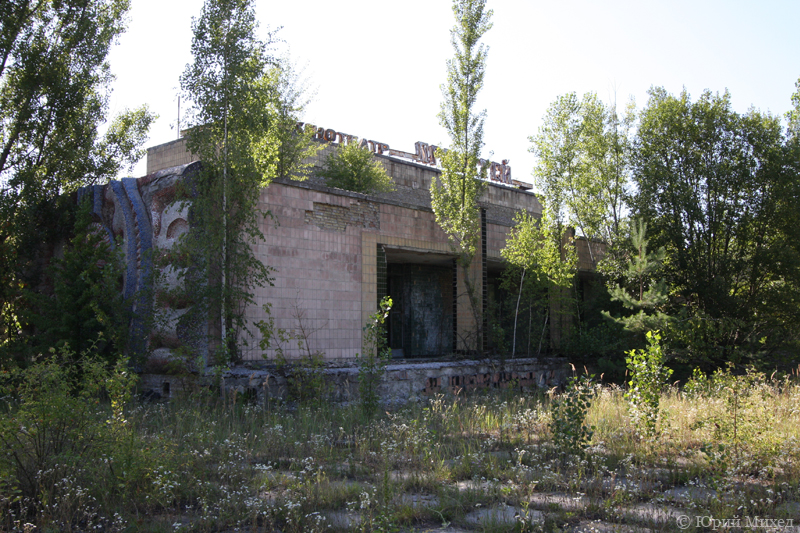
The Prometheus sculpture, which is now at the entrance to the station, used to stand near this cinema. Some find a sinister omen in the presence of this name in Pripyat—the ancient hero brought fire to people, which gave them huge power, but if handled carelessly, could prove fatal.
We pass into the foyer.
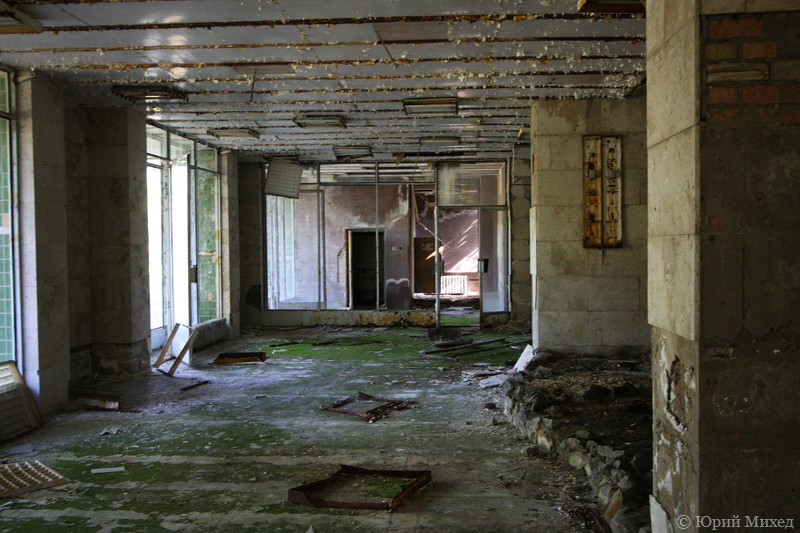
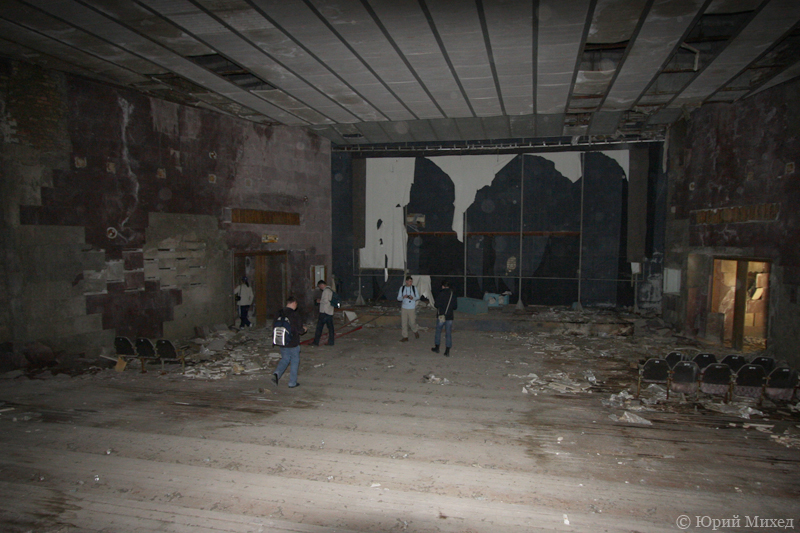
From it into the auditorium, where a few seats and remnants of the screen have survived. I wonder if the projectors survived (I didn't have time to run into the projection room)?
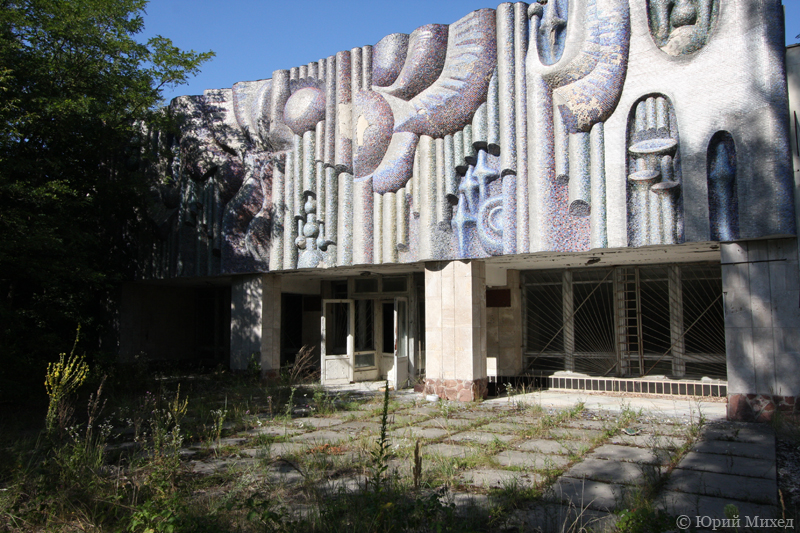
Nearby is the music school, with its facade decorated with traditional Soviet mosaic.
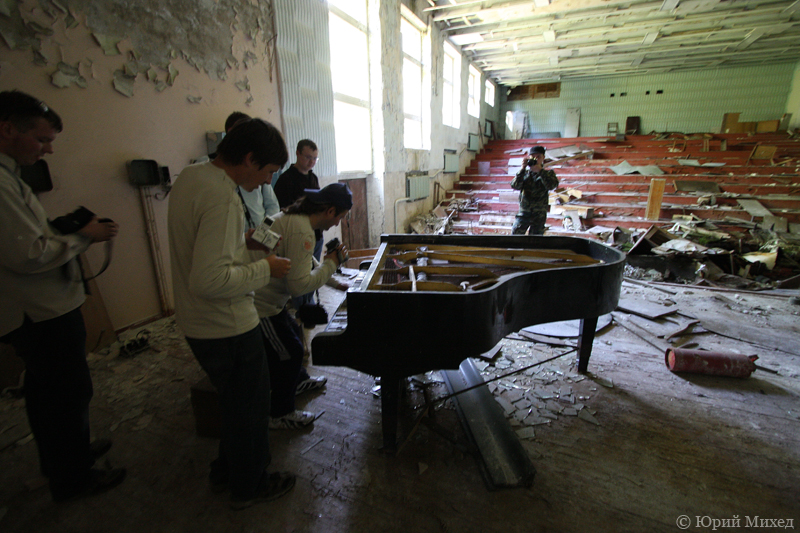
In the assembly hall, a grand piano has survived, responding with dull thuds when the keys are pressed. The building was also used for several years (most likely for recreation) after day X—the floors in the rooms have the same covering as in "Lazurny".
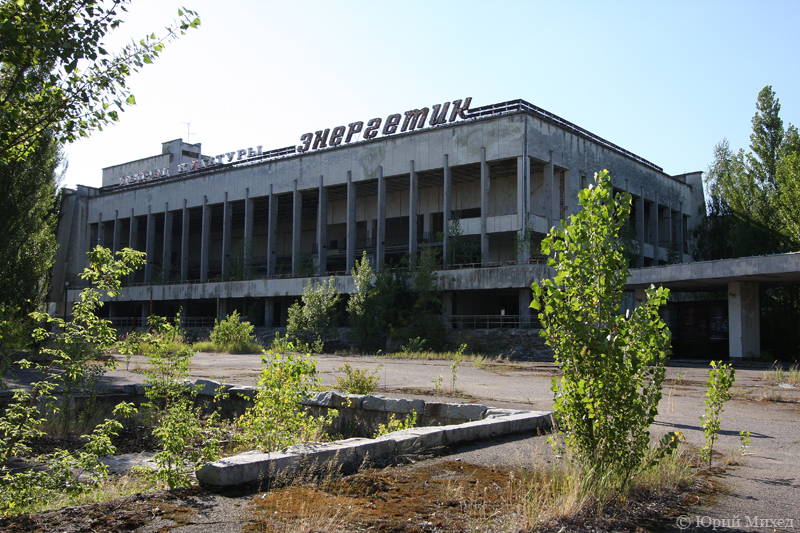
And the town's main cultural institution was the "Energetik" Palace of Culture (having made a circle around the town in a few hours, we returned to the square again).
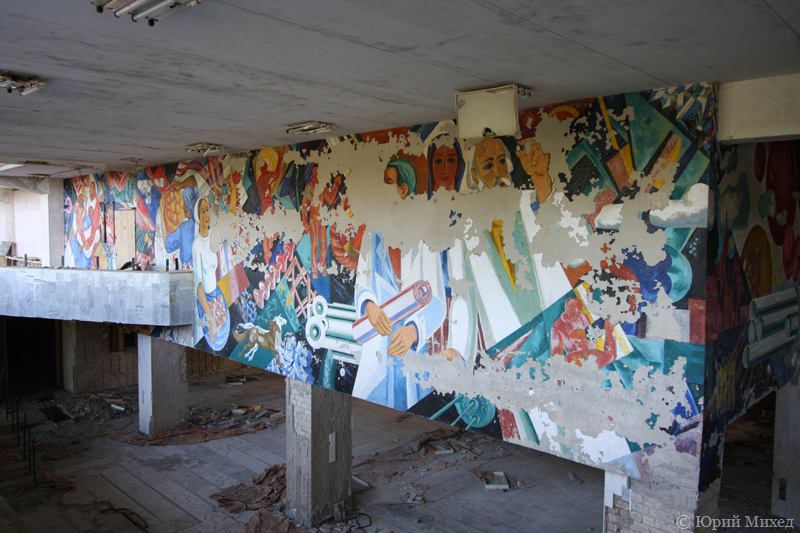
Not a single photo report from Pripyat is complete without this socialist-impressionist mural in its central hall. Usually, it is shot from the other side, where the paint has not peeled off so badly.
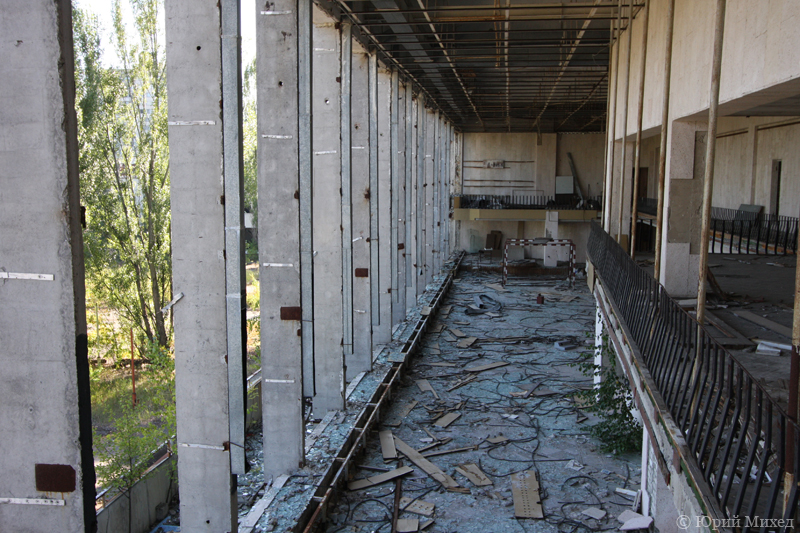
The building had large windows, and as a result, a thick layer of broken glass covers the floor. It is unclear how five-a-side football goals ended up here.
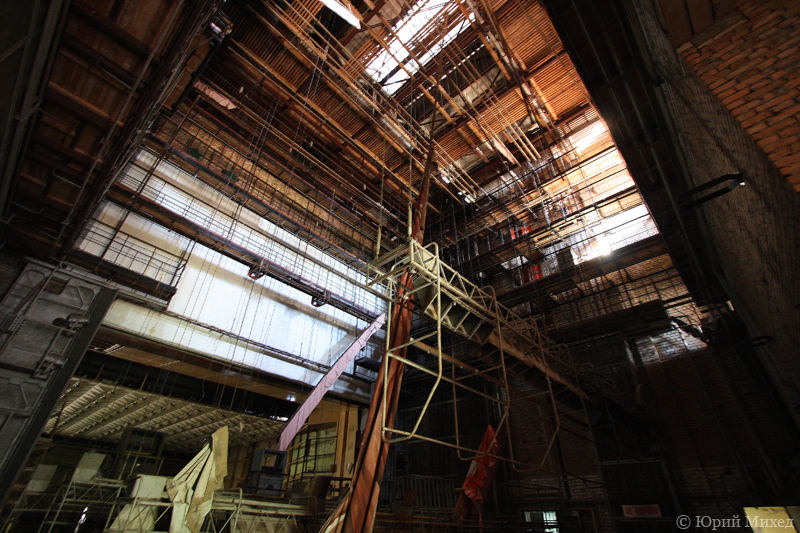
The Palace of Culture featured a very serious theatre stage—all this equipment with ropes five storeys high allowed for convincing effects with scenery and actors. At the bottom left, the auditorium is visible. Behind the stage is a propaganda centre with portraits of party figures, which I don't even want to show (naturally, not for ideological reasons, but because it has already been captured from the same angle about a hundred times).
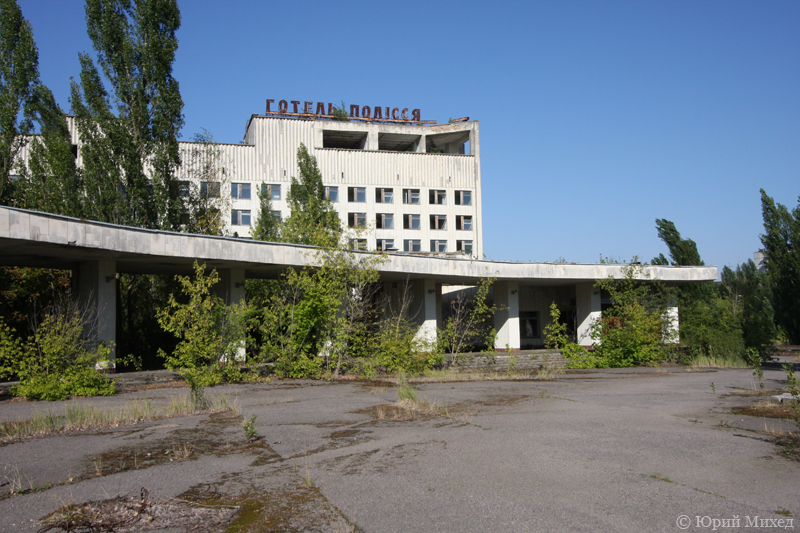
Next to the Palace of Culture, behind the arched structure (which used to have a slogan on it)—the "Polissya" hotel.
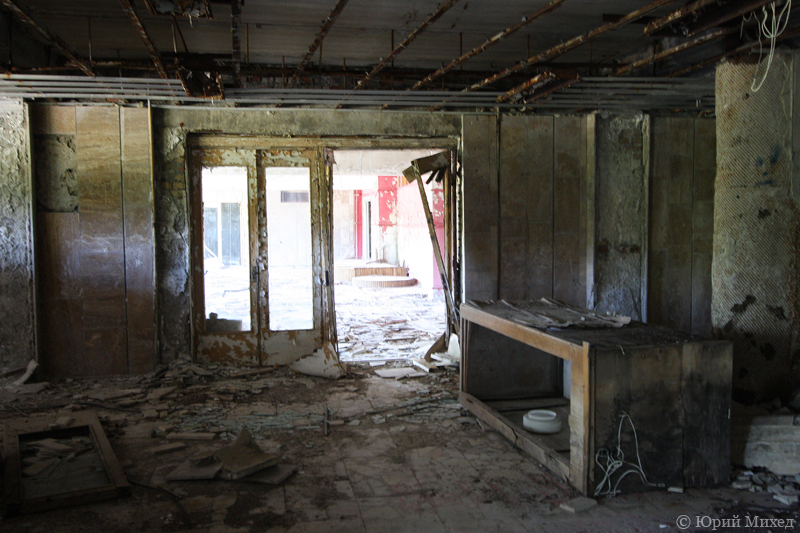
All that remains of the rich decor.
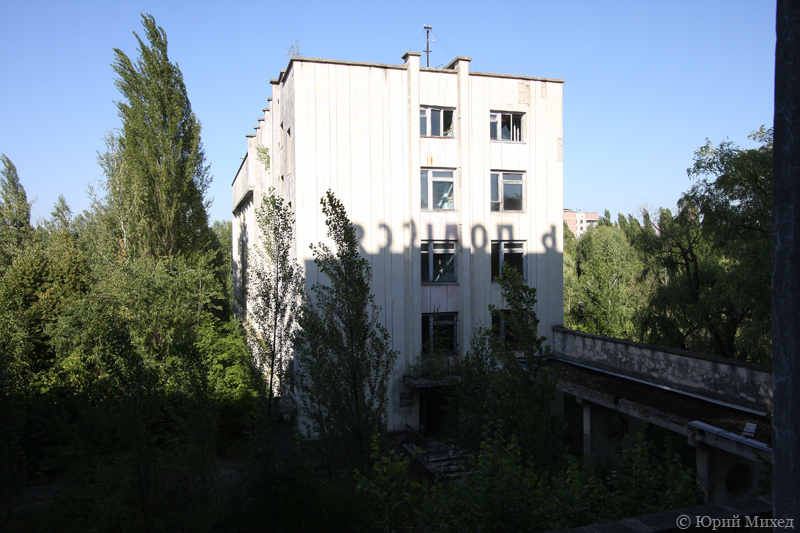
From the window, one can see the neighbouring structure where the town executive committee was located. On its roof, a slogan about the unity of the people and the party was also previously displayed. We didn't manage to get inside anymore.
The hotel is the last stop of our tour. There is neither time nor energy to inspect it. We go up to the observation deck, which is finished with expensive smooth tiles, to cast a farewell glance at the town. The day is drawing towards evening.
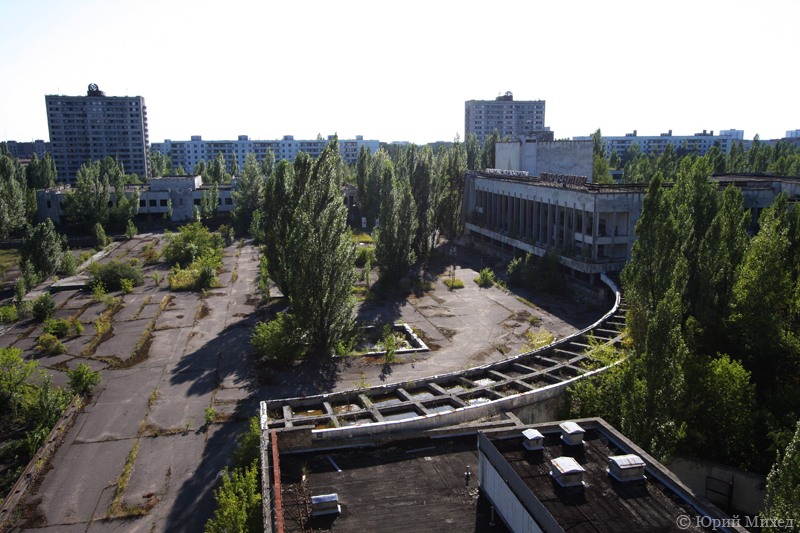
Below, the forest rustles and Pripyat remains silent.
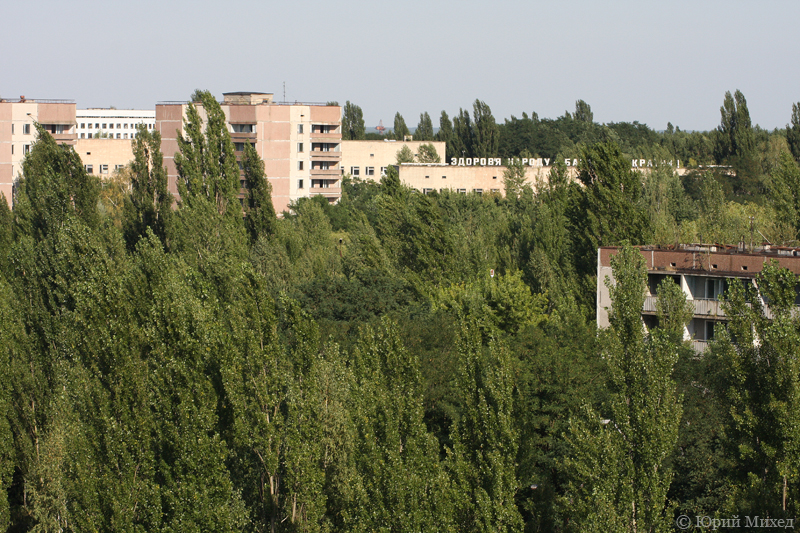
I take a telephoto lens out of my bag.
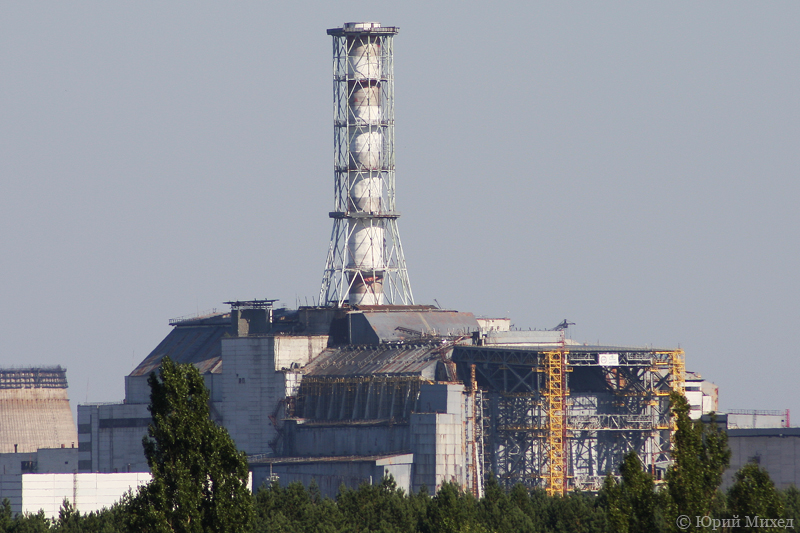
In early 2008, the American History Channel released a one-and-a-half-hour film called "Life After People". It told what would happen if humanity suddenly disappeared, leaving the fruits of its activity intact. With the help of computer special effects, the creators of the film showed how the lights would go out and the sewerage and metro would flood, how domestic animals would go wild or perish, and how towns would slowly become overgrown and collapse. After 50,000 years, traces of man will practically disappear, and only rare archaeological finds and nuclear waste, the decay of which can last for millions of years, will remind of him. The film showed Pripyat as a live illustration of the twenty-year mark. Nature quickly reclaims its seized possessions.
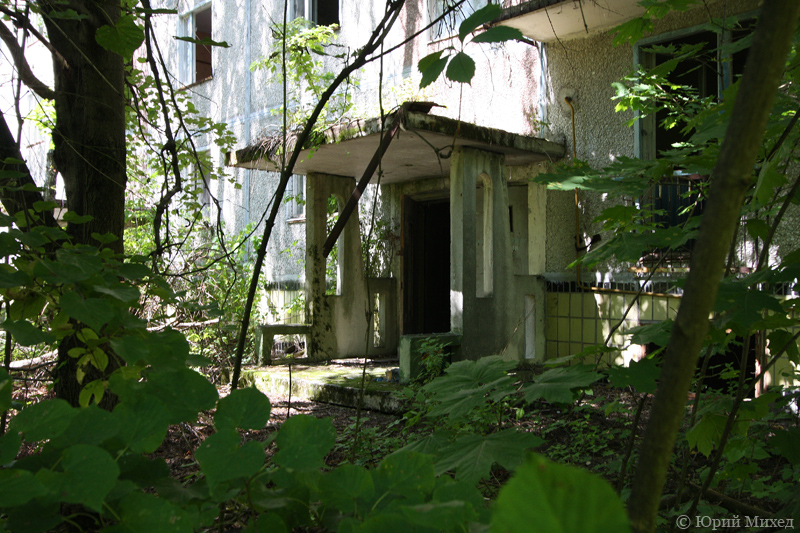
The abandoned town is slowly but surely being destroyed by rains and winds. In some places, floors have already managed to collapse. And although no particularly major collapses have occurred yet, it's all just a matter of time—the buildings are already in an emergency state, and some of them are literally on their last legs. The town is doomed—corrosion quickly does its job, and in 100–200 years, not a single house will be left here. And although there are proposals to turn Pripyat into a museum town, it is unlikely that this will ever happen—the very idea of investing money in the restoration of such an object looks far too absurd to most people. Perhaps someday Pripyat will rise again—but it will be something completely different, and it is unlikely to happen in our lifetime. This land is far too heavily contaminated. And despite the fact that today the radiation level is no longer so high (radionuclides are gradually going into the soil, and some isotopes have managed to go through several half-life periods), there can be no question of safe living. After all, some heavy elements that fell in the "ten" not only have half-life periods of tens of thousands of years but also form even more dangerous and radioactive isotopes in the process. Hundreds of generations will change before man can return here.
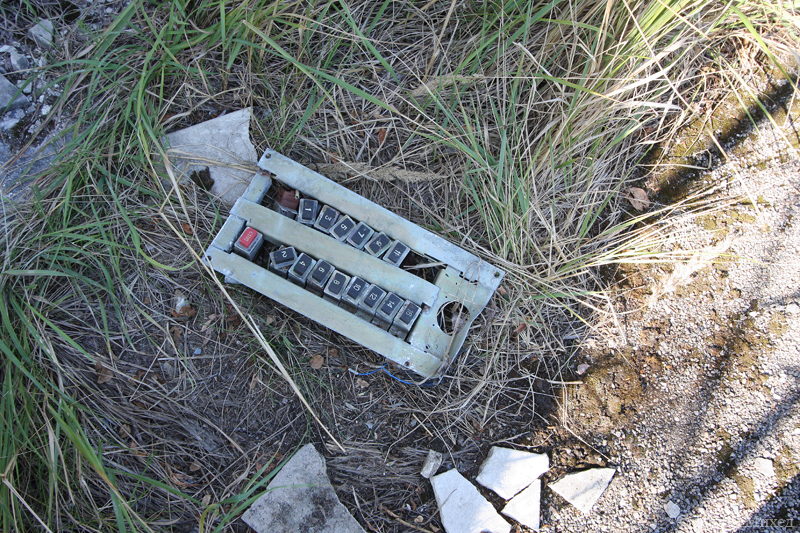
The Zone is likely to remain a natural ecological reserve, which is what it effectively is today. And Pripyat, until it collapses, will be a stark reminder of what careless handling of the forces conquered by man can lead to.
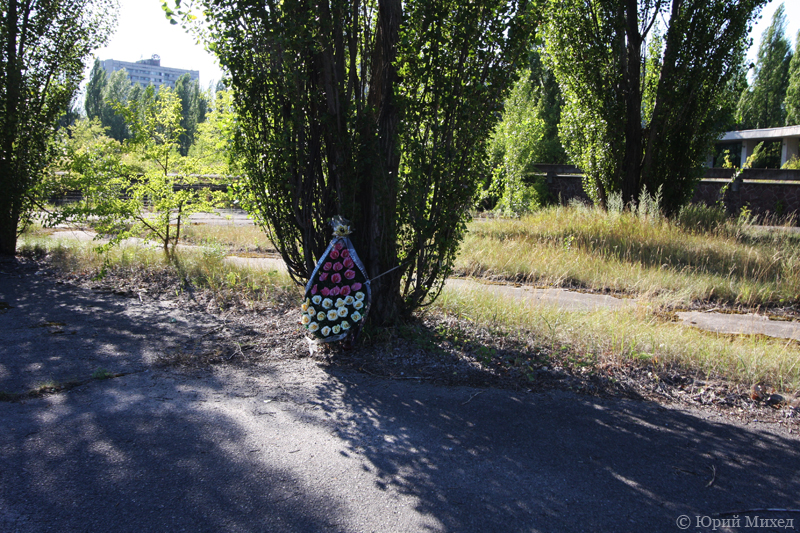
The bus drives towards Chernobyl. The silent ghost town is left behind.
See also:
Kurchatov—the town serving the Kursk NPP, the twin brother of Pripyat.