Sukhumi: Council of Ministers House and views from above
Abkhazia*, May 2016
Google Maps, Yandex.Maps
In the very centre of Sukhumi there is Liberty Square (formerly Lenin square), near which stands a complex of abandoned buildings. The complex includes a dominant 12-storey main building. It is officially called the parliament of Abkhazia, but this name is actually incorrect, since the parliament of Abkhazia never held sessions here. Due to the fact that during Soviet period the building hosted the Council of Ministers of the Abkhaz ASSR, the building is called the “Sovmin building” (Sovmin is an abbreviation that literally means “Council of Ministers”).
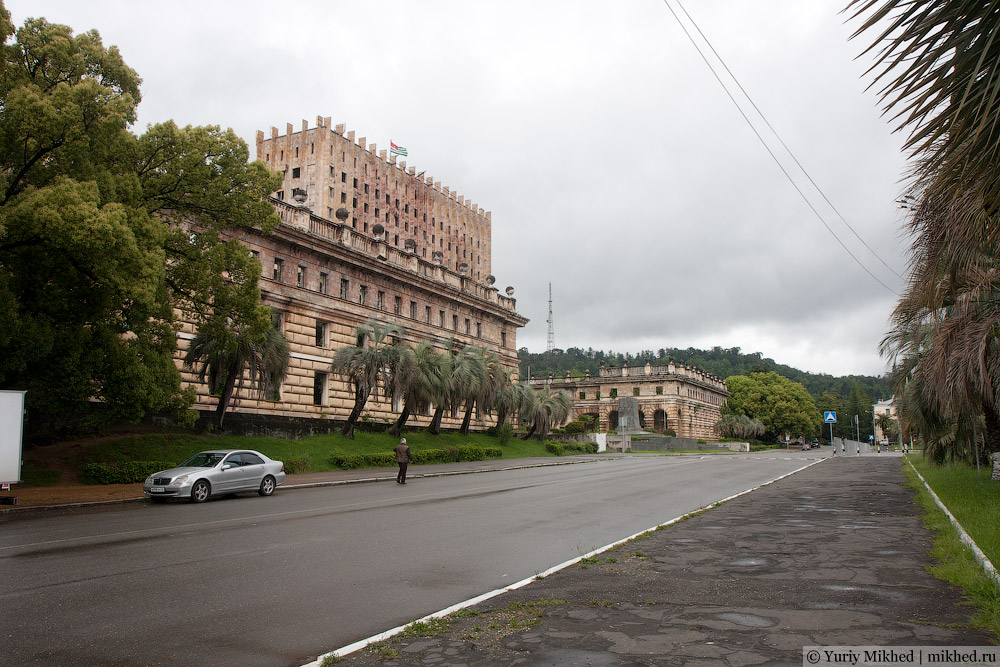
The side buildings of the complex were built in 1935, the tall building, however, was erected in the 1980s. The architects made sure that its architectural style matched the rest of the buildings.
On the pedestal in front of the Sovmin building was a monument to Lenin. It was destroyed by the Georgian soldiers during the offensive of 1992.
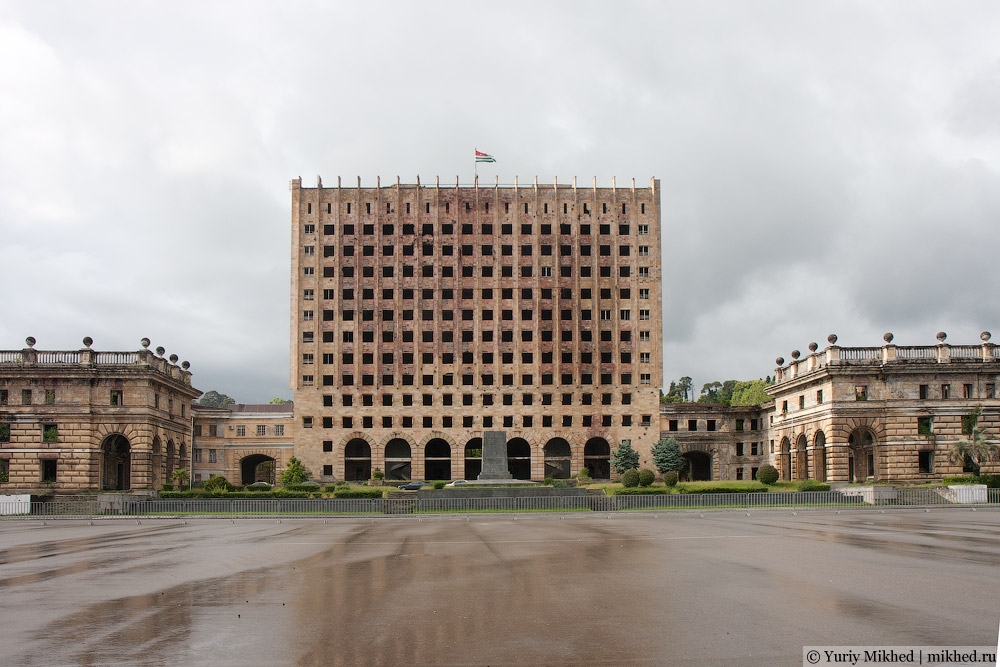
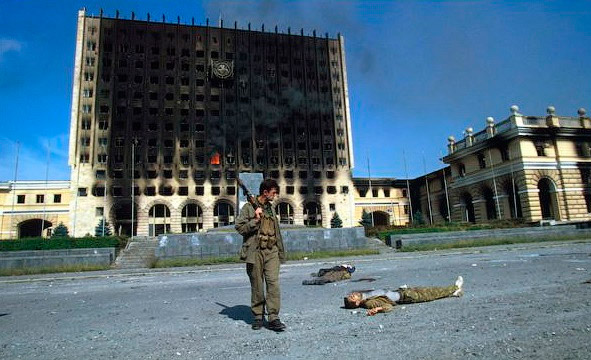
The skyscraper did not serve its indended purpose for long. During the storm of Sukhumi in September 1993, the Georgian military occupied the building and set up firing points there. After a two-hour battle, during which the building was damaged and completely burnt out, the Abkhazians and Kabardin volunteers managed to capture it. The members of the pro-Georgian government, who were inside, were shot the same day without trial and investigation.
Killed soldiers on the square after the assault in front of the burnt-out Sovmin building, September 27, 1993.
Since then, the Sovmin building has been abandoned. The question of its future has been raised many times in Abkhazia. Ideally, Abkhazians would like to repair it and use it for parliament sessions. However, estimates have shown that restoration, given the size of the building and its extremely deteriorated condition, will require inconceivable funds, which the republic simply does not have. At the same time, everyone feels sorry about demolishing the building, so the load is still there unto this very day.
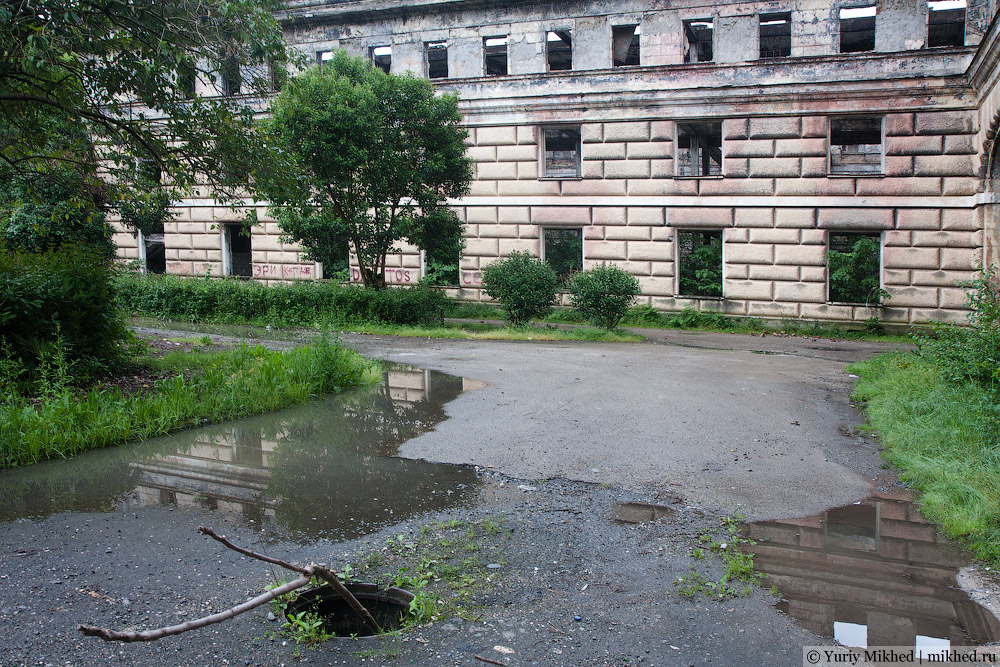
Let’s get inside. If you look closely, you will see a large number of black heaps on the floor. These are exactly what you thought they were: the lower floor is actively used by the bypassers to fulfill thier basic physiological needs.
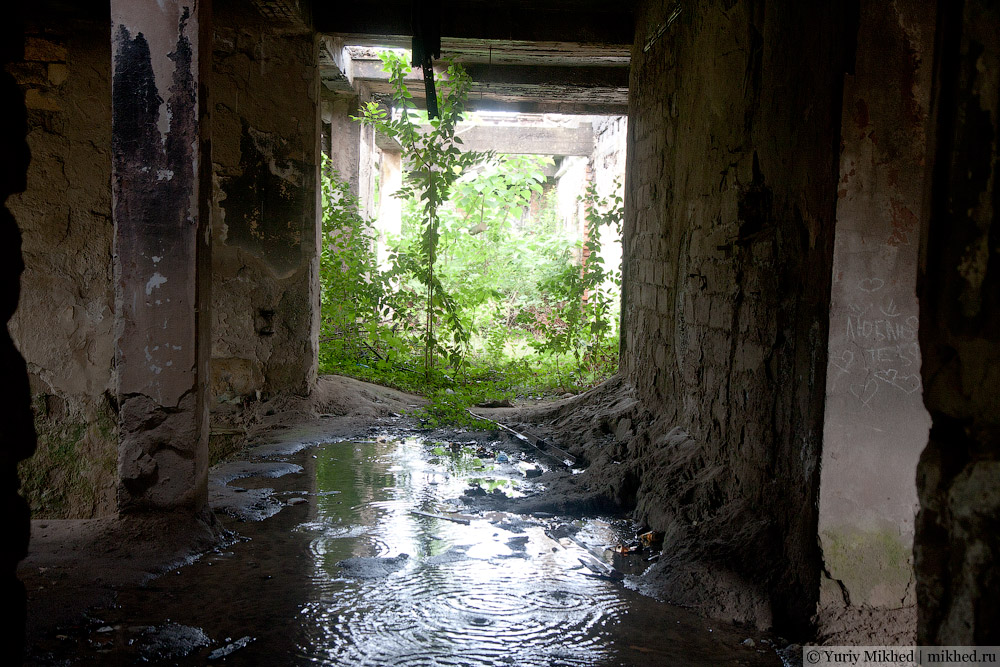
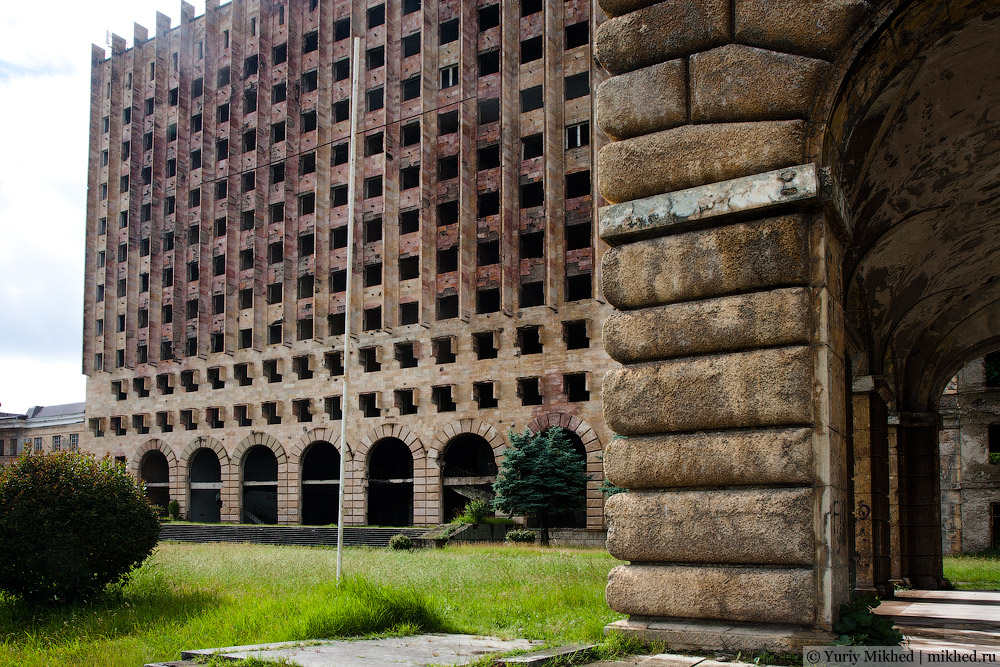
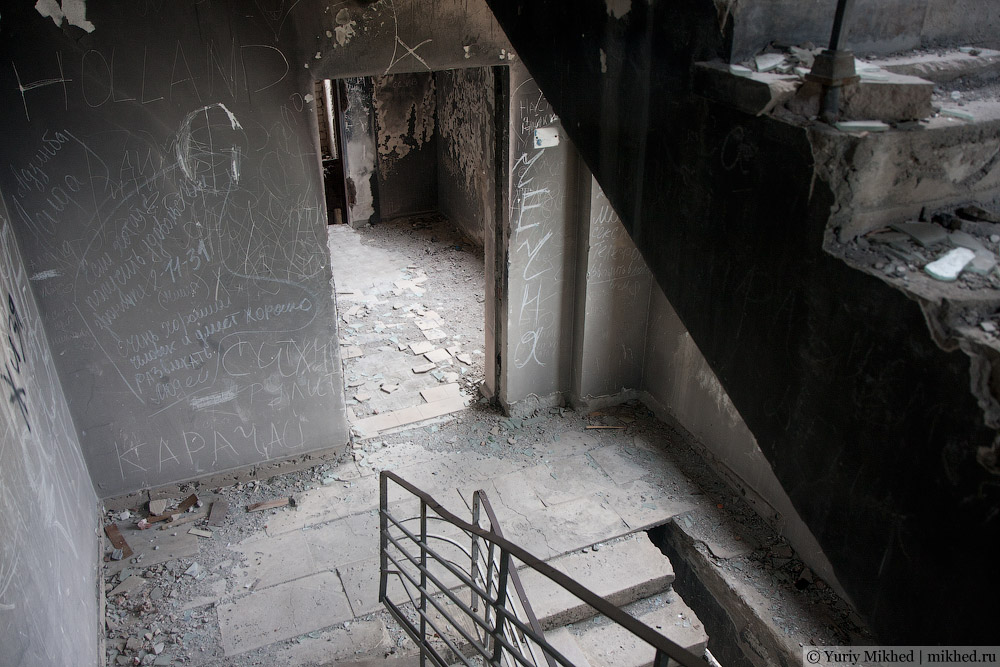
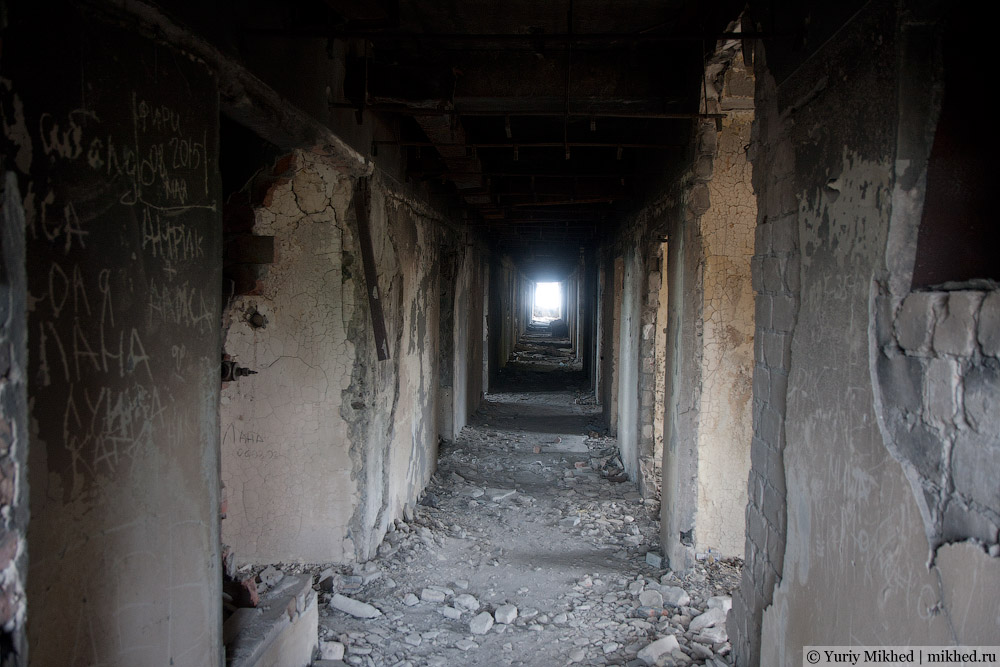
Nothing prevents us from going upstairs. Inside, all the walls are covered with soot left from the fire (on the outside, it was was gradually washed away by rain). Tourists from different countries and regions leave autographs on the black walls.
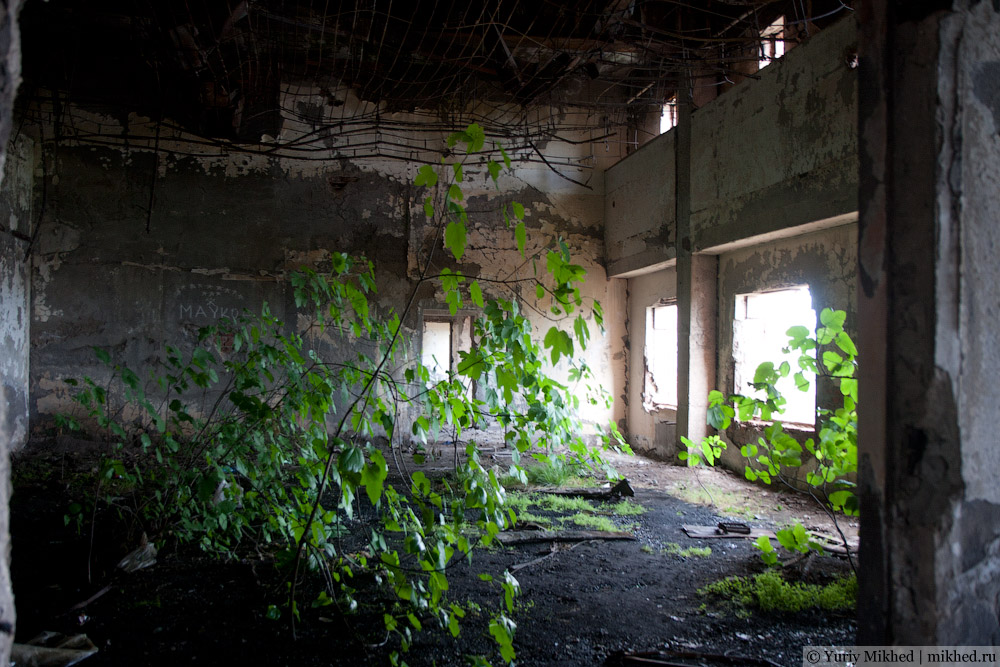
The office rooms had turned into picturesque greenhouses.
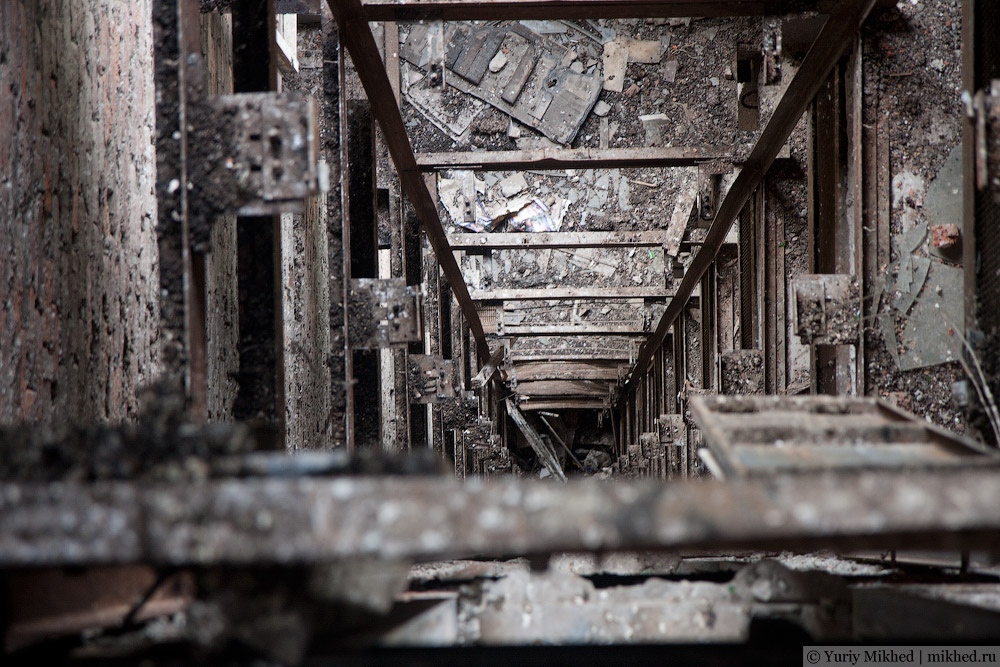
Elevator shaft.
There is nothing interesting inside the building. The layout of all floors is the same and everything is destroyed and ripped. No objects or furniture is left. Any nearby abandoned construction site will look approximately the same.
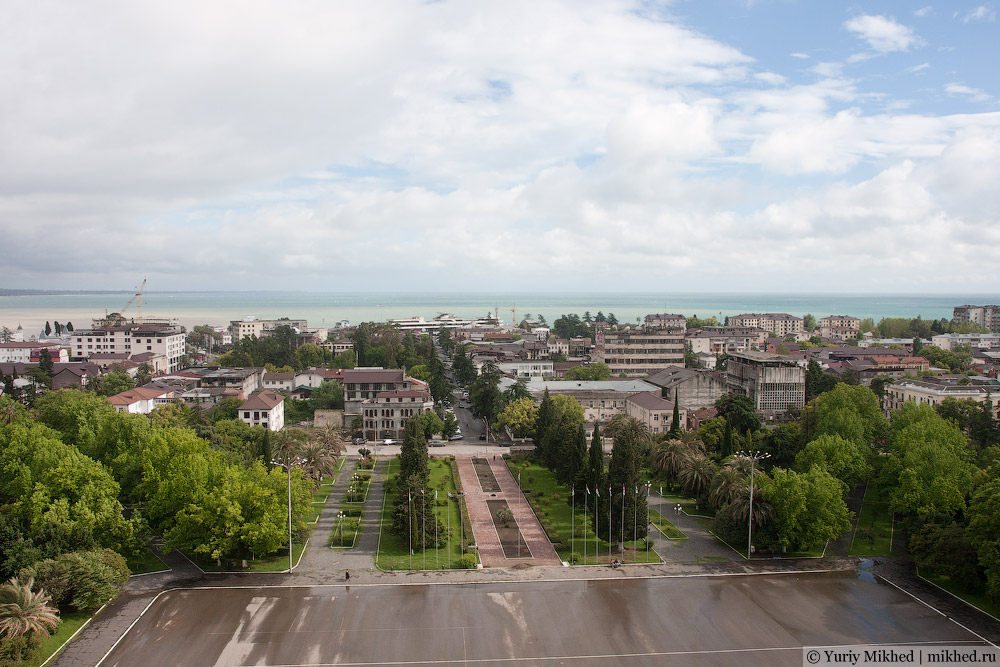
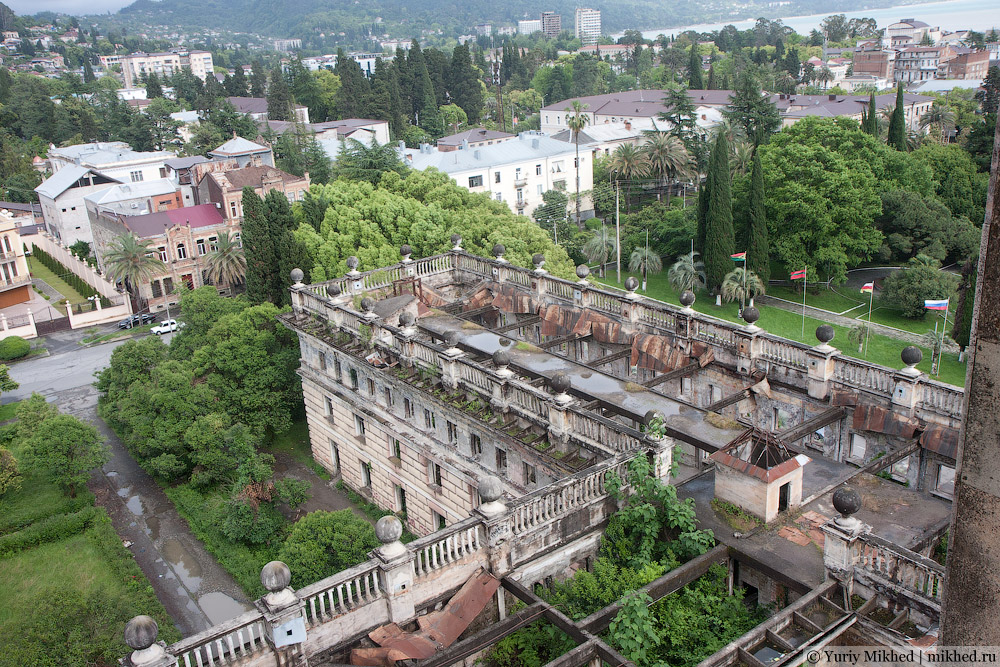
It is still worth getting inside, however, because of great views of Sukhumi. View of the square.
Historical area near the shoreline.
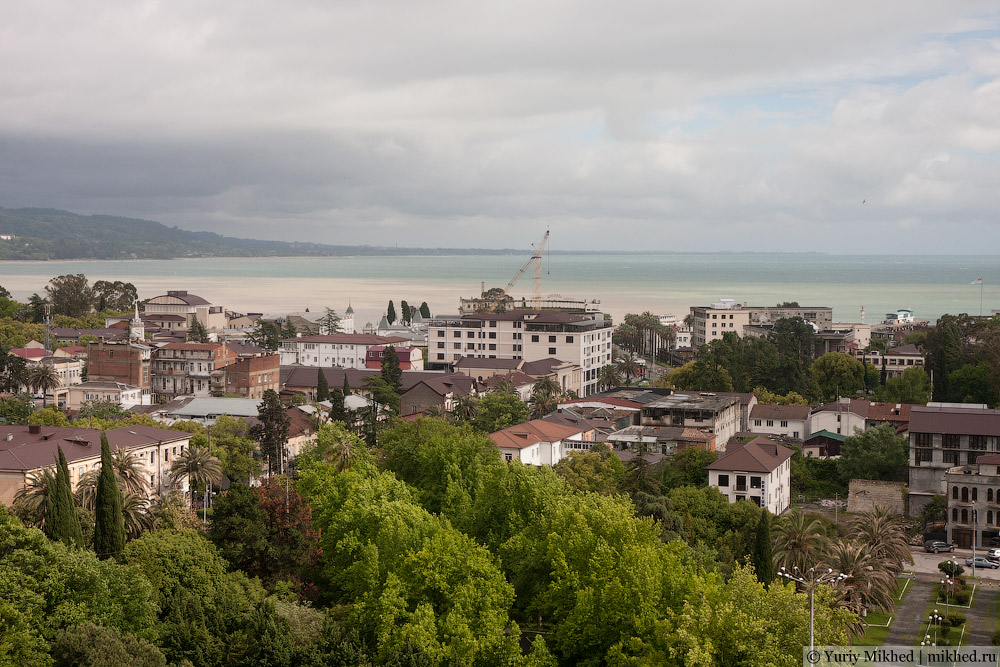
View to the west. In the far distance you can see the neighborhood “Novy” and the central strain tation, which I wrote about in the previous story.
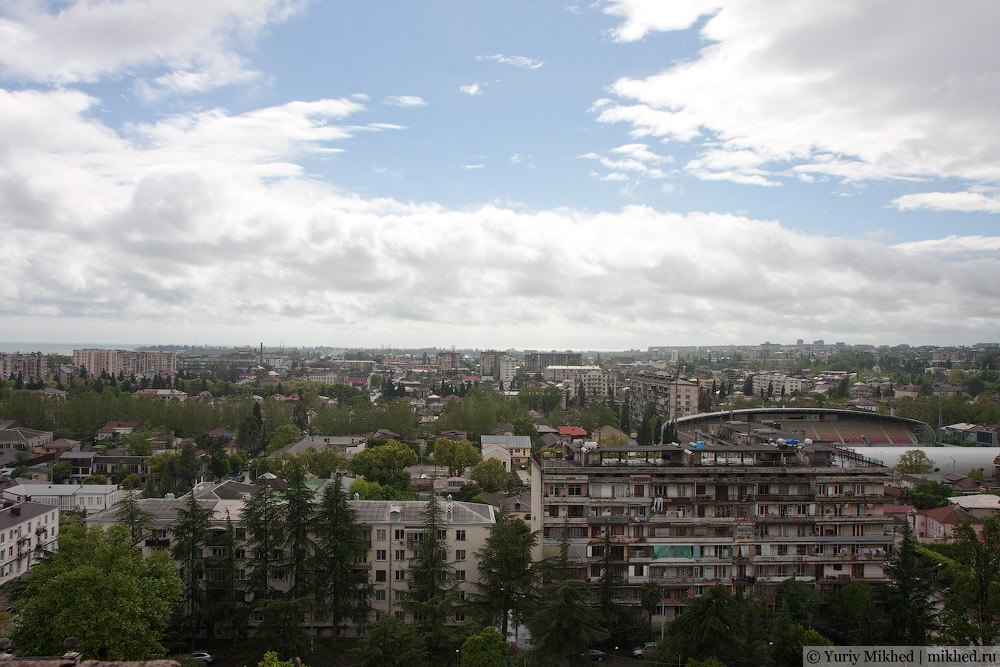
* * *
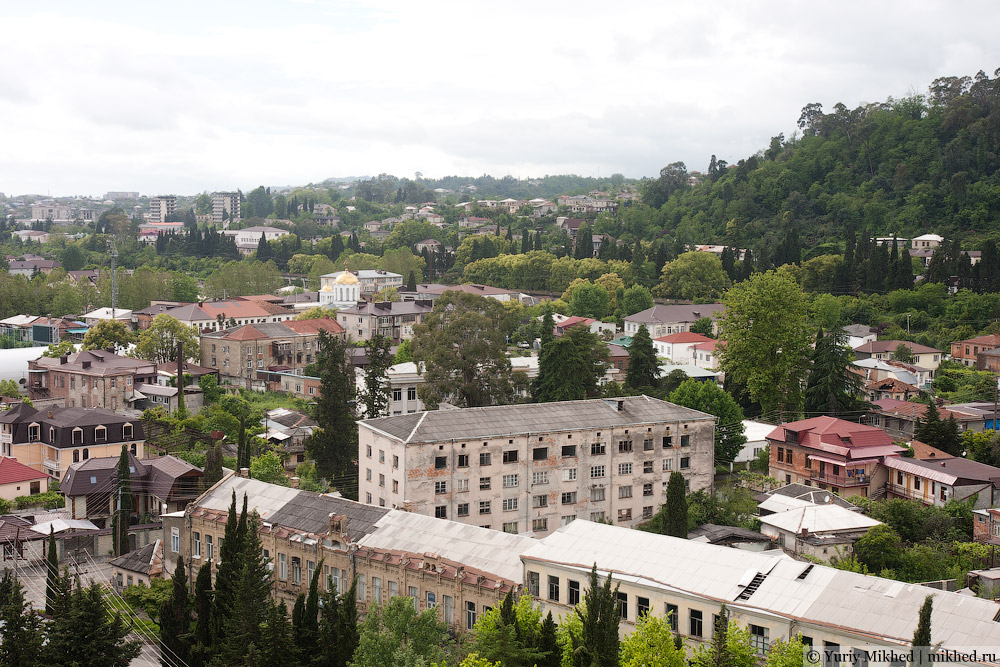
Southwest.
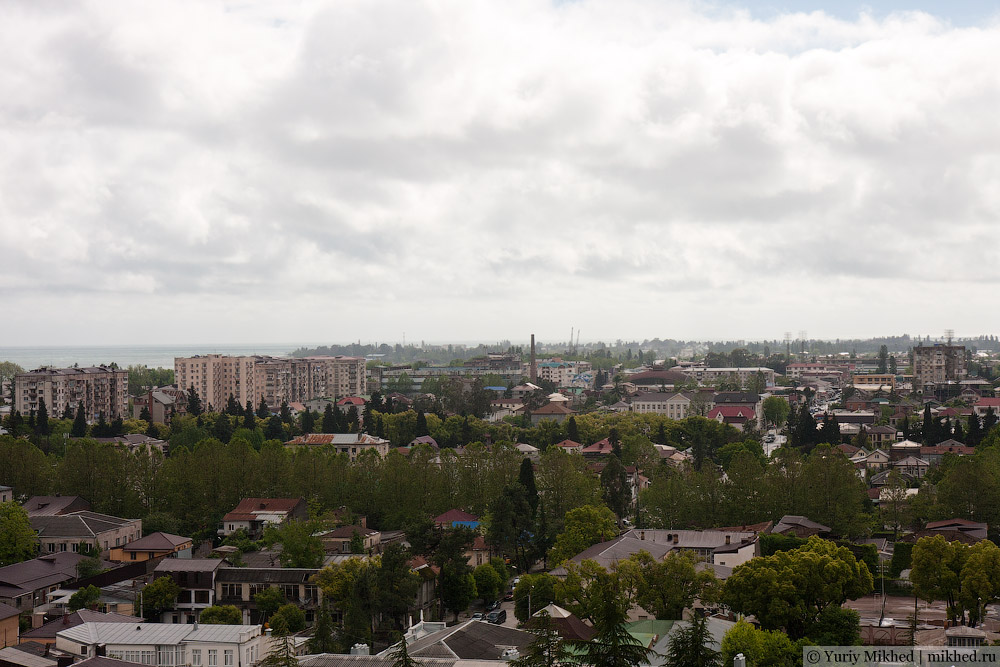
Southeast. On the right you can see the tall abandoned buildings of Soviet hotels.
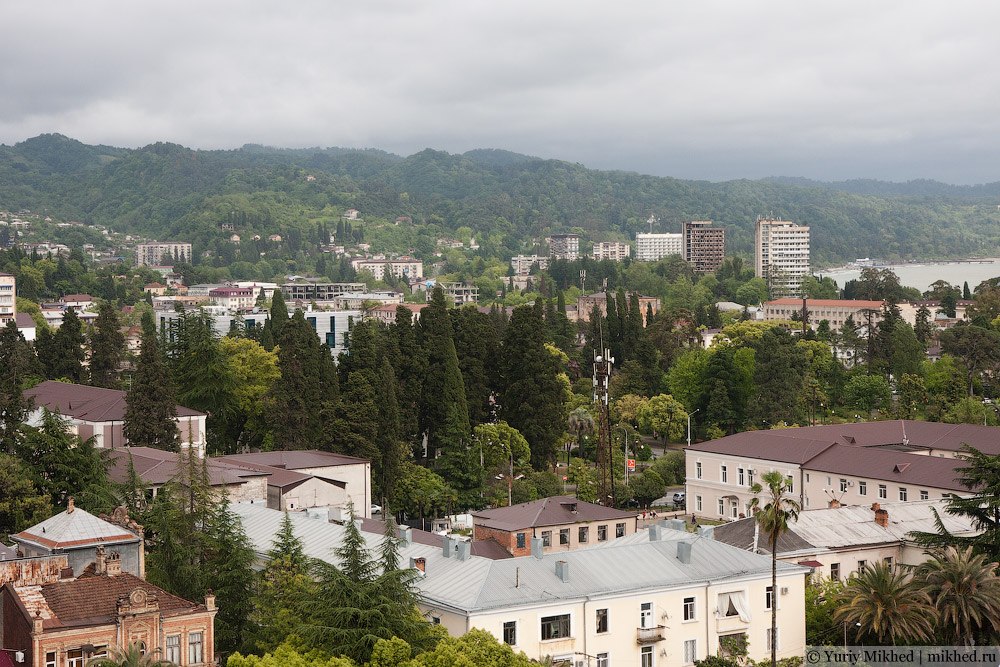
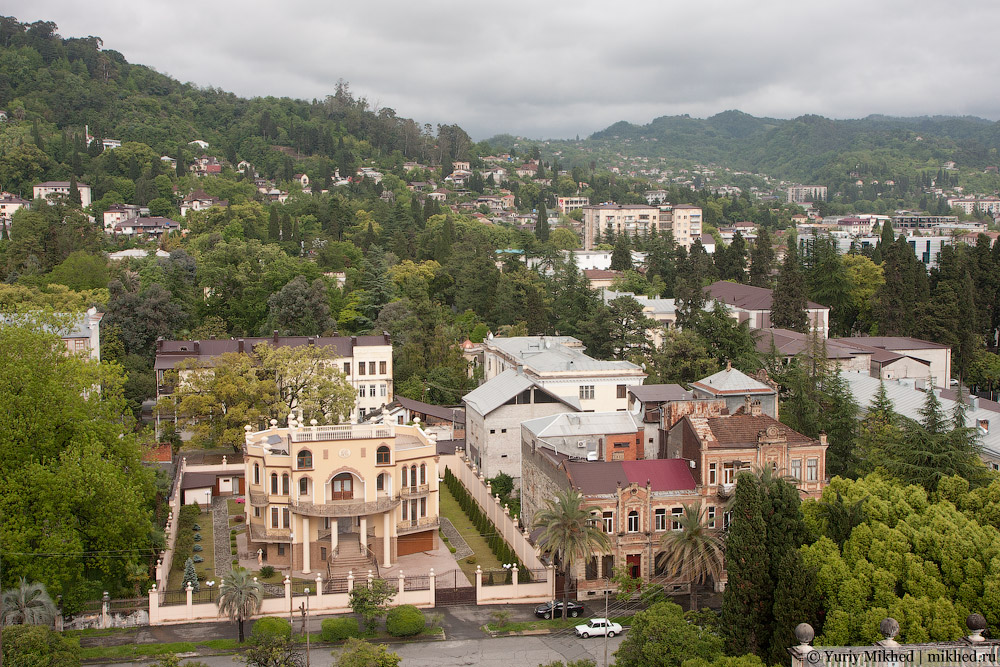
The house of some rich man and a beautiful historic building next to it.
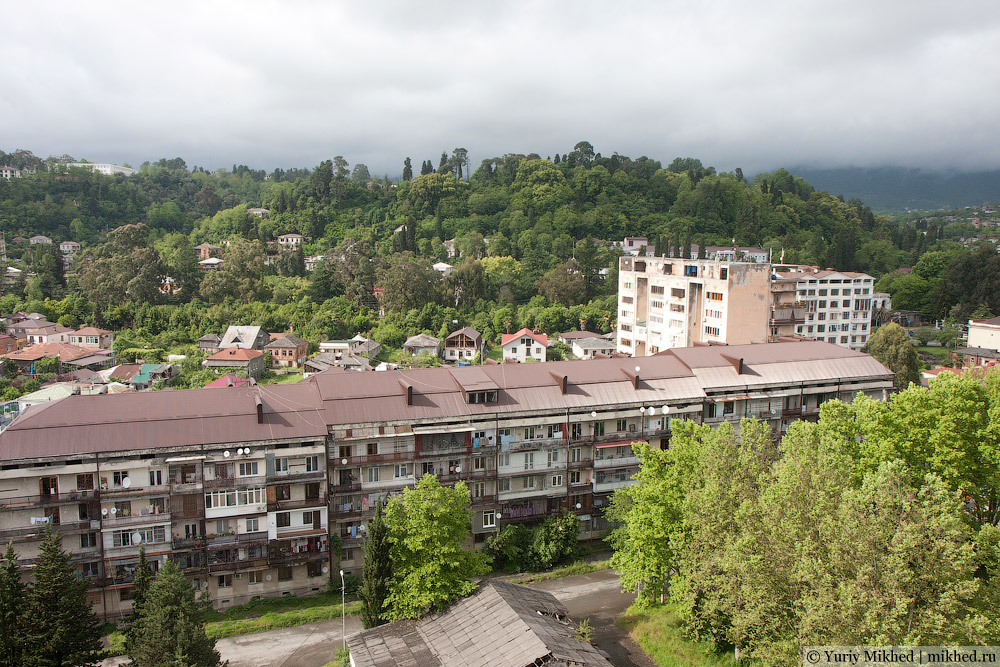
High-rise buildings.
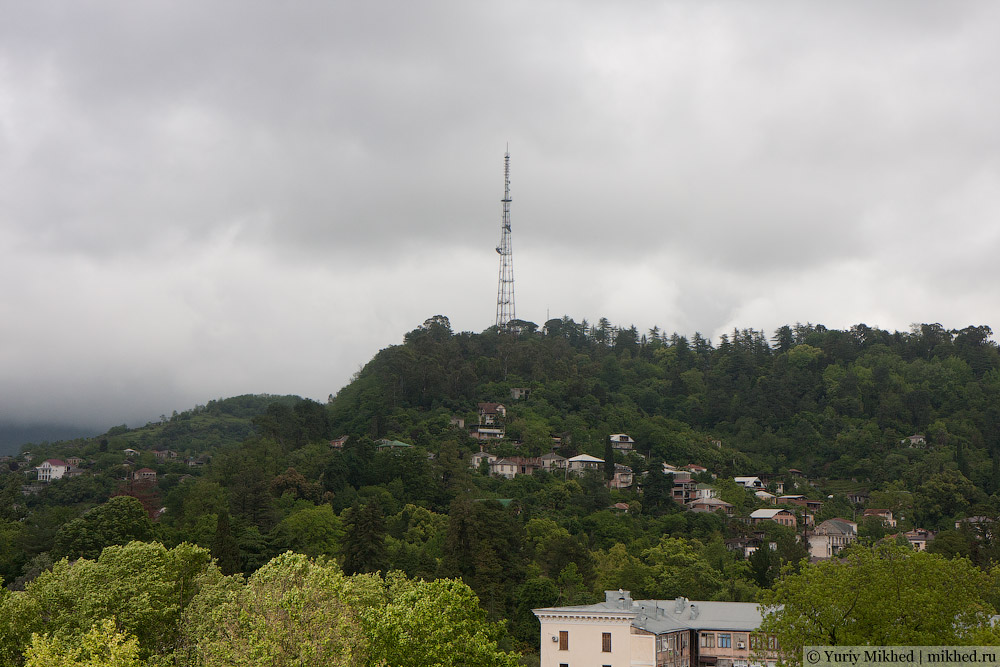
Television tower.
The roofs and ceilings of the side building collapsed.
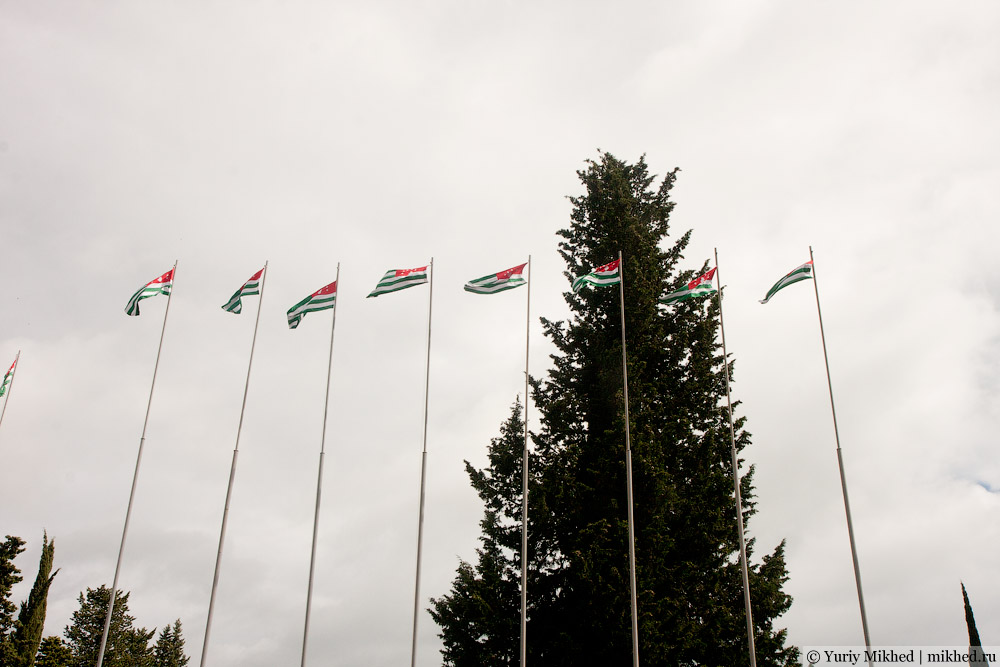
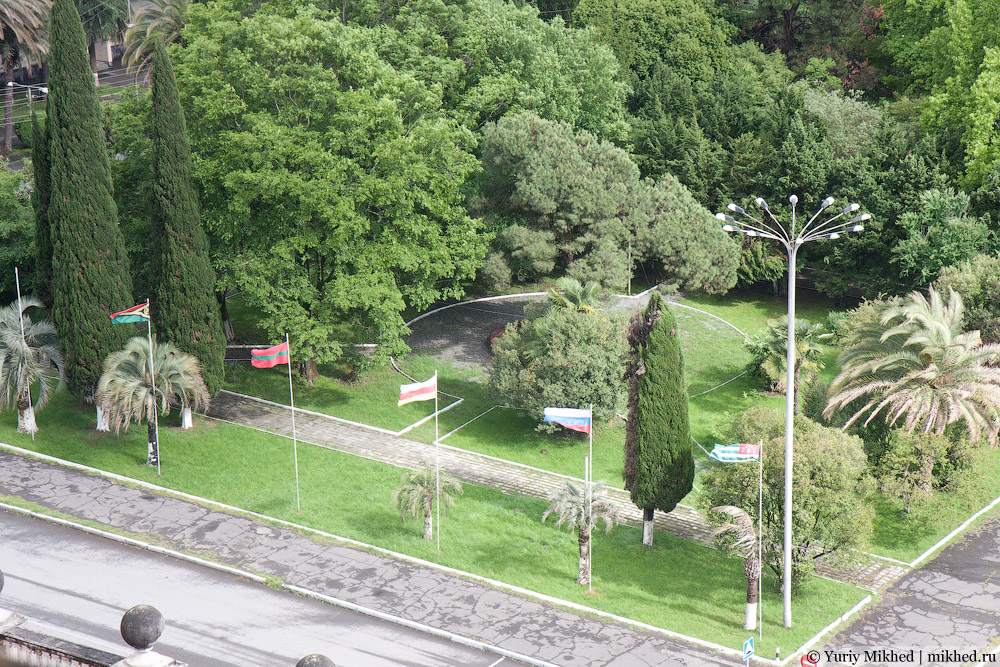
On the square next to Sovmin building there are the flags of the countries that recognized Abkhazia. Those are Russia, Venezuela, Nicaragua, various unrecognized territories of the former USSR, such as South Ossetia or Transnistria, as well as various small island states that you have probably never heard of. In fact, they are most likely never heard about Abkhazia either, but were offerd money for such recognition by Russia (one of them later changed its mind). Abkhazia is also recognized by the so called Donetsk People’s Republic, but the flag of the DNR is not here, as even Abkhazia does not recognize DNR itself.
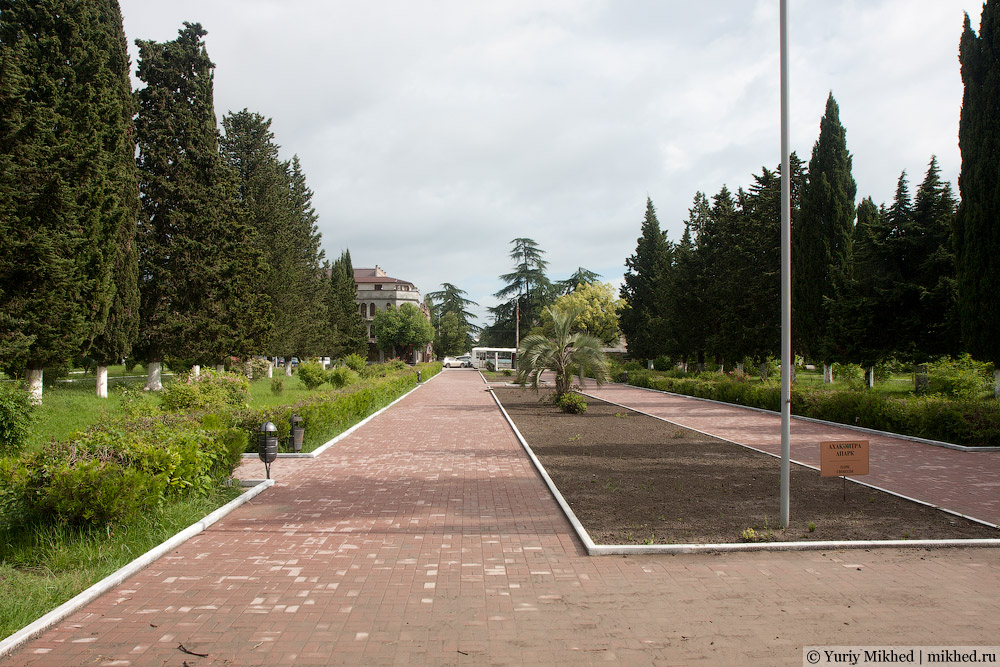
The square itself is not bad (by Abkhaz standards) and is pretty beautified, and is surrounded by fence to prevent parking. There I met two teenagers who first offered to buy “very good tobacco”, and when I refused, asked me to donate some money to them, “maybe just some hundred rubles On that day — 1,36 €
 39,23 ₴
 29 647 Br
 1,54 $
”.
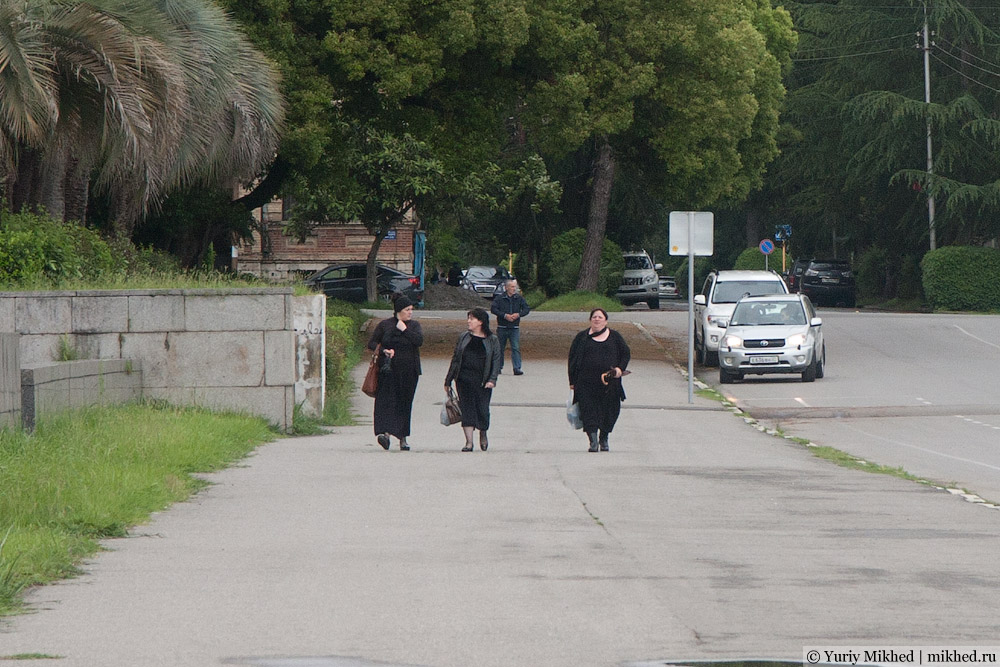
A feature of the Caucasus -- most women, especially the elderly, always dress in all black (this is true among non-Muslim peoples as well).
One of my acquaintances made a remark to me that it is wrong to say ”Sukhumi”, and I should say “Sukhum” instead. You know, all these demands to change the language for the sake of someone’s political preferences are very annoying. Belarusians demand that their country must called “Беларусь” in Russian, and take offense at more traditional Russian name “Белоруссия”, the Kirghiz people do not like “Киргизия” and want “Кыргызстан”, “Молдавия” should now be “Молдова”. They, of course, can come up with “objective” reasons to support their point of view, but in fact, it is strictly a question of politics. It the same idea with “Sukhum” and “Tskhinval”, only the other way around. It’s interesting to see how opponents of “Беларусь” and “Кыргызстан” suddenly quickly got disaccustomed to “Sukhumi” and “Tskhinvali”. But since I’m a consistent person, I do not like the idea to constantly changing the language for the sake of any ideology, and will thus always write “Белоруссия”, “Киргизия”, “Алма-Ата”, “Сухуми”, “Цхинвали”.
By the way, “Sukhum” is quite a strange word. “Sukhumi” is a purely a Georgian name, in Abkhazian the city is called “Aҟәa”. Let don» they say “Aqua” then?