Liepāja
Kurzeme, Latvia, November 2017
Google Maps, Yandex.Maps
Liepāja is an interesting historical city on the shores of the Baltic Sea. In my childhood, I happened to visit many towns in Latvia, but never this one. I didn't regret my visit — if you are in Latvia and have a free day, it is well worth travelling precisely here.
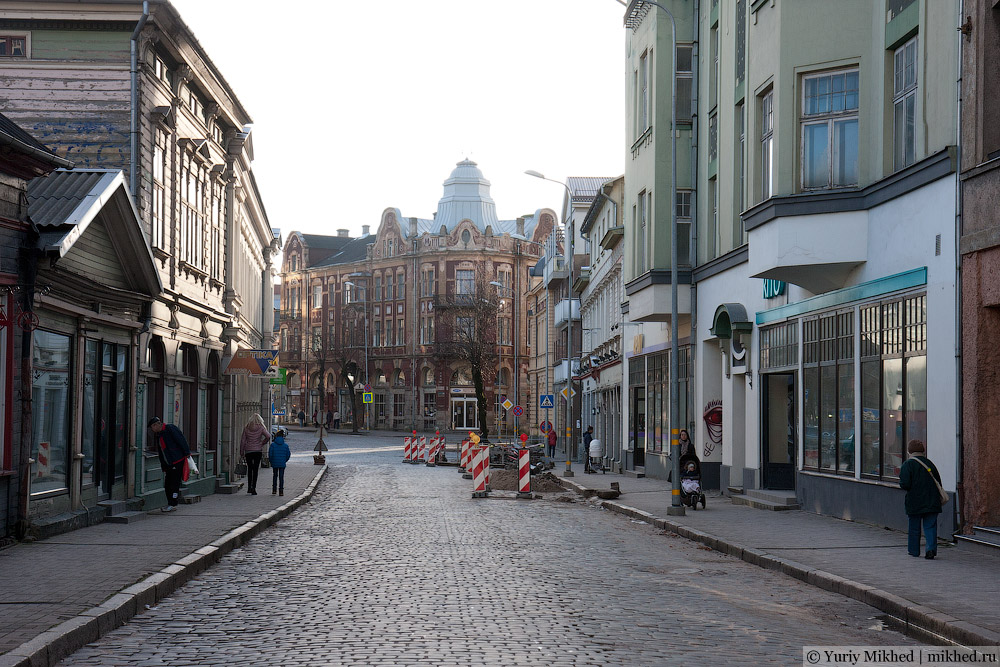
The name "Liepāja" in Latvian is pronounced with stress on the diphthong "ie", which is essentially a single sound in Latvian; pronouncing it with stress on ā immediately gives away a visitor from an East Slavic country. The name traces back, according to one version, to the Livonian word "liiv", which translates as "sand" (the Livonians are a small Finno-Ugric people living in Latvia, whose extinct language was close to Estonian, but very distant from Latvian). The German name "Libau" and the old Russian "Libava" have the same origin.
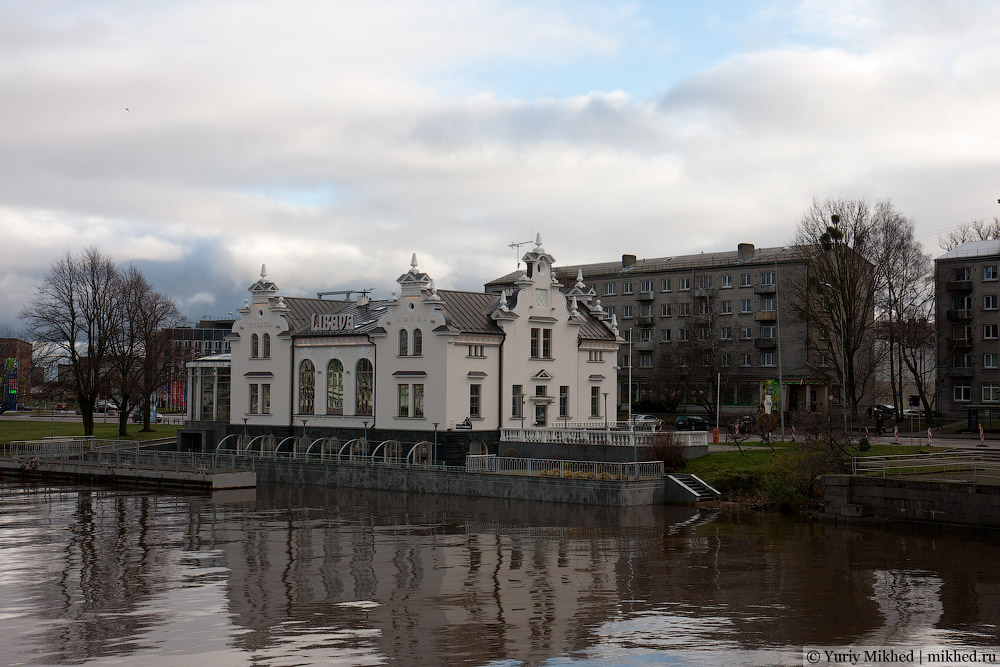
Liepāja is a port city. The port ranks second in Latvia in terms of cargo turnover.
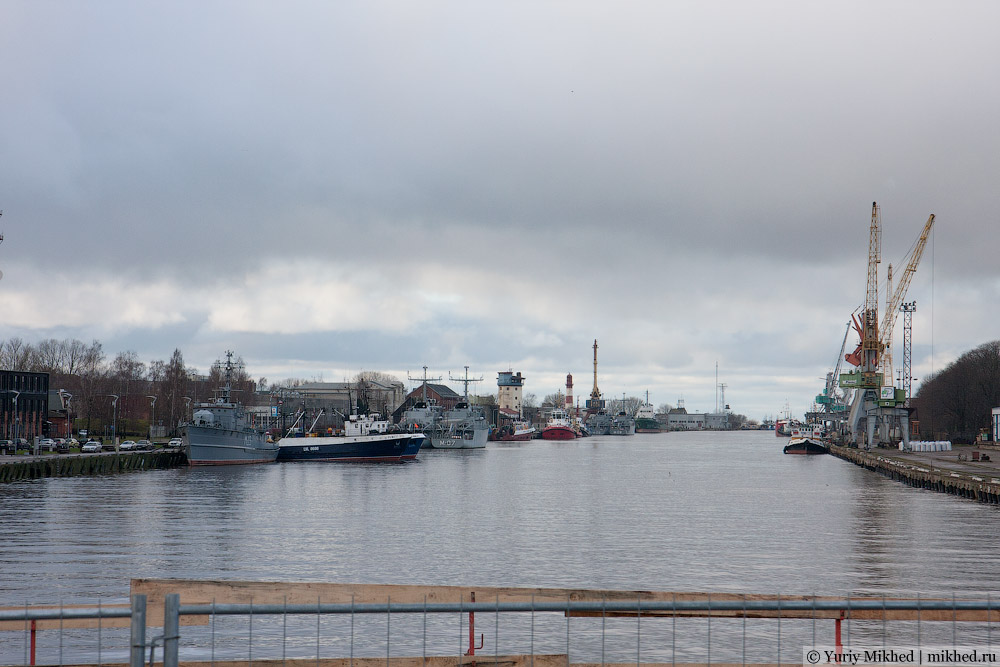
The modern industrial port is located a bit further away (you can see it on the right in the photo), whilst the city itself emerged on the banks of a canal connecting the Baltic Sea and Lake Liepāja. Currently, the canal holds mostly small fishing vessels and coast guard boats, while historical port buildings are situated along the banks.
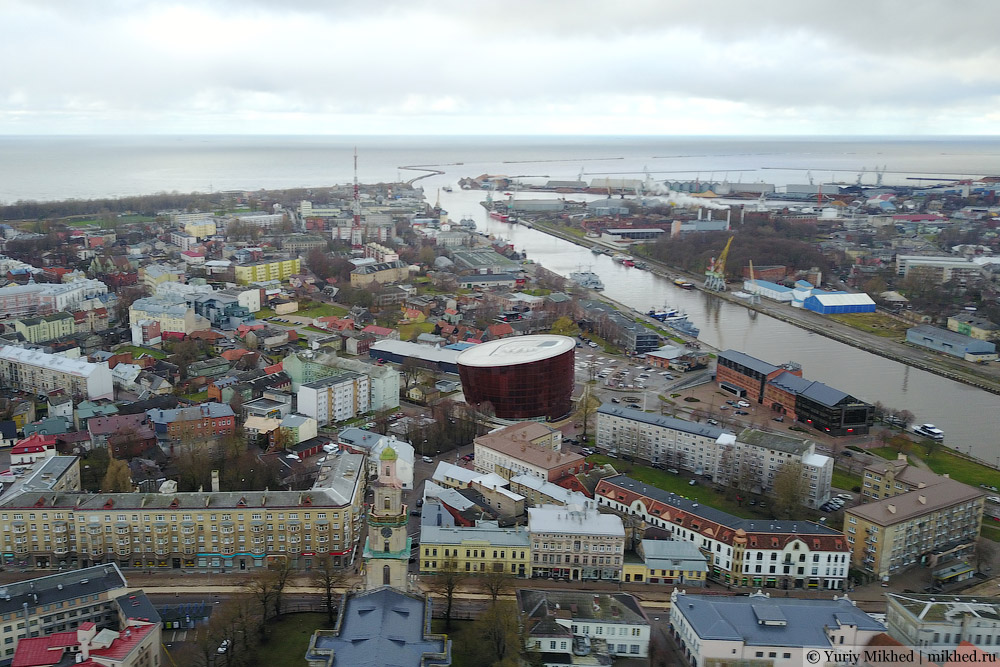
Ships.
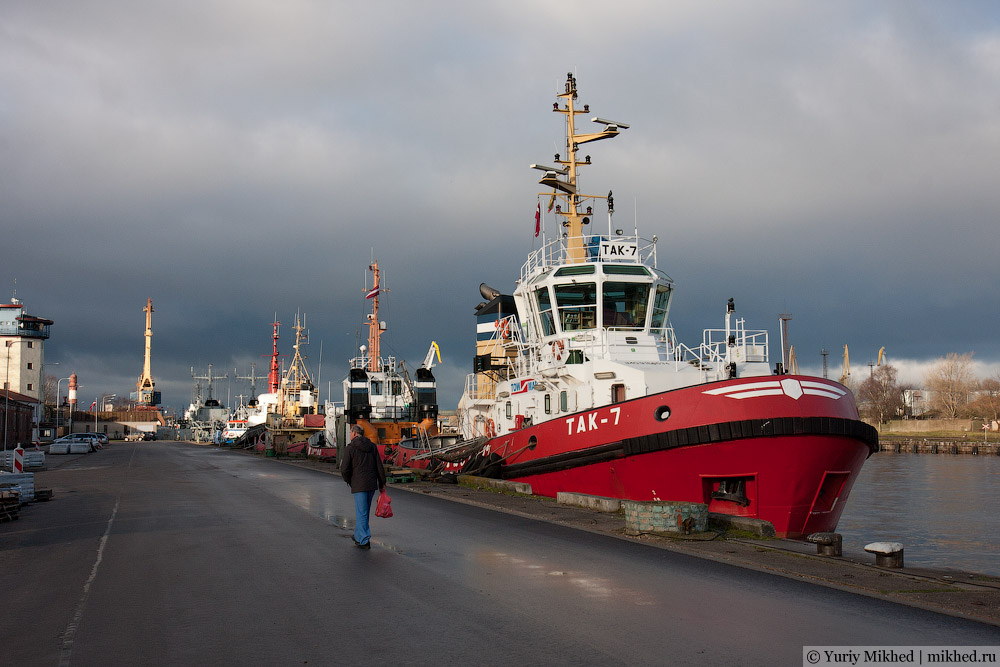
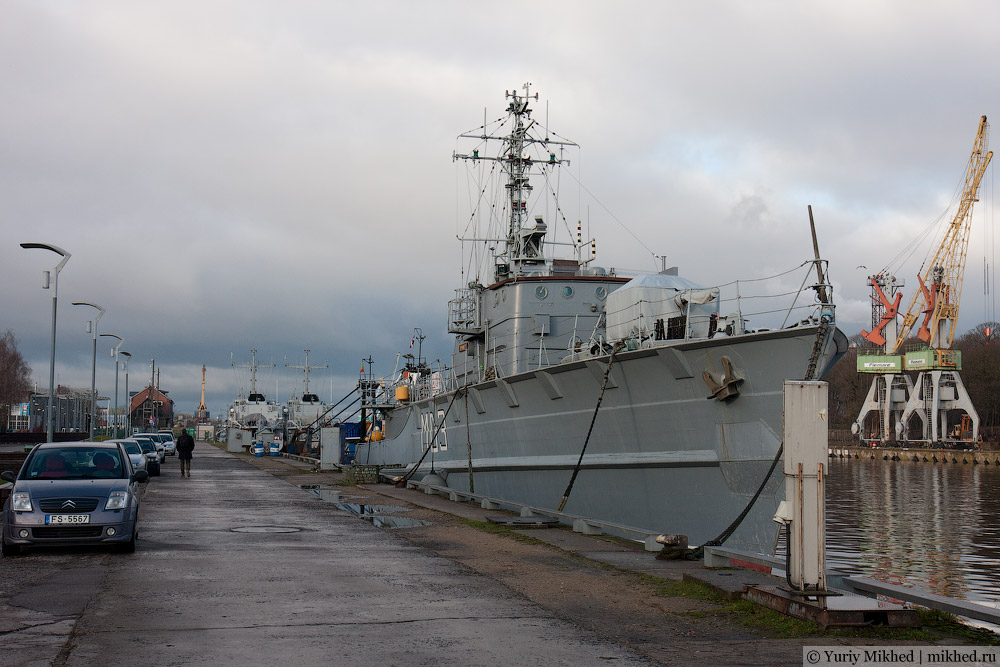
The military ships are assigned to the Latvian Navy. M-03 has already been decommissioned, but the ships a bit further away are active.
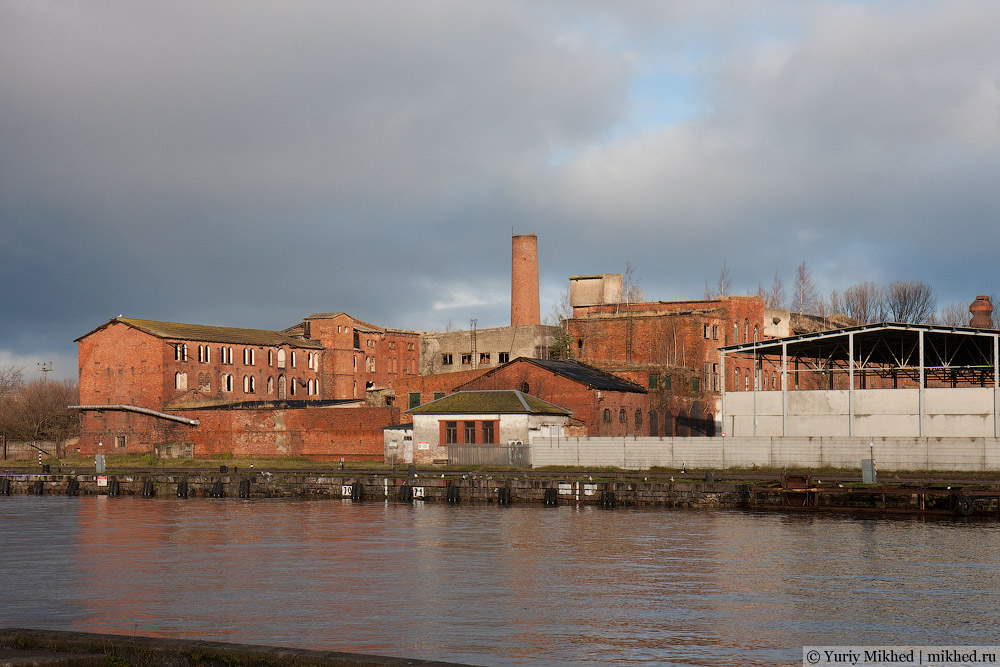
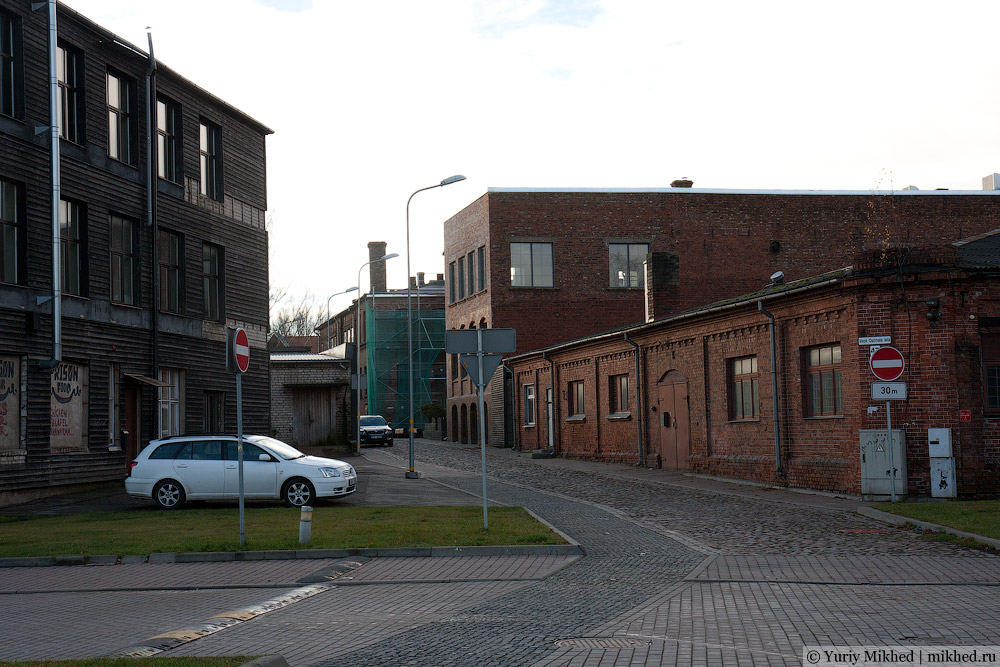
In the old port, you can see interesting industrial buildings from the beginning of the century, some of which are currently abandoned.
As in many other European cities (for example, in HafenCity in Hamburg or Copenhagen), the old port area is gradually undergoing renovation — old industrial buildings are being converted into residential or commercial ones, and they are trying to improve the surrounding space.
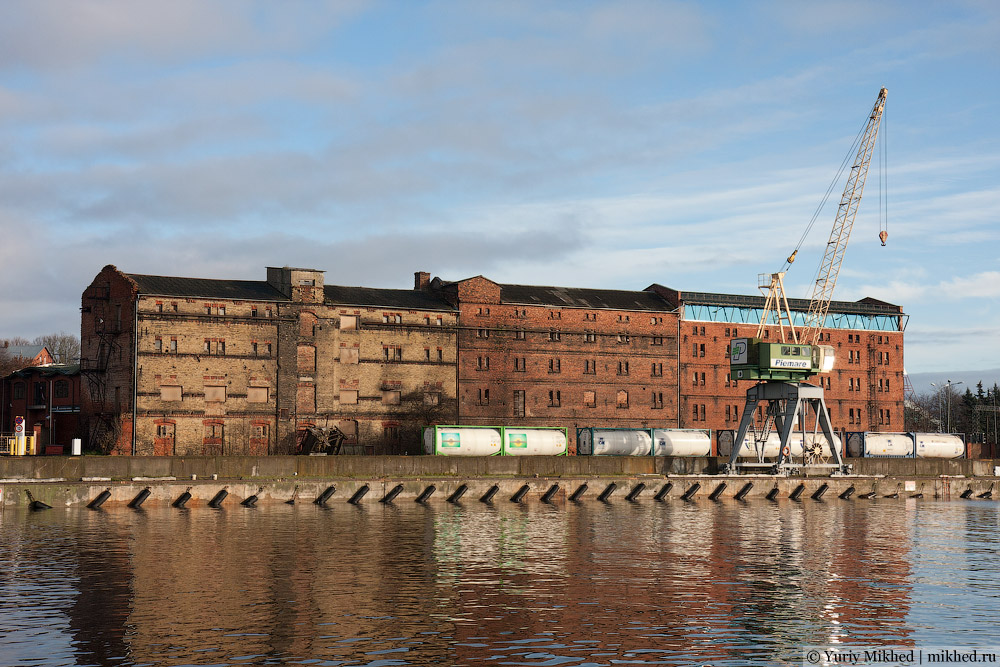
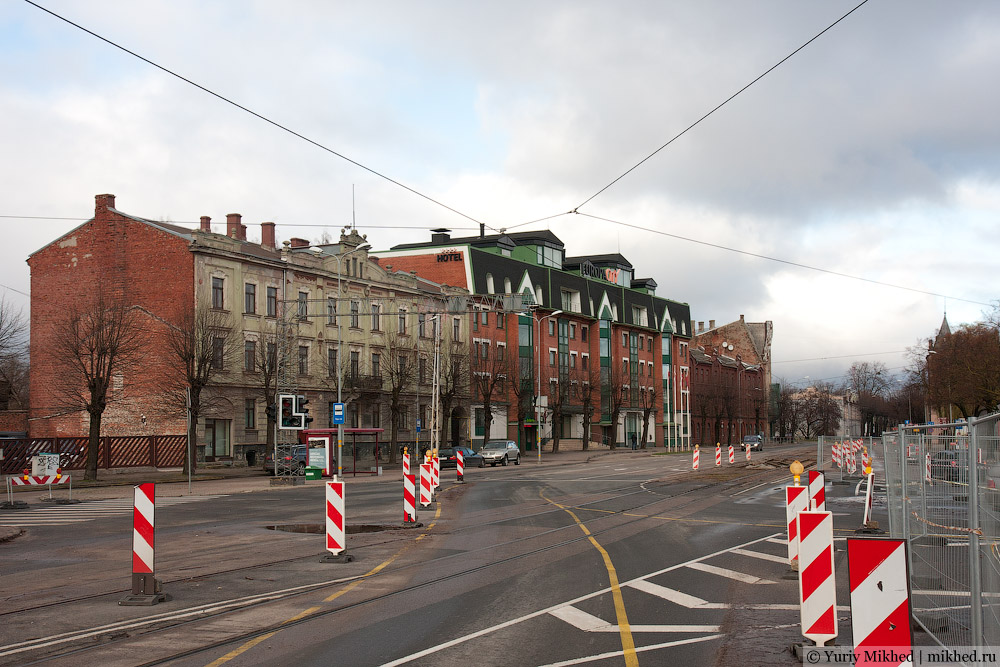
Warehouse premises on the south bank have been converted into a hotel (though the architecture raises questions, there is rather too much glass).
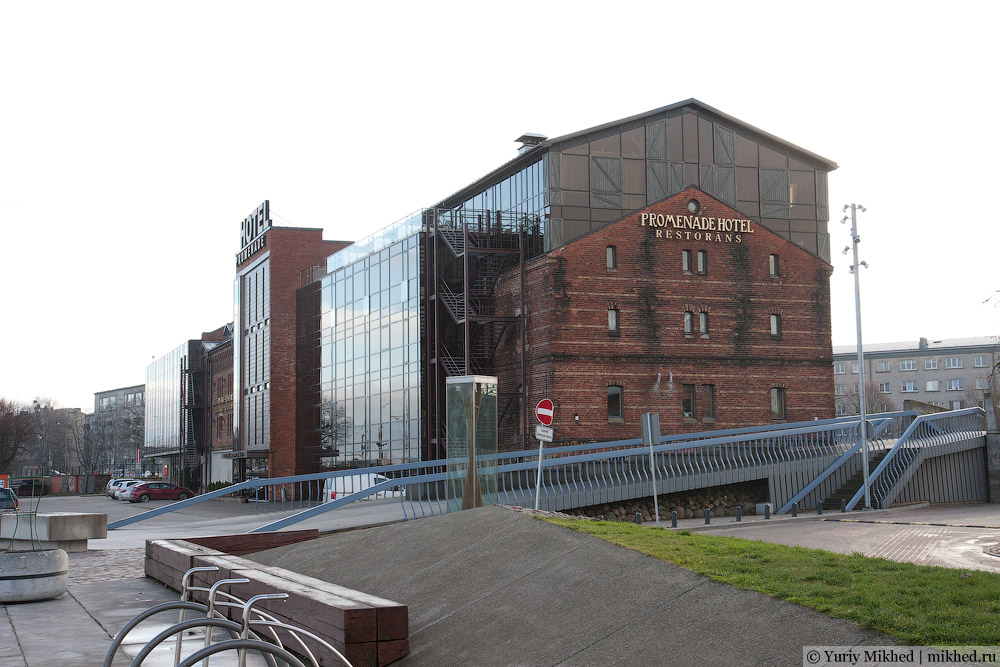
Although the waterfront cannot be called extraordinary, it is being tidied up.
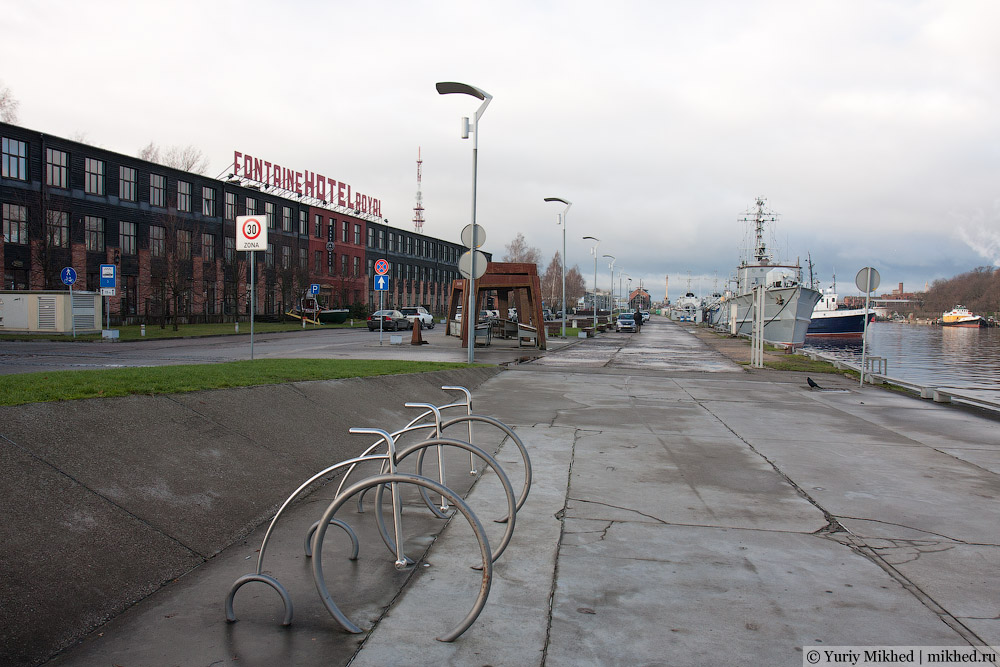
They have hung suspended lanterns, which are popular in Northern Europe.
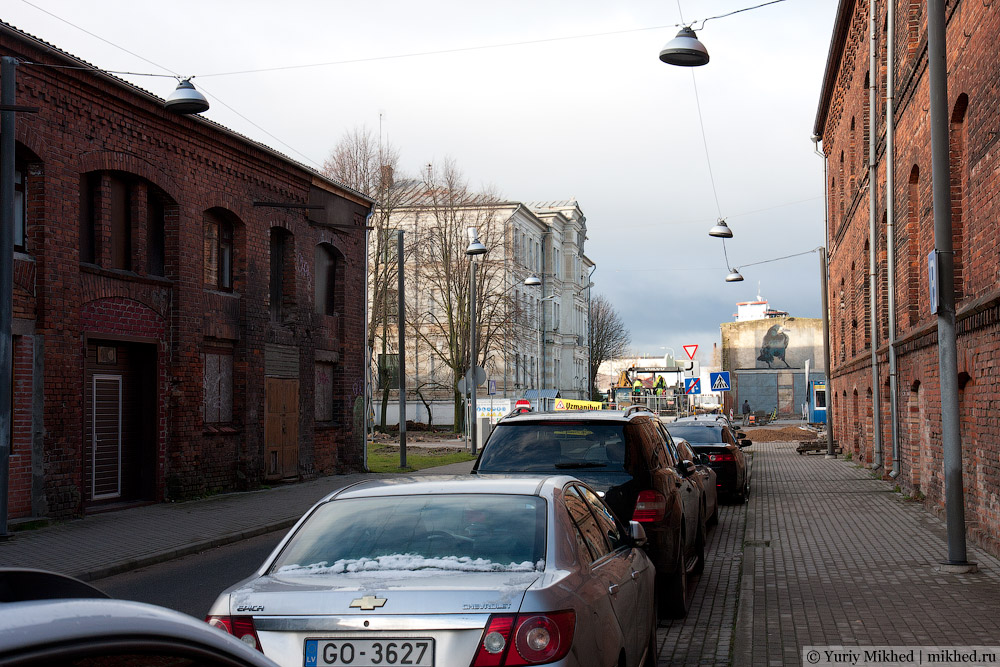
Buildings are being restored.
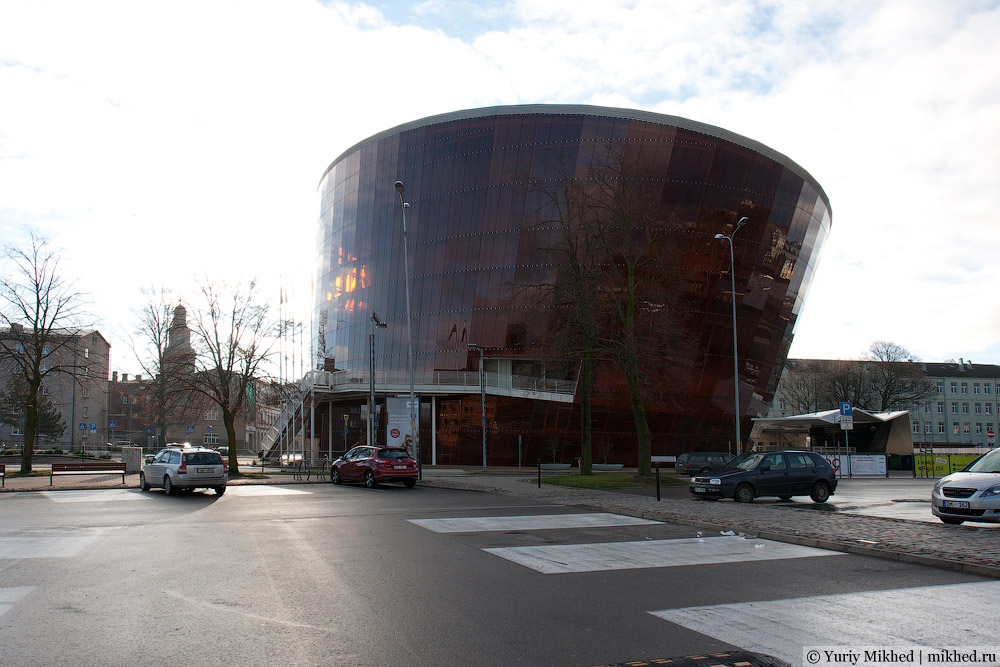
Nearby, they built one of the city's new landmarks, the "Lielais dzintars" ("Great Amber") concert hall. Honestly, it reminds me of the style that's ironically referred to as "capitalist romanticism" in former USSR.
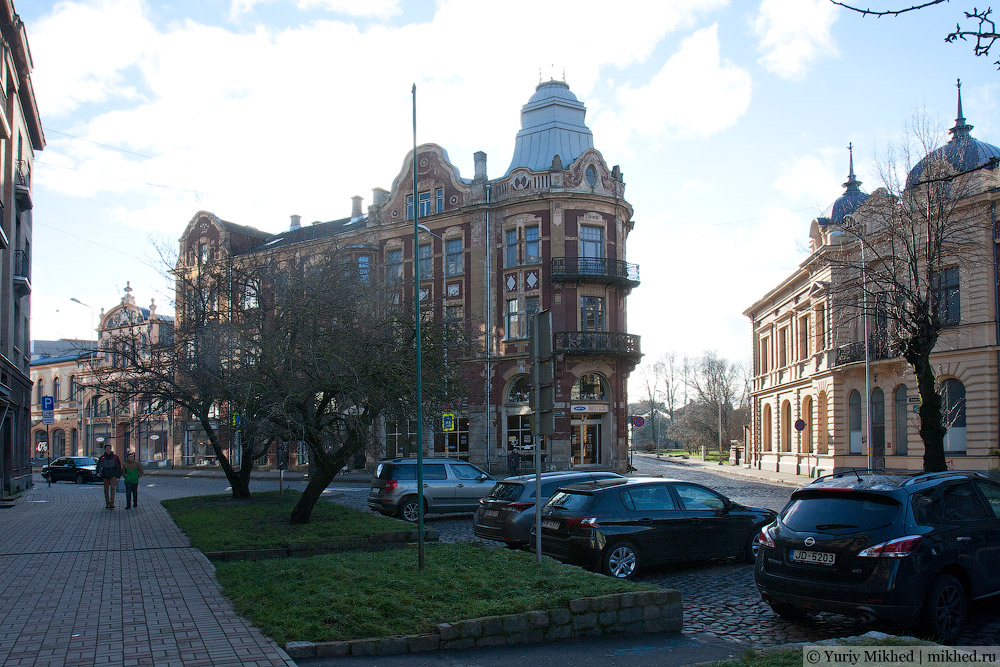
Let's head deeper into the city. Although the historical centre of Liepāja is small, unlike Jelgava, it is well preserved. Some buildings are very beautiful.
The territory of present-day Latvia was under the rule of the Livonian Order for a very long time. Libau under the order's rule is mentioned as early as 1263. In the 15th century, a trade route from Amsterdam to Moscow passed through it.
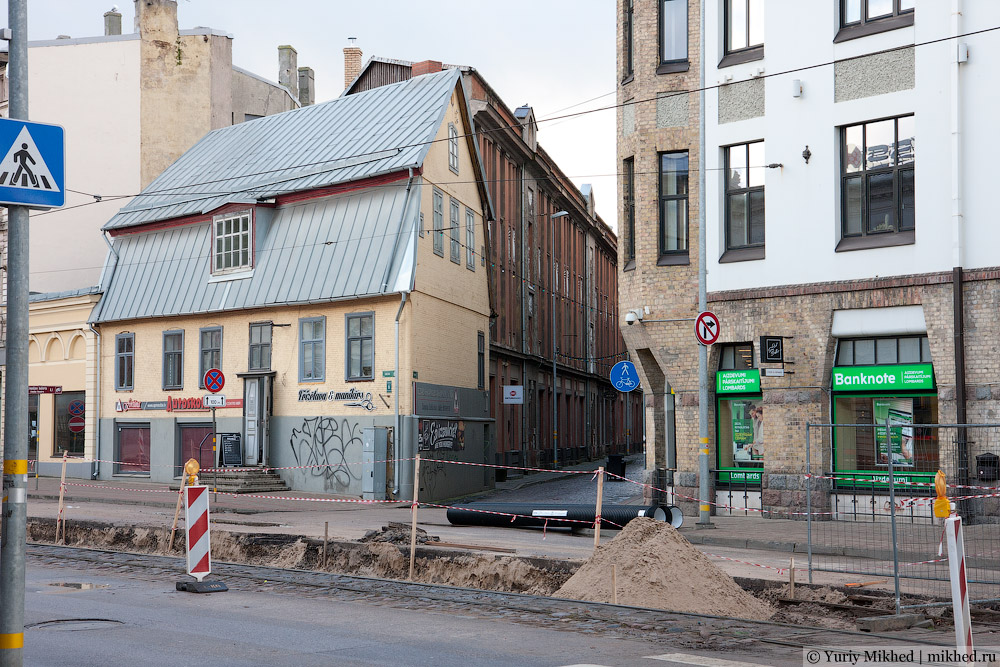
The Duchy of Courland became part of the Russian Empire in 1795. In Russia, the city was an important seaport and industrial centre. As mentioned in the previous story, a major Russian naval base was located here.
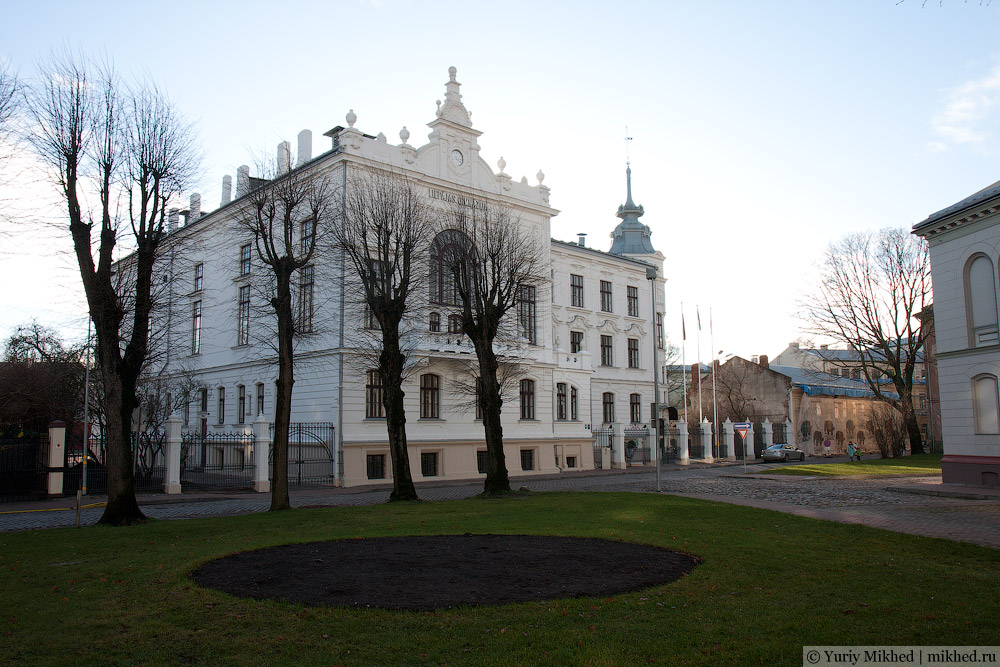
This building once housed the main office of the Russian East Asiatic Steamship Company.
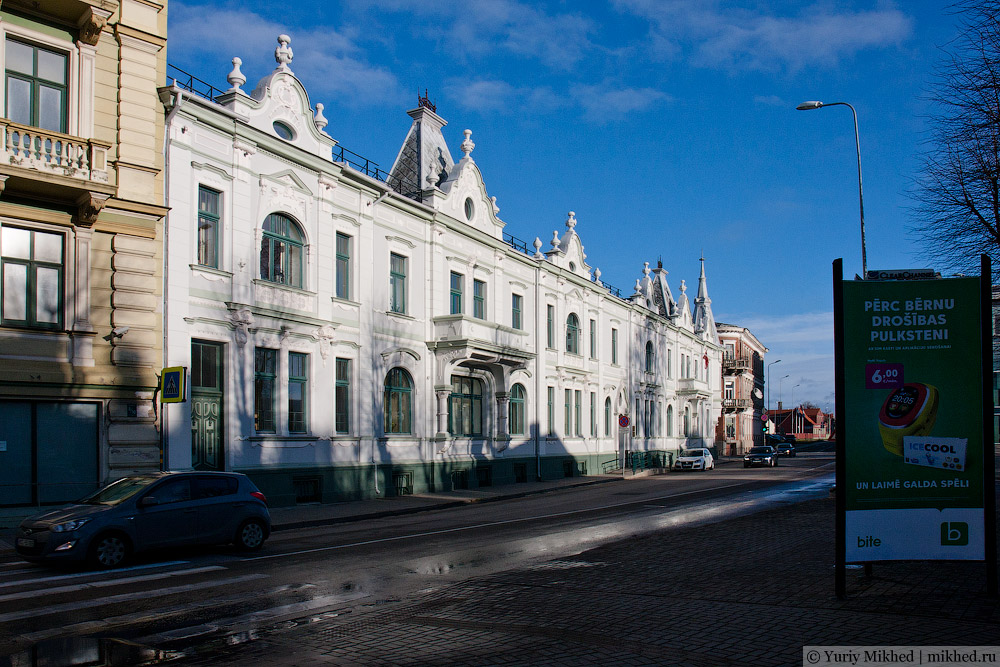
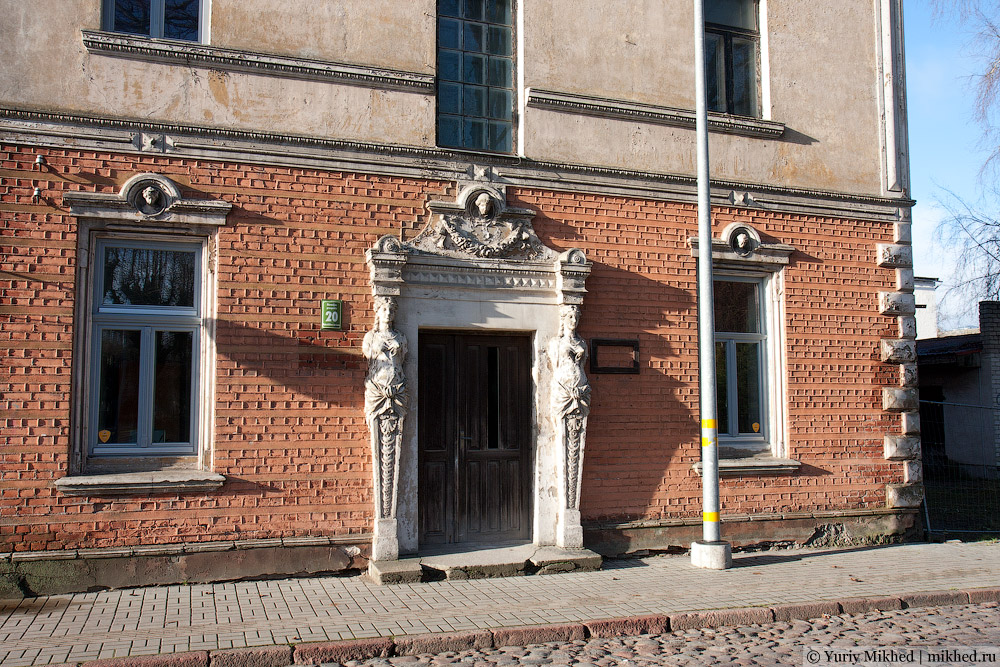
Interesting details.
* * *
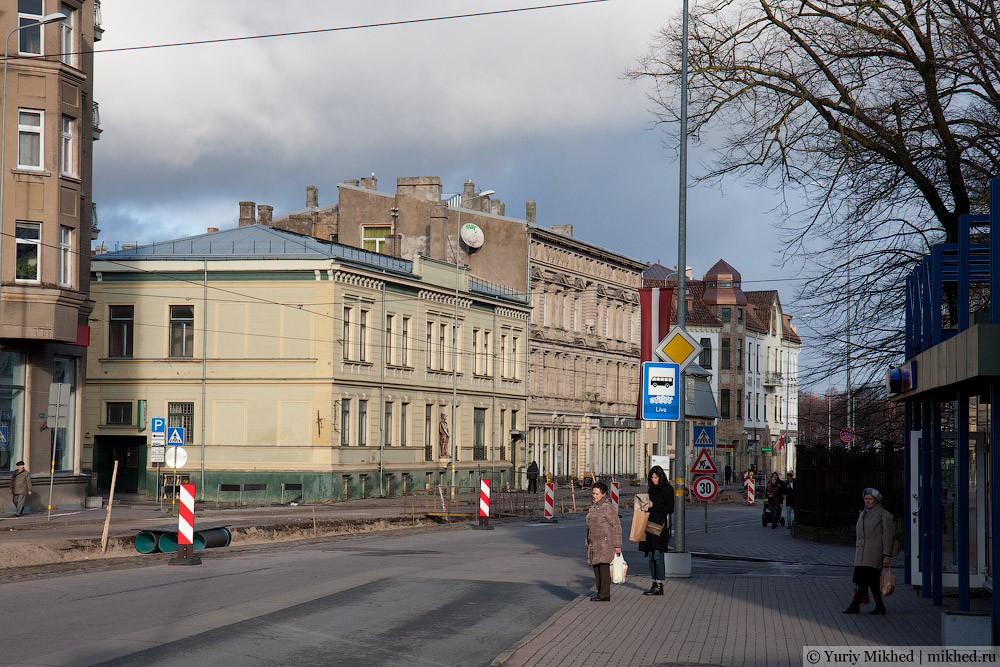
In 1919, during the Latvian war of independence, Liepāja was the de facto capital of the Republic of Latvia for about 6 months.
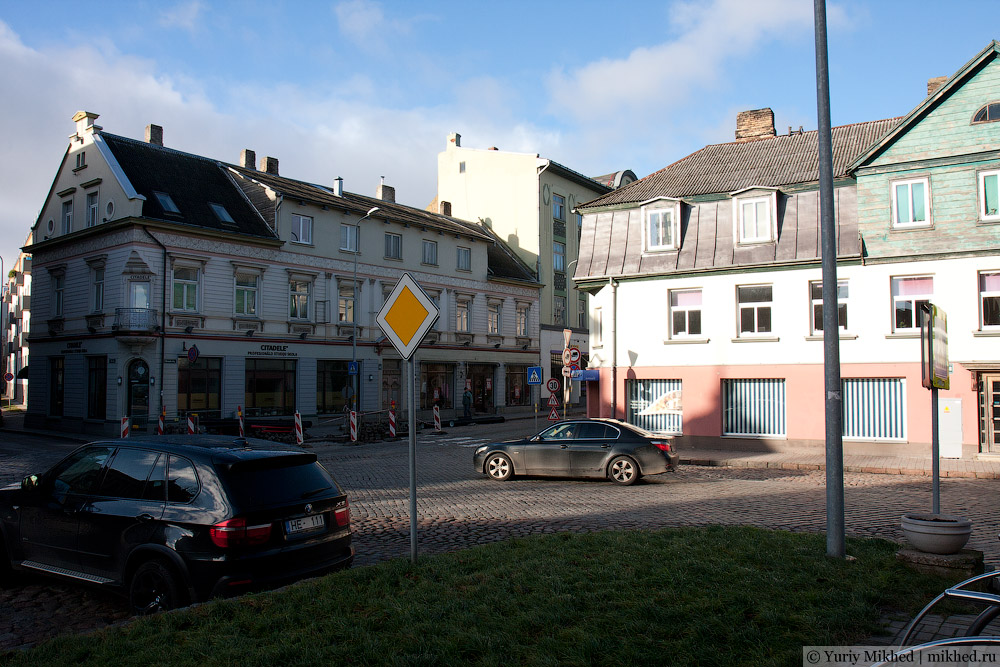
One can encounter many equally interesting wooden structures.
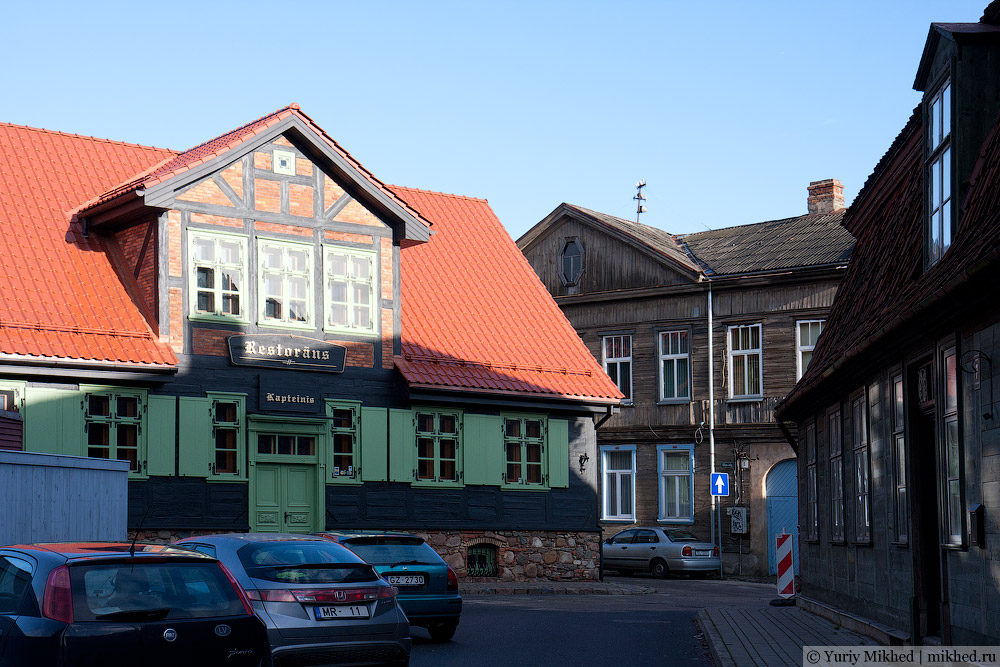
German timber-framing (fachwerk).
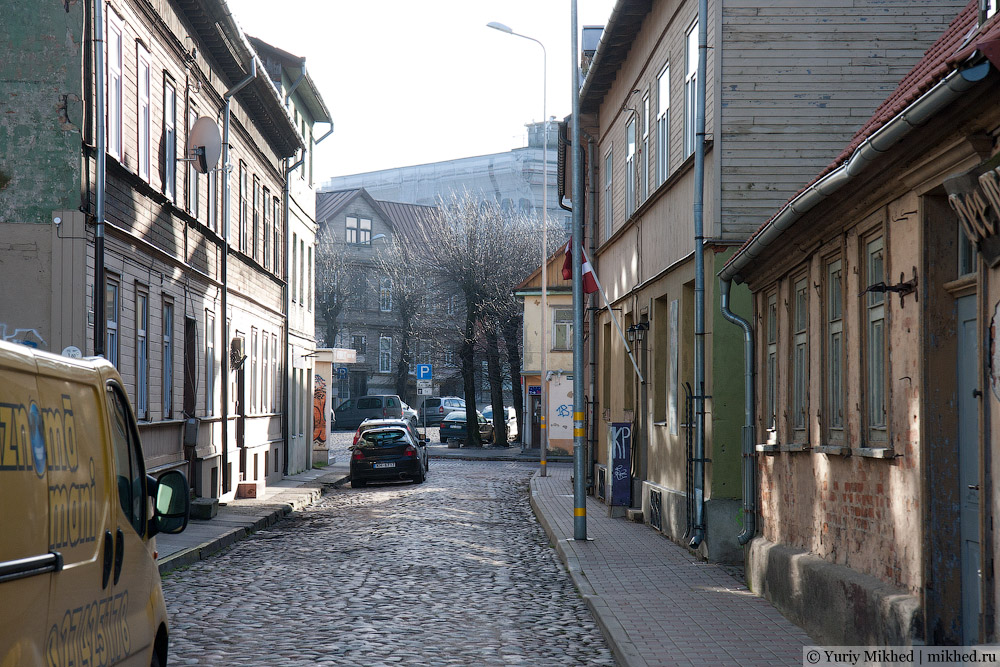
The condition of the buildings is generally decent.
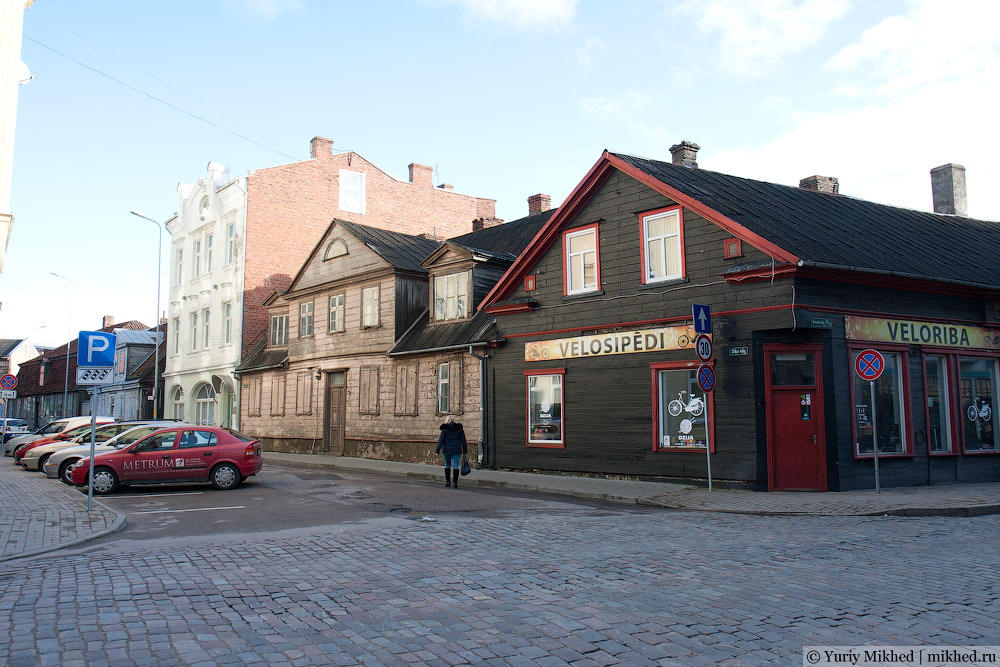
* * *
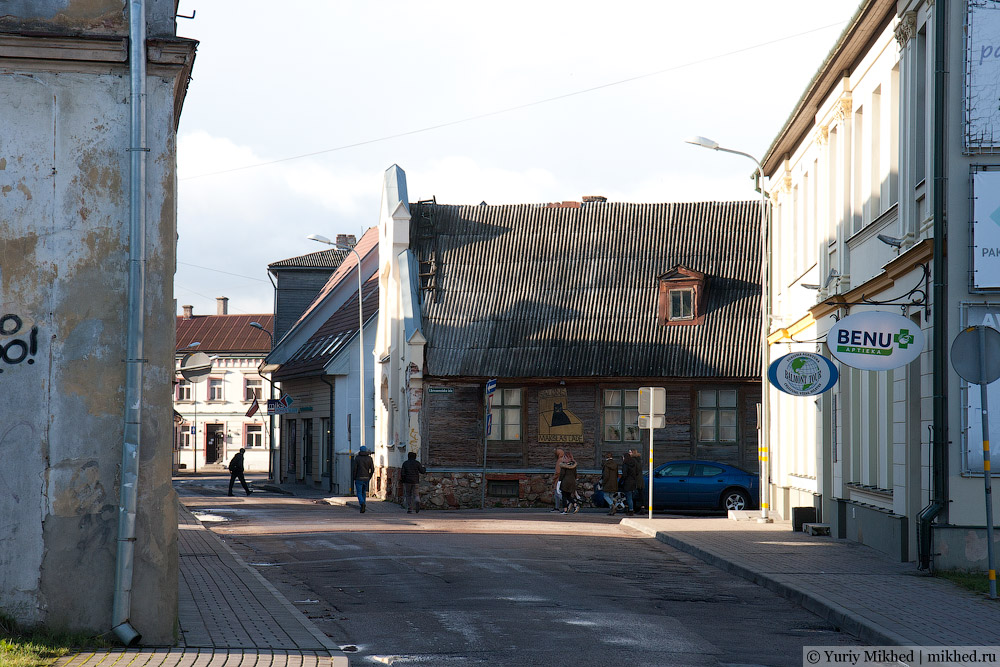
The oldest structures are now around 250 years old.
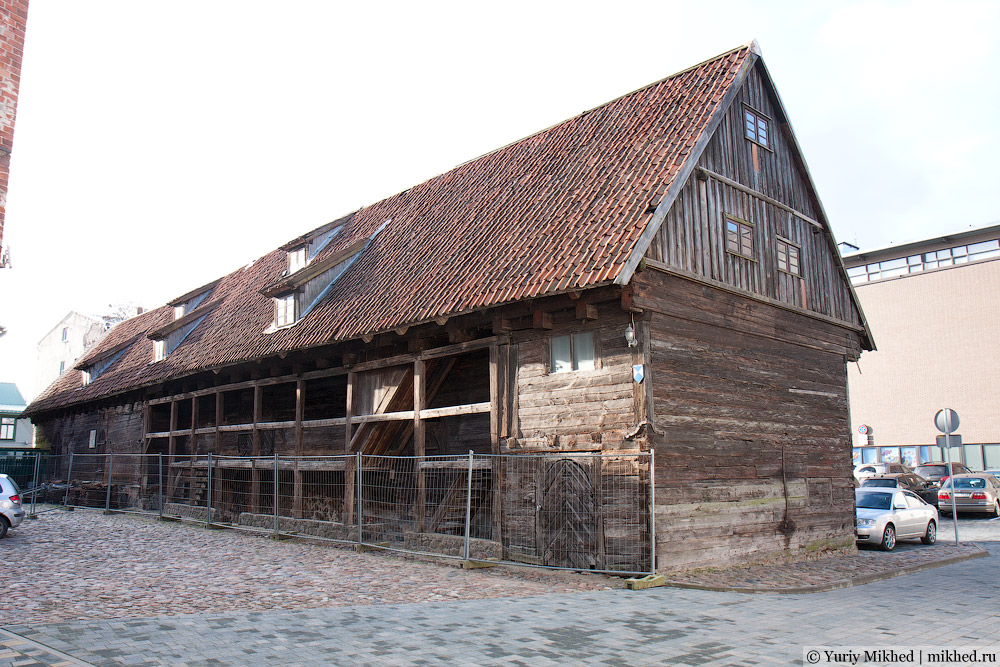
A plaque preserved since Soviet times.
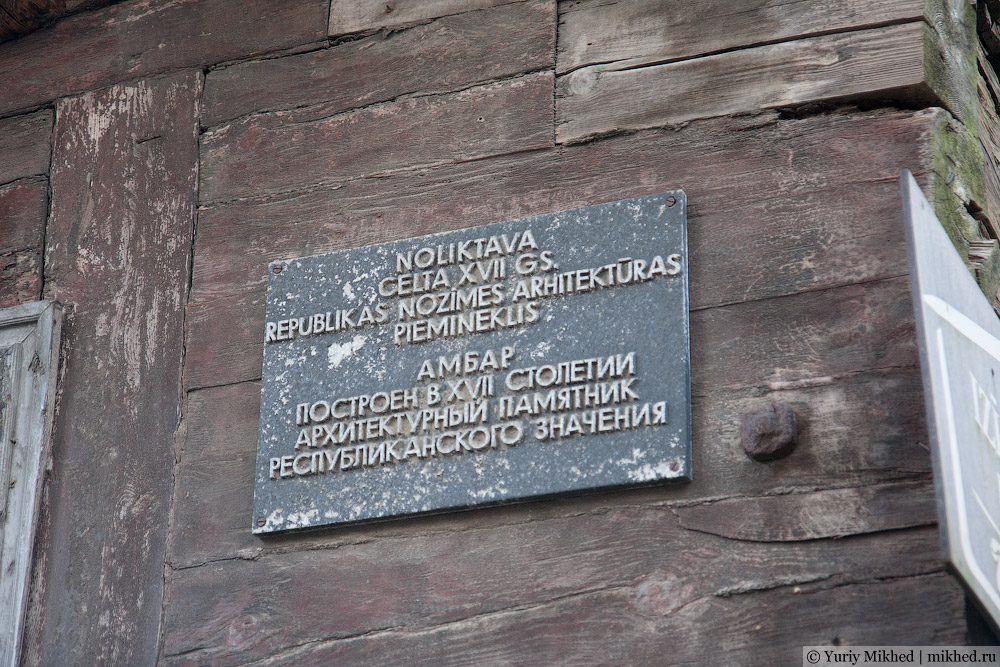
The central streets are paved with cobblestones.
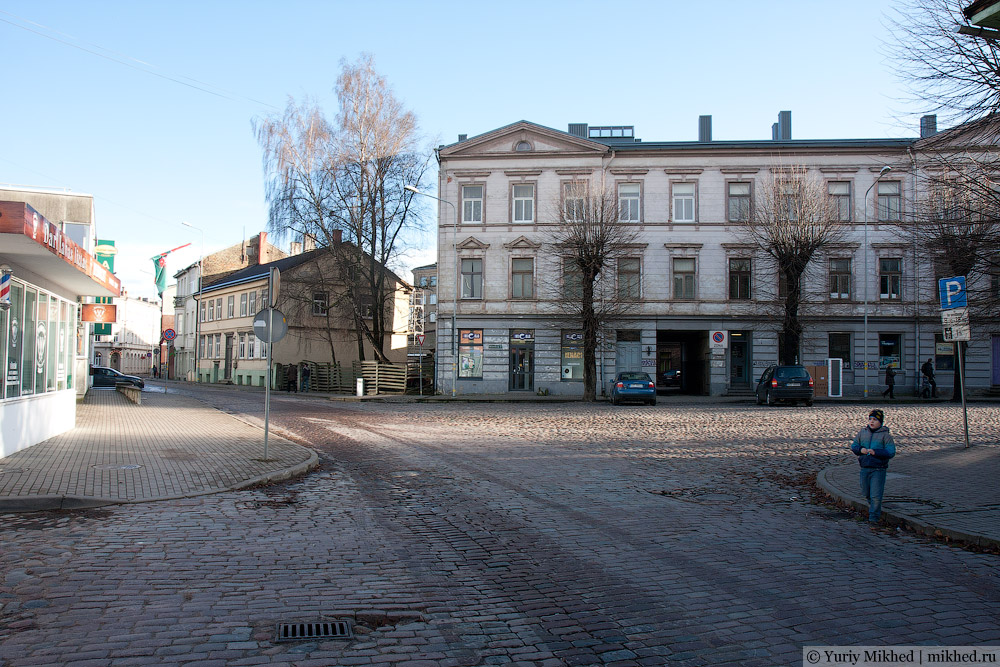
The pavements and pedestrian streets have been renovated and tiled.
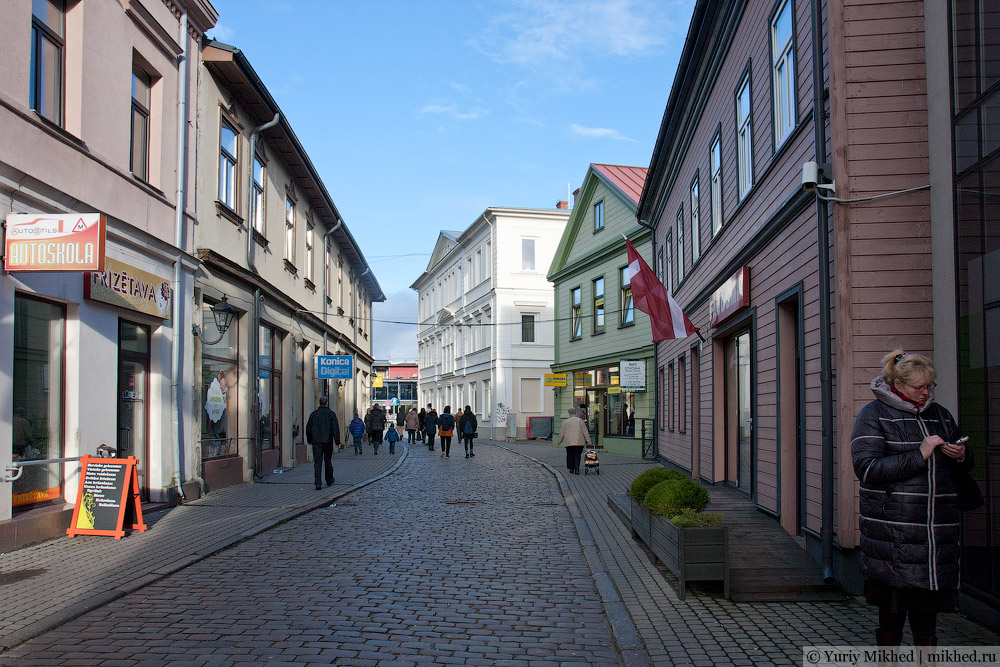
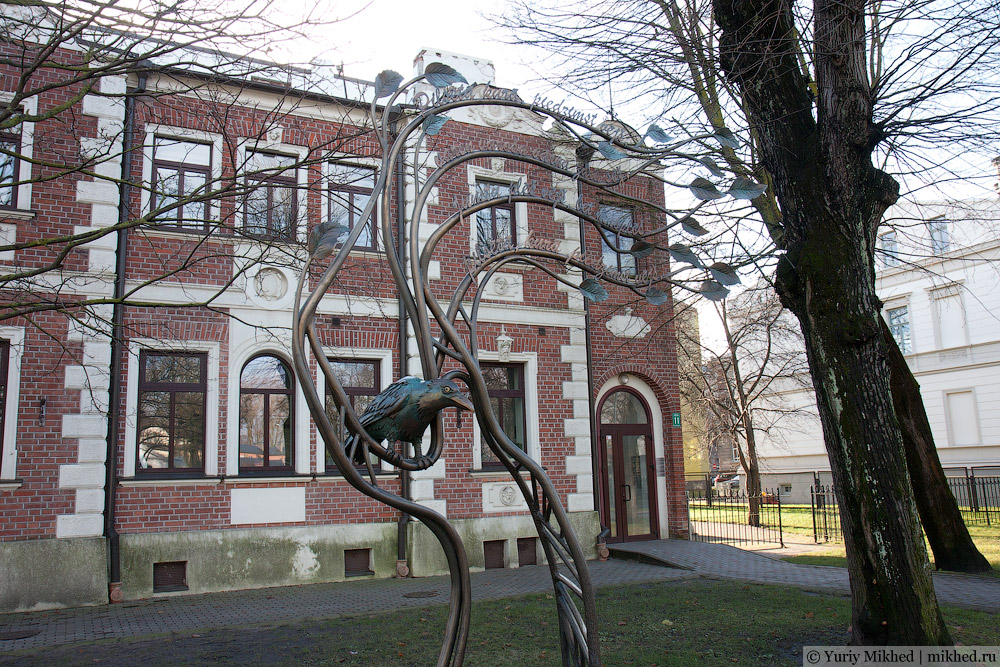
Kūrmājas Prospect, one of the main streets leading from the centre to the sea, is decorated with sculptural compositions of characters from the song "Pilsētā, kurā piedzimst vējš". The song about Liepāja, whose name translates as "The City Where the Wind is Born", was written in 1973 by composer Imants Kalniņš and poet Māris Čaklais. The piece quickly became popular, performed by many Latvian musical groups, and in 1999 it became the official anthem of the city. "Pilsētā, kurā piedzimst vējš, varen varoša vārna zarā sēž, jumtu plēš vējš, bet nenoplēš".
"Pilsētā, kurā piedzimst vējš, laivinieks laivai dēli tēš, zārcinieks zārkam vāku tēš" ("in the city where the wind is born, the boatman carves a plank for the boat, the undertaker carves a lid for the coffin").
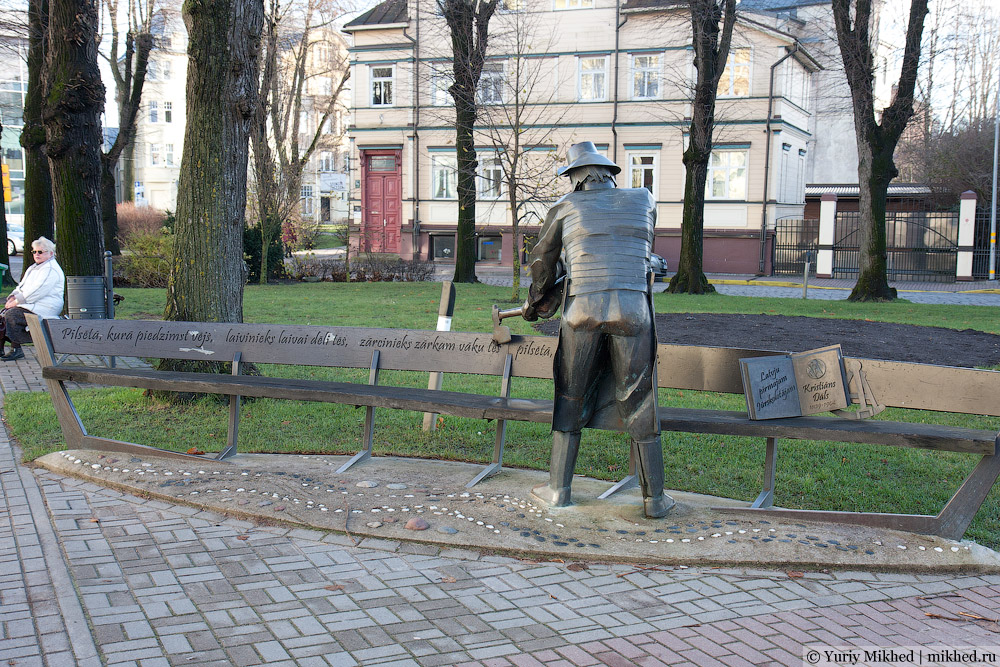
The mention of the boatman and the undertaker in the same verse perhaps hints at the hardships faced by those who went out to sea. At the very end of this street stands a monument to the sailors and fishermen who never returned.
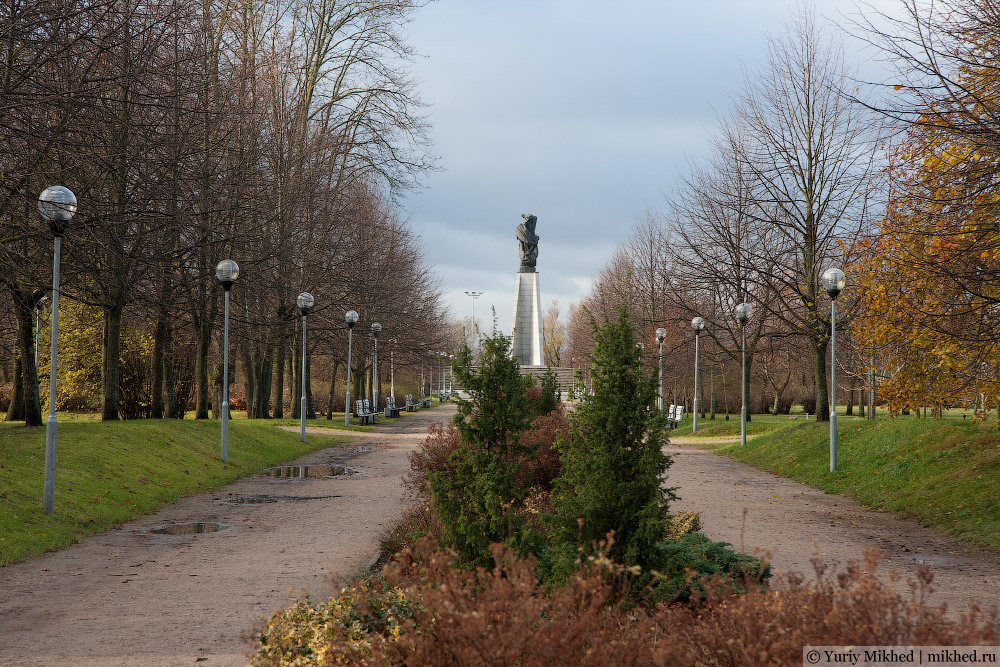
The monument was erected in 1977, so its style strongly resembles the Brezhnev-era memorials to war heroes.
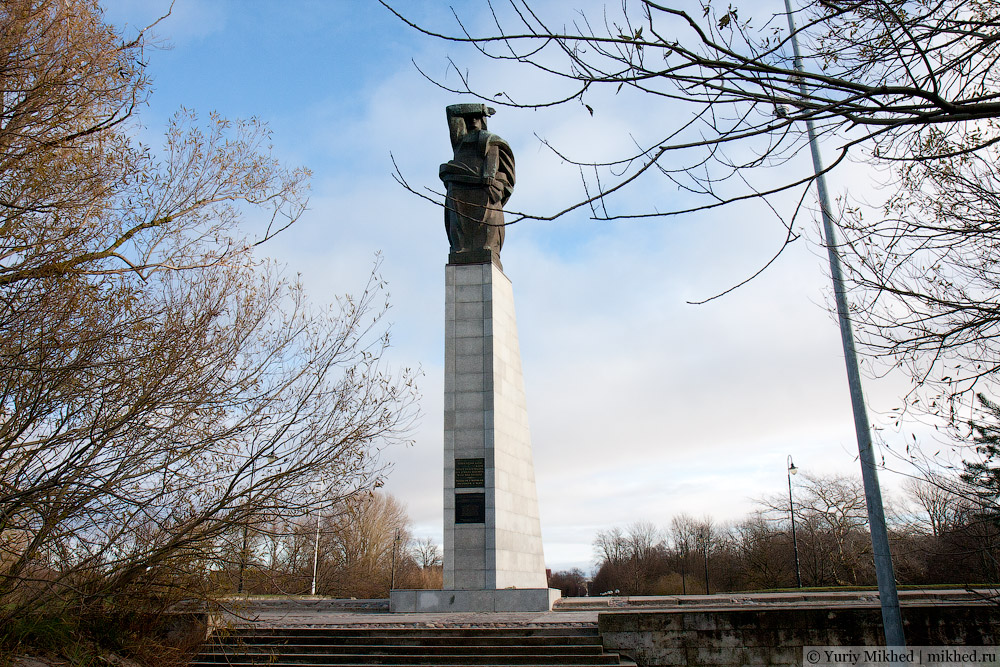
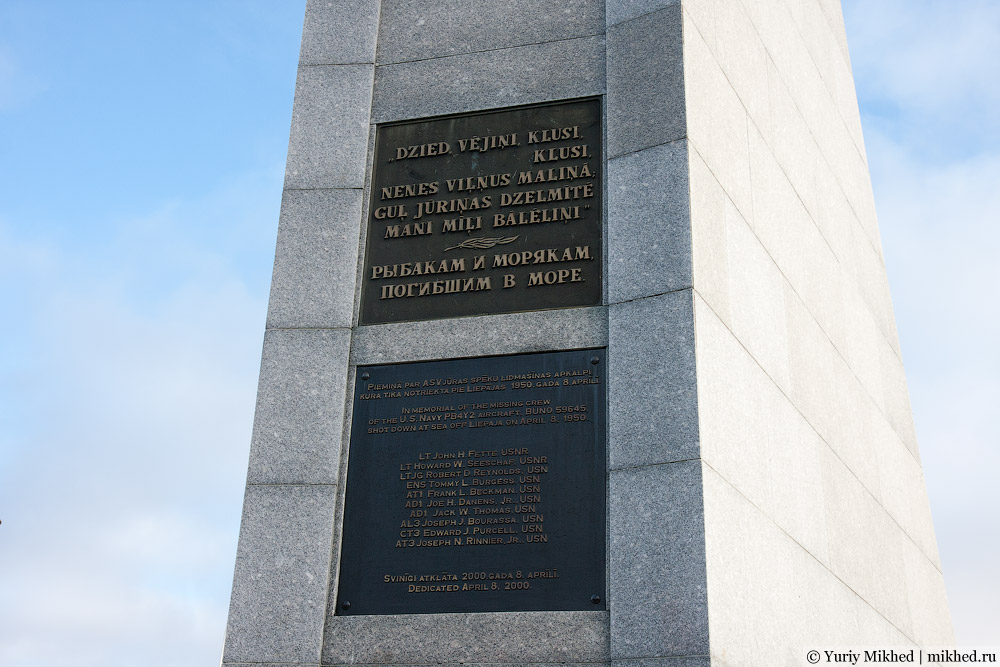
"The breezes sing softly, softly, the little waves do not carry to the shore, my beloved little brothers sleep in the depths of the sea," reads the Latvian text on the plaque (the use of such diminutive suffixes for every noun is an organic device in Latvian, common in folk poetry). The commemorative plaque below was installed in 2000. It bears the names of the crew of an American PB4Y-2 Privateer patrol aircraft, which flew into USSR airspace in 1950 and was shot down by Soviet fighters not far from Liepāja. All 10 people on board perished.
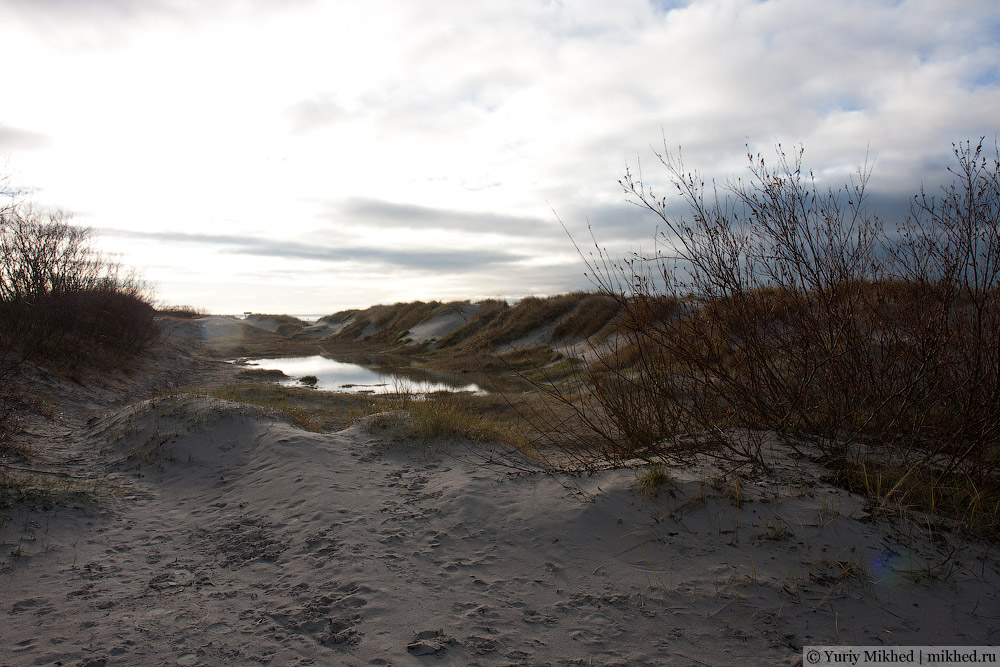
The beach is very wide, with several rows of sand dunes.
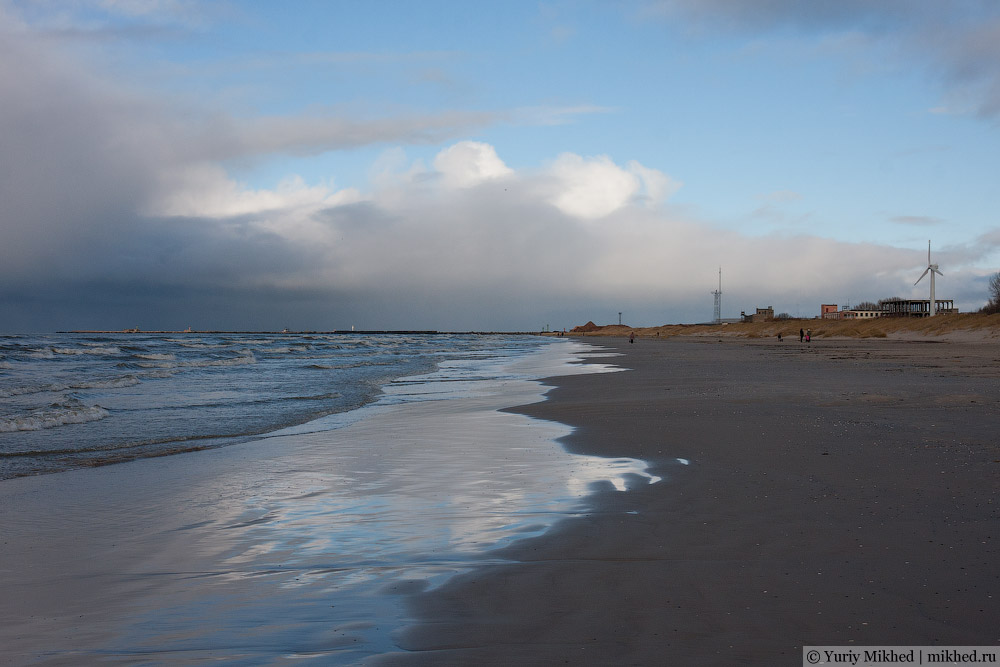
The Baltic.
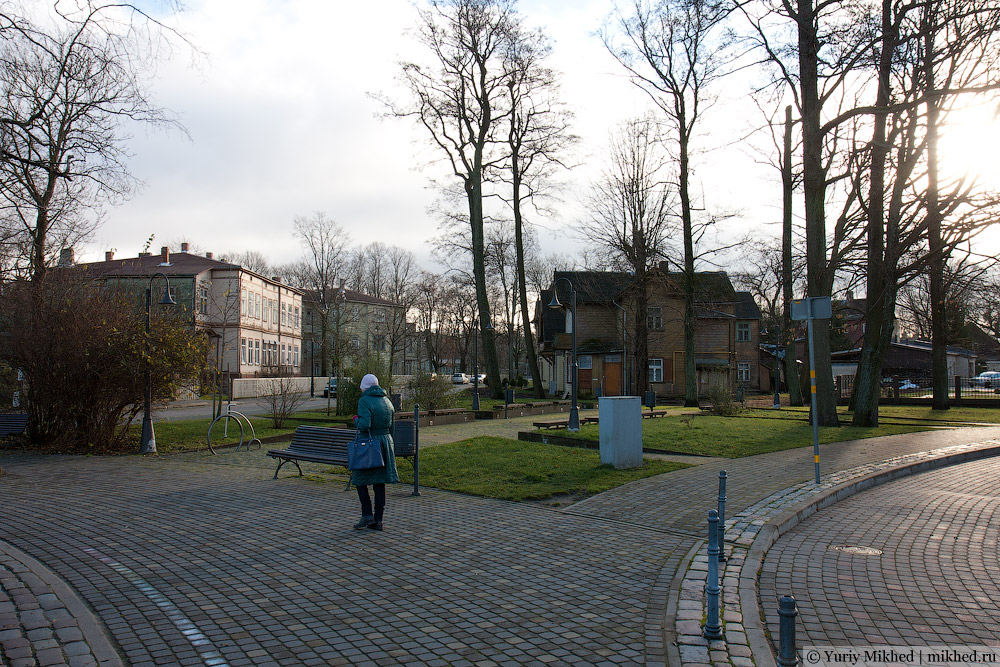
A lovely neighbourhood near the seaside park.
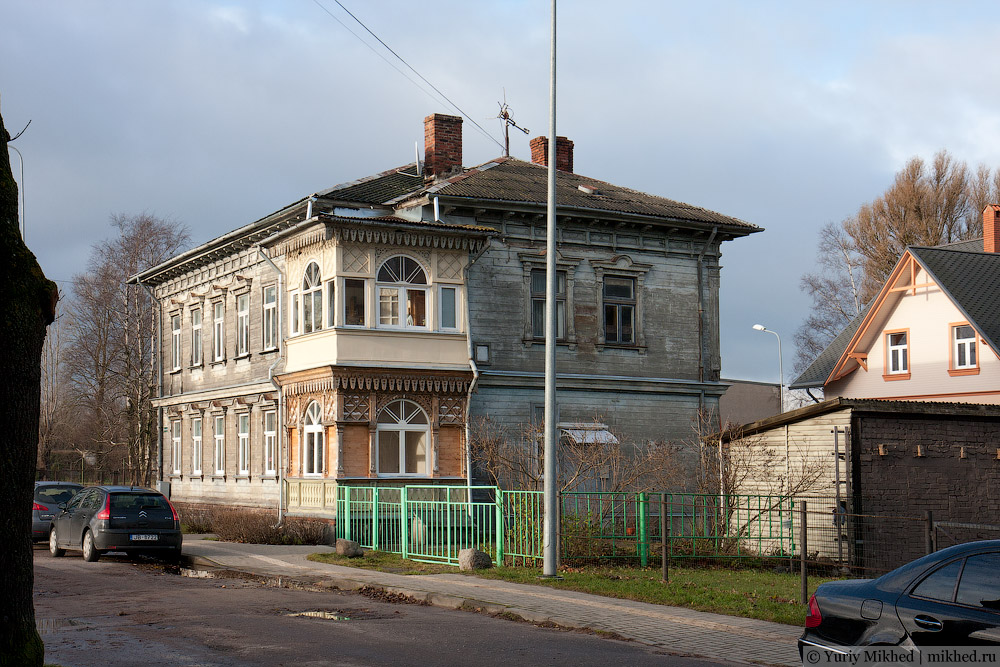
I liked it for the high-quality street maintenance.
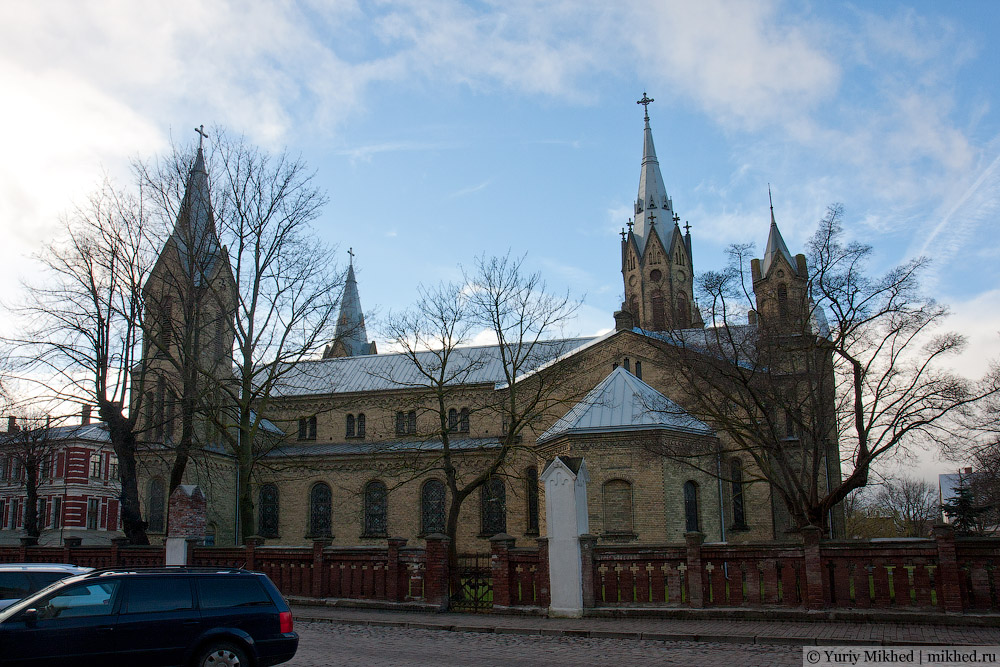
Several churches, both German and Russian, have been preserved in the city.
In Soviet times, Liepāja continued to be an important industrial centre, port, and naval base. Following independence, due to the mass departure of Russians, the city experienced significant depopulation — whilst in 1989 the population stood at 114,500 people, by 2000 it had fallen to 89,000. The population continues to decline due to migration and natural decrease. According to data from 2017, only 69,000 residents remain here.
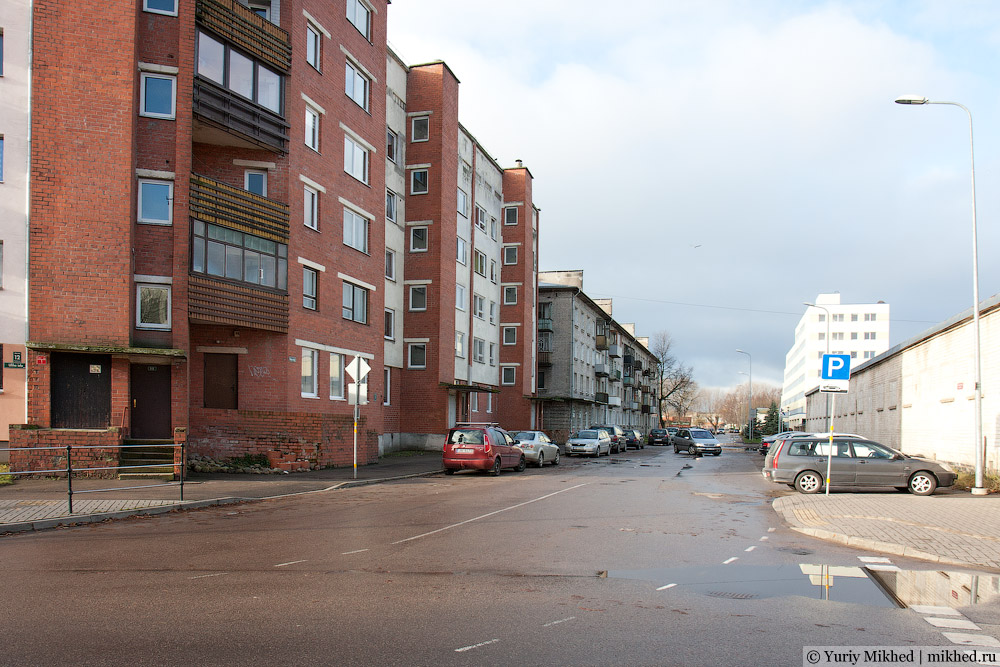
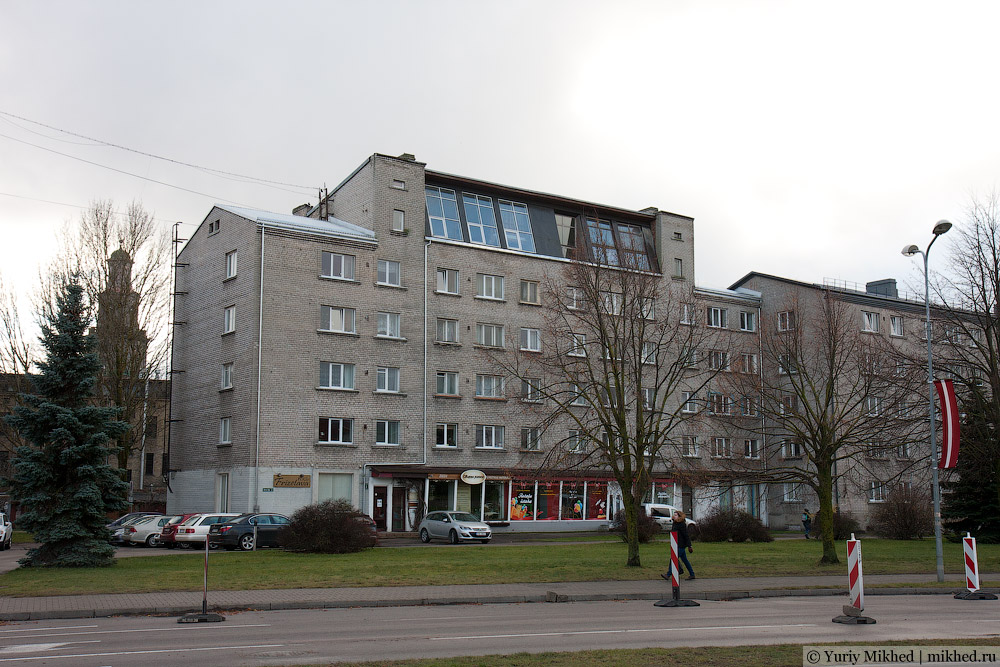
A very unusual structure on the roof of a standard Soviet five-storey building. I wonder what it was originally made for?
* * *
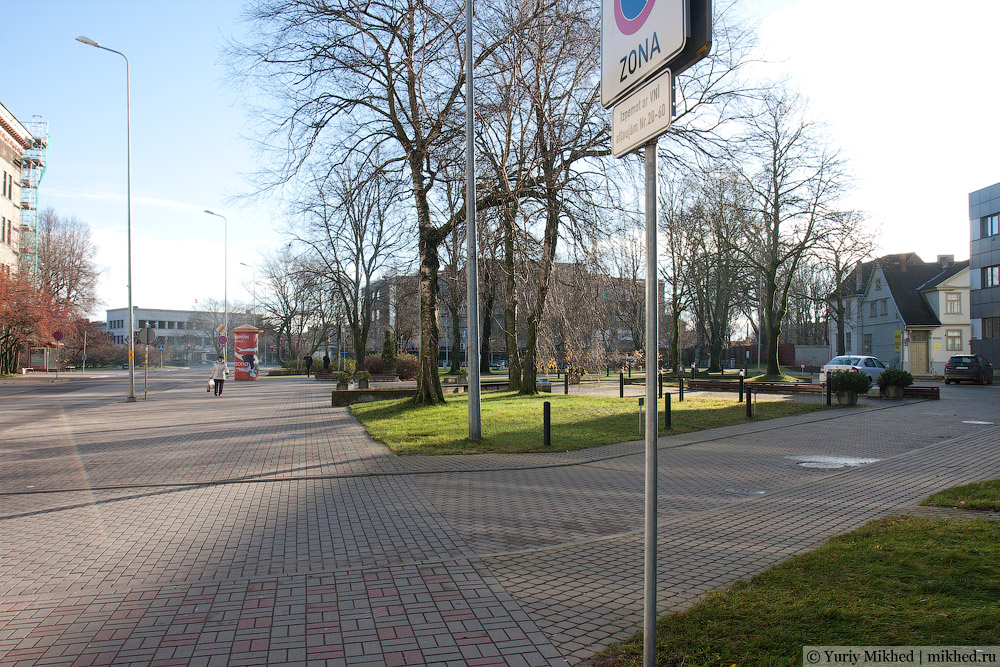
City squares and public spaces.
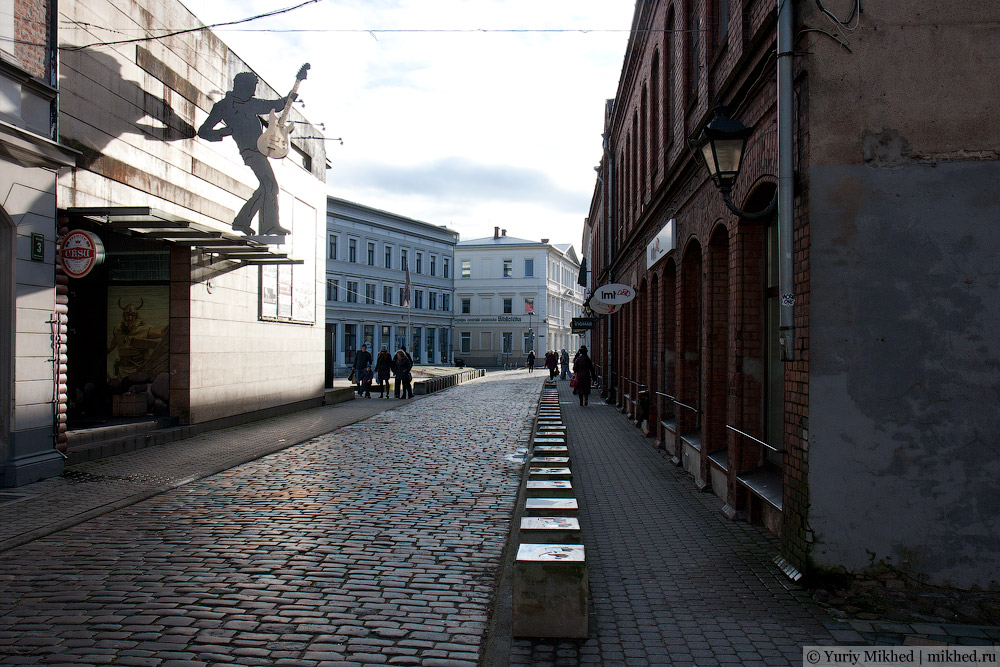
Something like the Hollywood Walk of Fame — along the street, there are bollards with handprints of famous Latvian musicians.
The city's tram system, operating since 1899, is one of the oldest in the territory of the former Russian Empire and the first electric one in Latvia. Its feature is a narrow gauge of 1,000 mm. Most tram systems of the former USSR use the Russian gauge of 1,524 mm, whereas the metre gauge is common among tram systems in Germany, western Ukraine, and some other European cities, such as Helsinki.
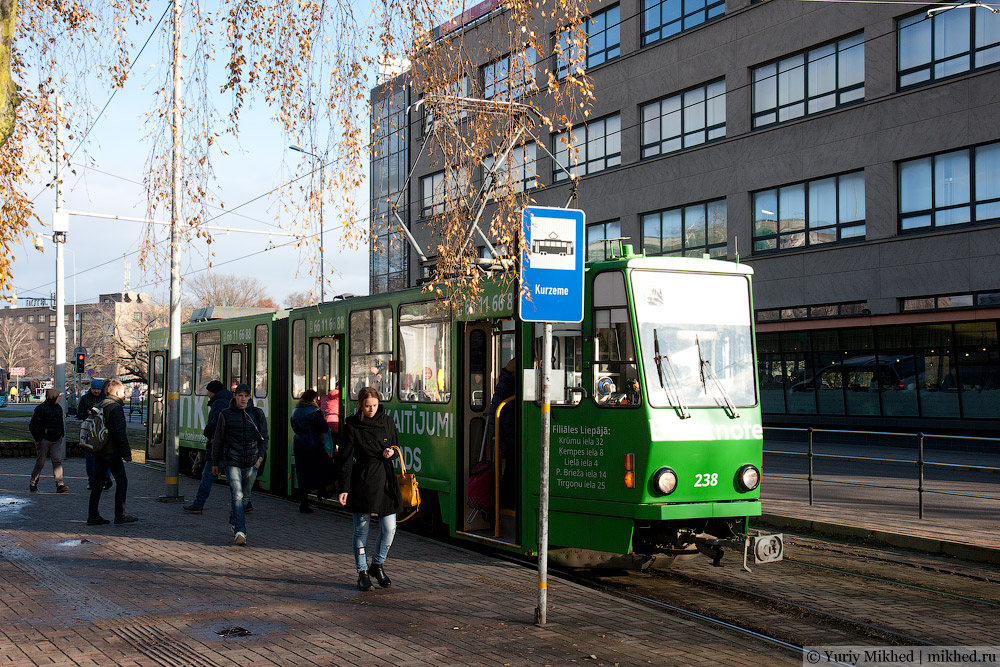
The fare is 70 cents On that day — 49 ₽
49 ₽ 21,82 ₴
 1,65 Br
 0,83 $
(80 On that day — 57 ₽ 24,93 ₴ 1,89 Br 0,94 $
from the driver) or 2.5 € On that day — 177 ₽ 77,91 ₴ 5,91 Br 2,95 $
for a day ticket. The rolling stock consists of Czech Tatra KT4 carriages from the eighties, typical for the former USSR. Mind you, these are not the carriages that ran here in Soviet times — the former KT4SU were scrapped due to wear and tear, and in the 2000s, the city purchased second-hand carriages that were being retired in cities of the former GDR. The city has plans to extend and modernise the system, but things are heavily slowed down by a lack of funds.
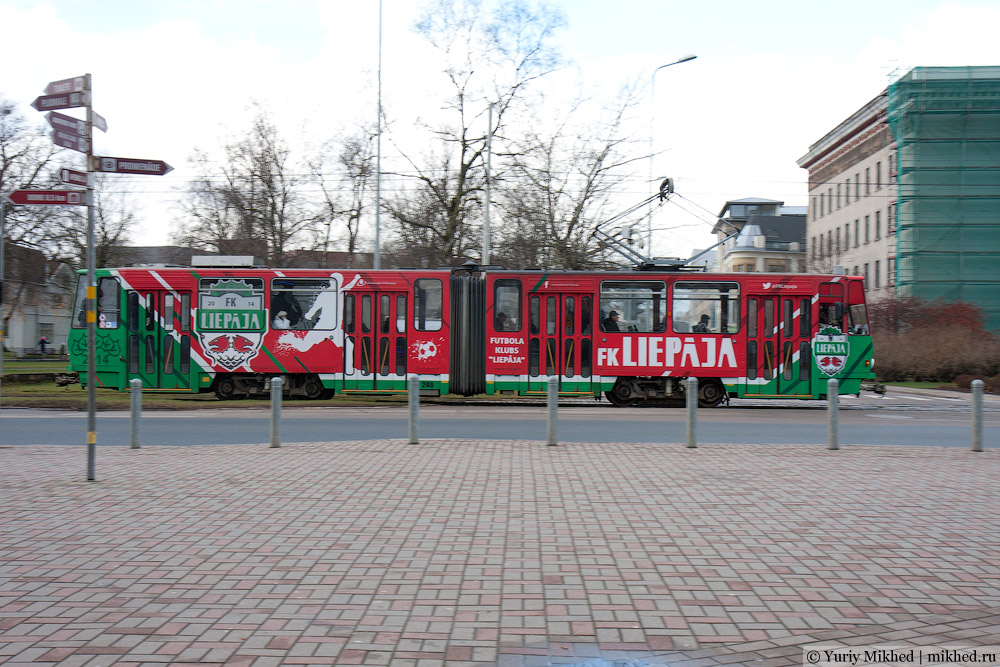
Original bicycle parking racks are found everywhere. I saw cycle lanes on a couple of streets, but overall there is no dedicated cycling infrastructure.
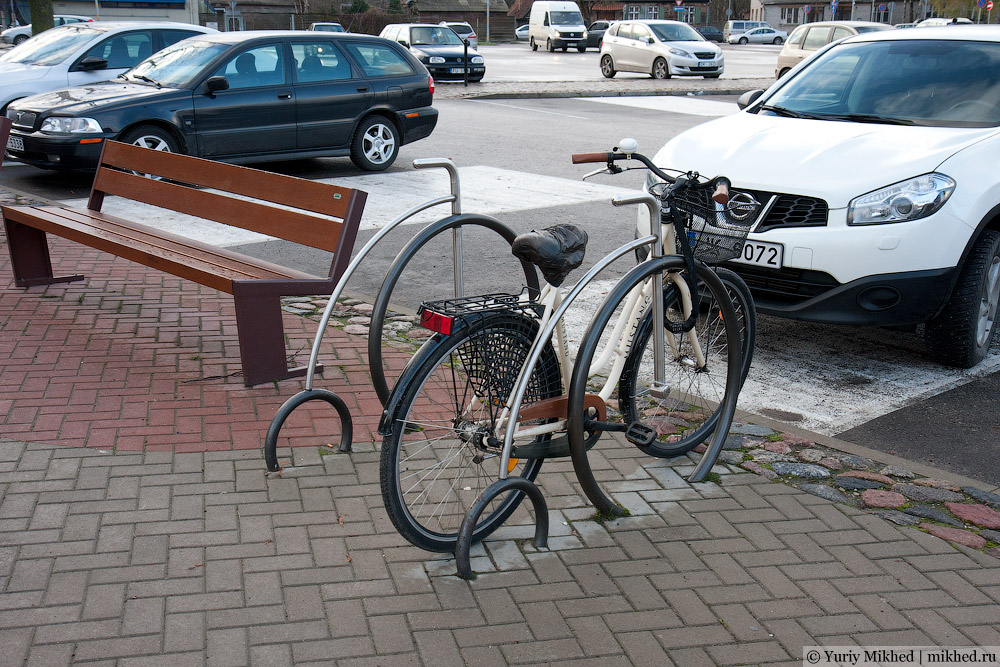
Trees are pollarded in a very strange way — essentially, they just hack them off from all sides; as a result, you get this. Is it worth doing it this way?
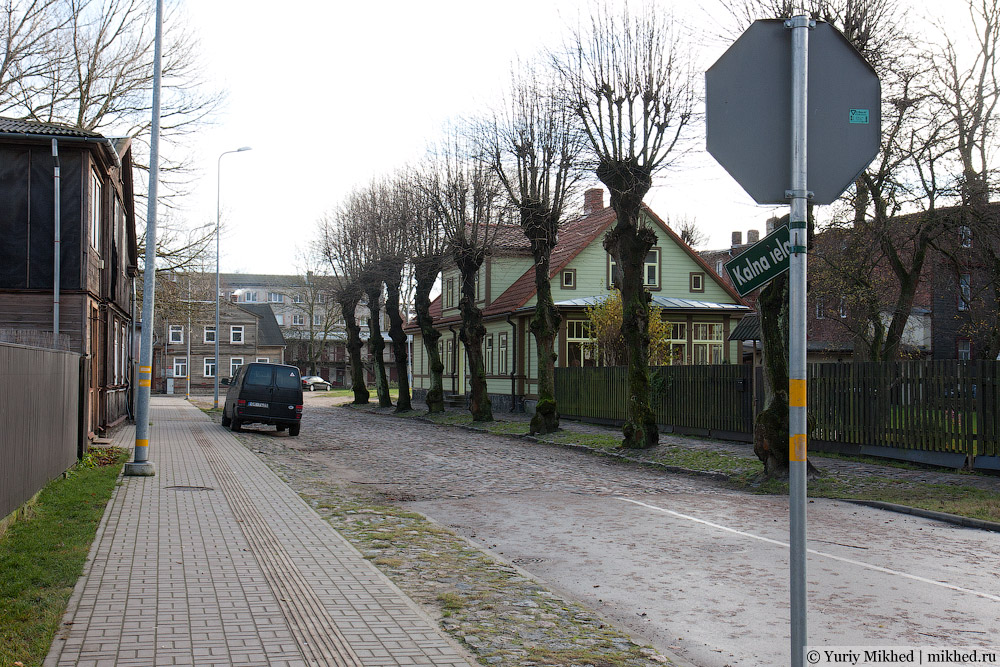
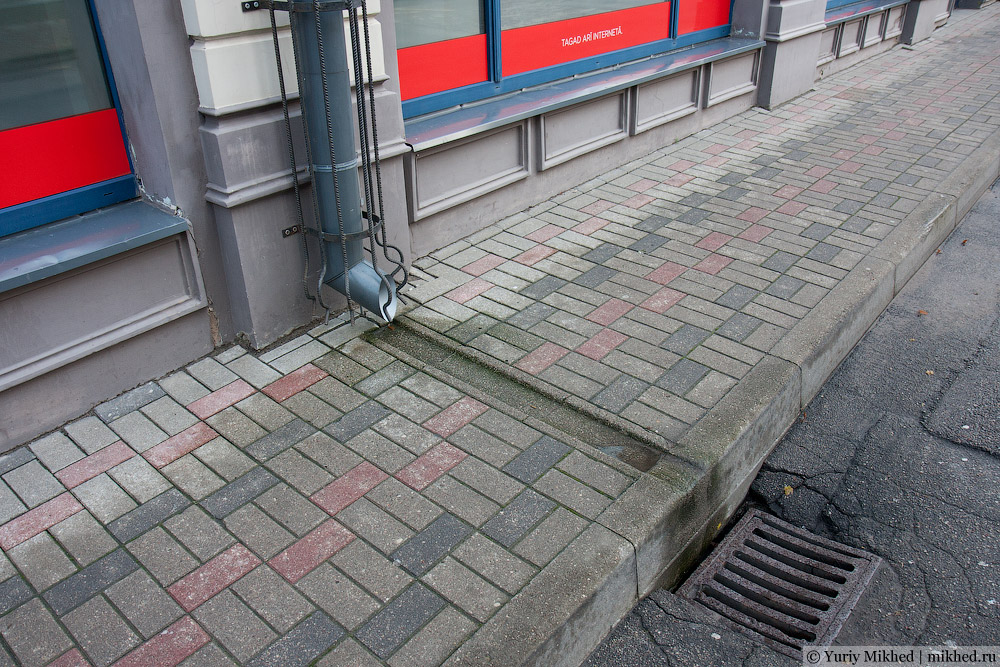
A groove on the pavement drains water away from the drainpipe. In Russia, such things are often neglected, because of which a section of the pavement turns into an ice rink in winter and breaks down faster in summer.
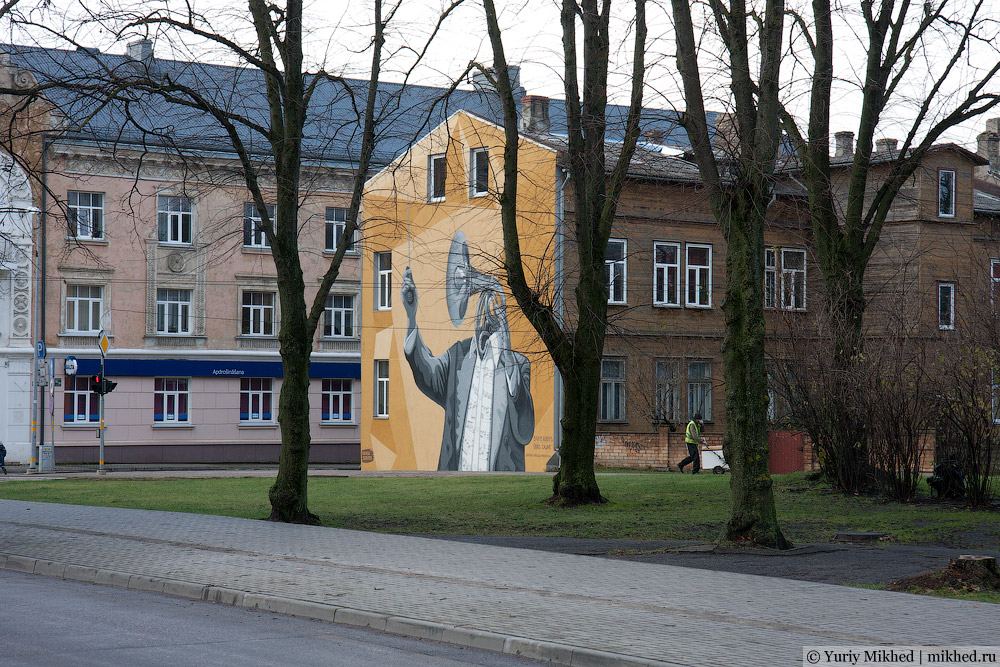
I came across a couple of nice murals.
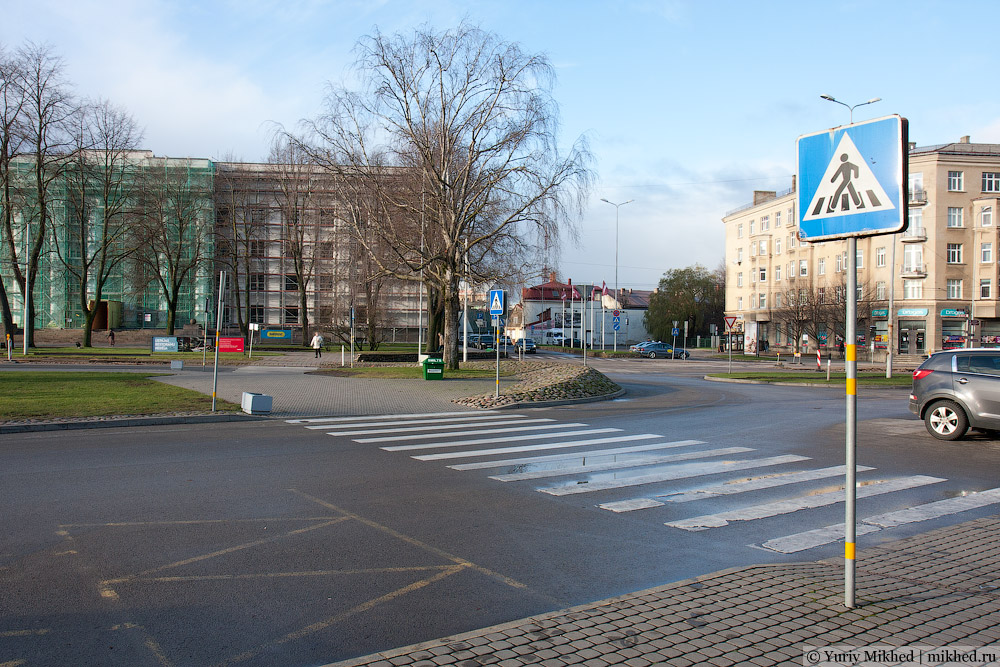
Special reflective tags are stuck onto all traffic light and road sign posts.
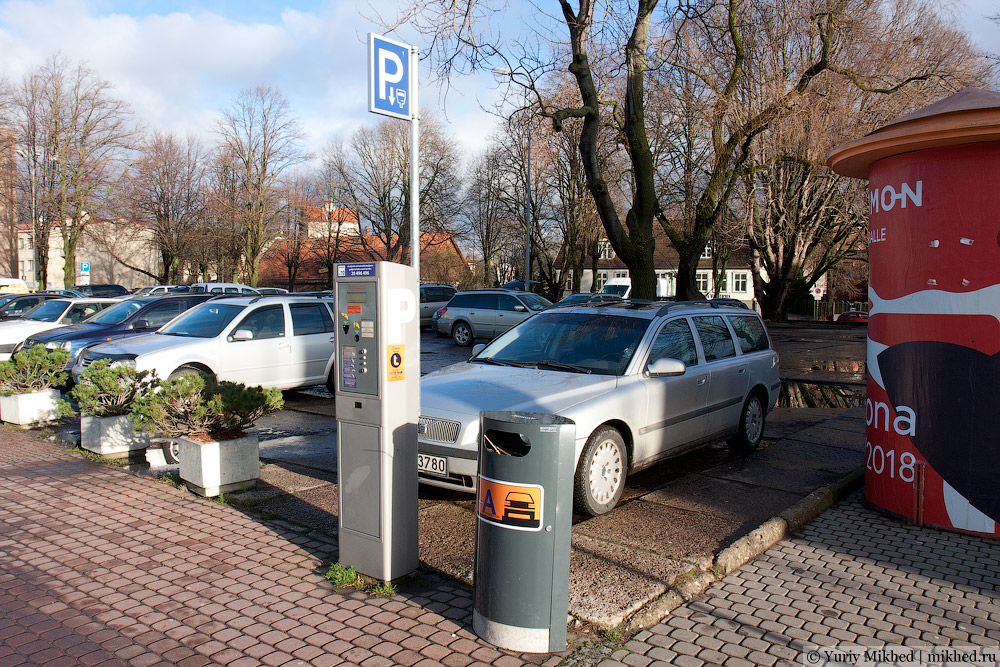
Parking in the centre is pay-and-display. Parking meters print a ticket that needs to be placed under the windscreen. A local detail — there is always a bin for used tickets next to the parking meter.
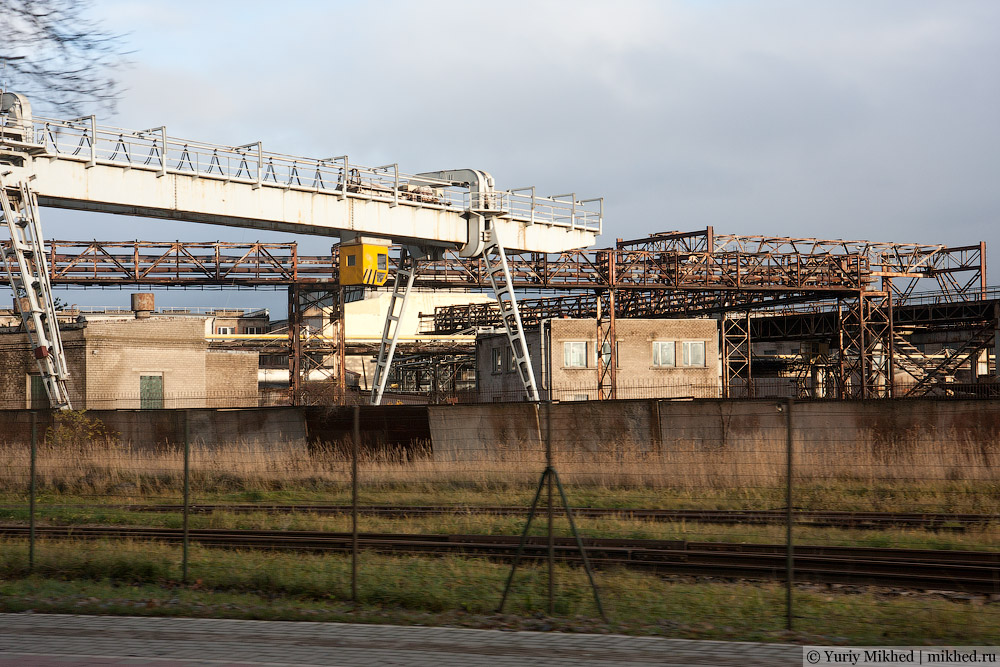
Leaving Liepāja, we drive past the metallurgical plant. The plant for manufacturing steel rebar was founded back in 1882 as the "Böcker & Co" enterprise. In Soviet times, it was one of the town's primary employers, but after the collapse of the USSR, like many industrial enterprises left without Soviet state orders, although it didn't close down, it barely makes ends meet and periodically goes bankrupt.
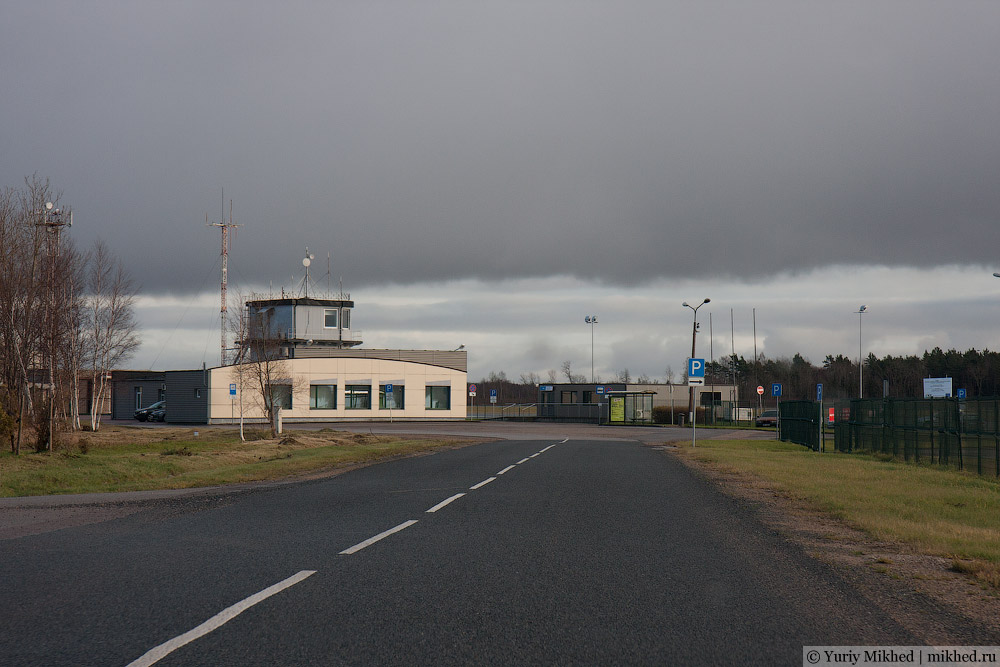
Finally, we drop by the local airport (LPX/EVLA). At present, Liepājas lidosta is the only regional airport in Latvia from which regular passenger flights are operated — a few times a week, an AirBaltic DHC-8 flies here from Riga (the travel time to the capital is just 25 minutes — during the first half of the flight, the plane climbs to flight level 180, after which it immediately begins to descend). A return ticket costs 53 Euros On that day — 3 747 ₽ 1 652 ₴ 125 Br 62,47 $
. The terminal is a tiny, single-storey building.
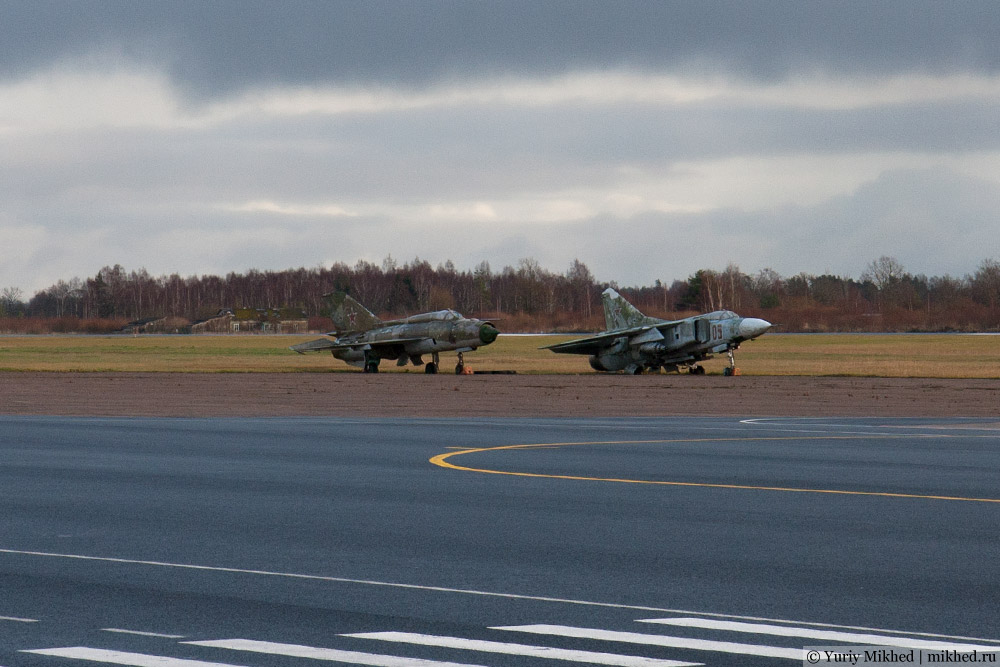
In Soviet times, it was a joint-user airfield, and decommissioned Soviet fighters are still preserved here. There used to be more of them, but now only two aircraft remain — a MiG-21PFM and a MiG-23S. The airport is infamous for being the site of the largest plane crash in Latvian history in 1967, when a passenger An-24B crashed on approach, killing 43 (according to other sources, 44) people.
Beautiful.
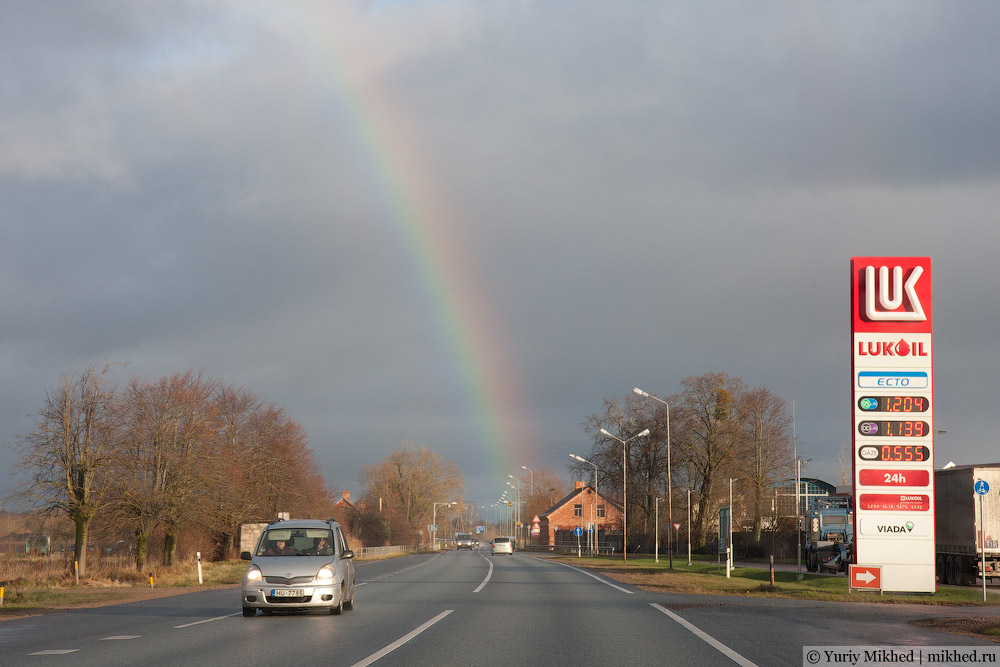
On the way back, we turned off into Durbe. This is the smallest settlement in Latvia with town status. At first, I wanted to write that it reminded me of Germany.
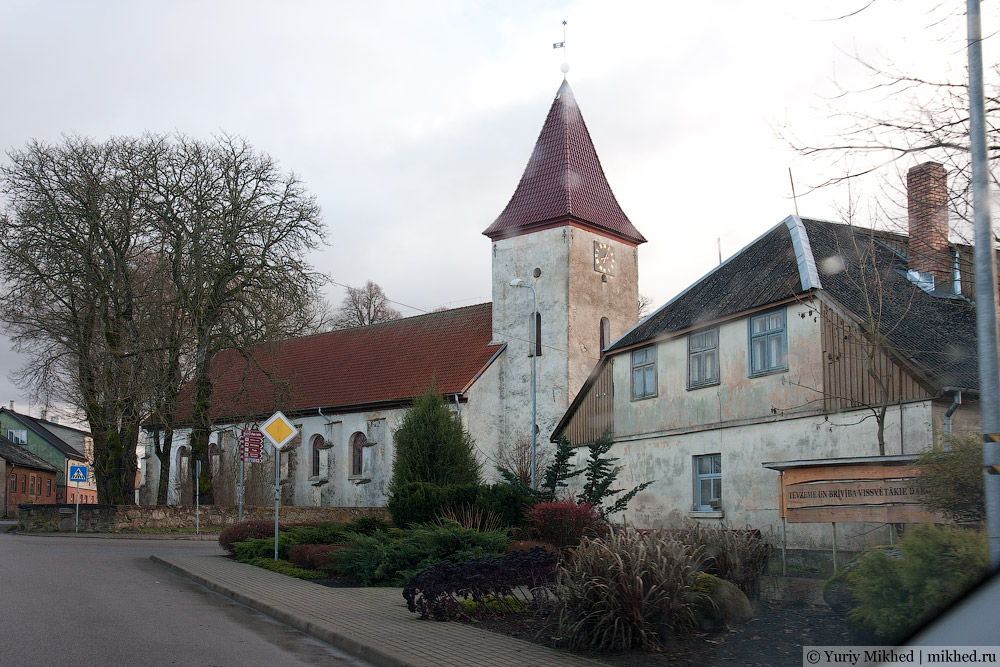
But then I changed my mind.