Jūrmala
Vidzeme, Latvia, November 2017
Google Maps, Yandex.Maps
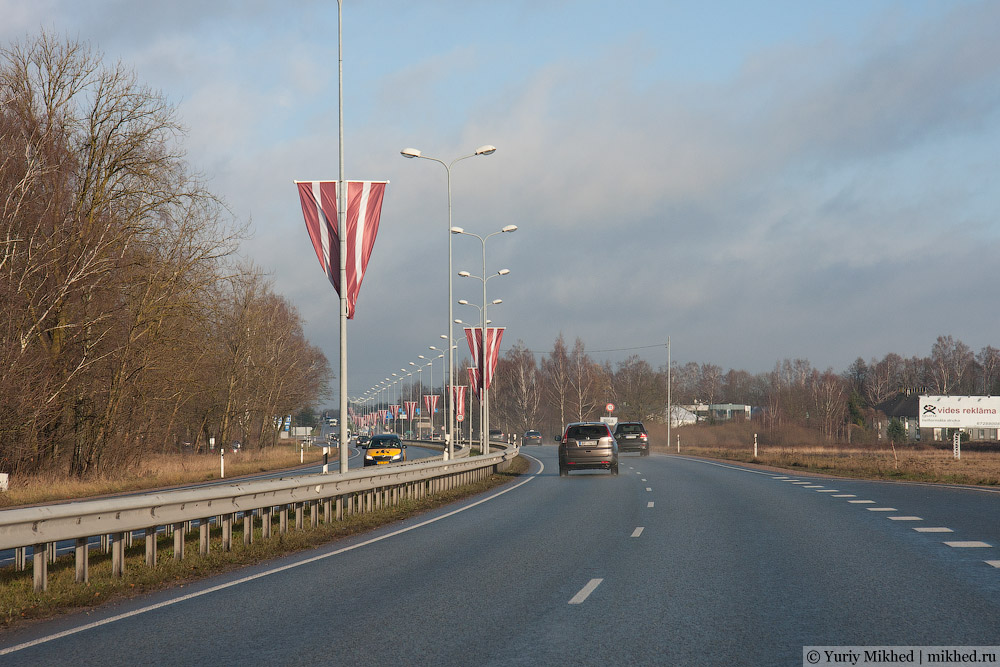
The hours of daylight in late November are already short, so I drove straight to Jūrmala without making any stops along the way, which is a 20-minute drive from the airport. Around Riga, the roads are all multi-lane and have dividers, though the speed limit is set at 90 km/h. Tomorrow is 18 November, when Latvia celebrates its main state holiday—Independence Day. Therefore, everything is decorated with flags.
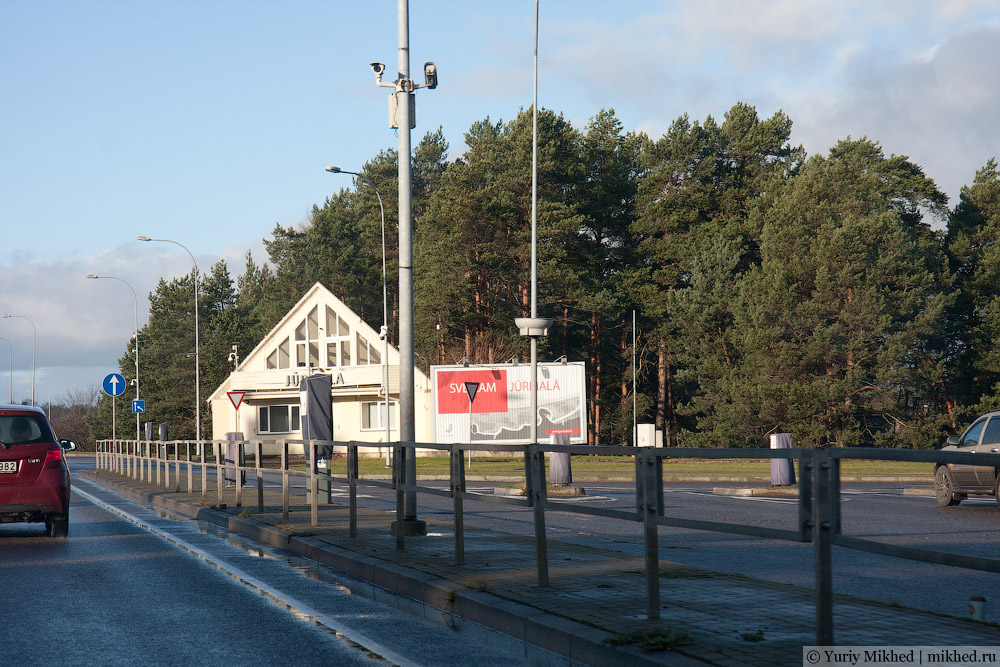
During the warm season, there is an entry fee to Jūrmala, but right now all the payment terminals are covered.
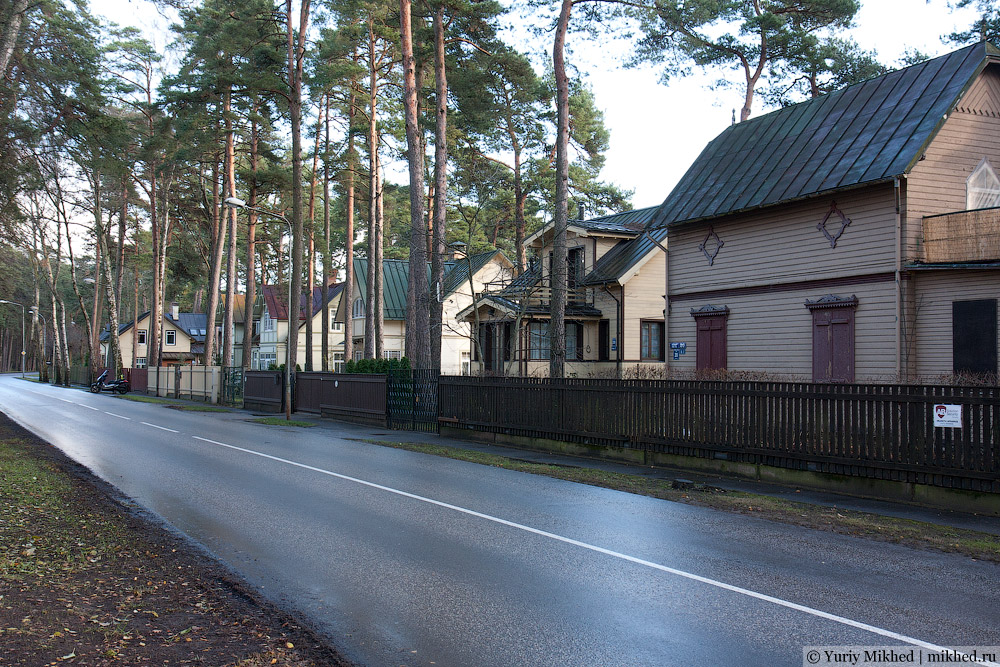
Translated from Latvian, "Jūrmala" means "seaside" (literally—"sea edge"). It doesn't look much like a town—it is rather a collection of many small villages stretched out over 30 kilometres along the coast of the Gulf of Riga. The population density is low, and low-rise buildings predominate.
A railway line runs alongside them. The track extends all the way to Ventspils, but most of the suburban trains go to Tukums. Thanks to them, getting to Jūrmala from Riga is very easy.
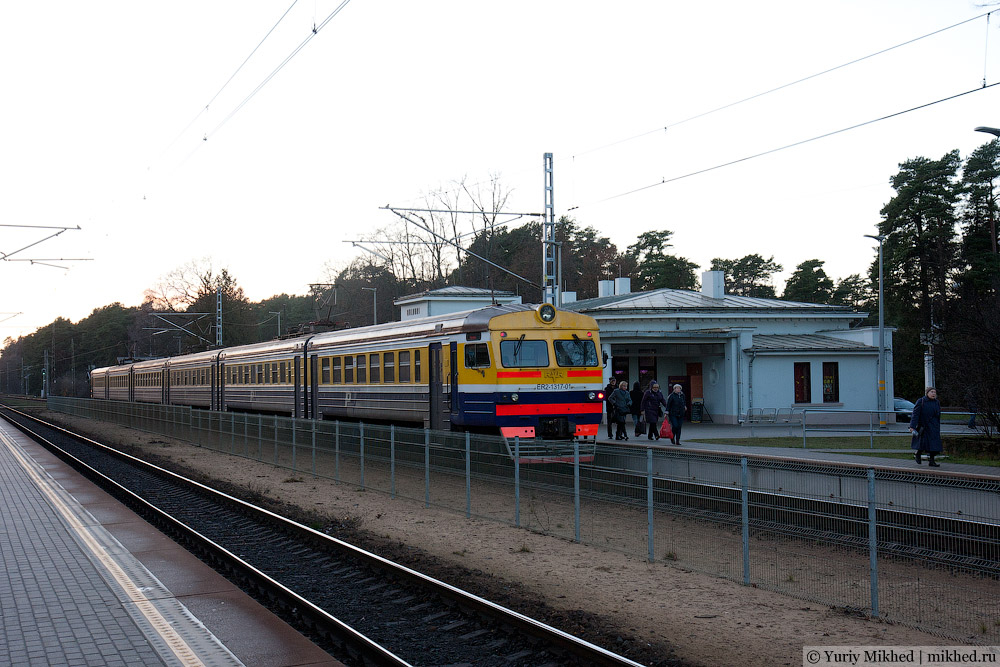
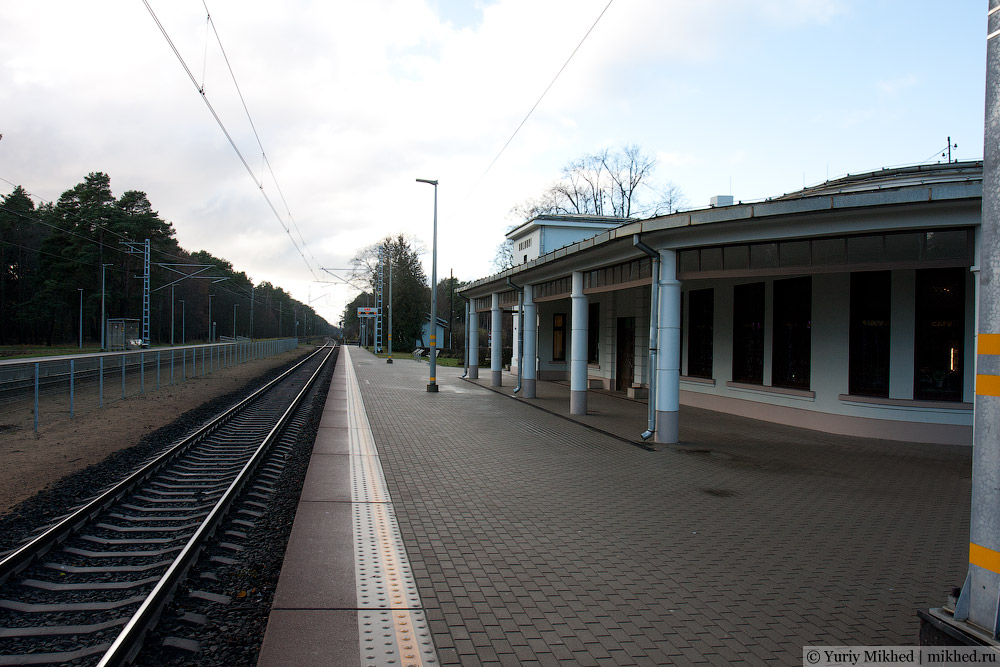
In my childhood, we came here quite often. We would arrive in Jaunķemeri in my dad's car, stop near the "Neptūns" cafe, and go for a walk. Jaunķemeri is at the other end of Jūrmala, where almost everything is covered by pine forest and there is hardly any development. I didn't make it there this time (it's far and time was short). When my parents divorced and dad left for Russia, my mum and I started coming by train. We would arrive in Bulduri—this station is the closest to Riga. That is where I stopped this time.
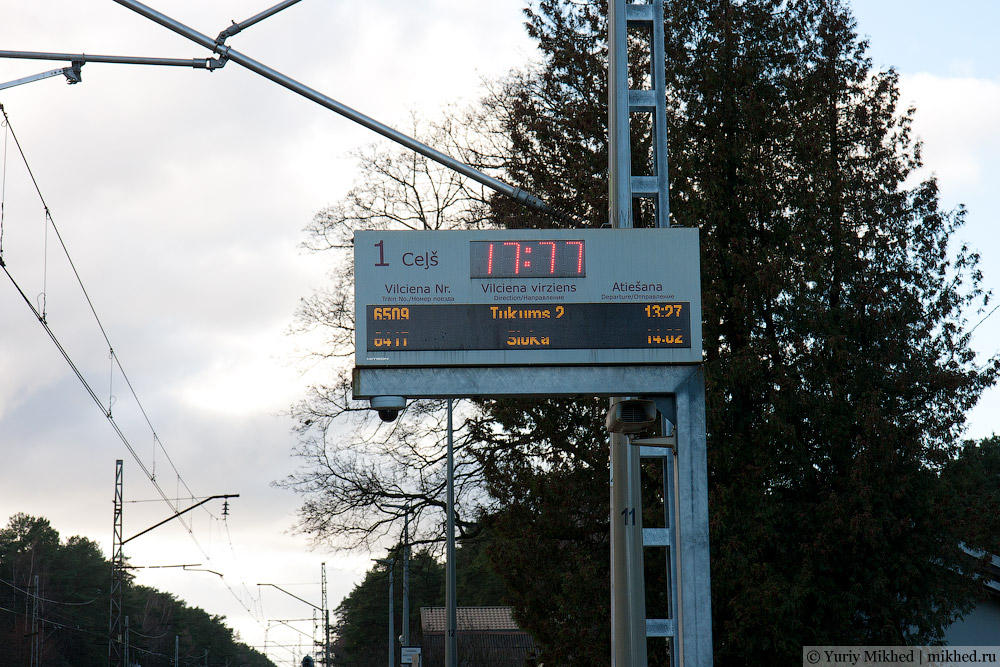
At each station, there is a display board indicating when the next trains will arrive. Convenient. The board isn't broken; the light bulbs just flicker rapidly. The eye doesn't notice this high-frequency flickering, but it is clearly visible in photos. In reality, the time shown is 13:08.
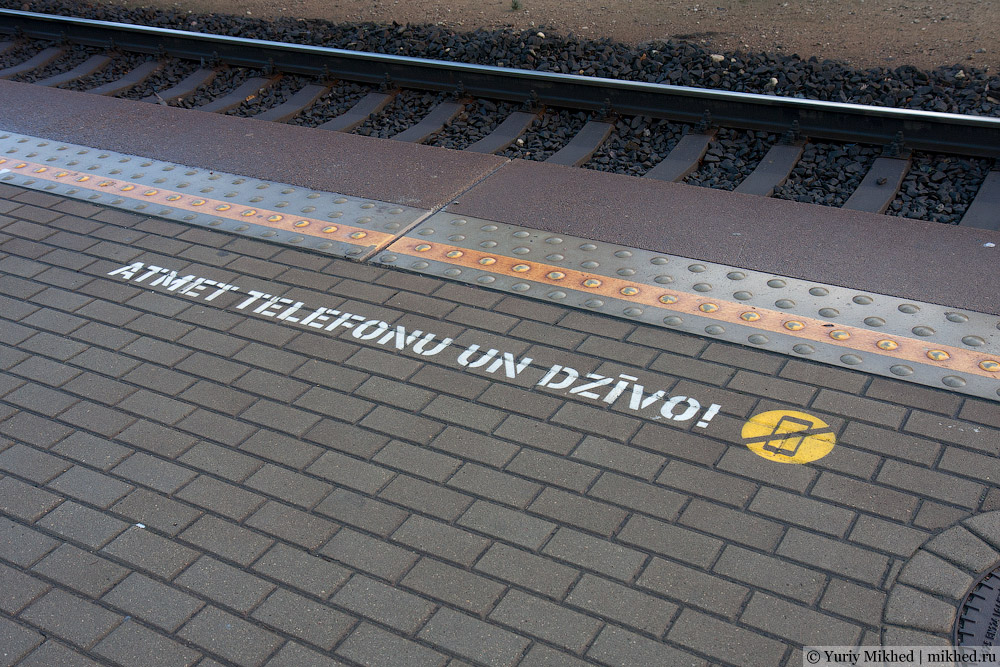
"Put the phone away and live!". The word "atmest" can also mean "to cast aside", "to put away", or "to give up", so the phrase even sounds somewhat philosophical.
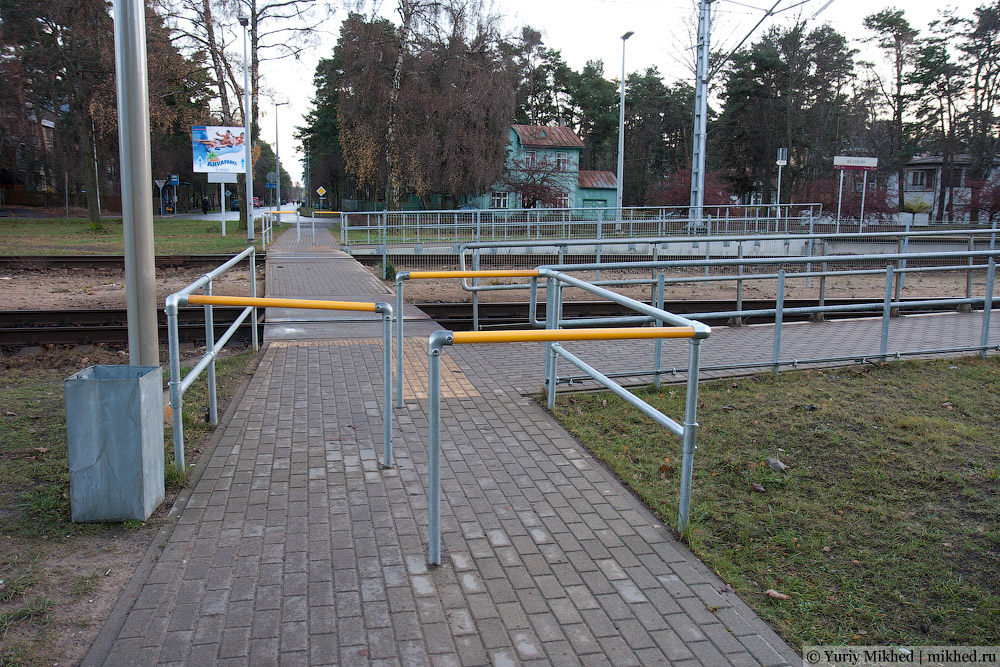
The railway crossing is fenced off with maze gates (so that pedestrians and especially cyclists slow down and don't rush out in front of a train).
On the whole, Jūrmala has become much better than it used to be; it has become far more well-maintained.
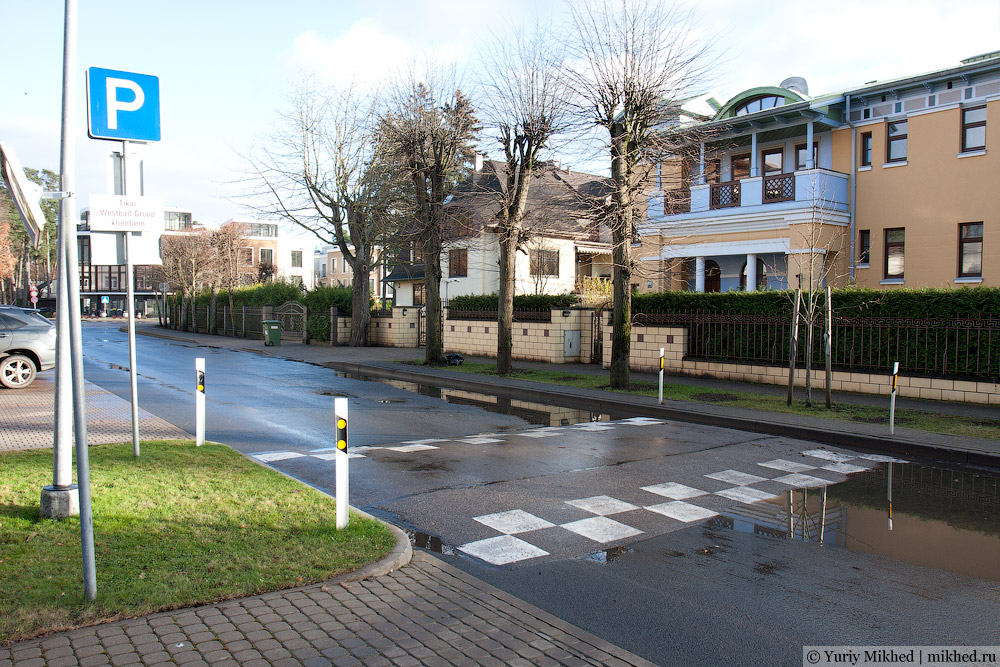
The roads have been repaired, and there are neat pavements almost everywhere.
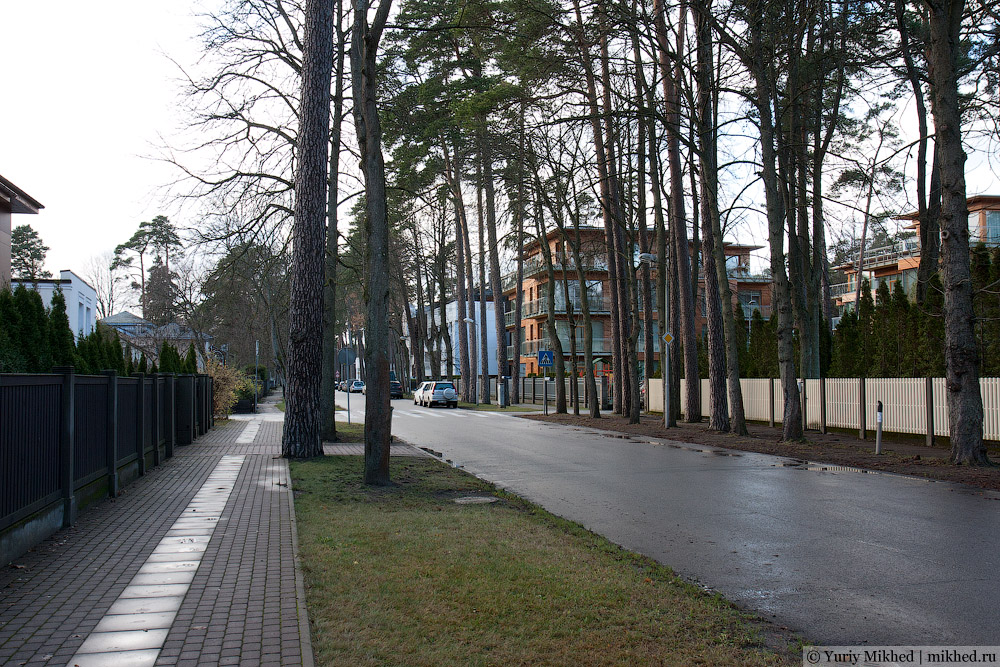
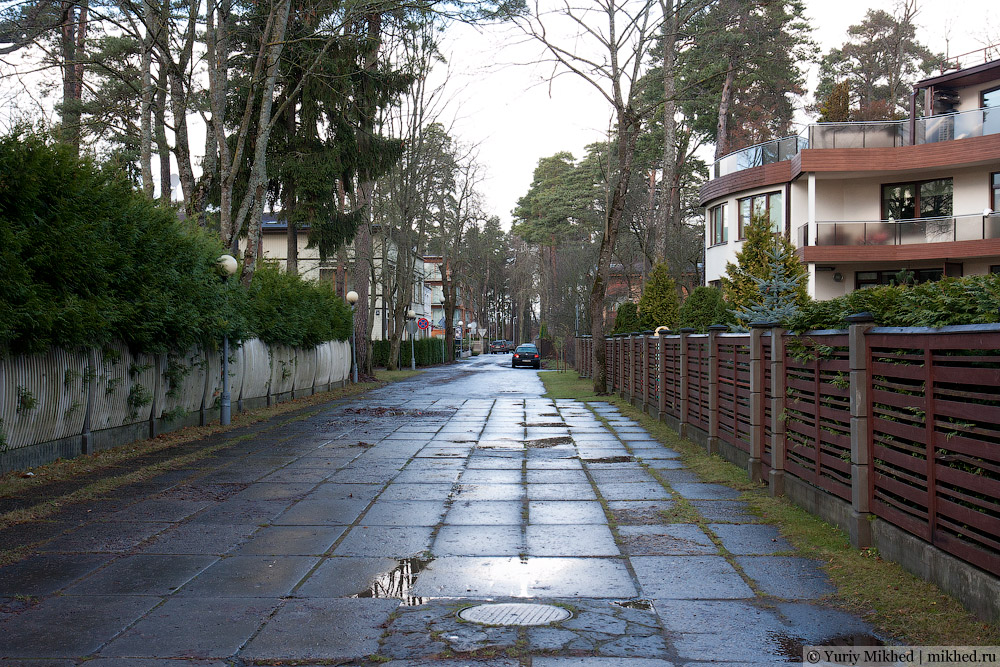
Although in many places, tiles laid back in the Soviet era have been preserved.
A few times I came across quite good playgrounds.
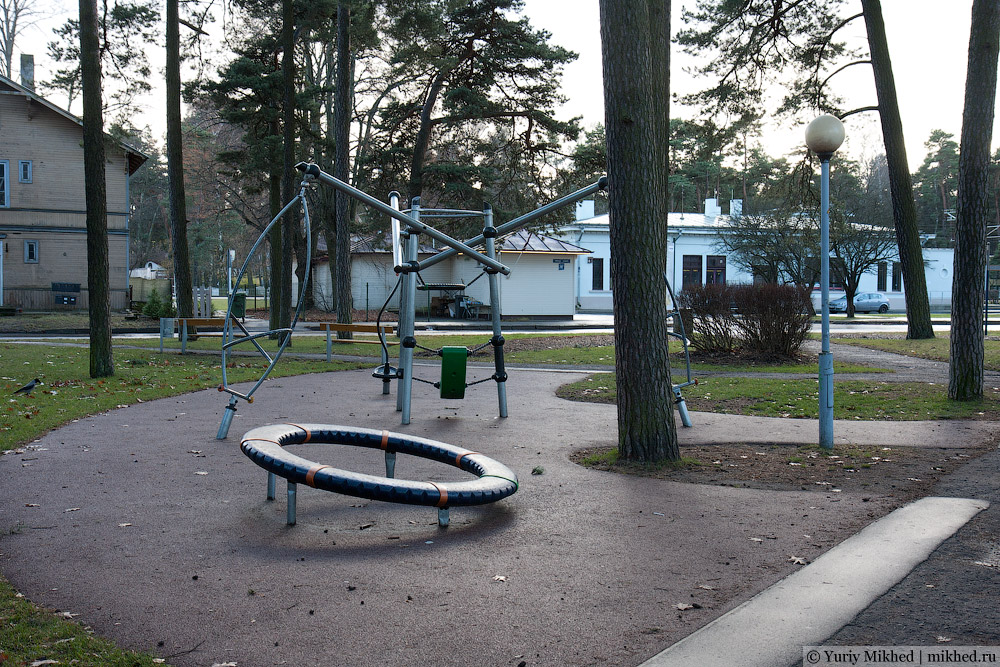
Proper civilisation.
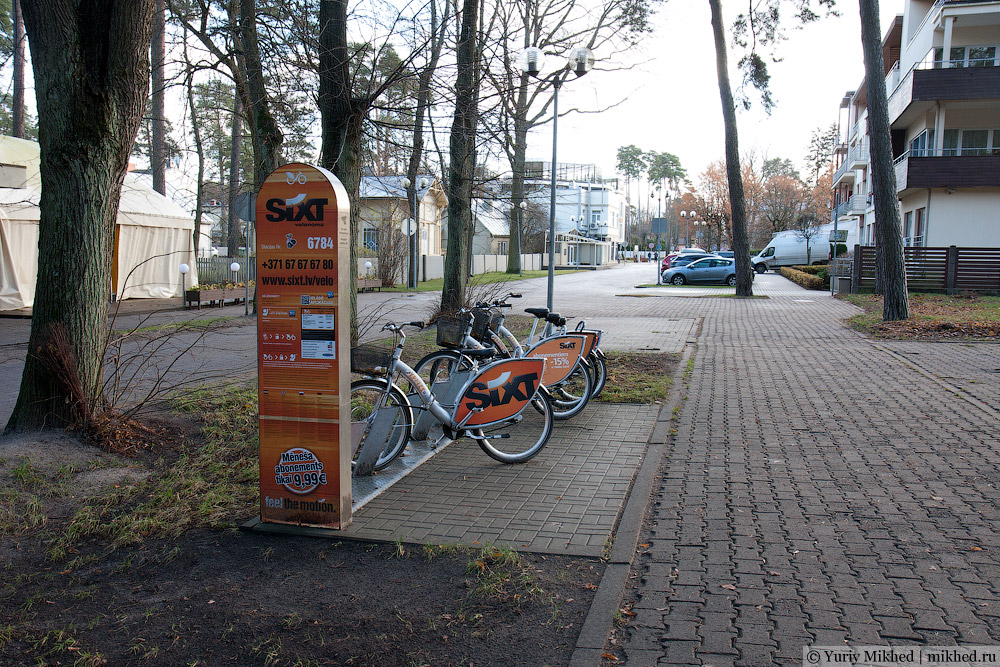
There are many bicycle parking racks, as well as bike rentals.
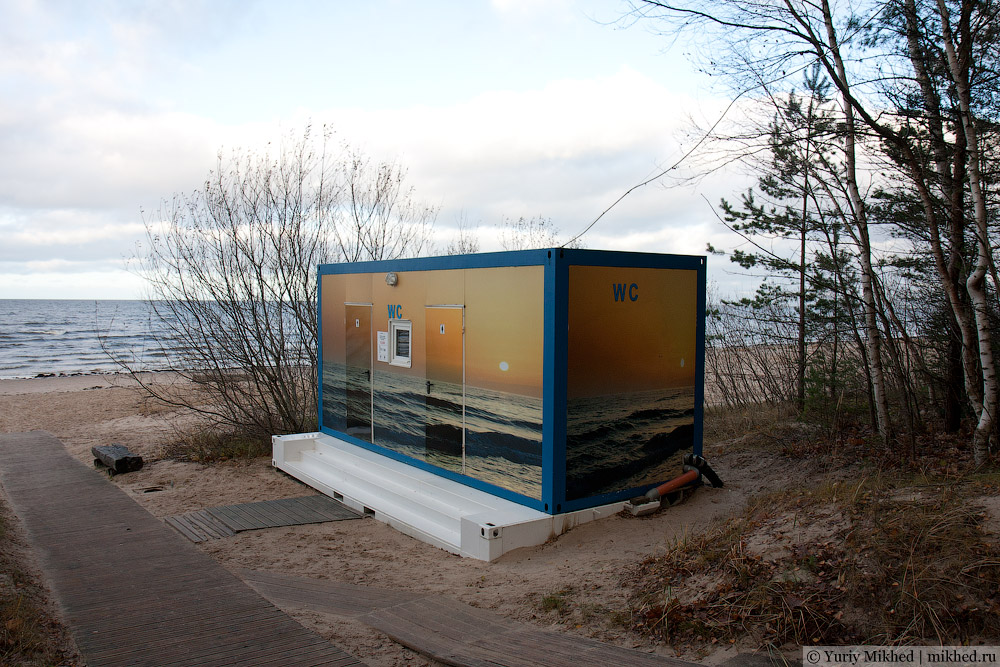
Public paid toilets like this one are placed around the town (though many are closed now). To use them costs 25 cents On that day — 18 ₽
18 ₽ 7,79 ₴
 0,59 Br
 0,29 $
.
The main change is that a lot of new housing has been built. Apartments are rented out to holidaymakers and are also for sale. Jūrmala is considered a prestigious place to live, but judging by how deserted it is, supply exceeds demand. Much the same could be seen in Sochi—there are also many "elite" residential complexes there where most of the apartments sit empty.
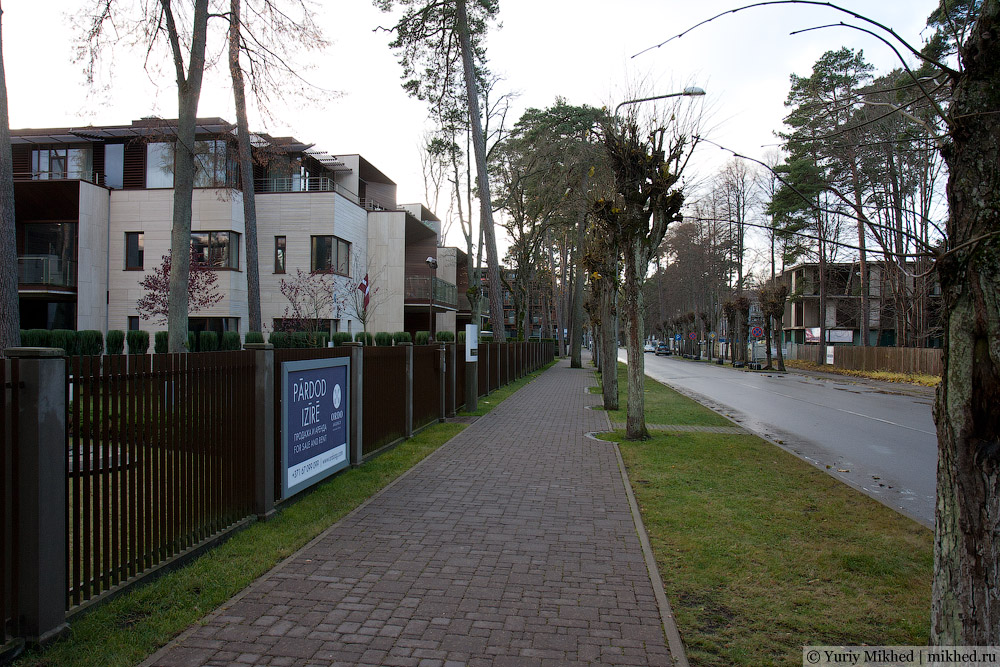
The housing, by the way, is good. In terms of architecture and the design of the grounds, it is indistinguishable from Scandinavia. But the prices are not for people with an average income. Apartments in such buildings start from 250000 euros On that day — 17 676 000 ₽ 7 791 350 ₴ 590 626 Br 294 650 $
.
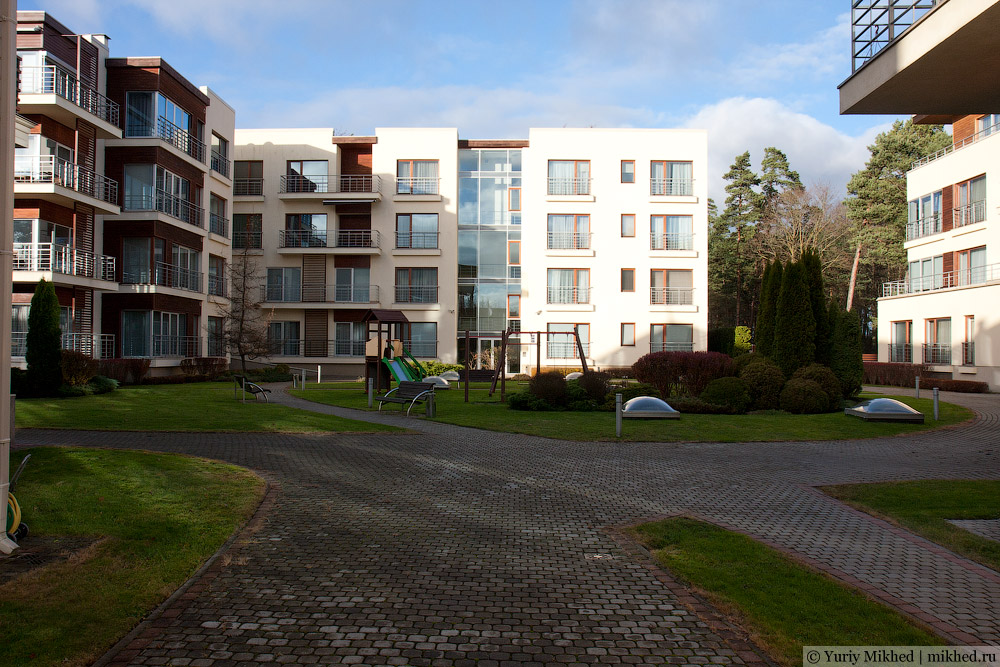
In a new development on the front line by the sea, a 100-square-metre apartment will cost 325000 euros On that day — 22 978 800 ₽ 10 128 755 ₴ 767 813 Br 383 045 $
.
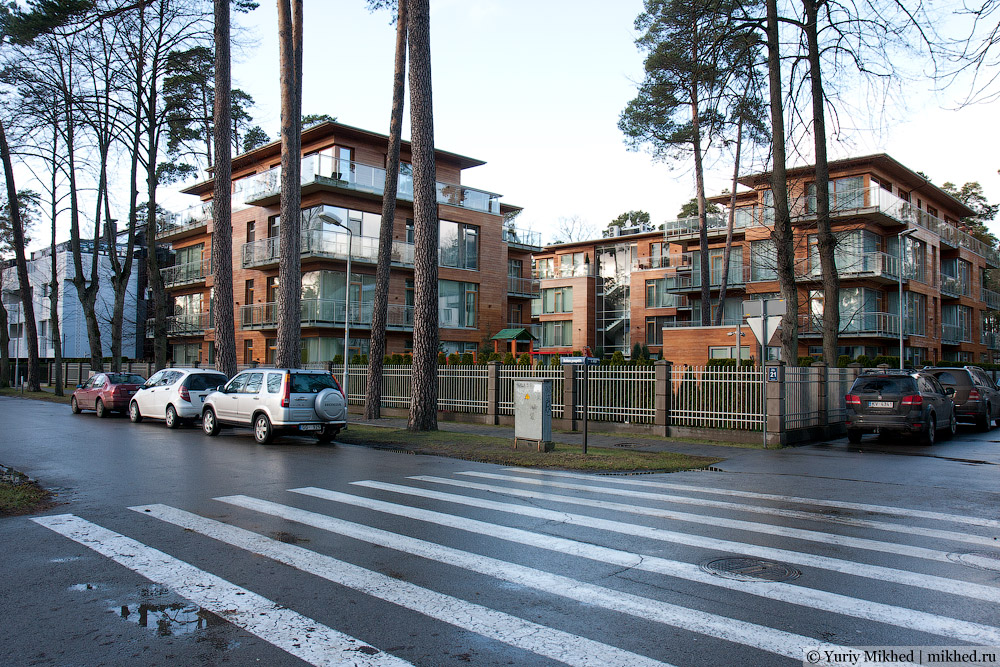
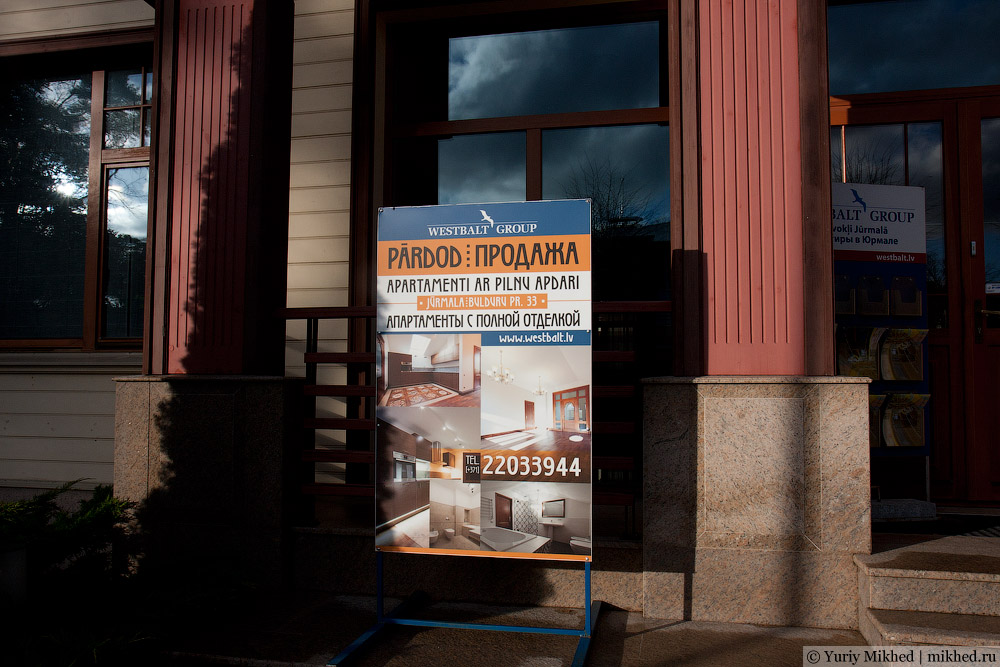
All real estate sale advertisements are duplicated in Russian, but not out of care for the local Russian-speaking population, but because a large percentage of the target audience for these ads consists of Russians. In 2010, in Latvia, which was hit hard by the economic crisis, a law was passed under which buying property worth from 145000 euros On that day — 5 540 407 ₽ 1 404 166 ₴ 535 155 024 Br 177 263 $
(and in the provinces—from 73000 € On that day — 2 789 308 ₽ 706 925 ₴ 269 422 874 Br 89 243 $
) granted the right to a temporary residence permit (with the possibility of obtaining a permanent one later). The law was primarily aimed at Russians (as it essentially provided a legal opportunity to move to the European Union) and, for obvious reasons, caused resentment among nationalists. But in times of crisis, money was more important. The nationalists, however, did not give up and continued to resist by all means. In 2014, through their efforts, the minimum price was raised to 250000 € On that day — 12 157 875 ₽ 4 444 200 ₴ 3 433 555 025 Br 329 200 $
, and in 2017, a requirement was introduced to pay 1000 euros On that day — 70 704 ₽ 31 165 ₴ 2 363 Br 1 179 $
annually for the residence permit. Today, the program has effectively ceased to work.
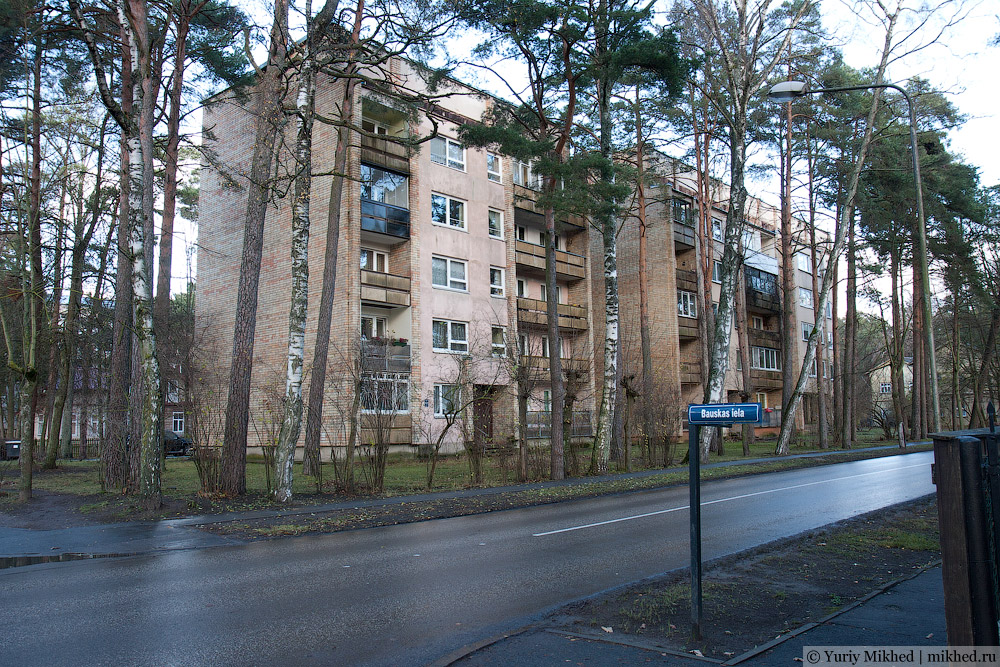
For citizens of Latvia wishing to buy an apartment in Jūrmala, there are cheaper options. A 50-metre apartment can be bought for 65000 euros On that day — 4 595 760 ₽ 2 025 751 ₴ 153 563 Br 76 609 $
. Mind you, the buildings will look something like this, and you'll have to take a walk to get to the sea.
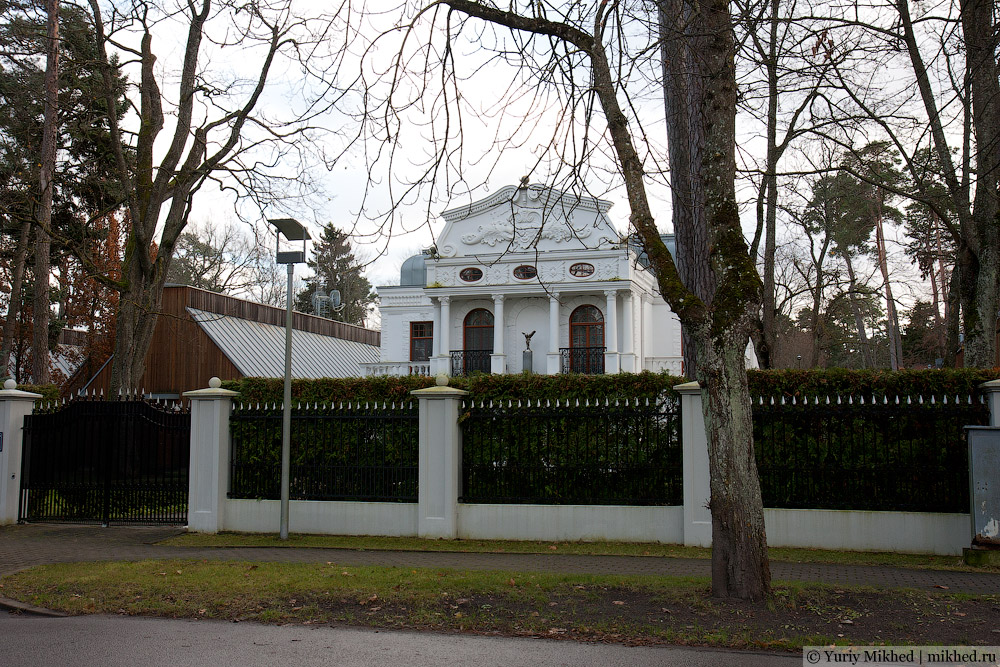
Local wealthy people live in Jūrmala.
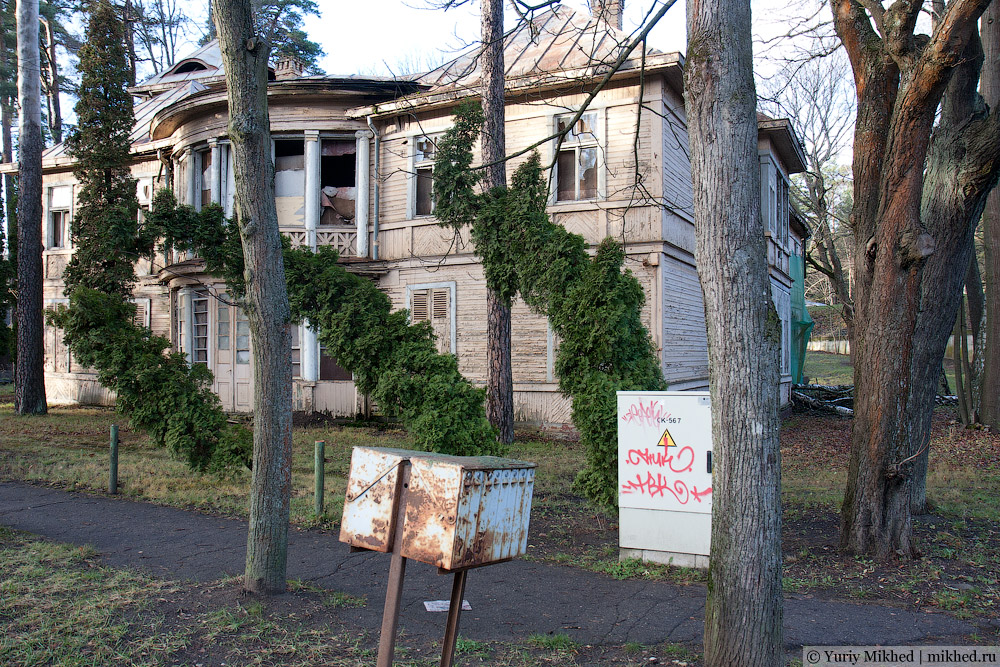
Despite the high cost of land, abandoned properties can be found.
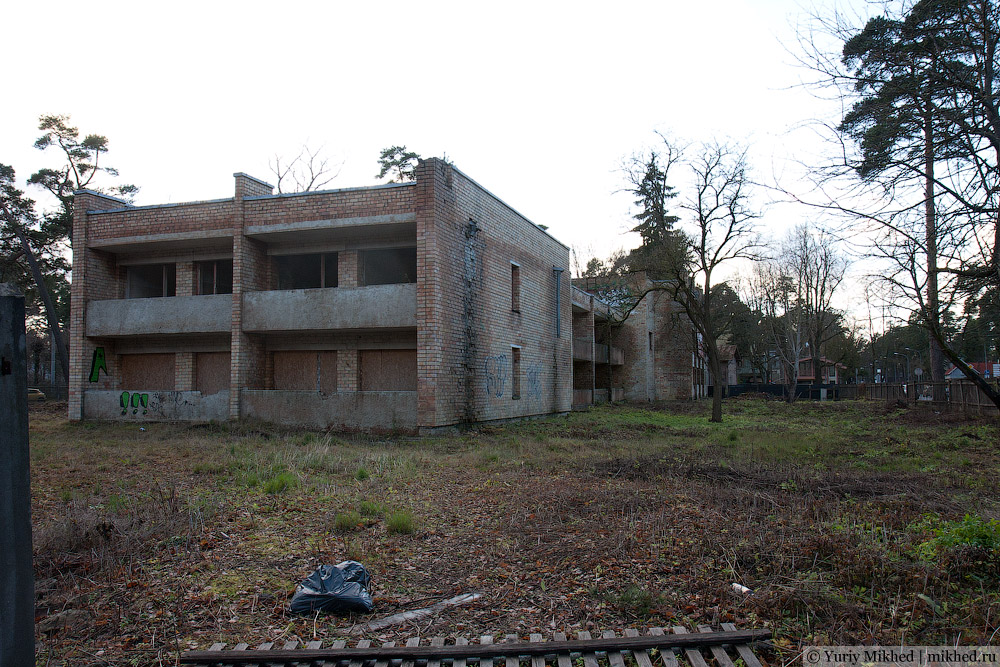
Or unfinished projects like this. Generally, in Latvia, you occasionally come across unfinished standard Soviet apartment buildings that they started building, abandoned after independence, and now they have been standing like this for many years.
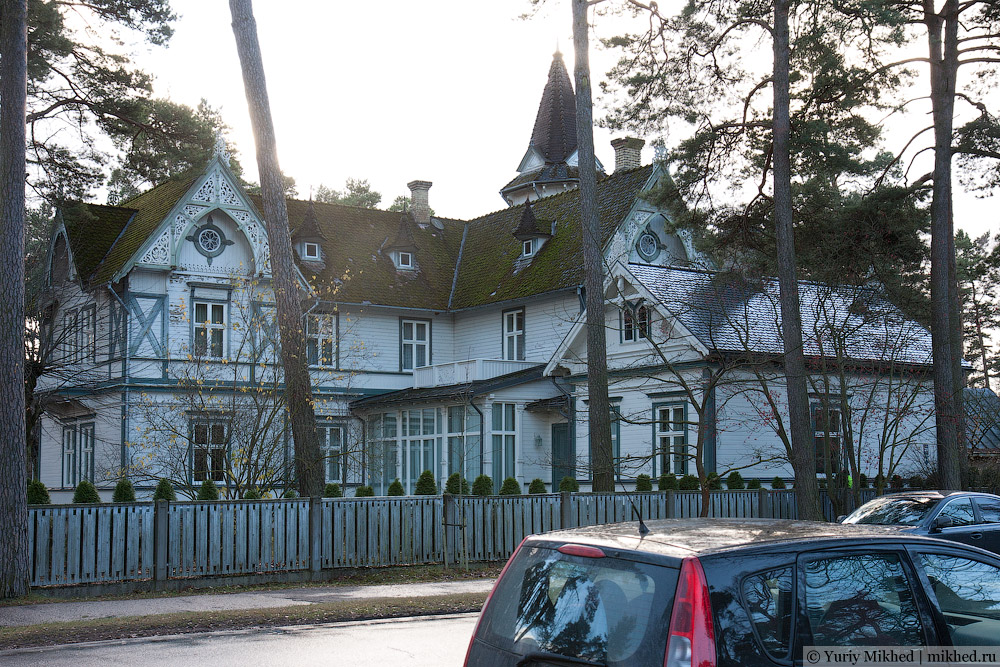
The old architecture consists of elegant wooden structures.
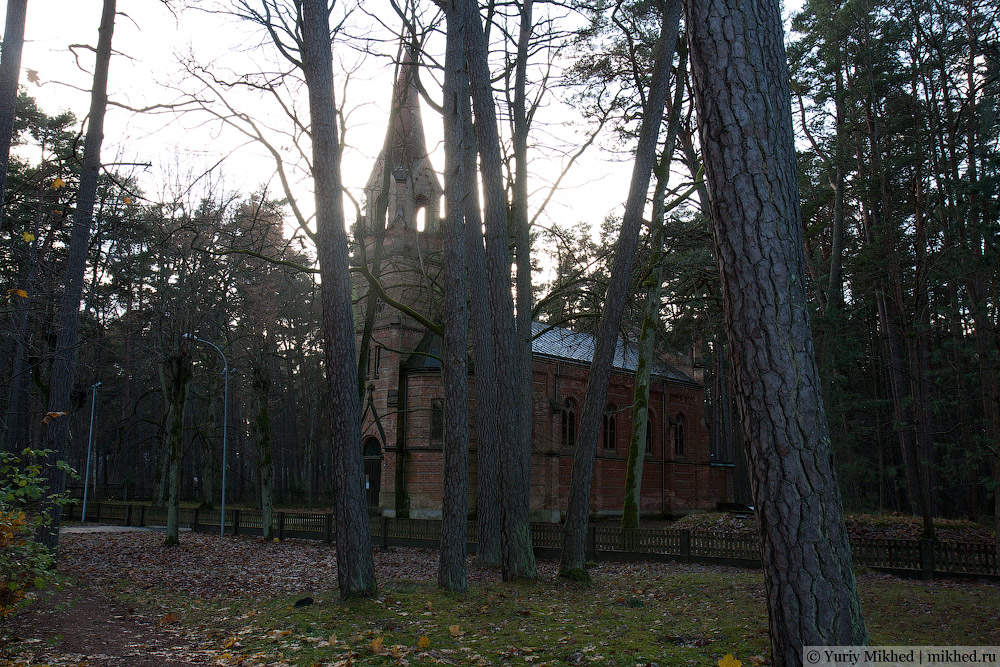
An old church.
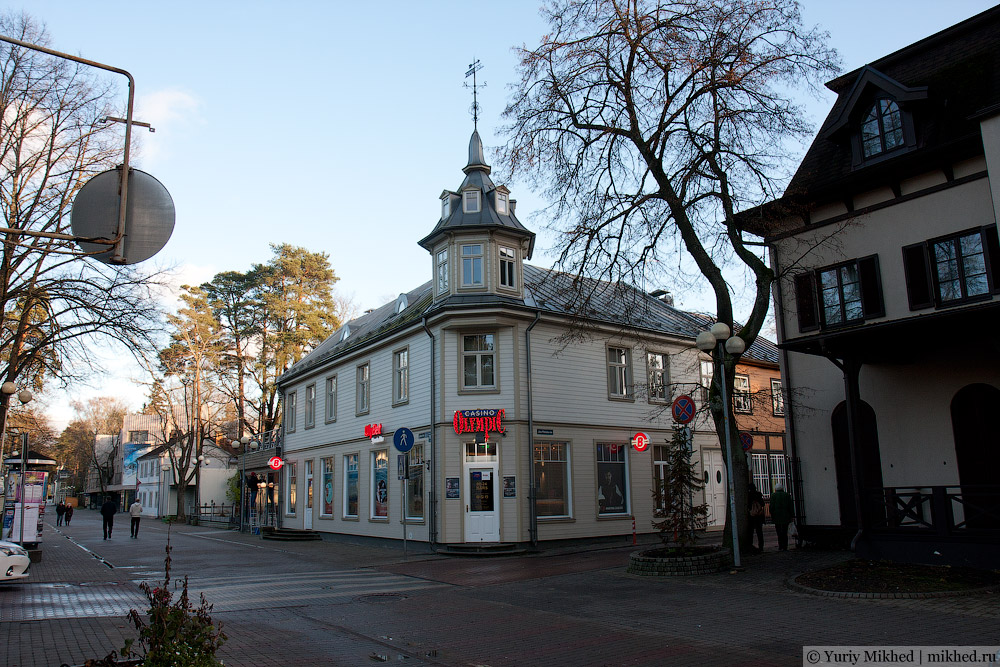
The most frequently encountered feature is a little turret like this on the corner of the building.
Prices for small houses also start from 250000 euros On that day — 17 676 000 ₽ 7 791 350 ₴ 590 626 Br 294 650 $
, though it depends on the condition of the house and its location.
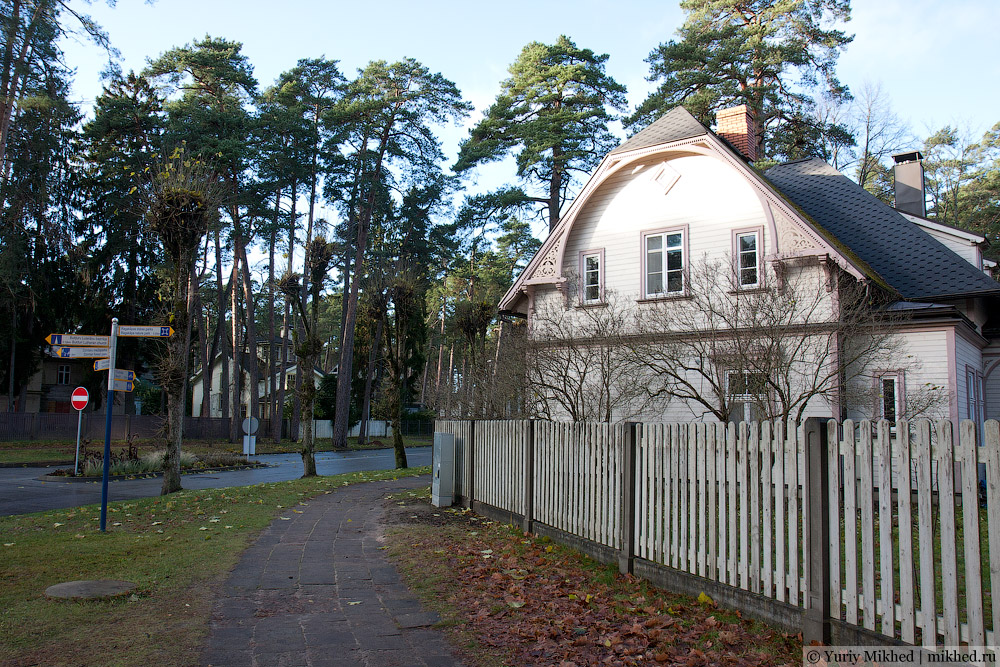
But for such an amount, the house will be quite old and require significant investment.
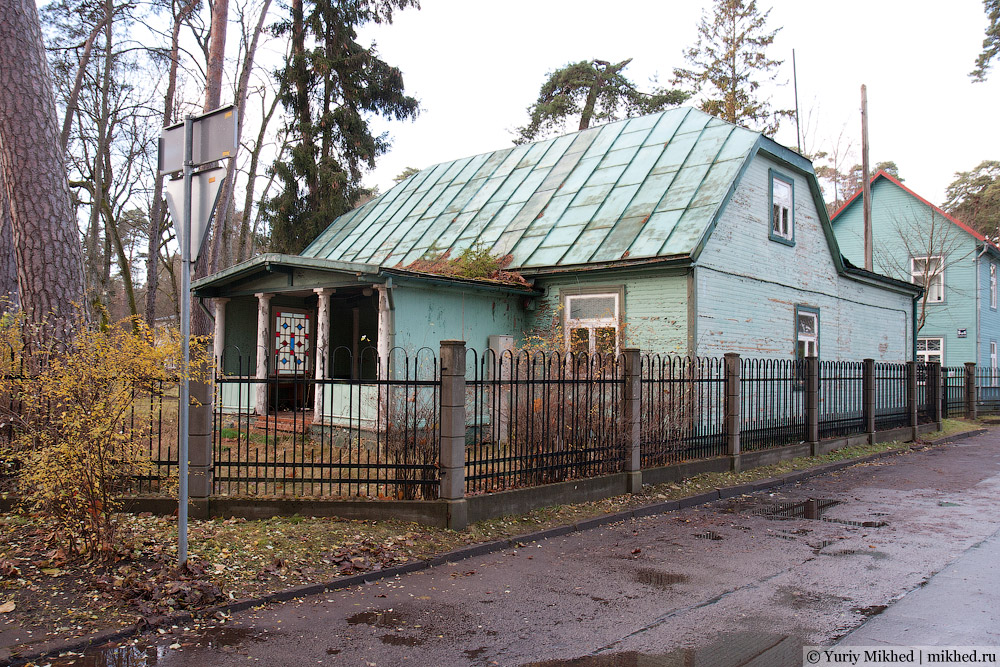
There are plenty of shortcomings too.
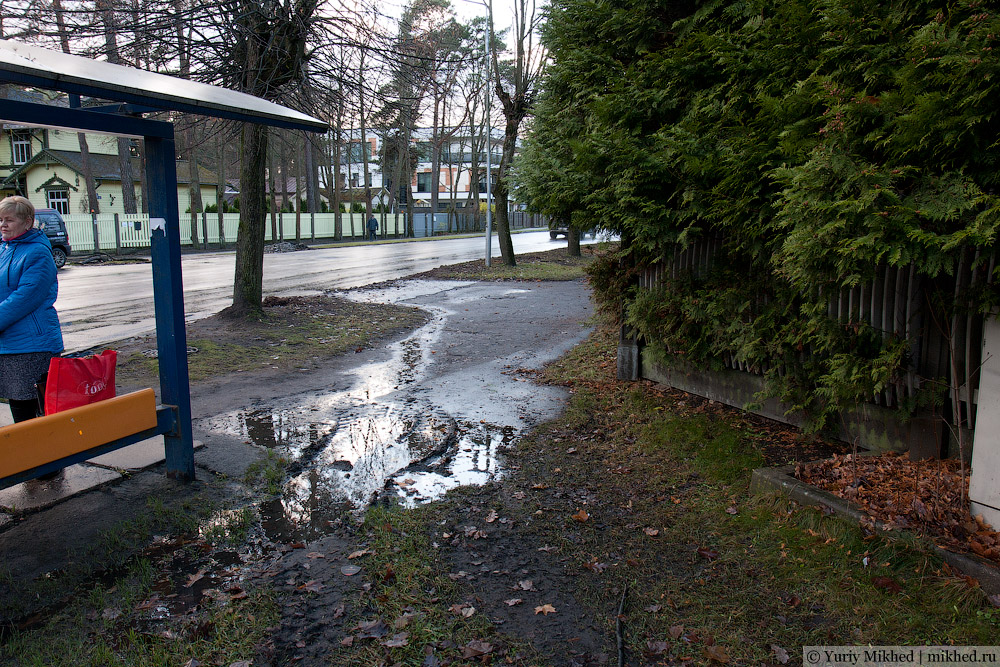
Some roads are patched up; there are puddles and patches of mud.
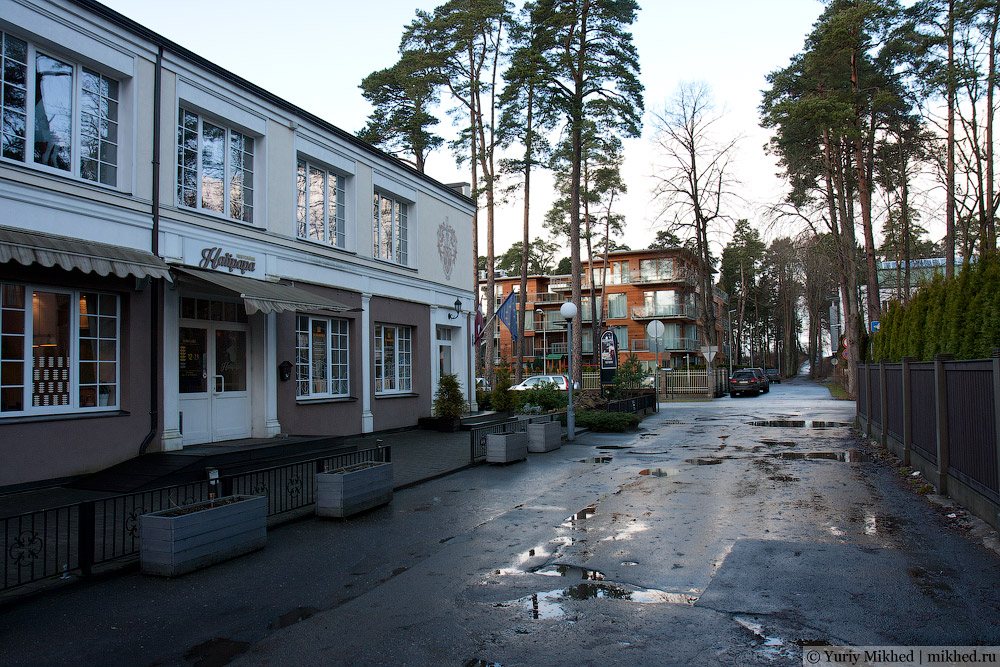
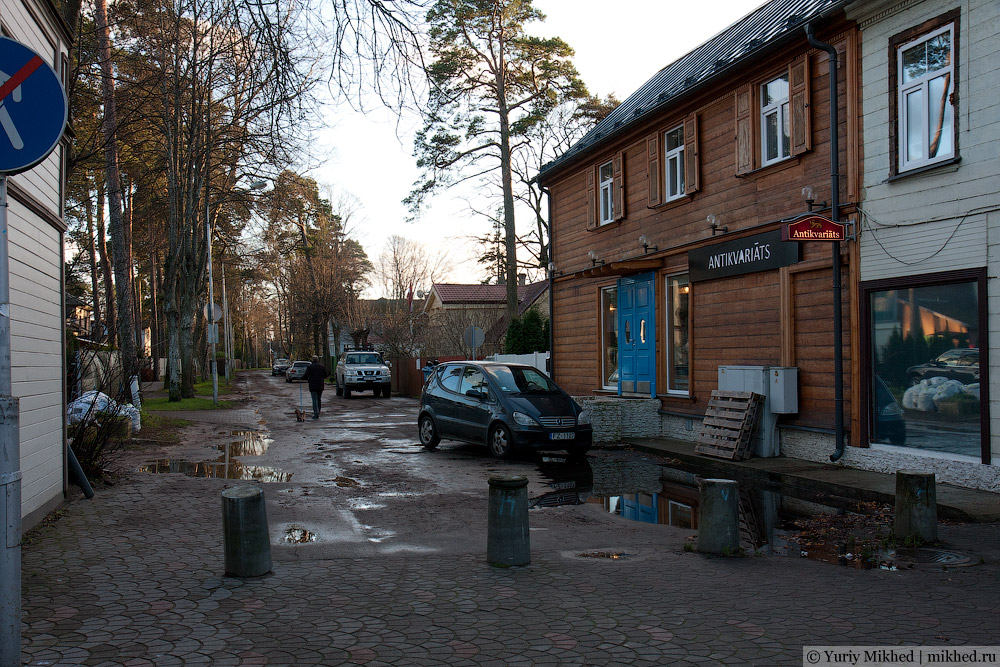
Actually, it's a typical thing for Eastern Europe—the main street is beautiful and well-kept, but as soon as you turn into the next one, the impression is completely different.
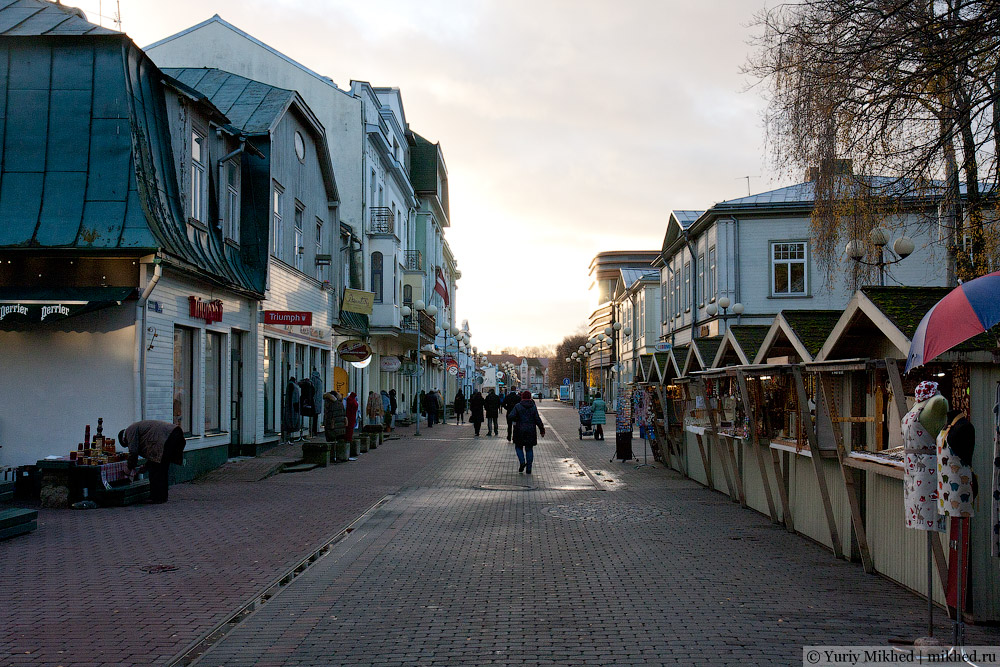
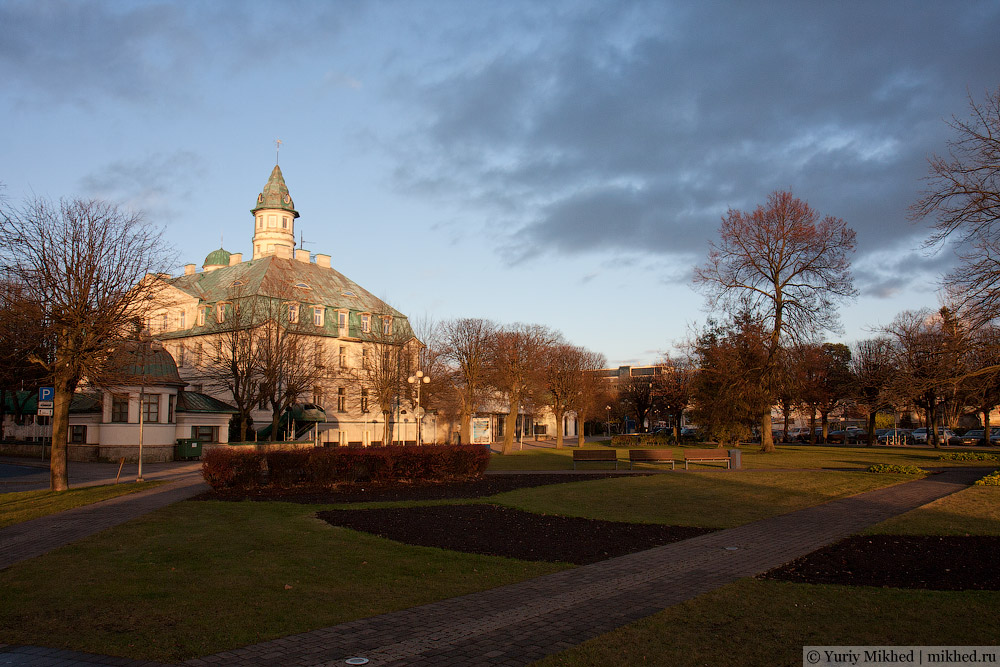
The town centre is located between Majori and Dzintari stations. The main pedestrian street with restaurants and souvenir shops runs here. I had never been here before and didn't even know that such a place existed in Jūrmala.
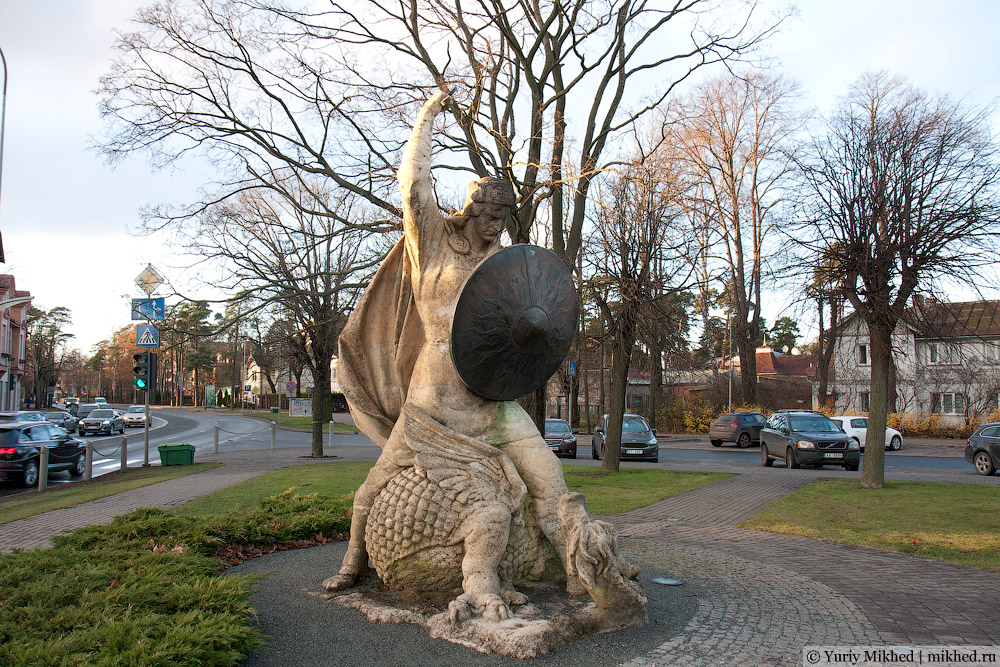
In Majori, there is a monument to Lāčplēsis, the legendary hero of Latvian folk myths. Lāčplēsis symbolises a brave warrior cleansing the land of invaders, so monuments to him are very common. His bas-relief, for example, features on the Freedom Monument in Riga.
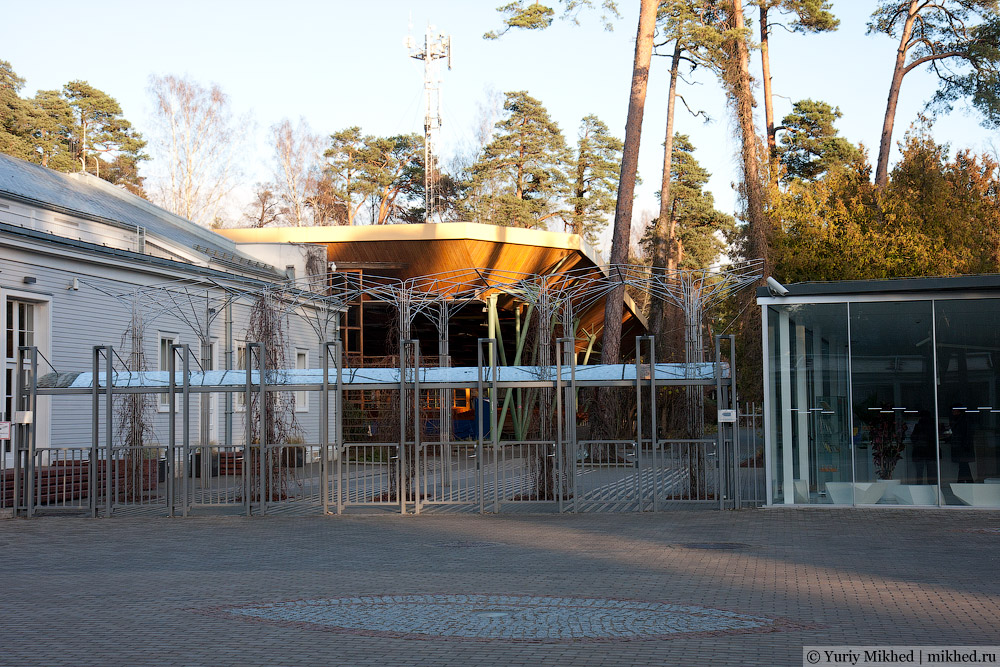
The famous "Dzintari" concert hall. The "Singing KiViN" festival and the "New Wave" competition used to be held here, but after relations with the West deteriorated in 2014, Russian festivals stopped being held in Latvia.
Of course, the main attractions of Jūrmala are the sea and the pine forest running along it. Once upon a time, all the shores of the Baltic Sea were covered with pine trees. That is exactly why it is rich in amber, the fossilised resin of ancient coniferous trees. The Russian word for amber ("янтарь") originates from the Baltic languages. In Latvian, amber is "dzintars", so the meaning behind the name of the town, the concert hall, and the Latvian cosmetics company is now clear to you.
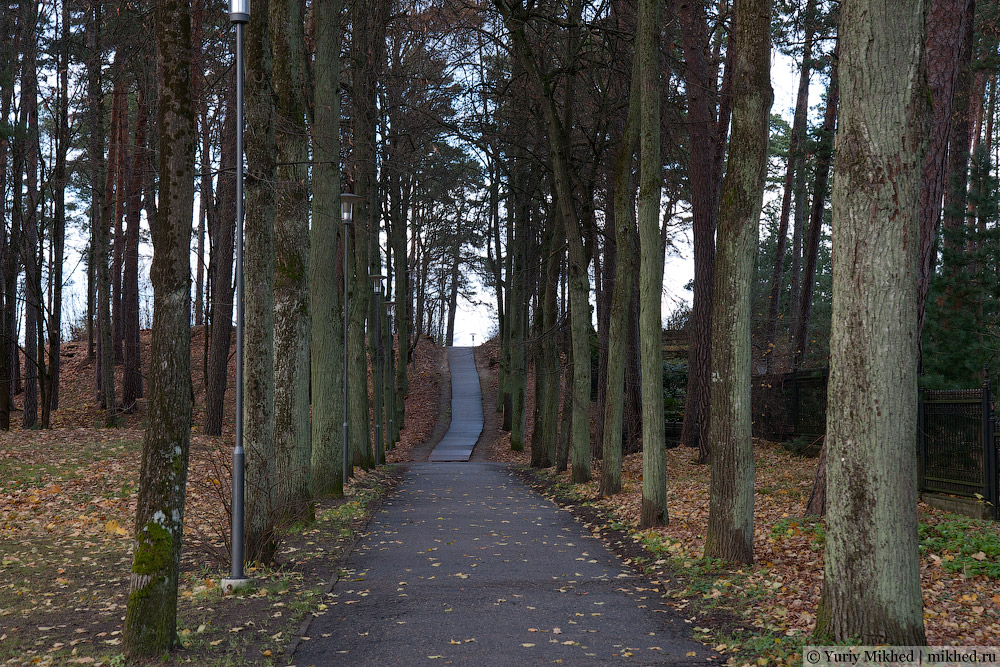
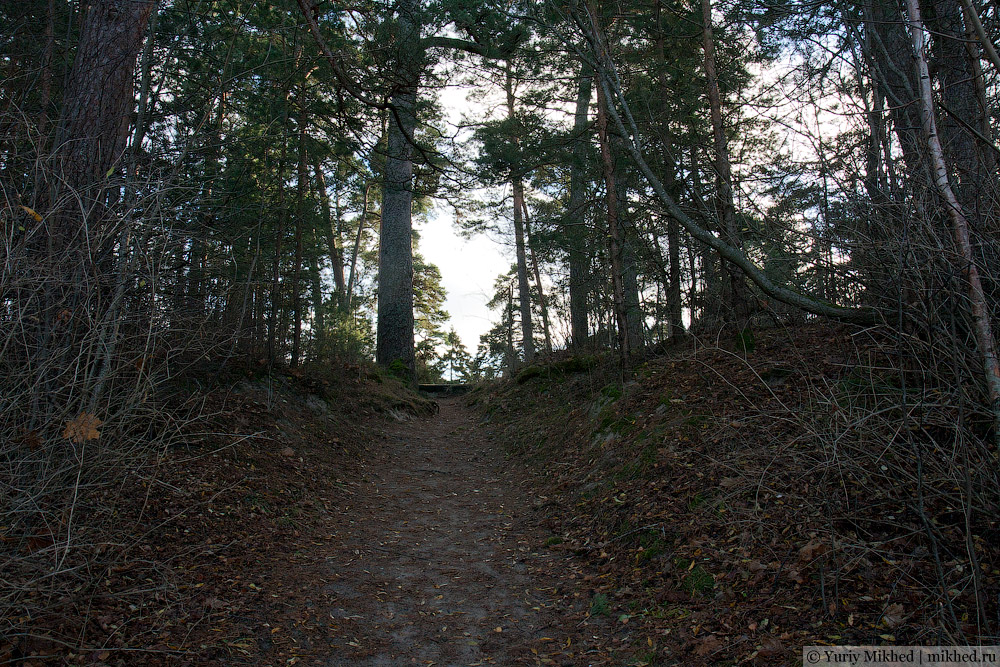
The Riga seaside is a very beautiful area. Before you reach the sea, you have to go up and down rows of sand dunes several times, with pine trees growing right on them. That feeling from childhood is familiar, when every time you climb a dune, you expect to see the sea, but it still doesn't appear, making the anticipation all the more thrilling.
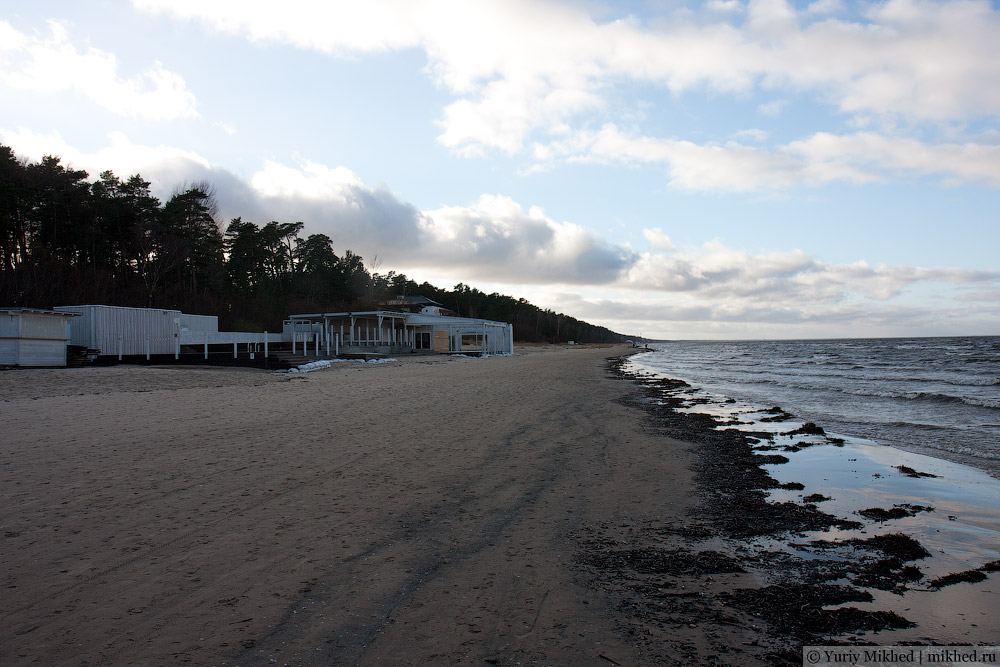
And then finally, a wide sandy beach opens up, before which the Gulf of Riga gently laps. Because of this, the sea here is very shallow—you can swim very far from the shore, and the depth will still be small. There are never any severe storms here, and if hard frosts strike, the waters always freeze for many kilometres from the shore.
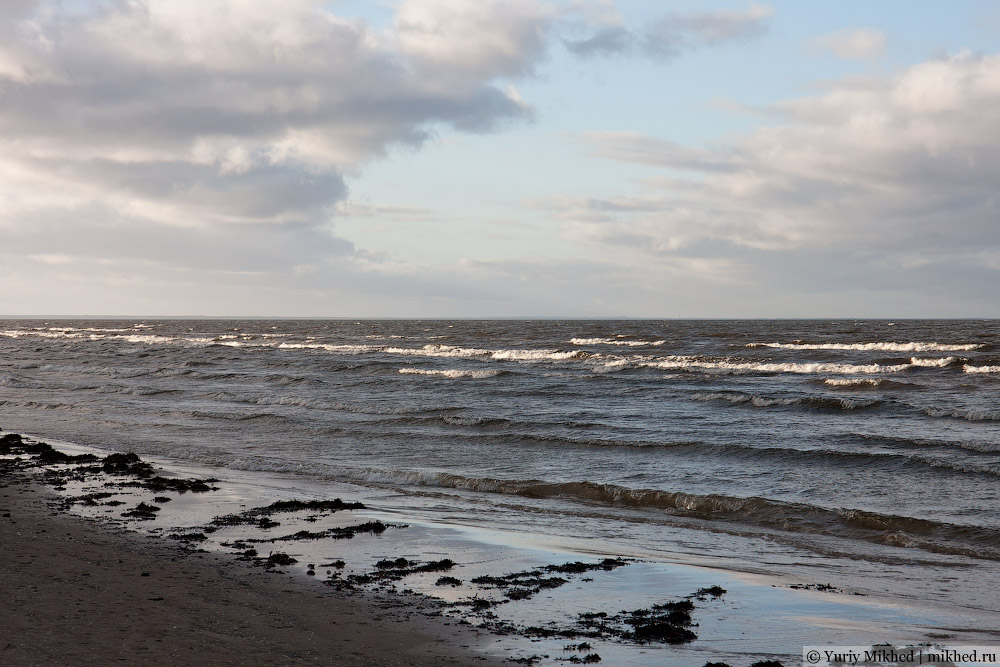
Some structures have managed to pop up along the beaches, but fortunately, there aren't very many of them.
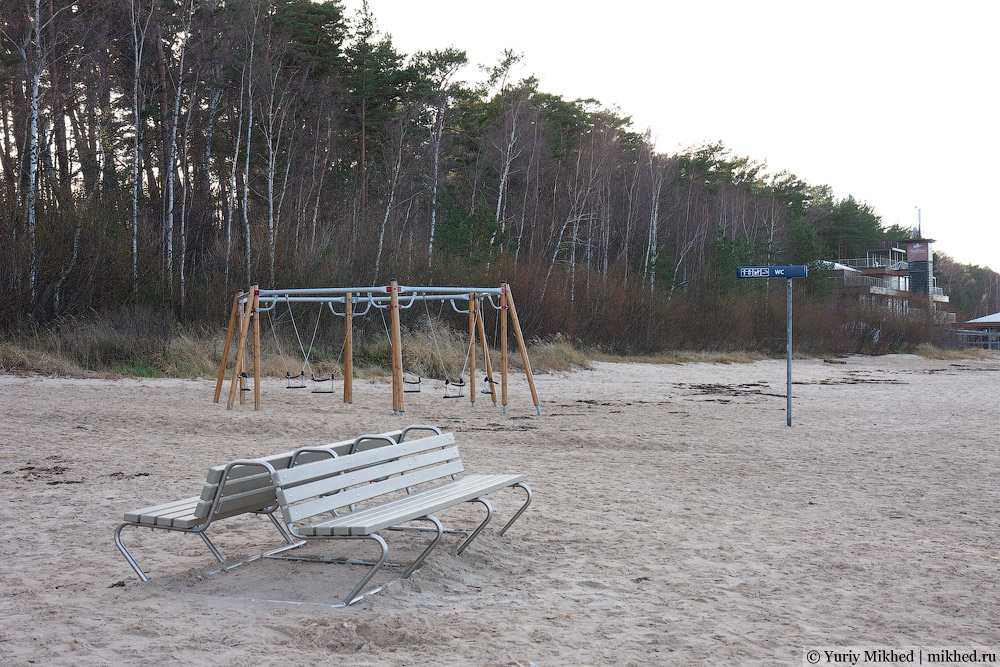
Just like many years ago, there are swings and benches here, and now entire playgrounds have even appeared.
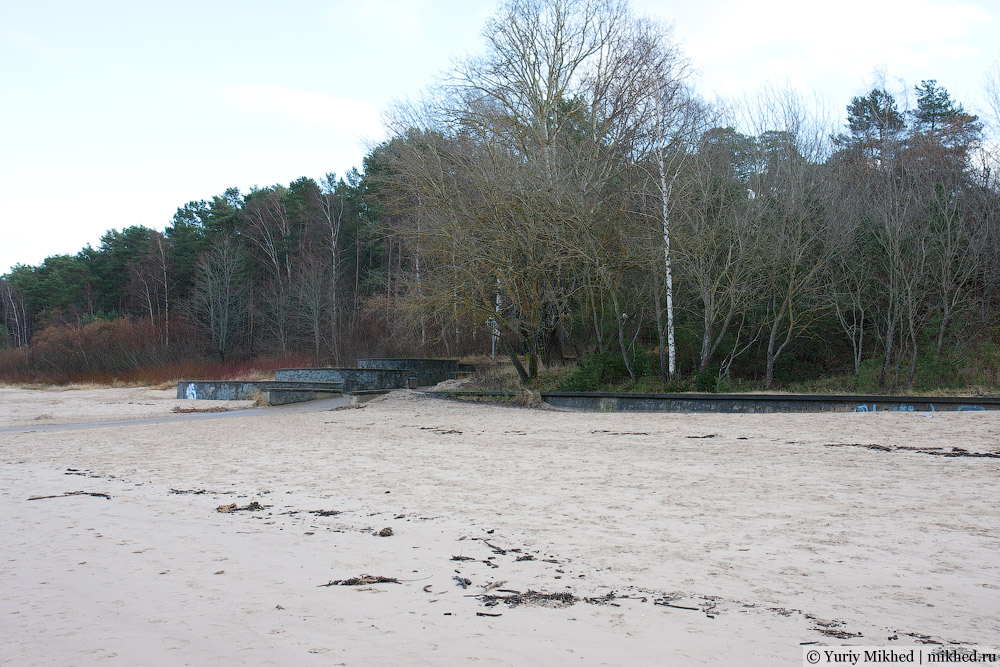
The "Jūras pērle" ("Sea Pearl") restaurant was located in this spot—one of the most famous entertainment establishments in the USSR. The restaurant was very expensive, had a luxurious menu and a variety show. High-profile guests came here, and famous artists performed. For obvious reasons, the restaurant was also popular with holders of "unearned" income—black marketeers, speculators, illegal manufacturers, and criminal elements. In perestroika times, it became particularly popular with the mob. In 1994, a fire broke out in the restaurant. After that, the building stood abandoned for several years, and in 2002 it was demolished. Now only the remnants of the foundation remind people of it.
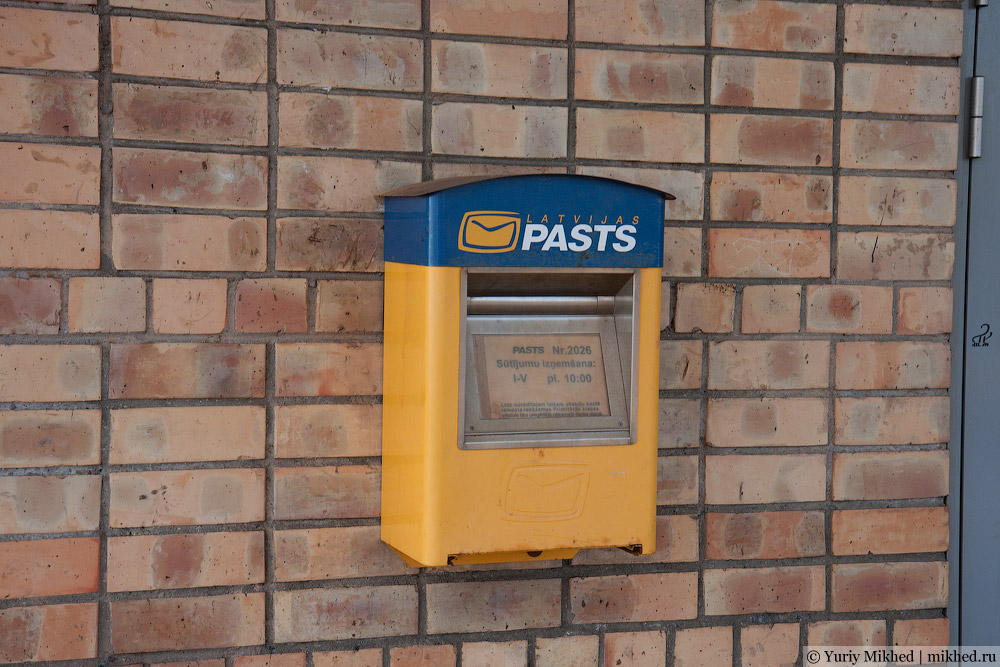
A Latvian postbox. By the way, a rare thing—only two were encountered during the entire trip.
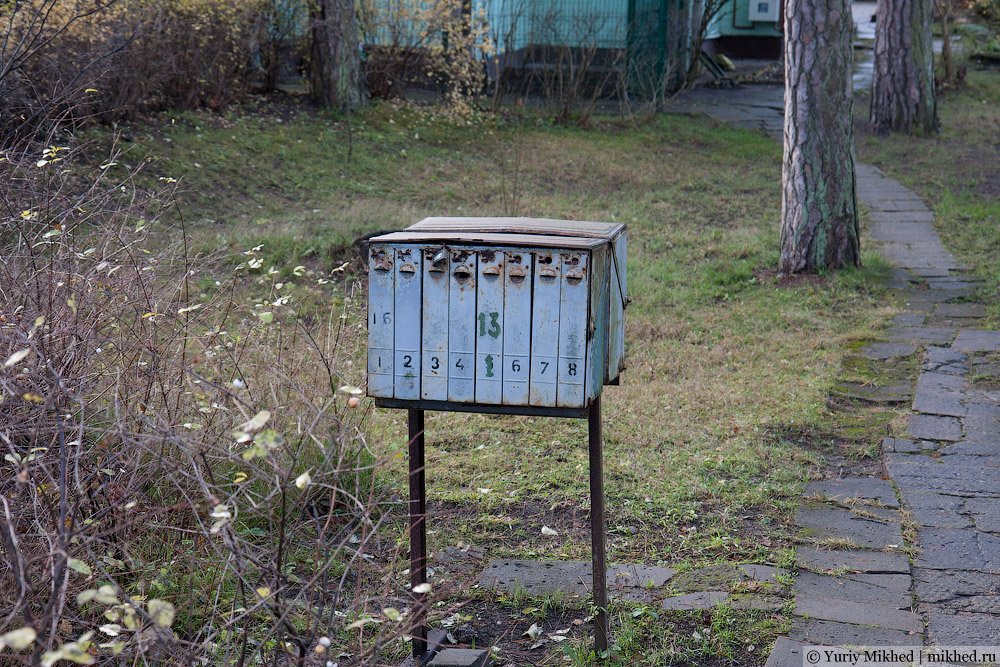
Near old apartment buildings, you can find groups of letterboxes like this; we saw the same thing in Lithuania.
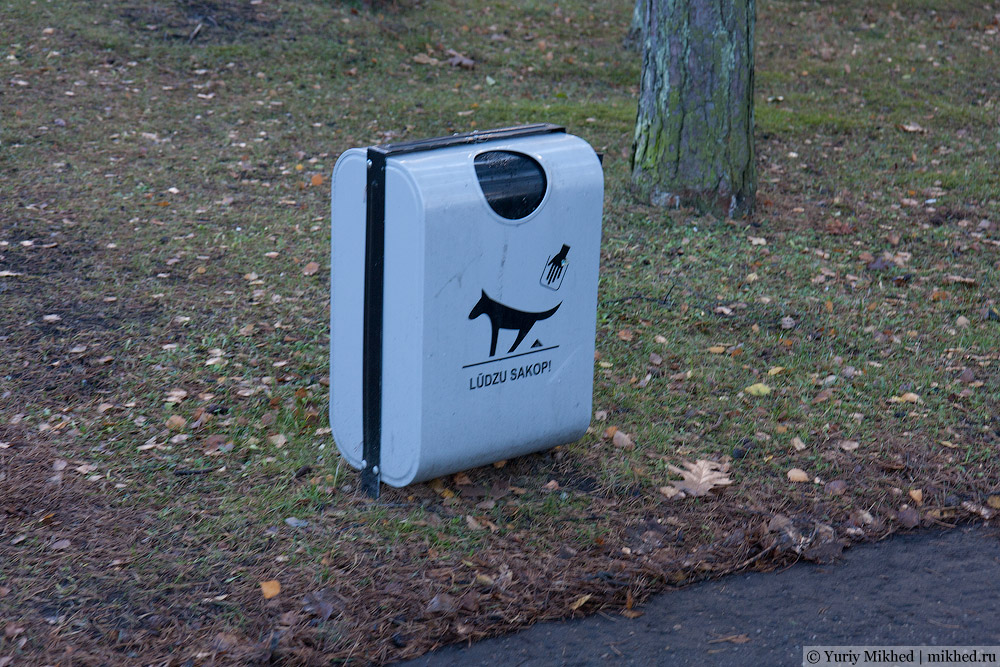
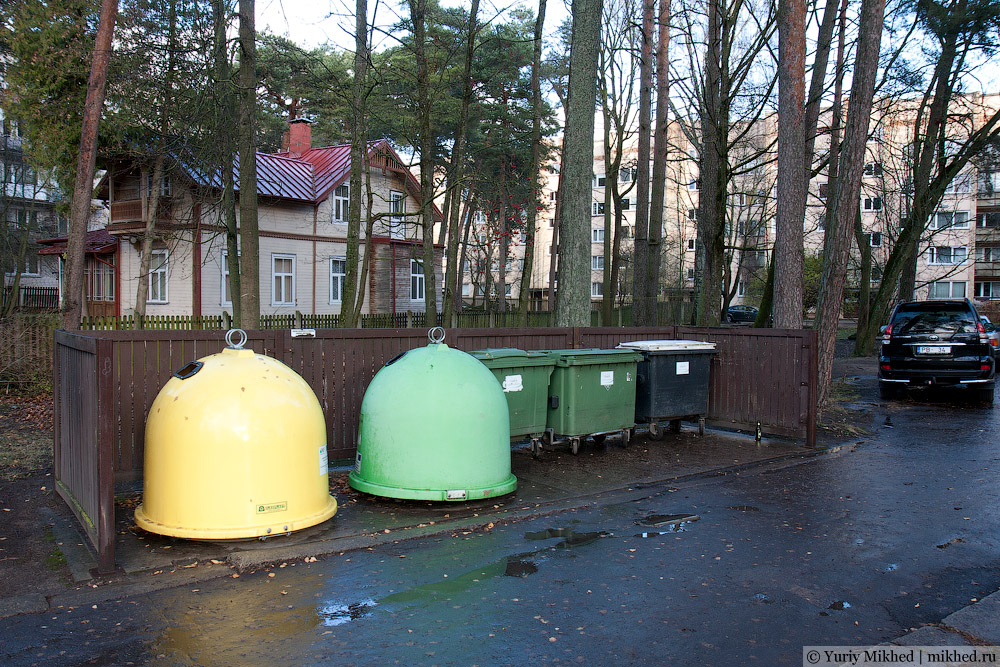
Jūrmala bins.
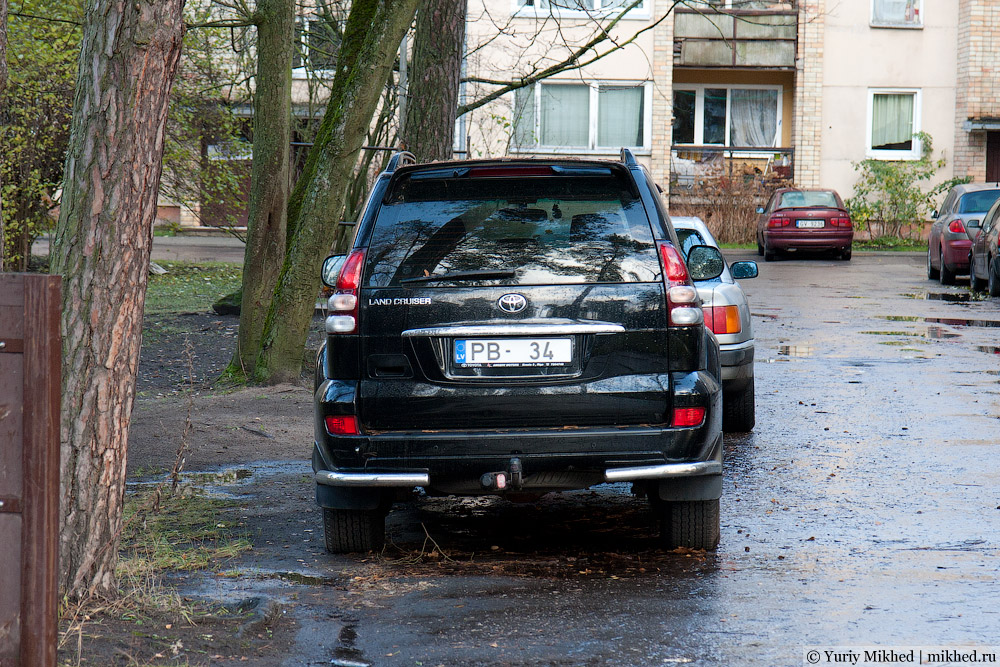
A car with vanity plates. If in Russia it is considered cool to have identical digits on a number plate, in Latvia the cooler you are, the fewer digits you have. Later, this pattern was confirmed—the more expensive the car, the fewer the digits. A single-digit plate was encountered only once in the centre of Riga, on some Brabus worth several hundred thousand euros. However, even if you are a loser with 4 digits, "nice" numbers are still rated higher.
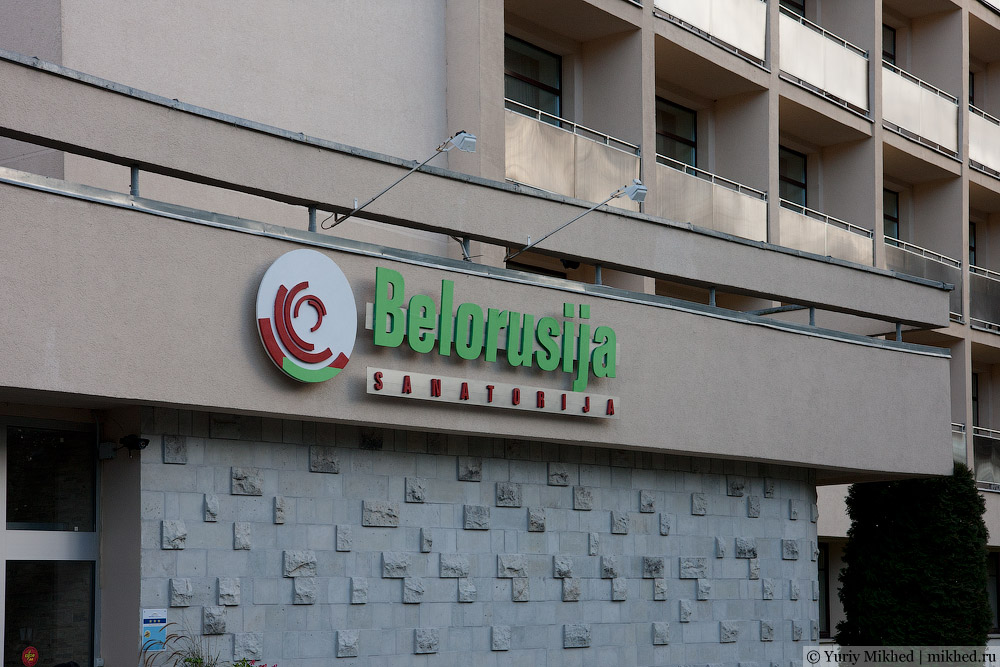
The "Belorusija" health resort. How do Belarusians like this name? Although it uses "o", it has only one "s", and you can't do without an ending in Latvian. Especially since in Latvian, Belarus is Baltkrievija, which literally means "White Russia". Which would you choose?
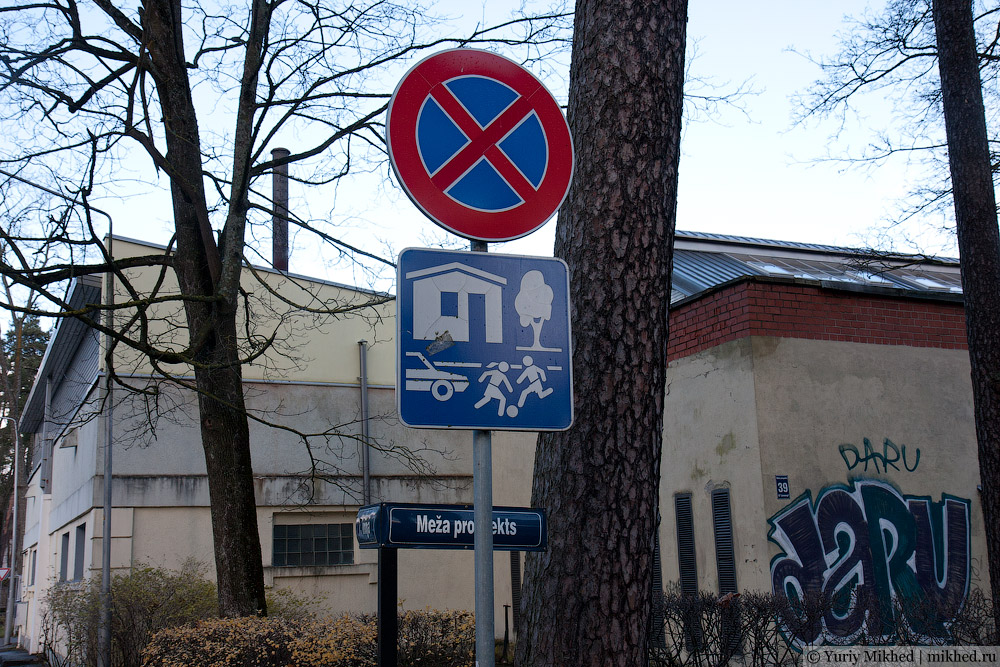
A rather unusual "residential area" sign.
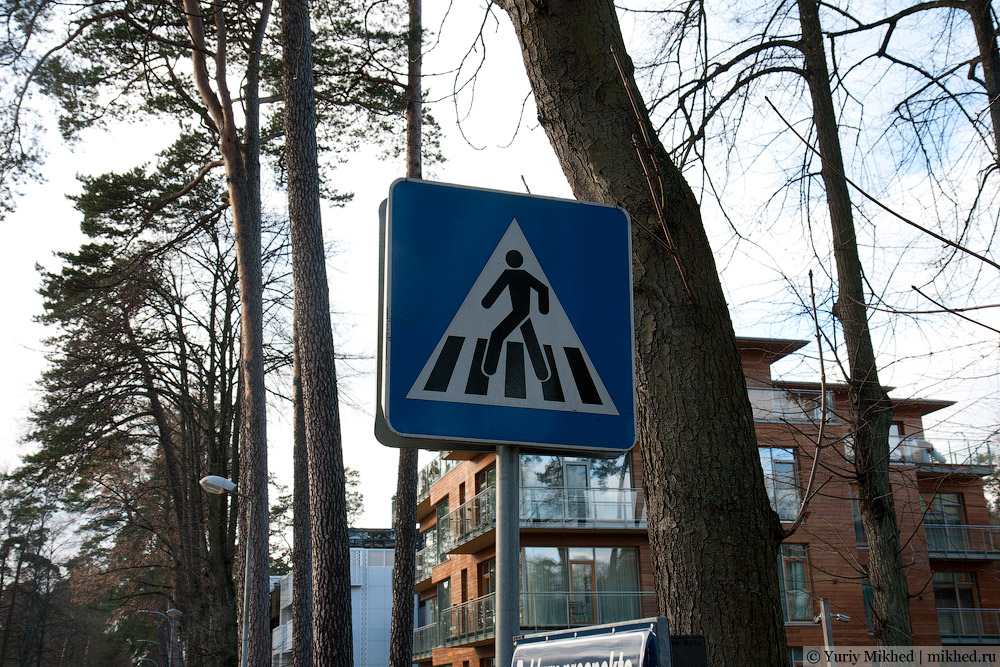
A pedestrian crossing sign.
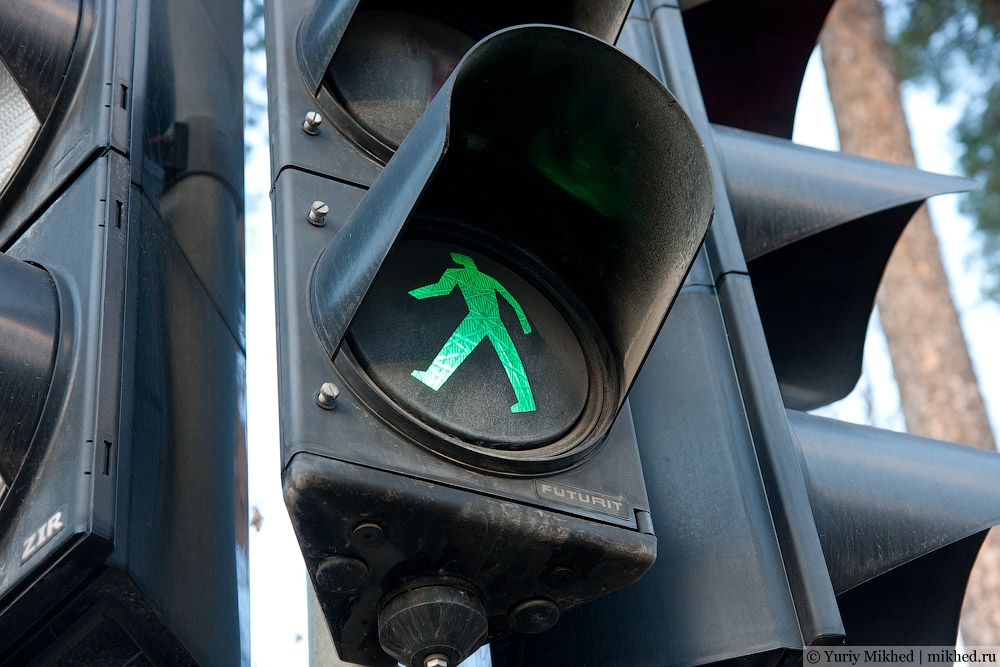
The pictogram on the traffic light is the standard European one.
On many roads in Latvia, striped poles with illumination for pedestrians are installed at crossings.
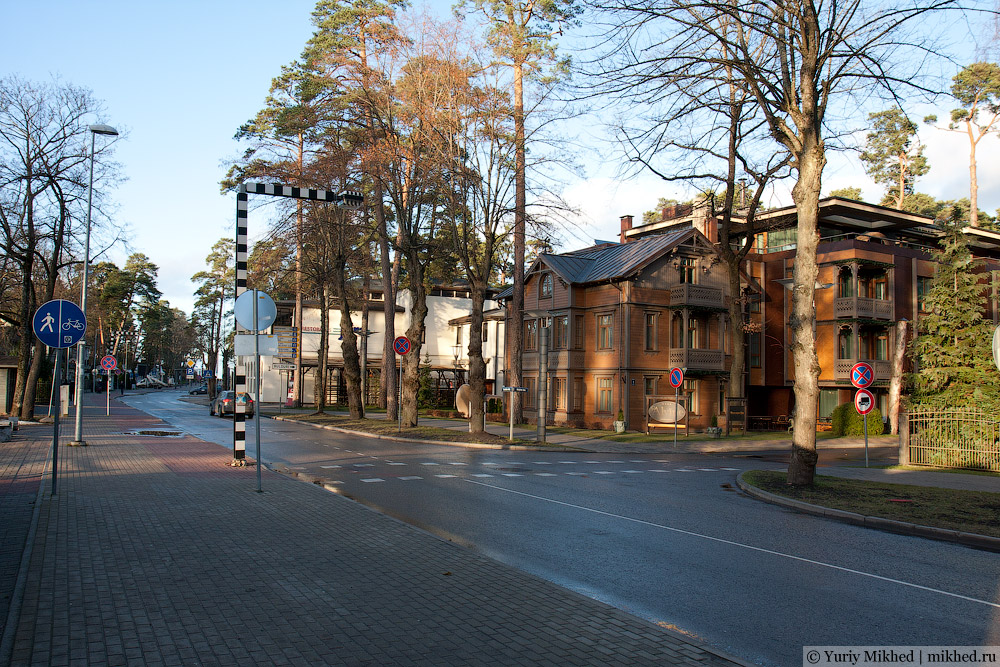
By half past three, the sun was already setting.
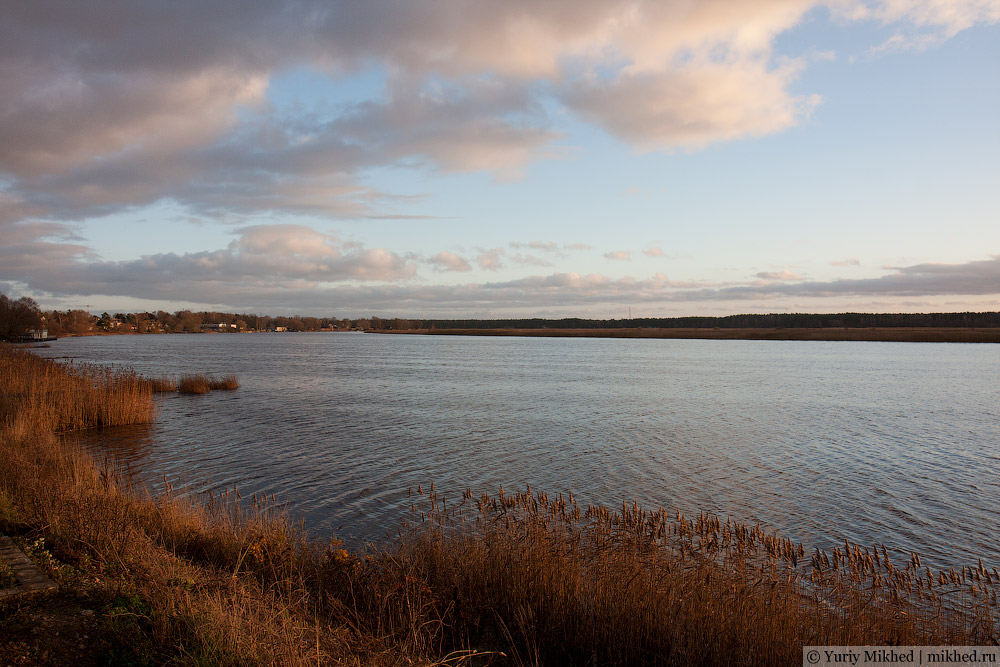
Near Majori, the Lielupe River, which flows into the Gulf of Riga, makes a wide bend. If you head upstream, you will arrive in Jelgava.
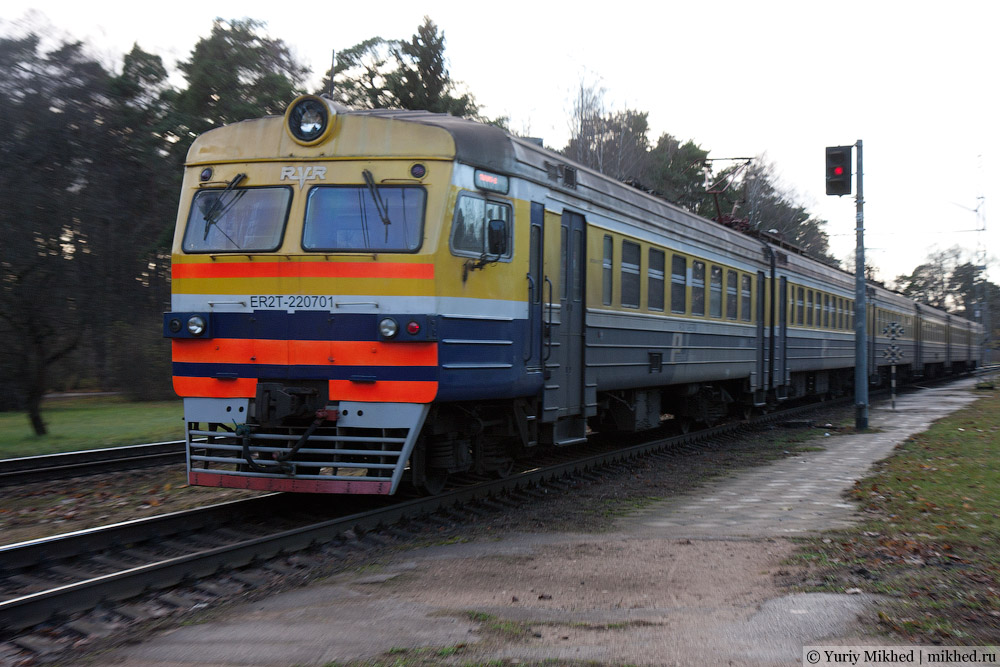
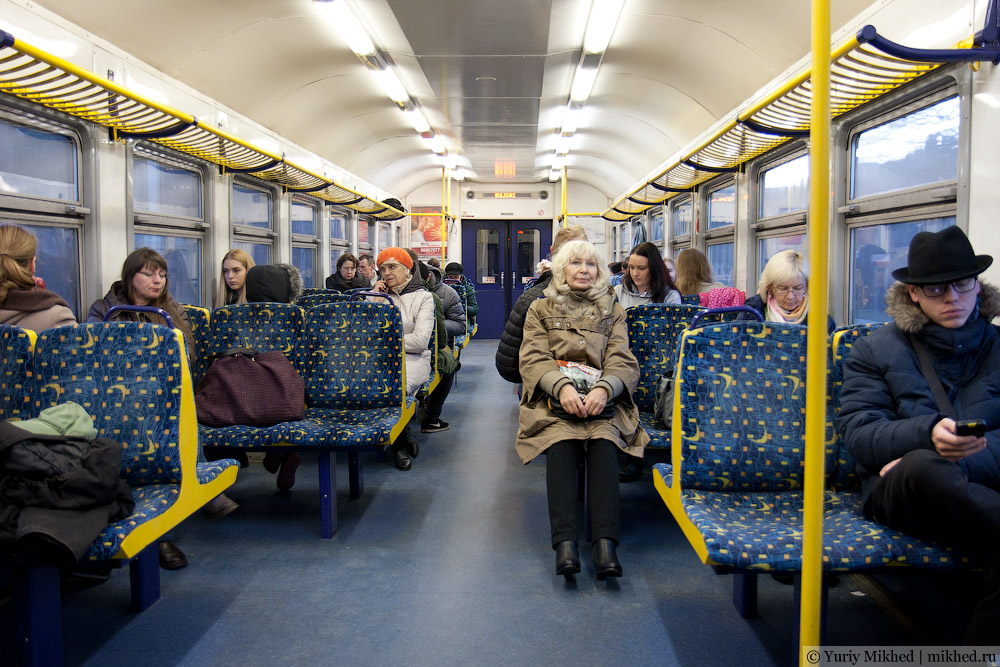
Walking back to Bulduri where the car was left takes too long, so I took a ride on the train. Traveling two stations costs 80 cents On that day — 57 ₽ 24,93 ₴ 1,89 Br 0,94 $
. The train is still the same ER2T developed back in the eighties by the Riga Carriage-Building Factory (RVR). The factory has few orders, because neither Latvia nor its Baltic neighbours need so many carriages, and no one else buys them. Therefore, for many years the factory has barely been making ends meet and balancing on the brink of closure.
Inside the carriages, it has become a bit more comfortable.
At 16:00 it begins to get dark; I am setting off for the city of my childhood. It takes only an hour to drive there.