Słubice
Lubusz Voivodeship, Poland, August 2016
Google Maps, Yandex.Maps
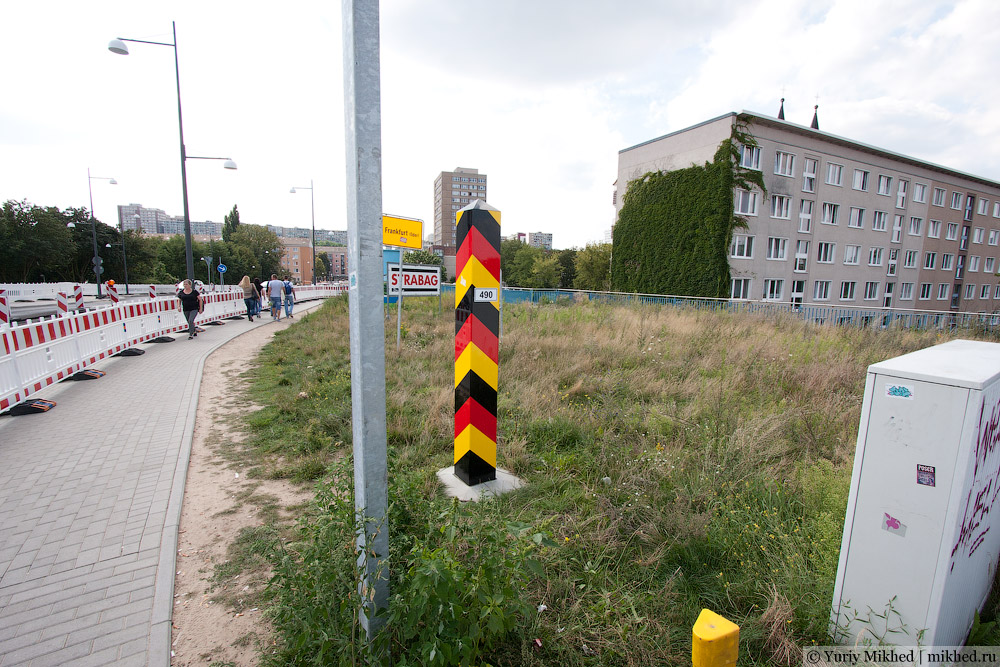
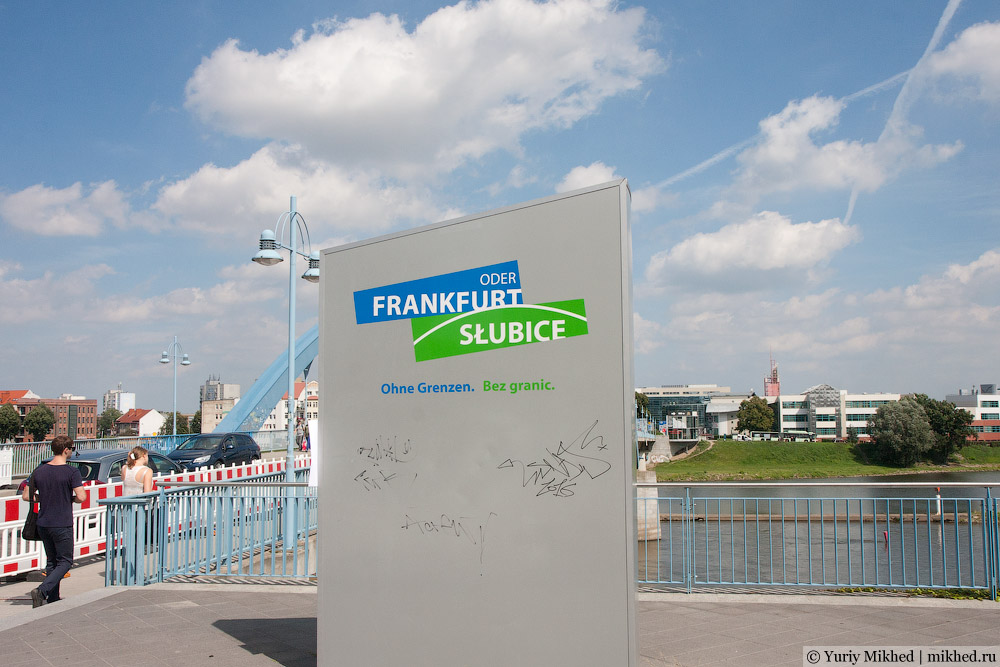
In front of the bridge in Frankfurt, there is a sign with the words "without borders" in German and Polish. The word "Grenze" is nearly the only example of a Slavic root that has made its way into the general German vocabulary (whereas the number of borrowed German roots in Slavic languages is simply countless).
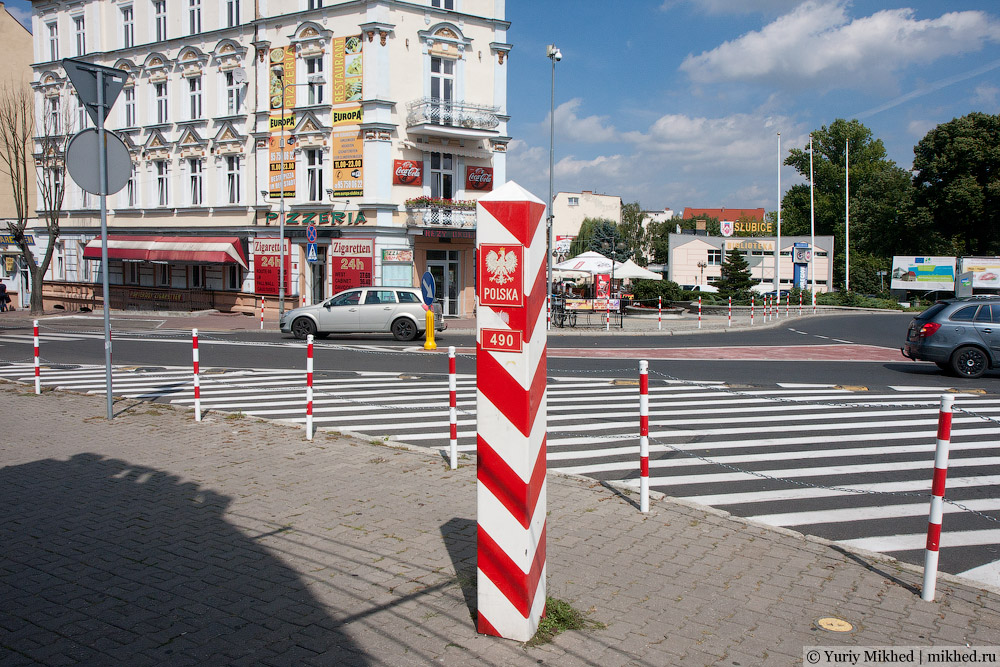
On the other side, a Polish border post welcomes you.
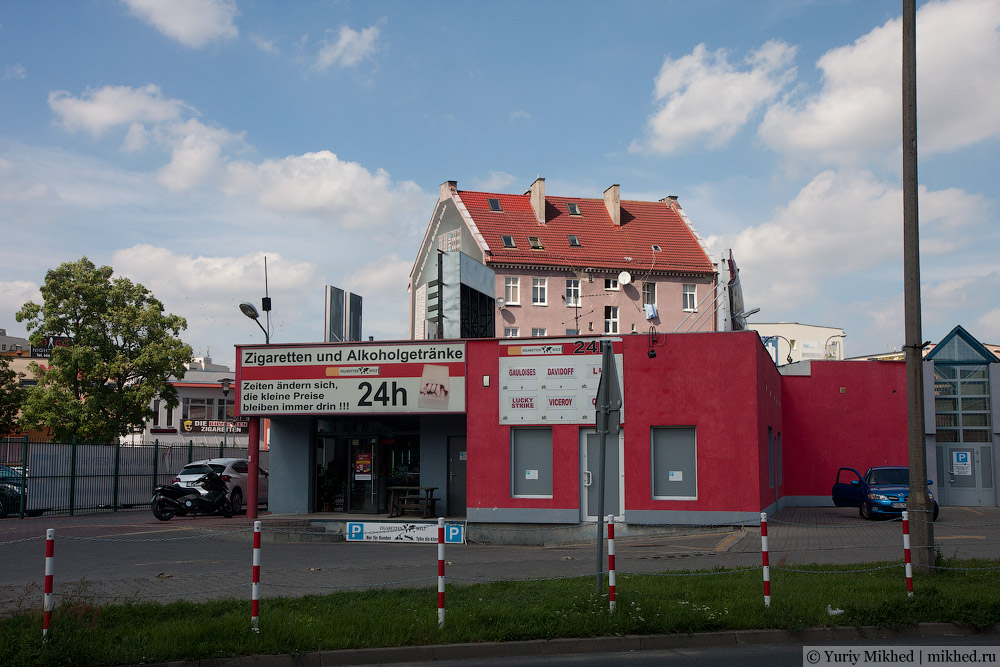
And some crazy number of cigarette shops.
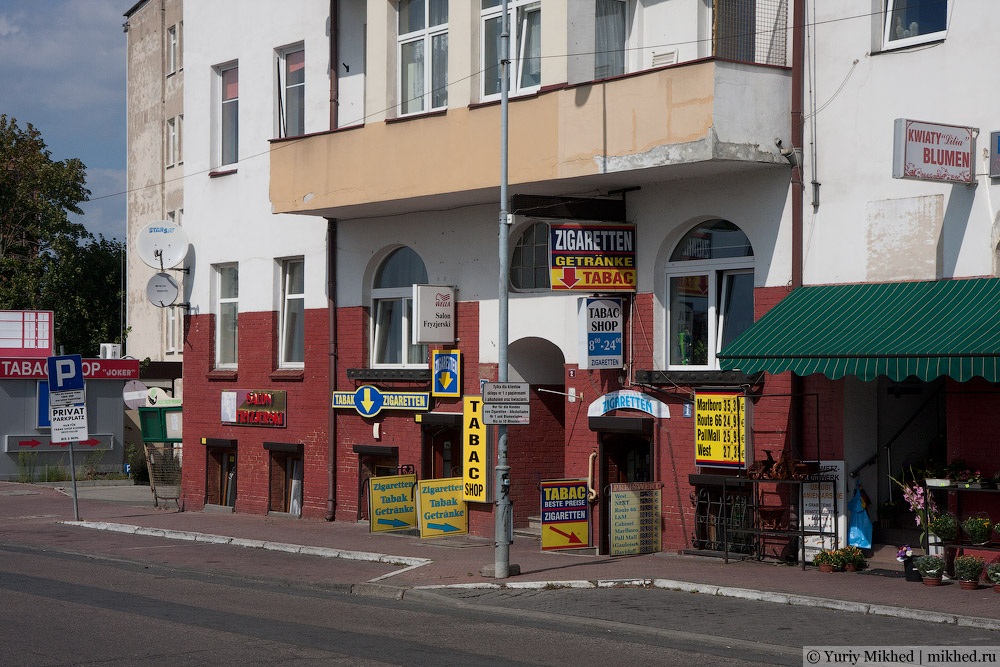
Within a half-kilometre radius of the bridge exit, there are probably no other businesses at all except those selling smokes and booze. And the explanation is simple—in Germany, excise duties on these items are much higher than in Poland, so German smokers from border areas travel to their neighbours for them. Catering to the main buyer, all the signs of these shops are in German. In neighbouring Frankfurt, practically no one sells cigarettes—there is no demand.
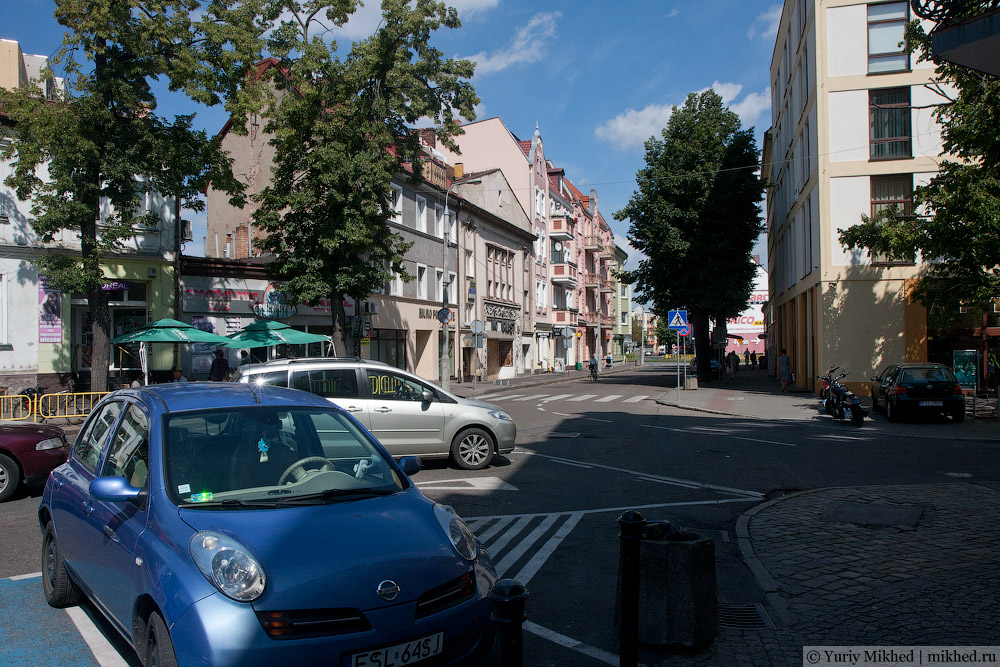
Słubice is the former German town of Dammvorstadt, which until 1945 was considered a suburb of Frankfurt. Following Germany's defeat, by decision of the Allies, its eastern regions (not the ones seized in 1939, but those that belonged to it before the war and had already been settled by Germans for several centuries) were handed over to Poland. About 8.8 million Germans were expelled, and 7.7 million Poles were settled in their place. The GDR recognized these lands as Polish as early as 1950, while West Germany was unwilling to do so for a long time. Germany finally renounced its territorial claims to Poland only after its reunification in 1990. Following the elimination of border control in 2007, the reintegration of Słubice and Frankfurt intensified, and now, despite their different ethnic compositions, they effectively function as a single city.
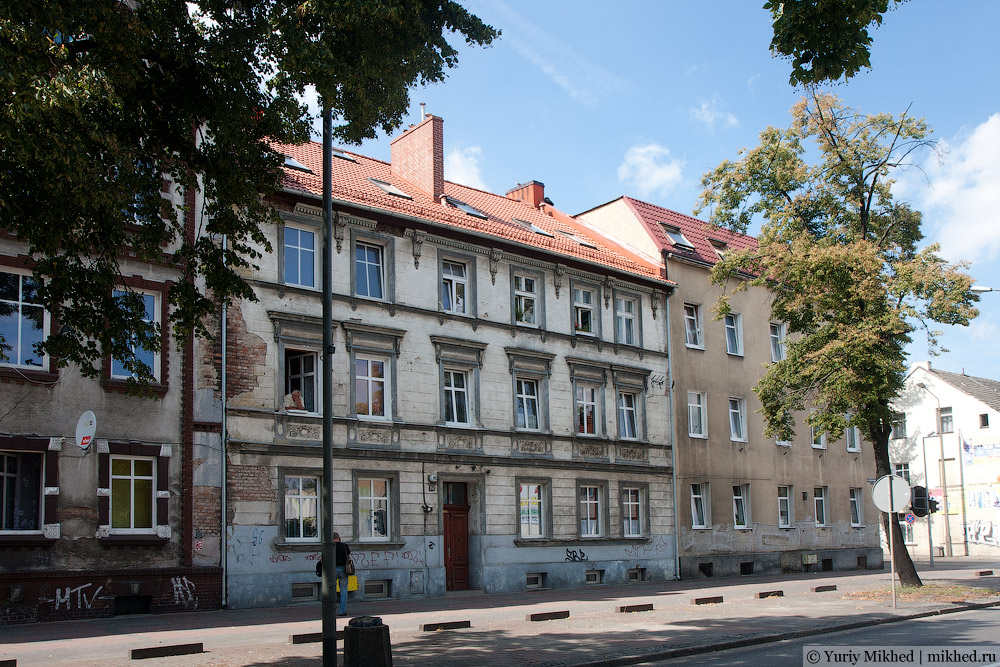
Old German houses are usually in worse condition than across the border. I don't know what to attribute this to—Slavic carelessness or still to poverty.
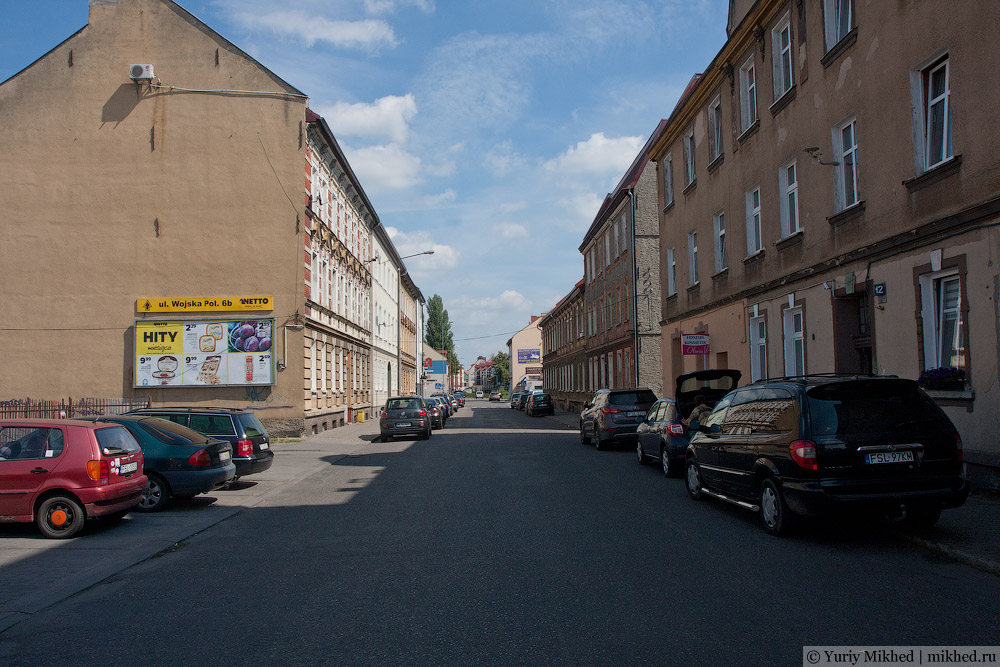
Not much pre-war architecture has survived, as Dammvorstadt was also bombed.
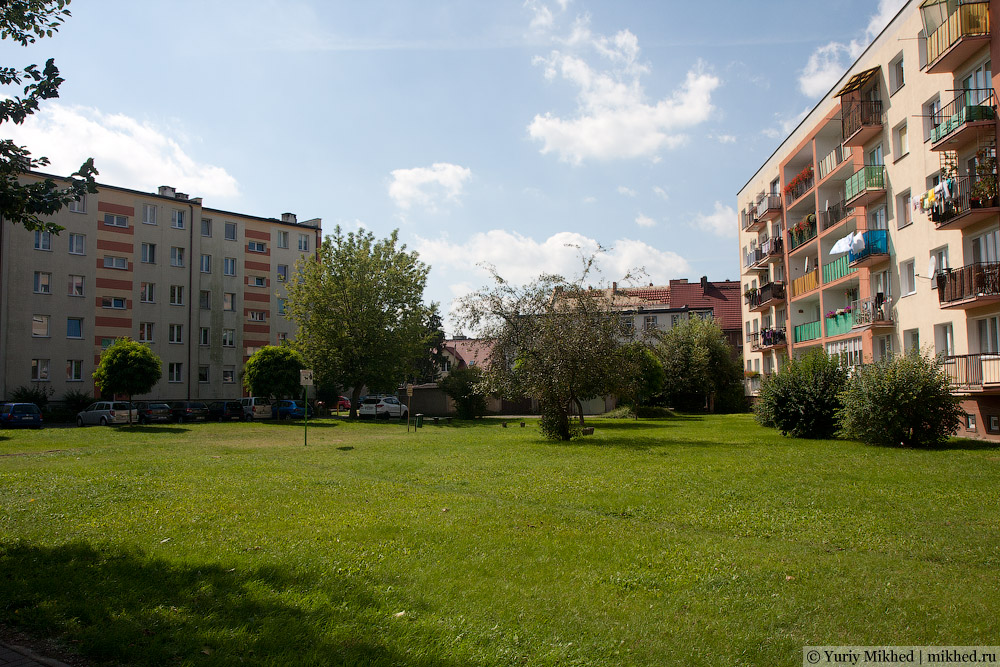
Just like across the river, the main part of the town consists of standard panel blocks.
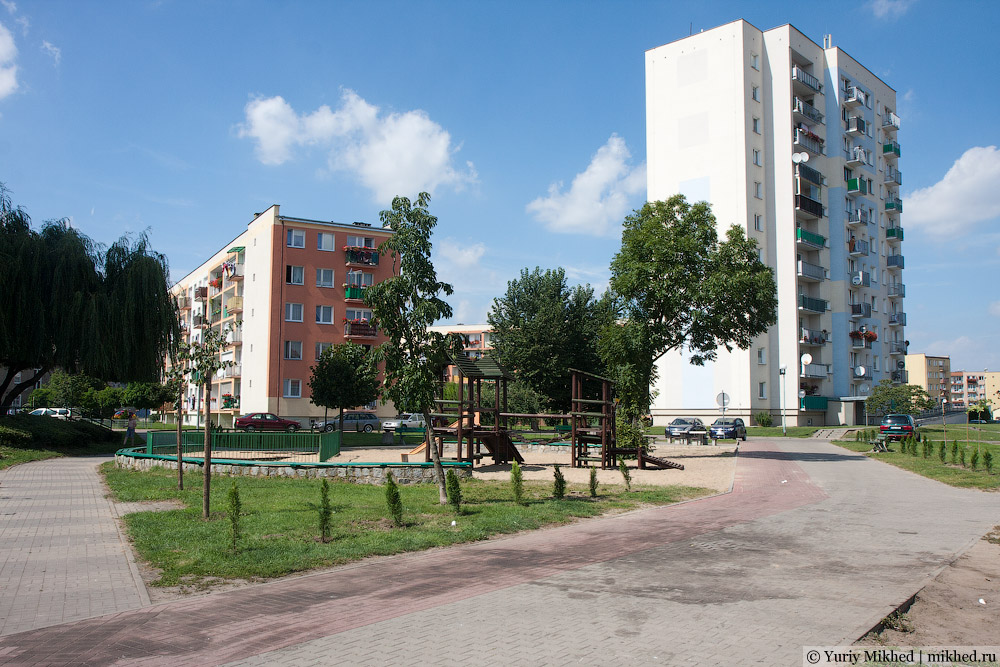
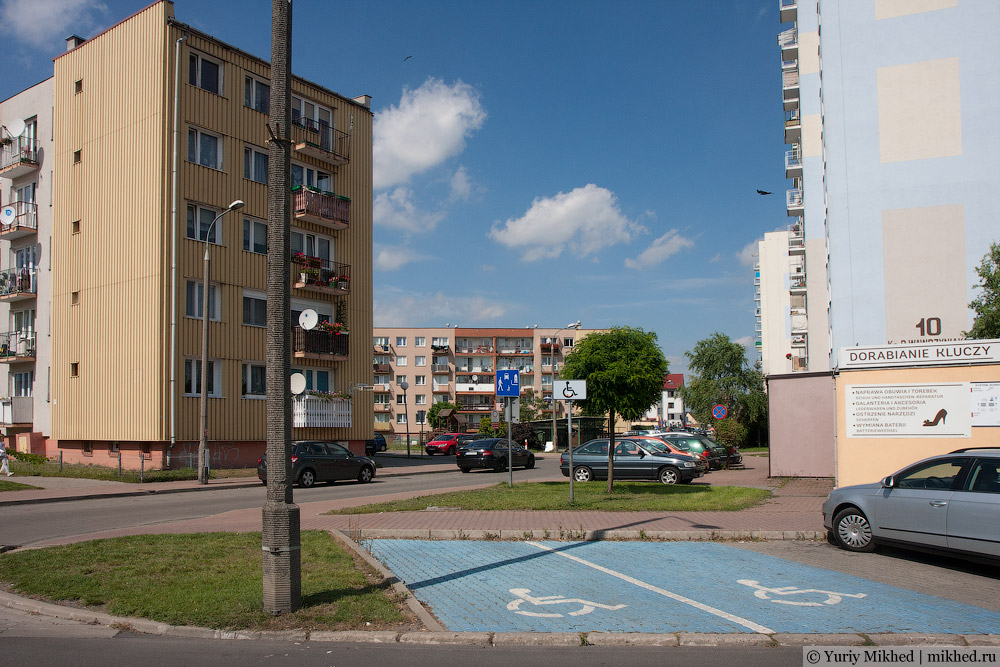
The layout of the grounds in high-rise neighbourhoods is good. Large lawns, parking spaces clearly demarcated, and nobody leaves their cars on the grass. If you compare it with Russia—it is night and day.
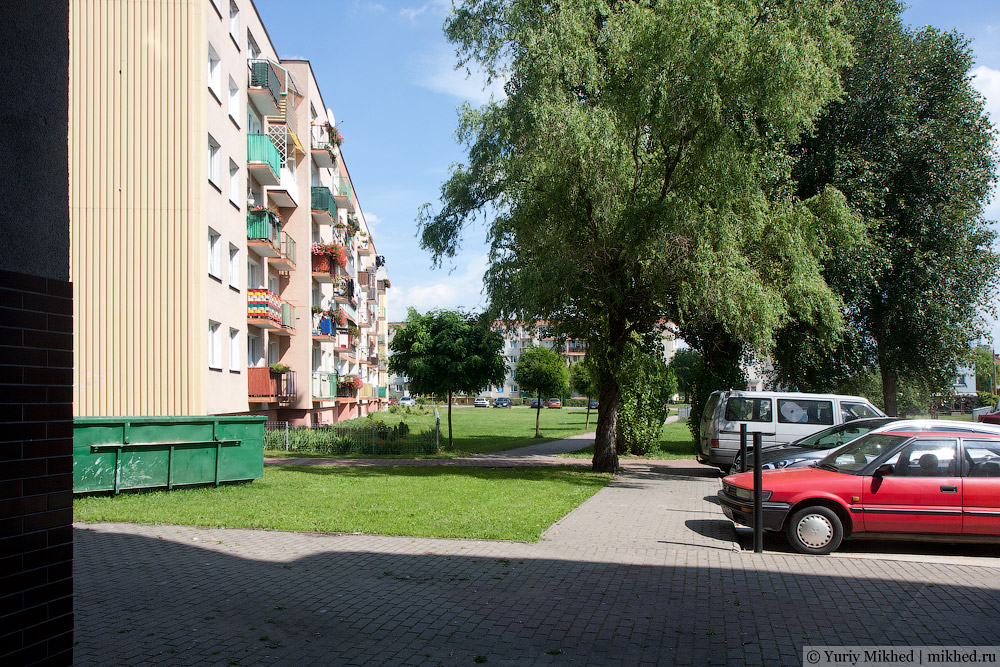
Modifying a building by installing awnings or glazing balconies does not seem to be banned, but few people do it.
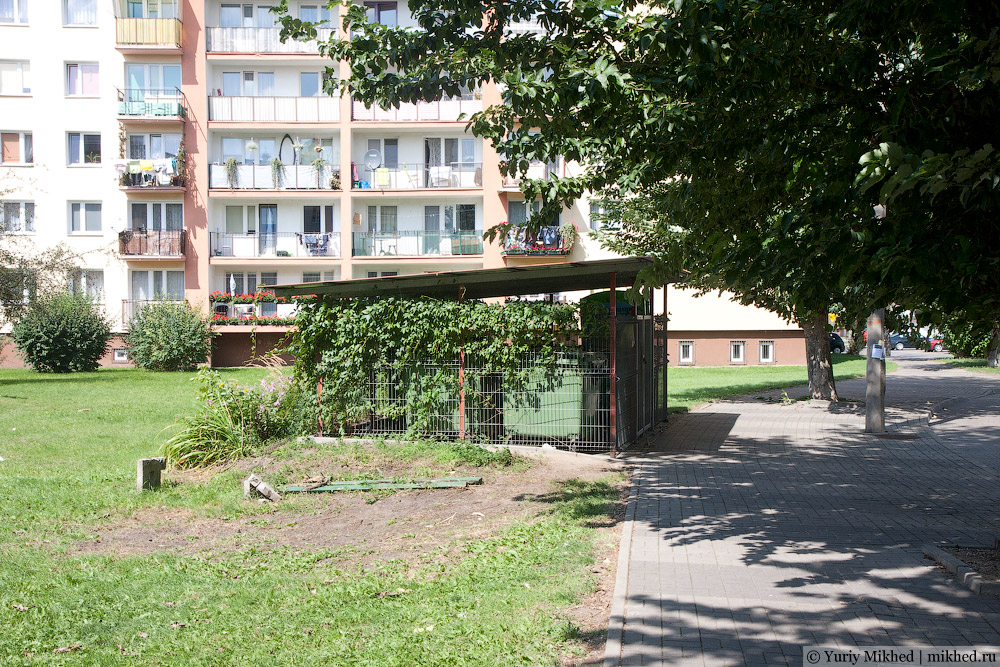
The bin storage area is green and neat. Only residents have access to it.
Elegant speed humps are installed near the residential zone to slow down traffic.
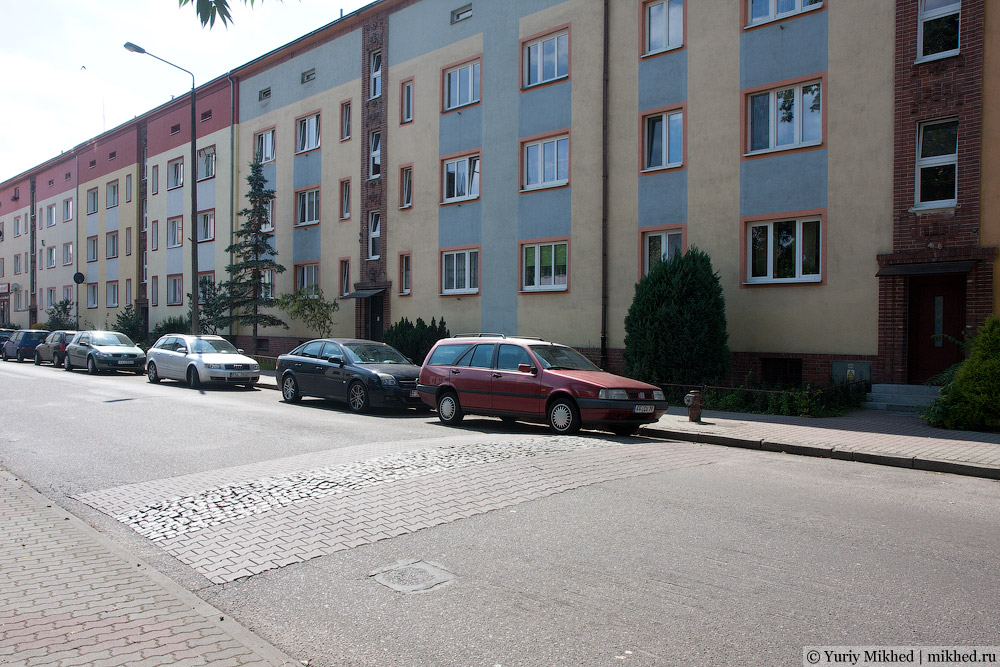
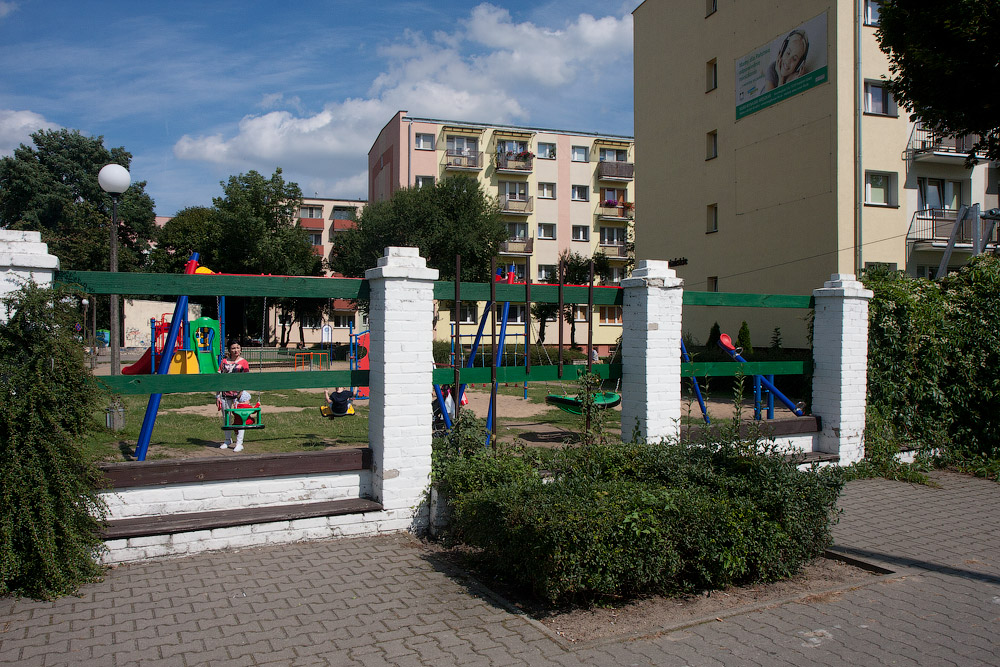
Many playgrounds resemble ours with their gaudy colours. The old flawed stereotype that "children love everything bright" refuses to die out because of bureaucracy.
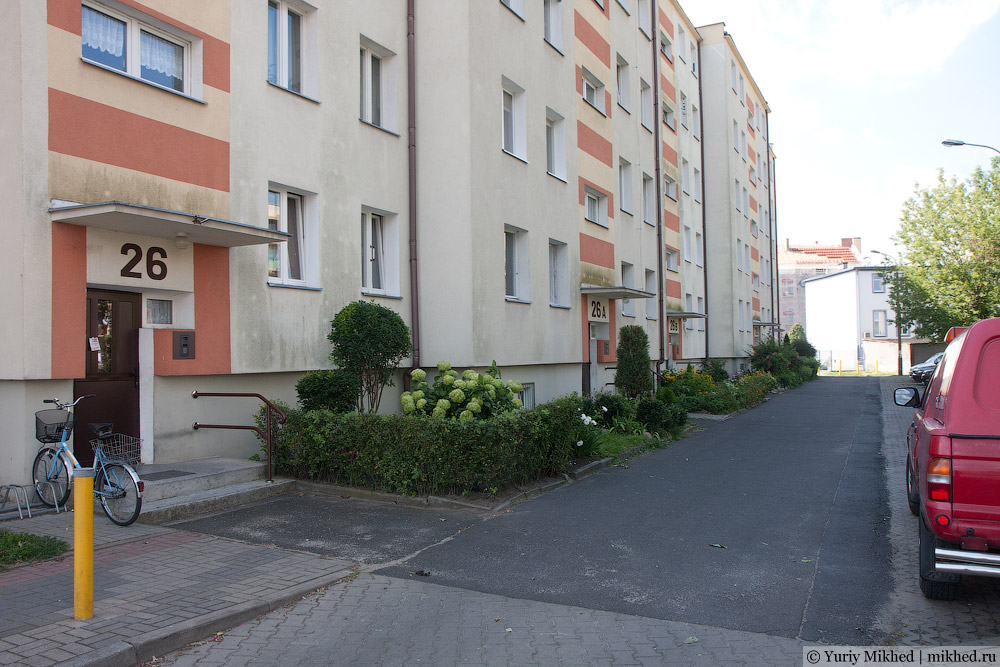
The entranceways to the blocks are neat, with glass in the doors and a small bicycle parking rack.
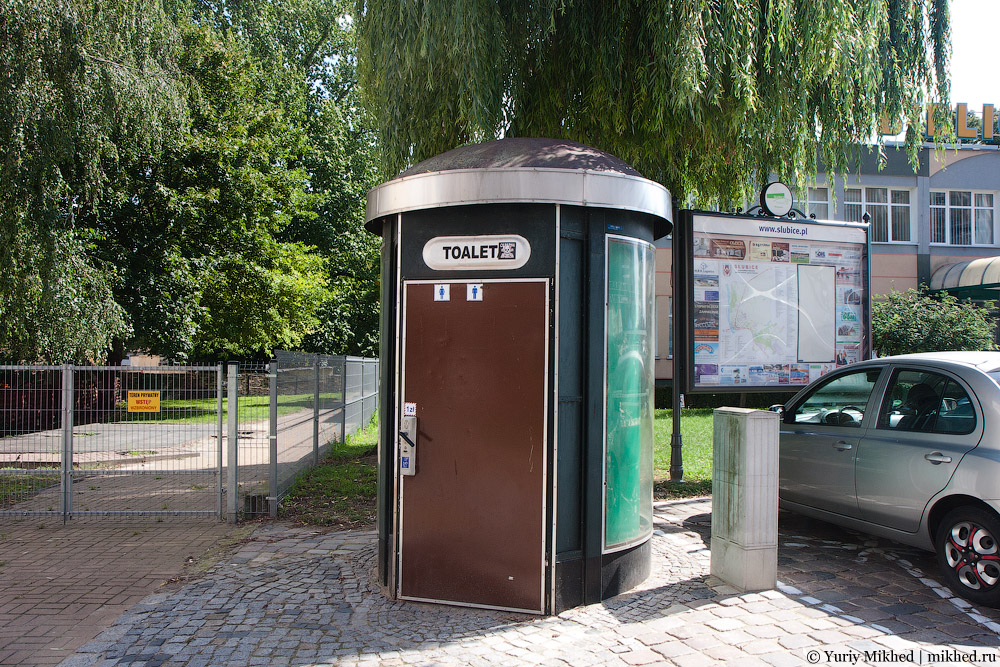
Public toilets like this can be found on the streets.
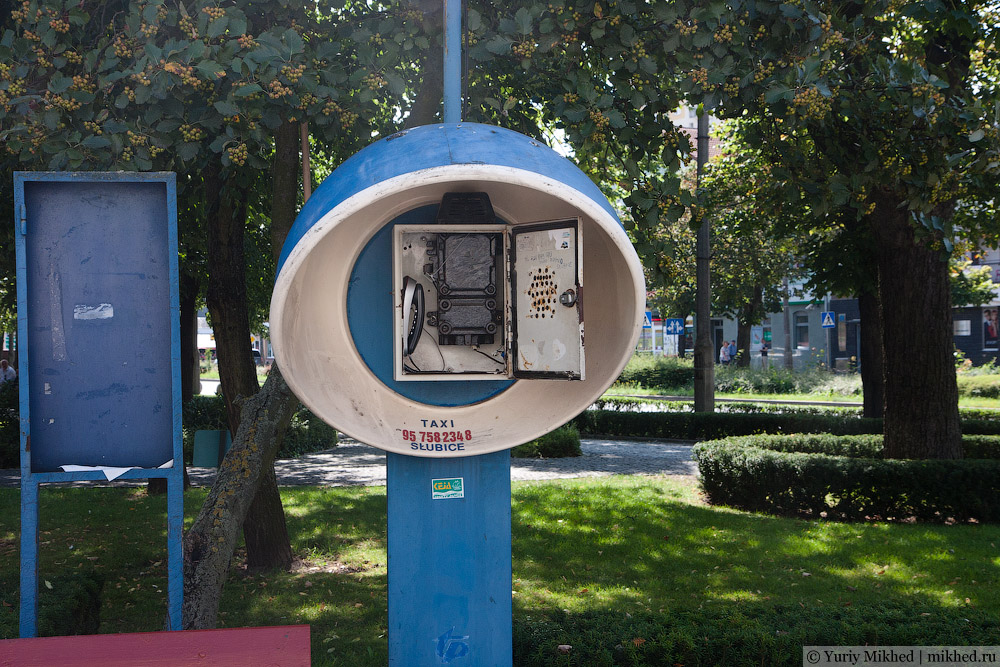
A street payphone.
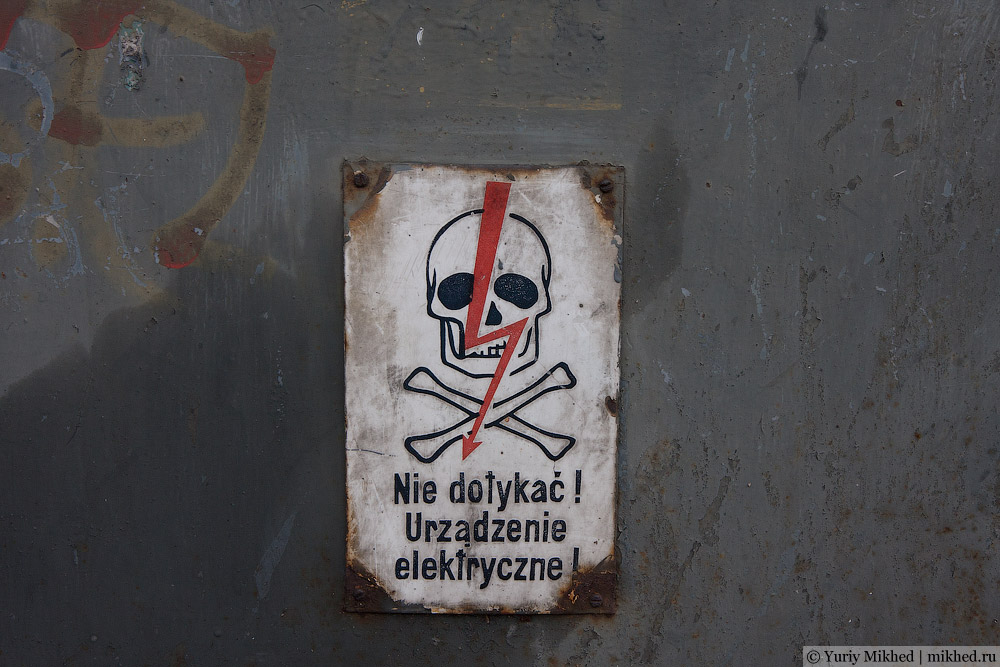
I liked the plates on the doors to the electrical equipment.
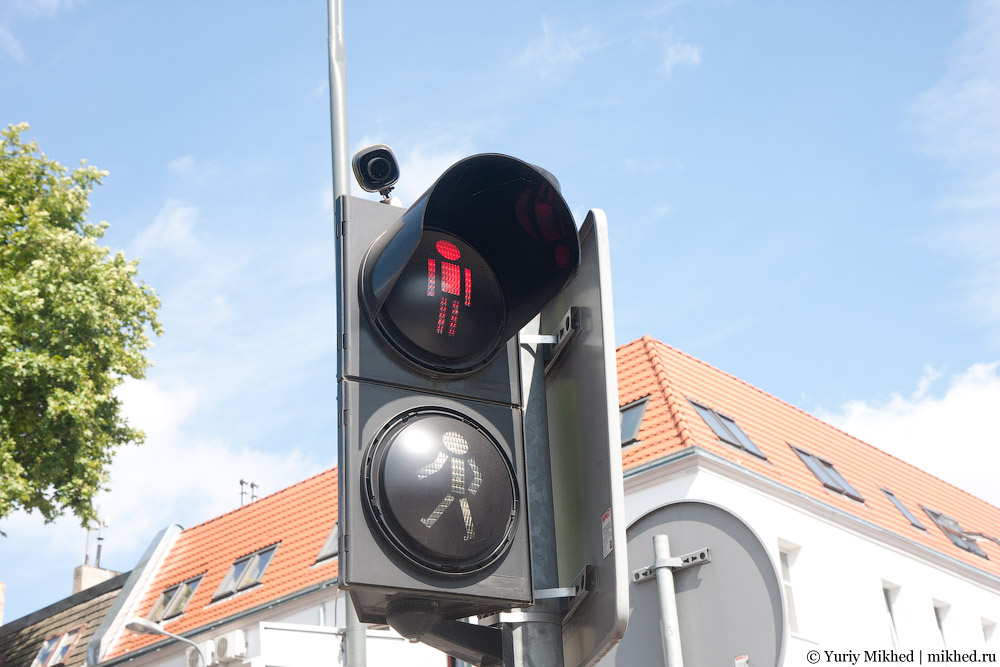
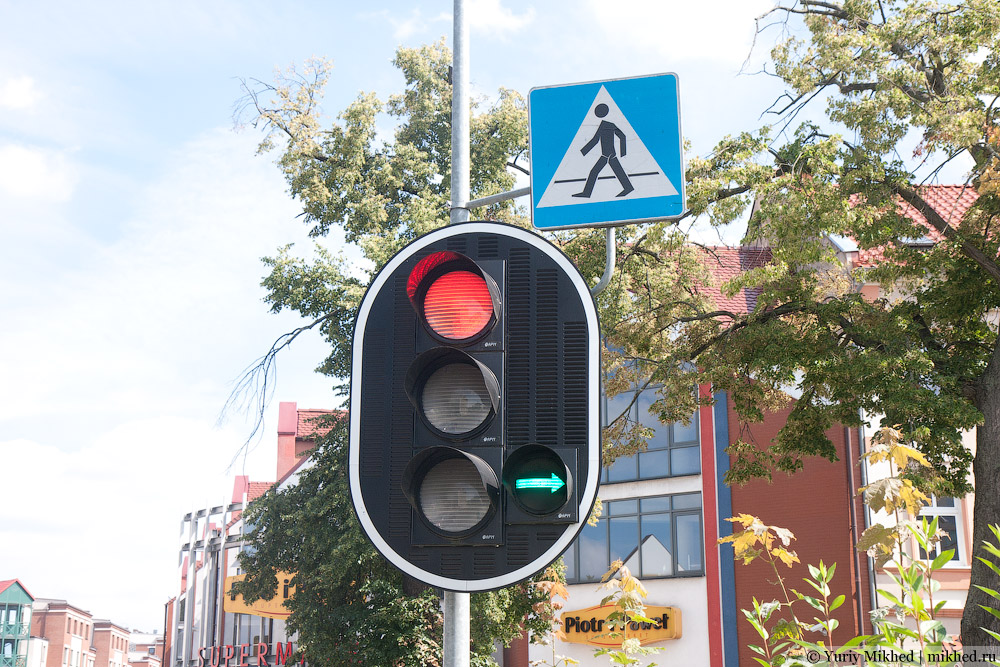
Traffic lights, however, were less fortunate—the pictograms were drawn by someone completely devoid of any sense of aesthetics.
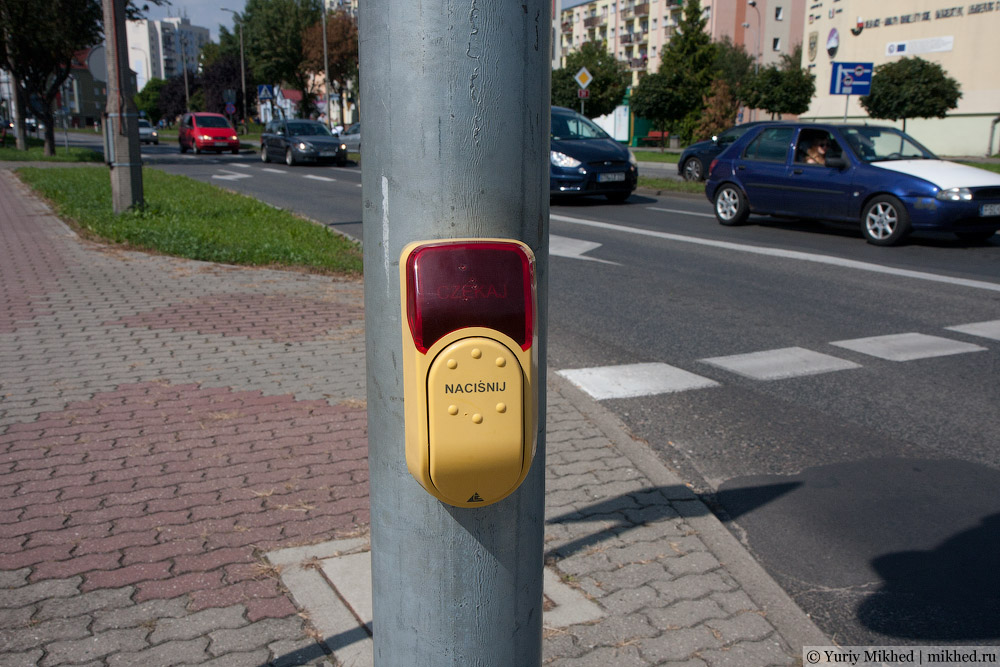
A button.
The rendering of the road signs is not impressive either.
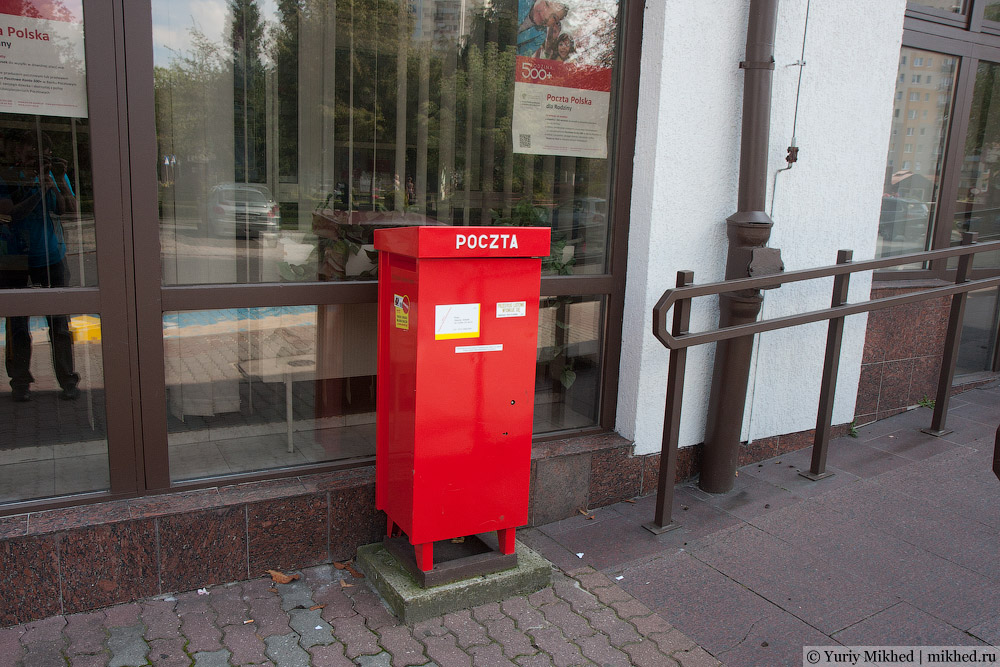
A Polish letterbox.
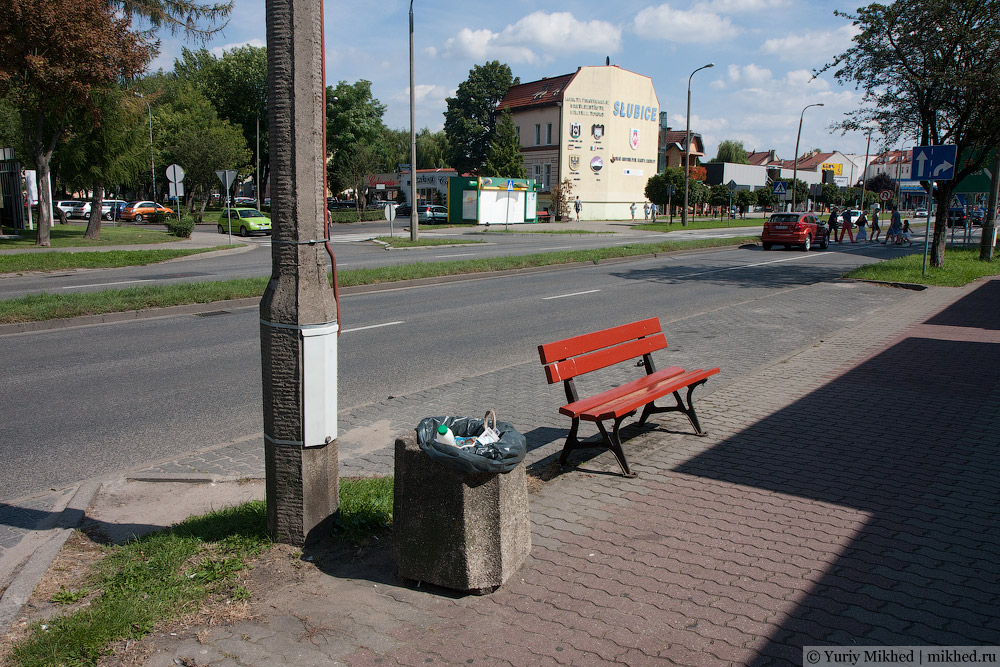
The primary bin model.
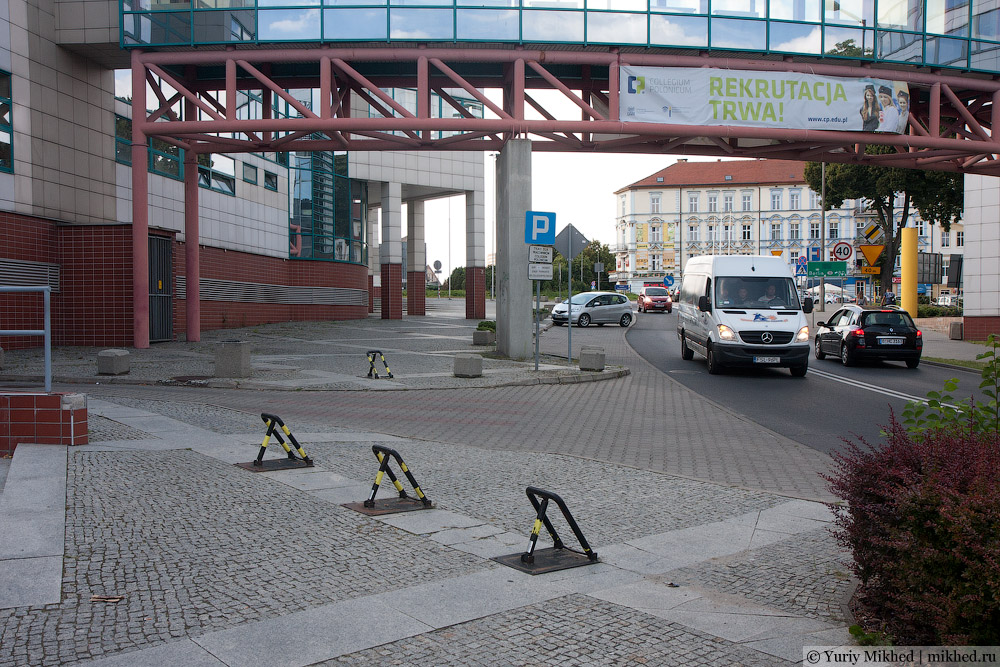
Parking posts just like in Sochi.
Disabled parking spaces are painted solid blue.
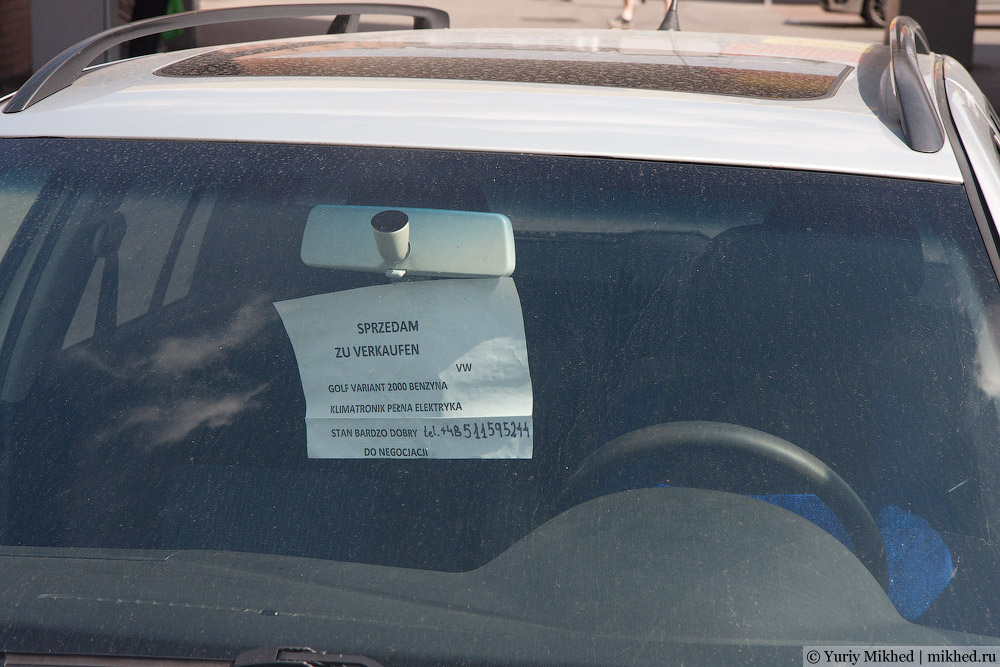
Private classified ads are also translated into German for the benefit of the neighbours. It seemed that almost all residents of the areas bordering Germany speak German well enough. When I was walking through the panel block neighbourhood, a man approached me and asked something in Polish. Seeing my confusion, he immediately switched to German, asking what I was filming there. When I explained that I was just travelling and interested in architecture, including this kind, he asked where I was from, and upon learning that I was from Russia, he switched to Russian.
What kind of car is this? Looks like an Oka, but it's not an Oka.
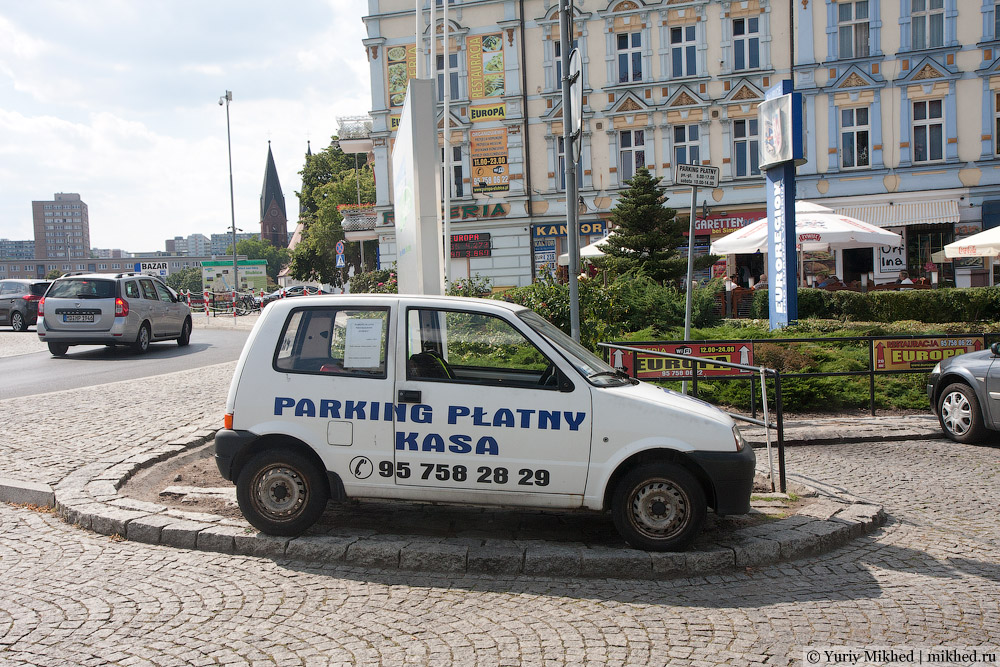
Typical Słubice.
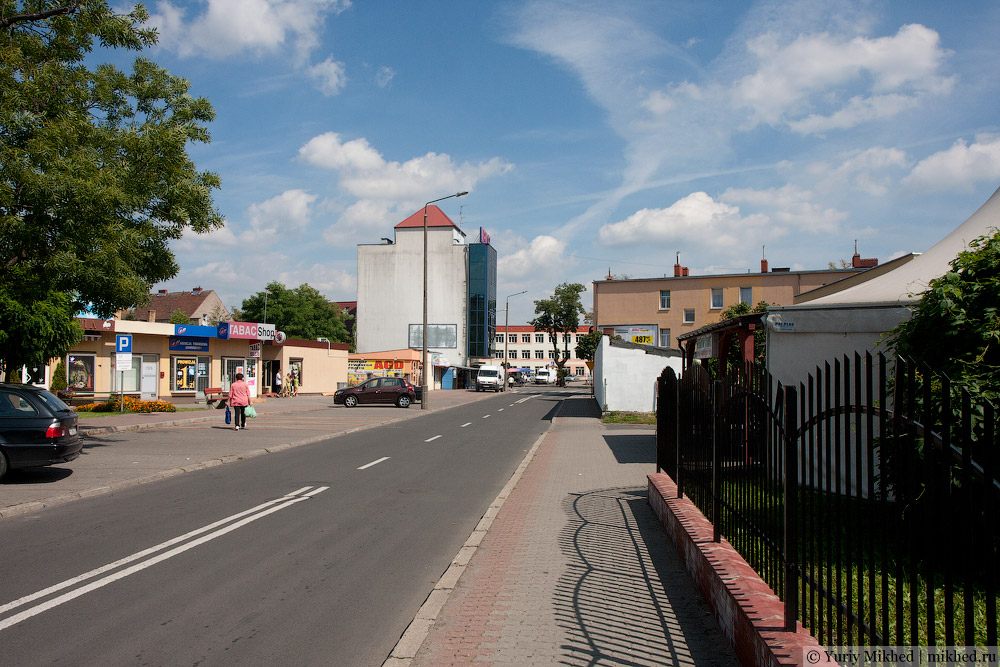
Germany on the left, Poland on the right.
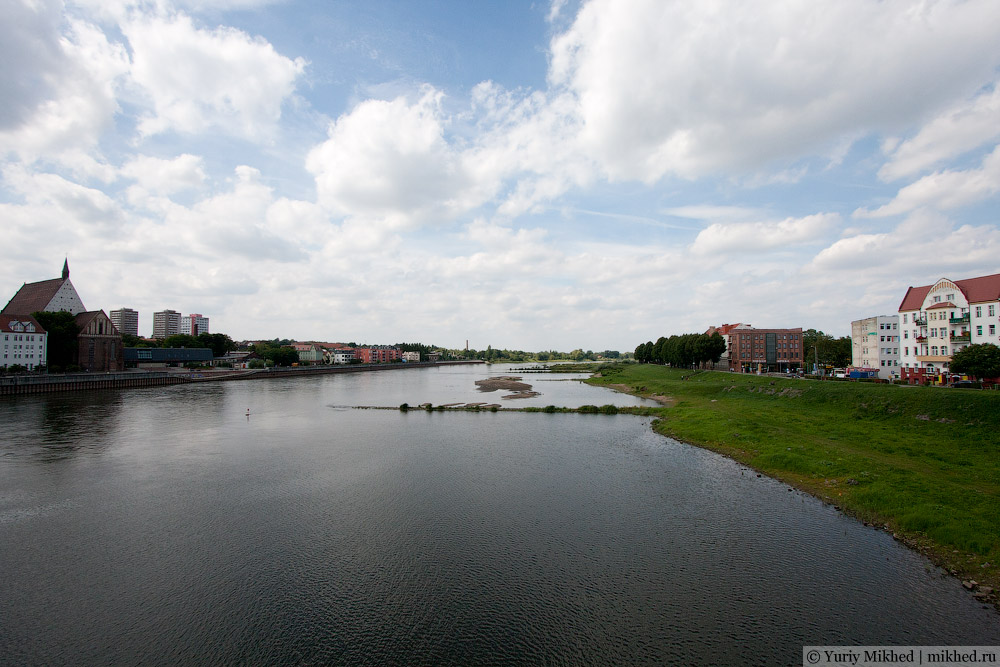
Heading back. Three countries in one day.