Prague, Details
Czechia, August 2016
Google Maps, Yandex.Maps
Prague is very beautiful, but there are a lot of tourists.
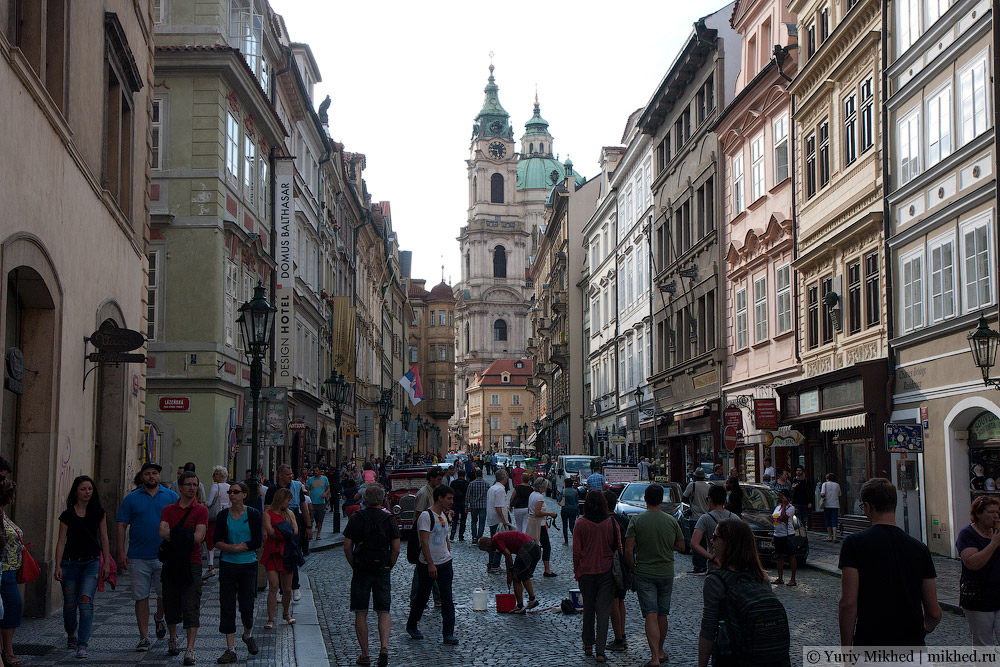
Much like in Amsterdam. If you don't like crowds on the streets, it's better not to come here during the peak season.
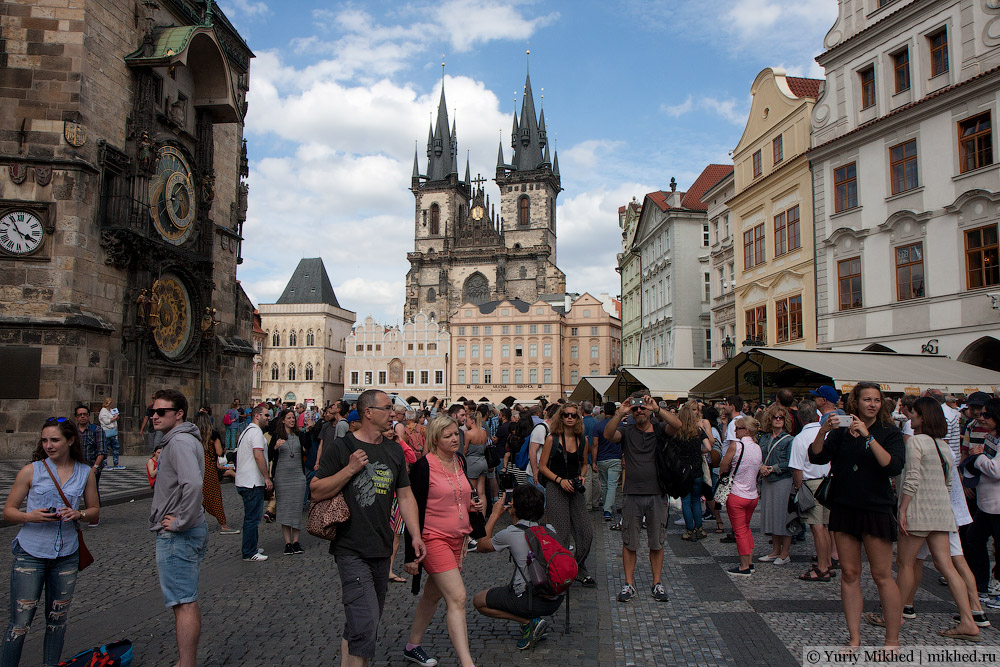
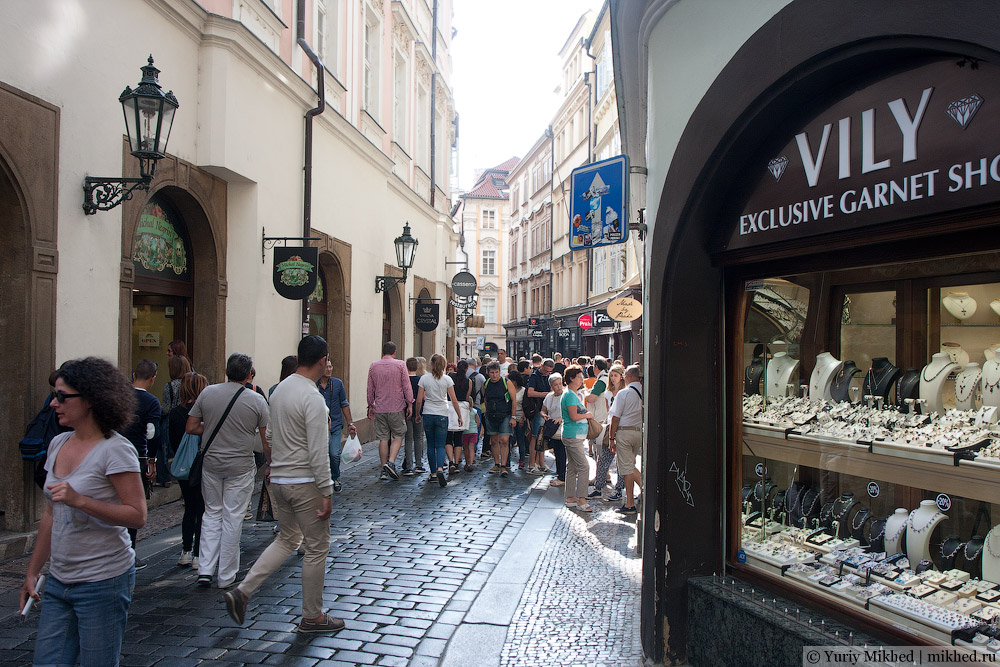
Some streets are packed wall to wall.
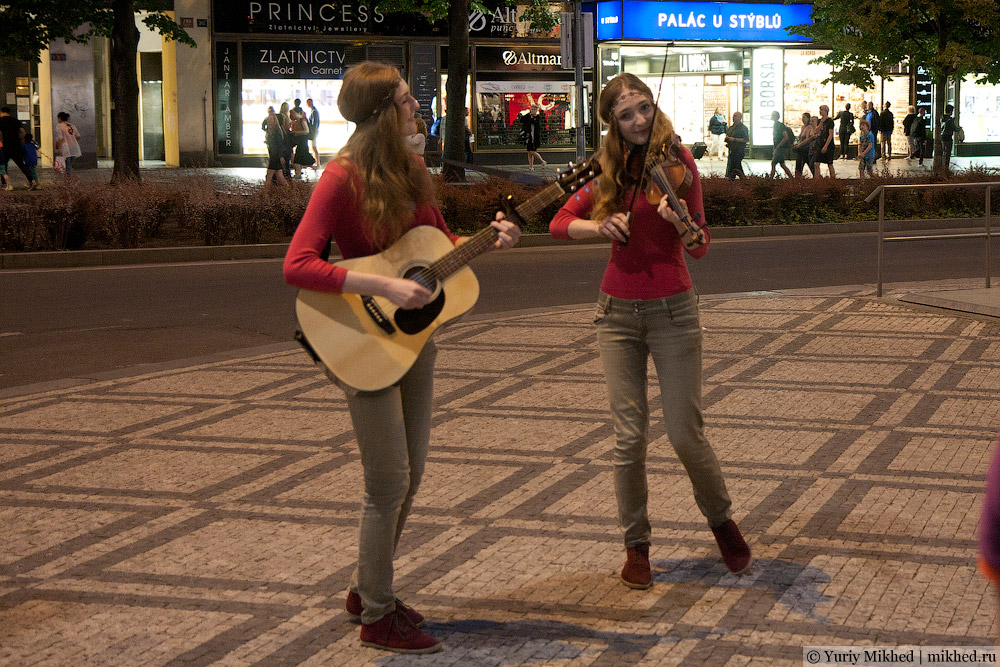
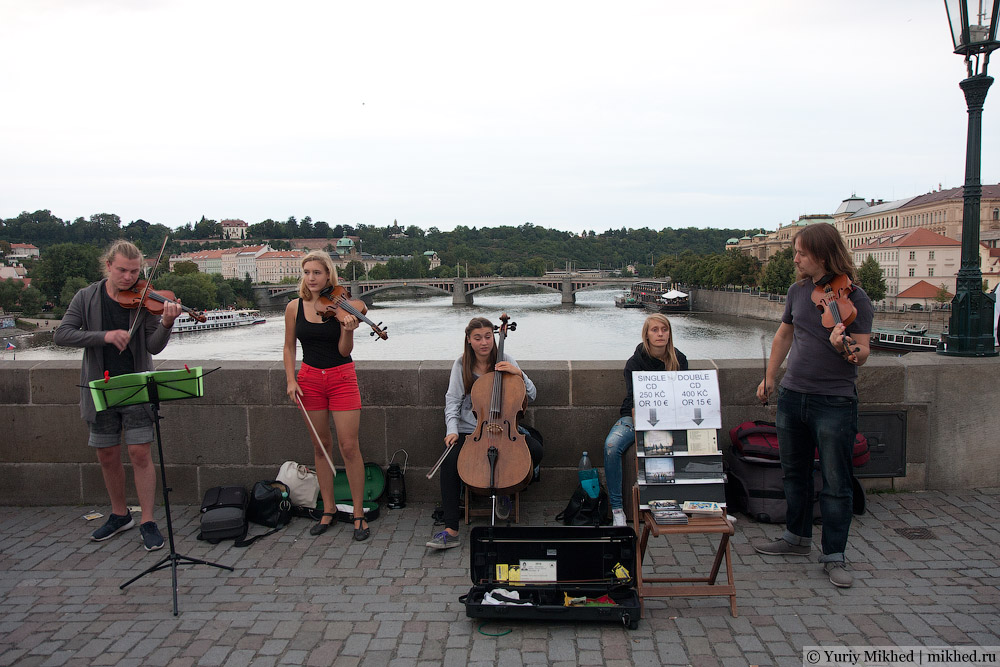
As a result, there are many people who specialise in making money from tourists on the street—souvenir vendors, musicians, etc. To control them somehow, primarily from a taxation perspective, the authorities came up with issuing permits for such activities. Those who haven't received a permit are not allowed to perform or trade on the street. The permit must always be in plain sight, displaying a photo, name, and the number of the performer or vendor.
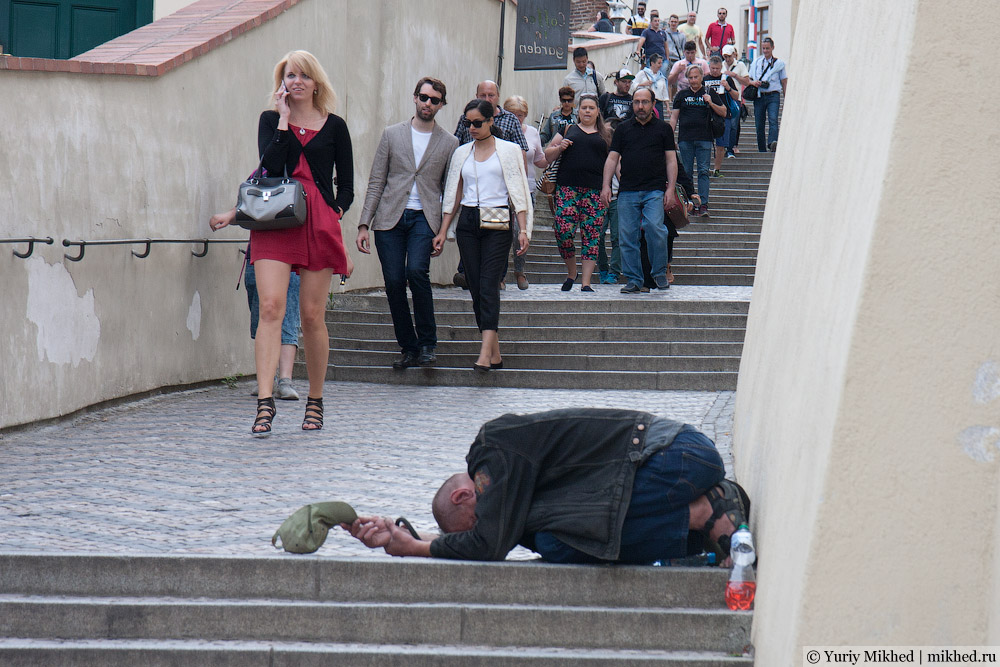
Those who have no skills simply beg. A peculiar feature of Prague beggars is their posture—they don't sit with an outstretched hand, but always stand bent double, stretching their arms forward. All the beggars I encountered were in this exact posture.
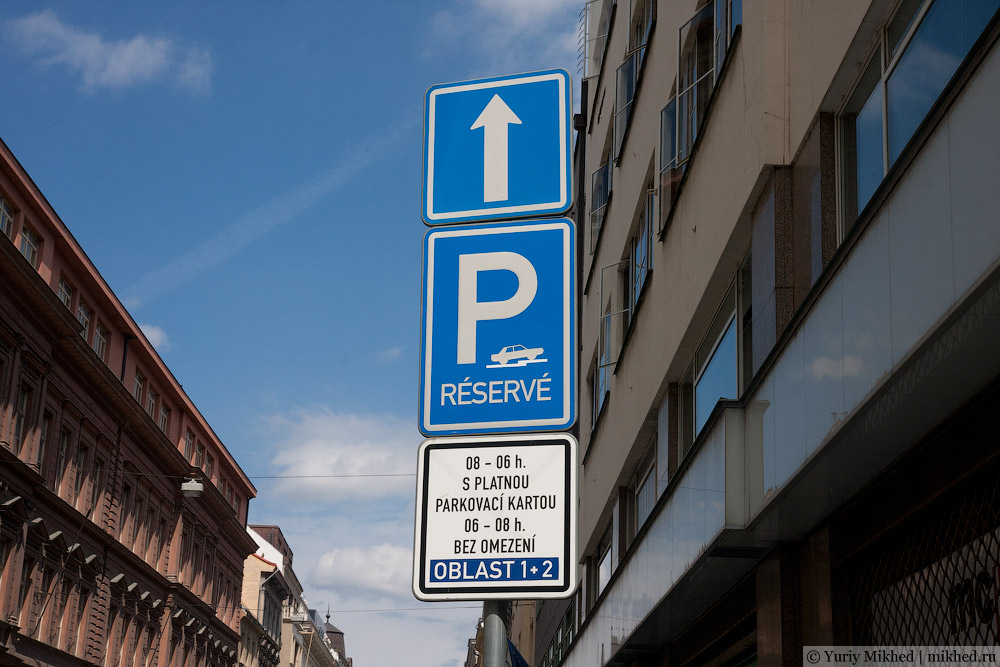
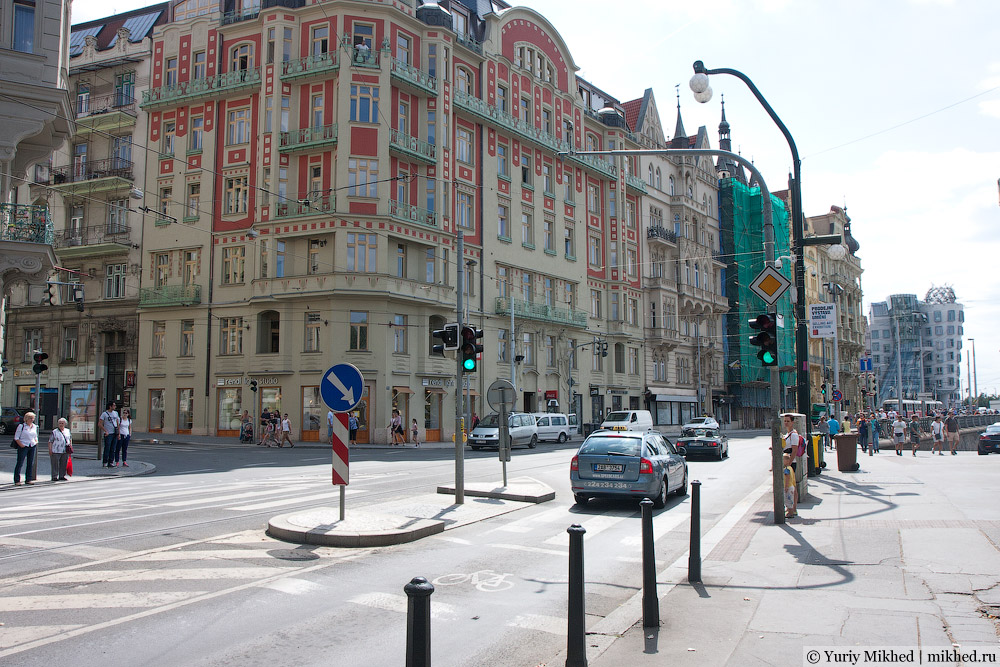
Road signs and direction indicators are incredibly detailed. The person entrusted with designing them is clearly a fanatic about their work.
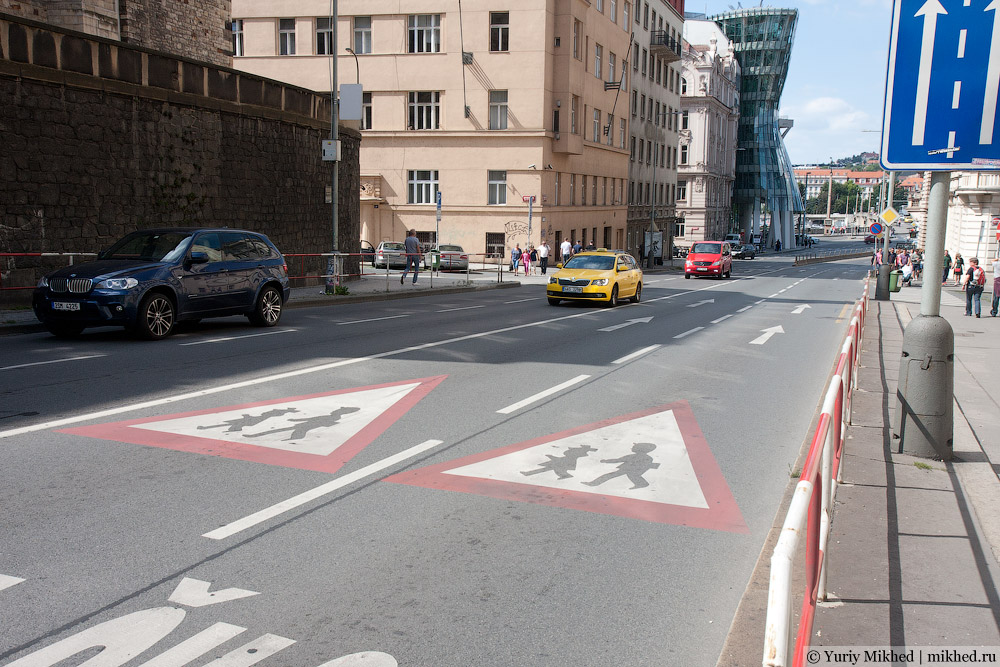
Sometimes signs are painted right on the road.
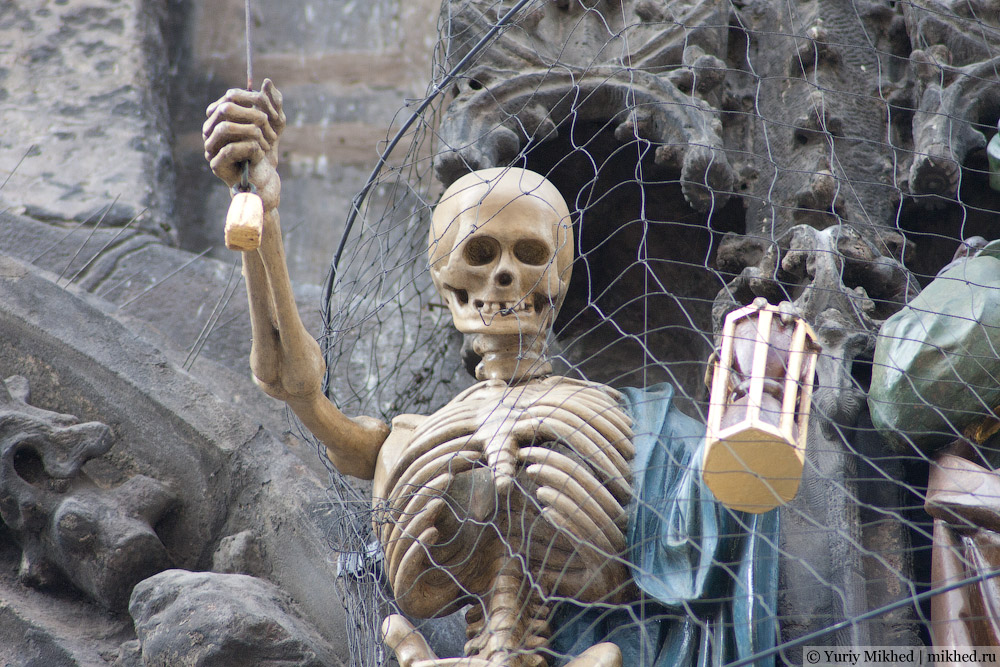
To protect against pigeons, various reliefs and sculptures are often covered with netting.
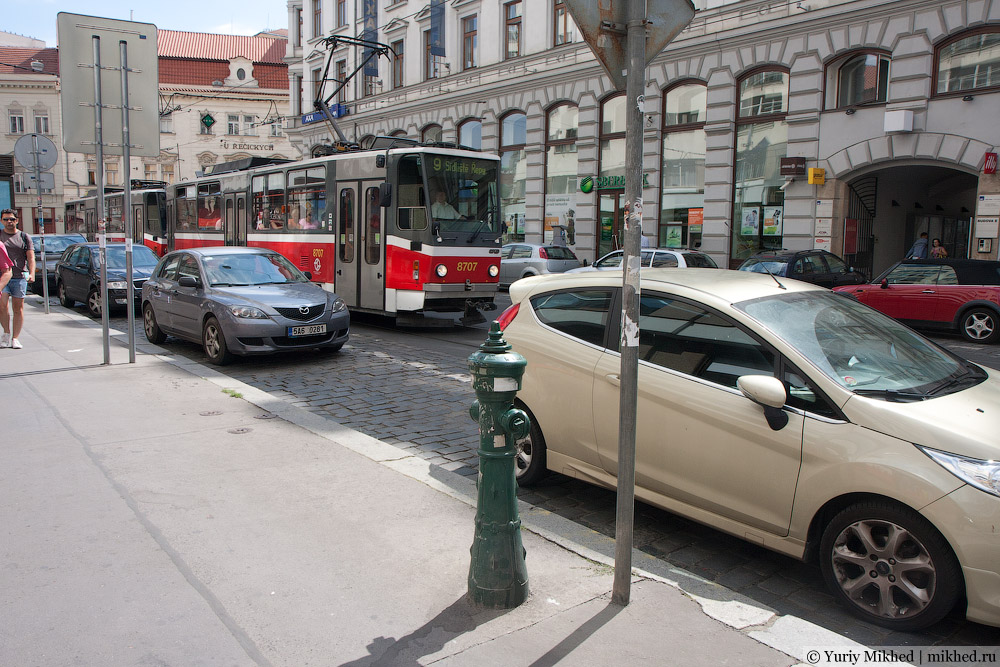
Occasionally, external fire hydrants can be found—a rarity for Europe. They don't have a single uniform design.
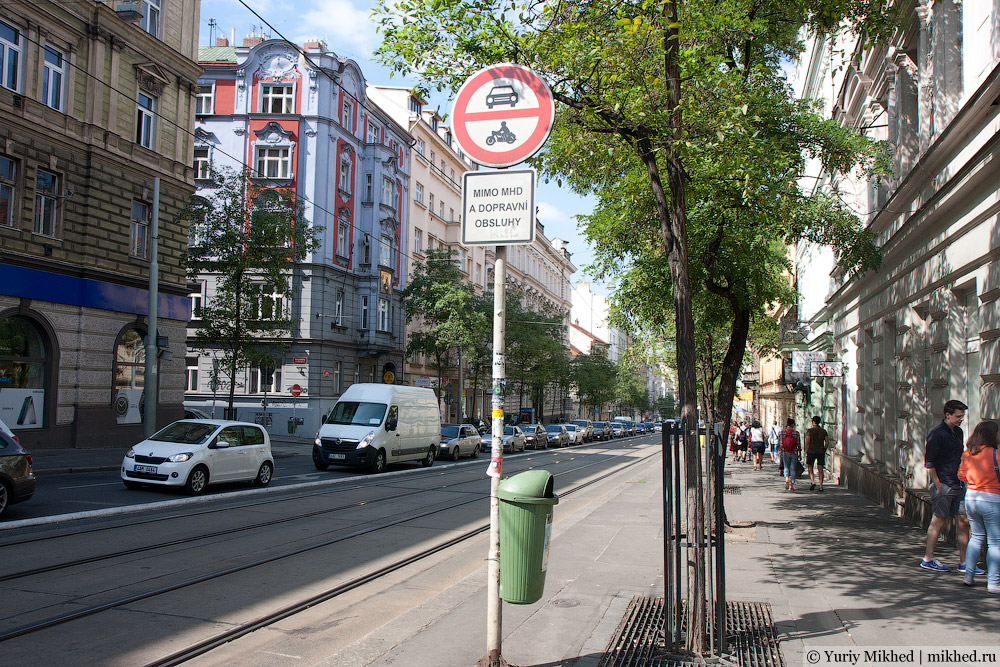
There are also several types of street bins. The most common and widespread one is the green plastic rubbish bin that is hung on posts.
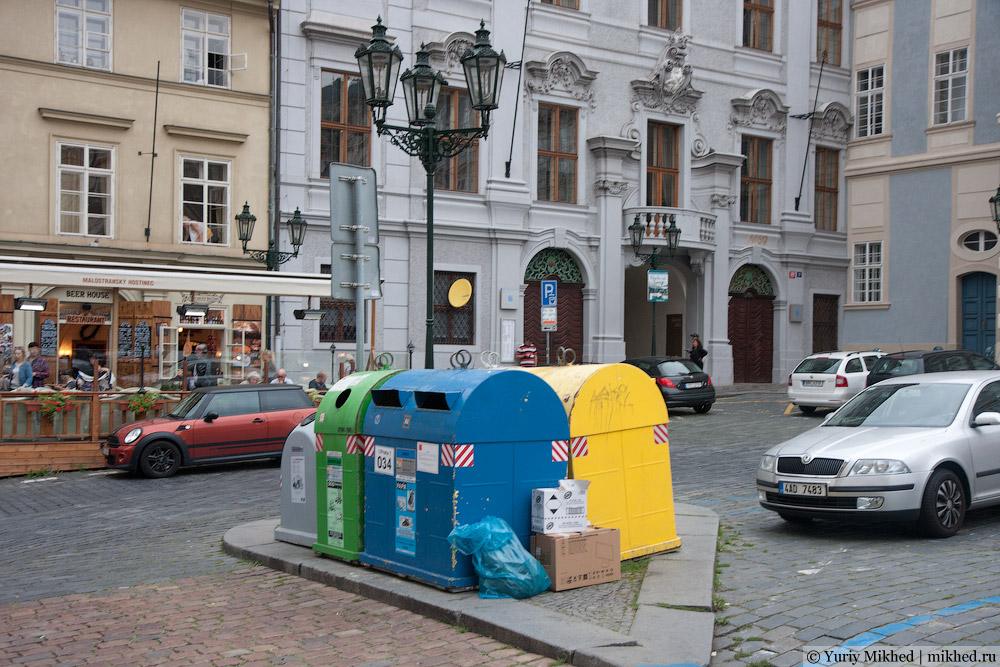
There are bins for the separate collection of recyclable waste with underground storage. Each of these bins has its own number.
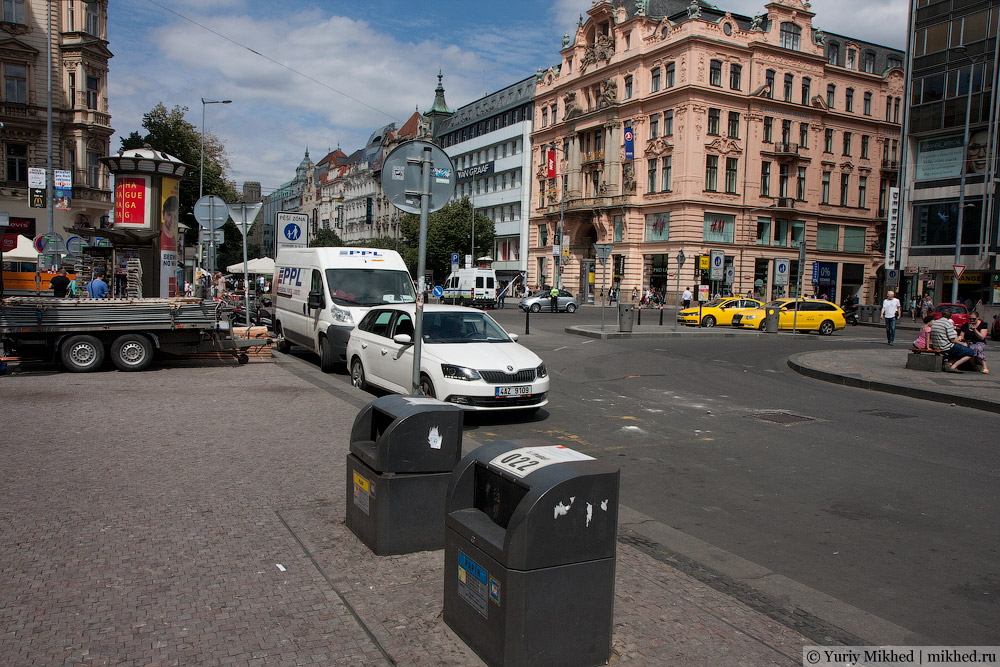
There are trendy ones for tourist areas.
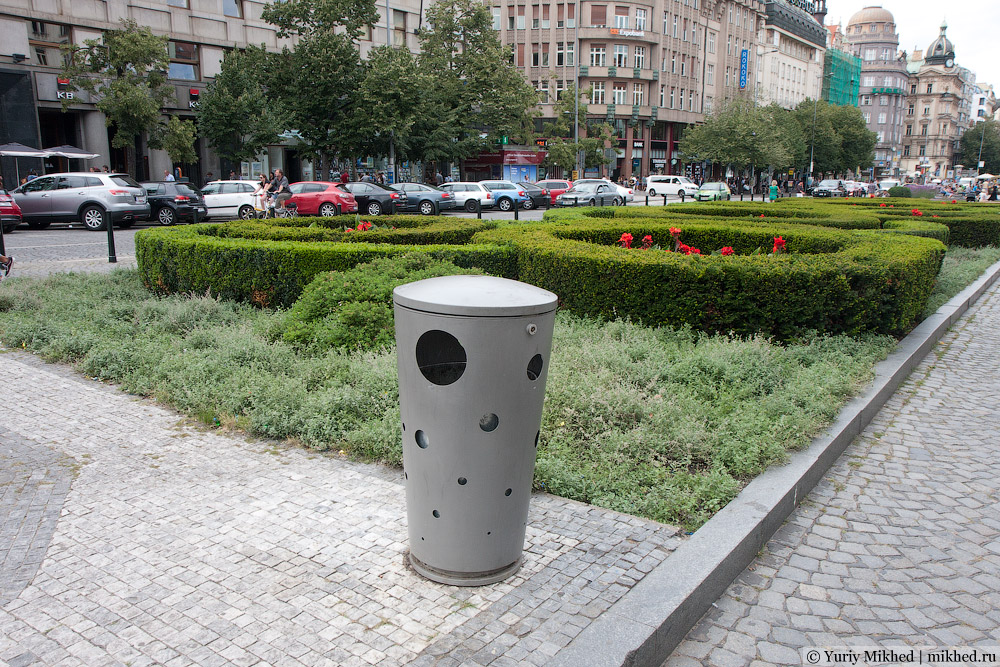
And there are special containers, also for separate collection. They are intended more for local residents.
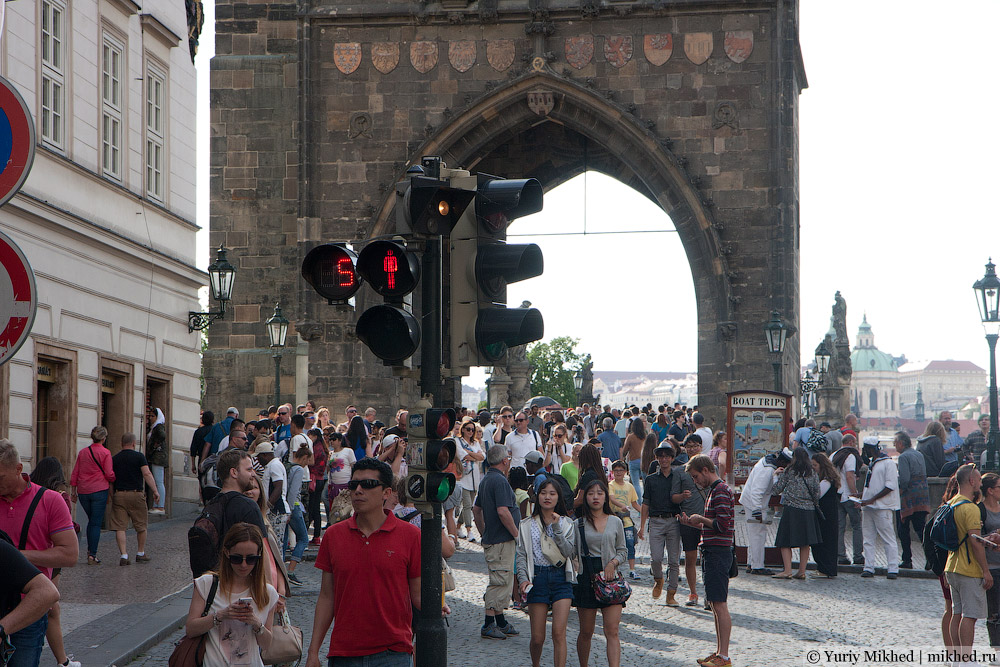
Traffic lights consist of circular sections and are usually equipped with a timer. A mini-section at the bottom is often encountered.
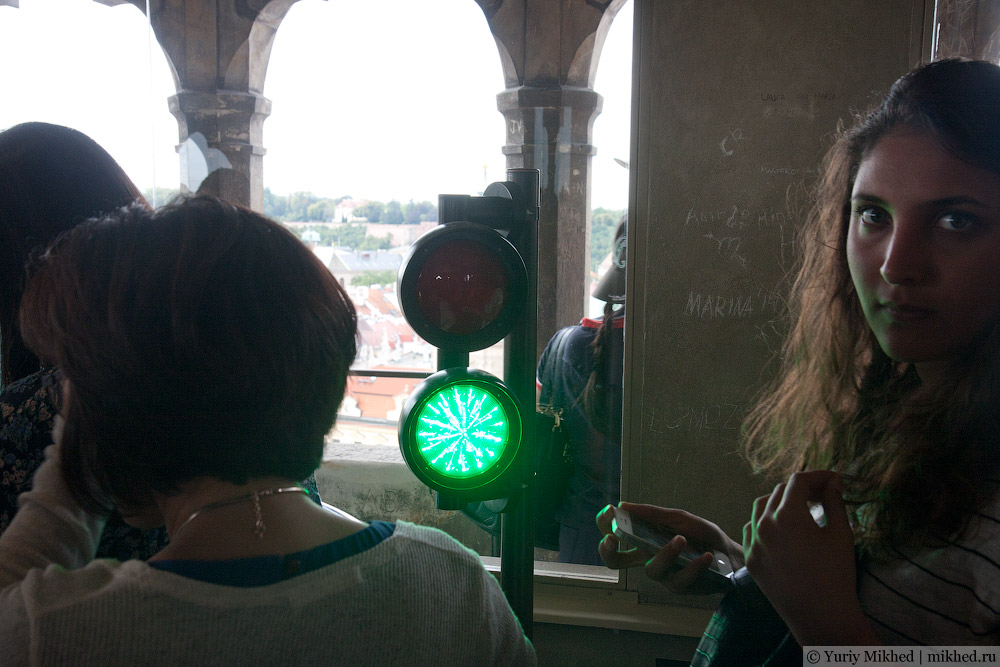
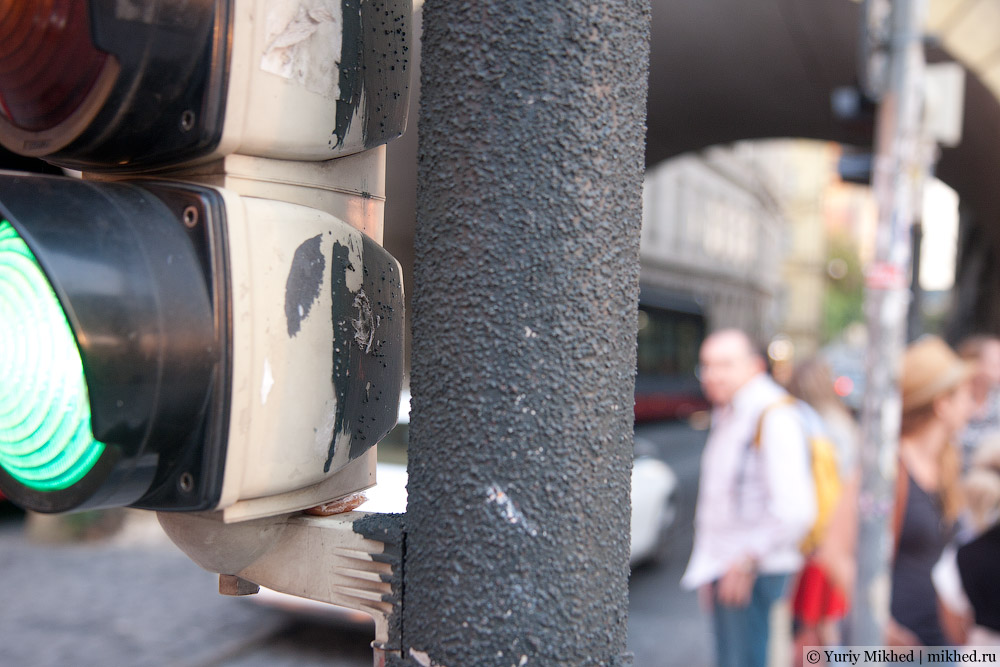
A traffic light and some cute girl.
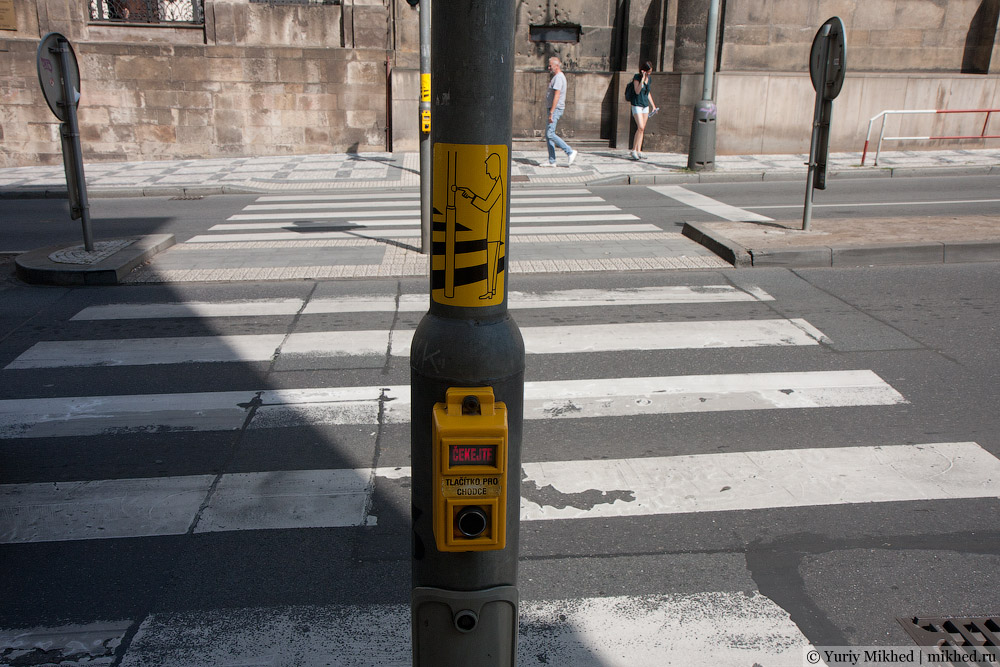
A traffic light button and instructions for it.
Lampposts are sometimes painted with a special textured paint that makes it impossible to stick advertisements on them.
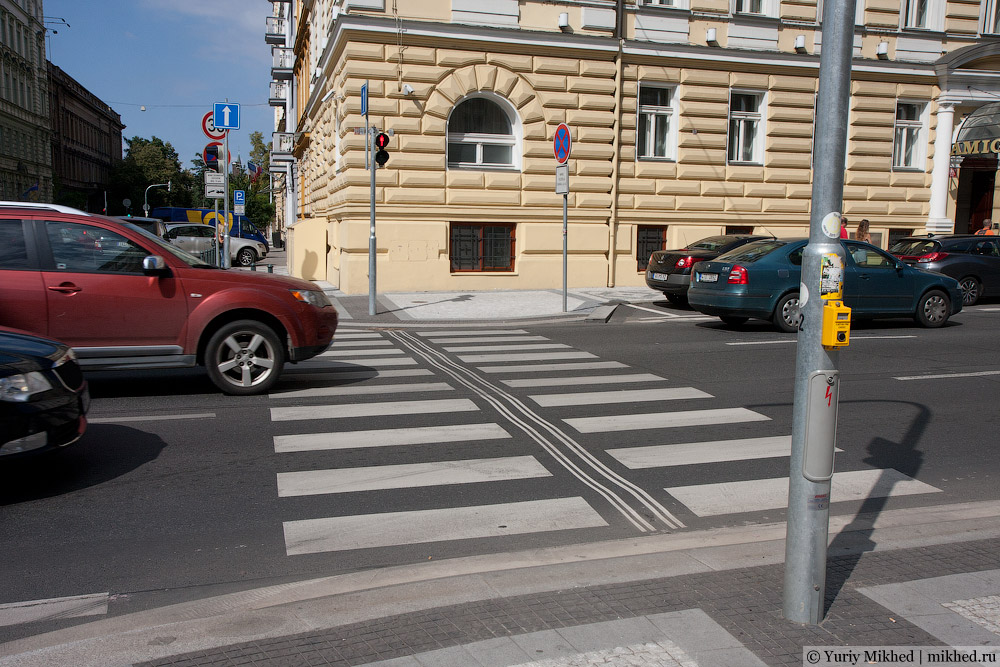
The zebra crossing markings separate oncoming pedestrian flows.
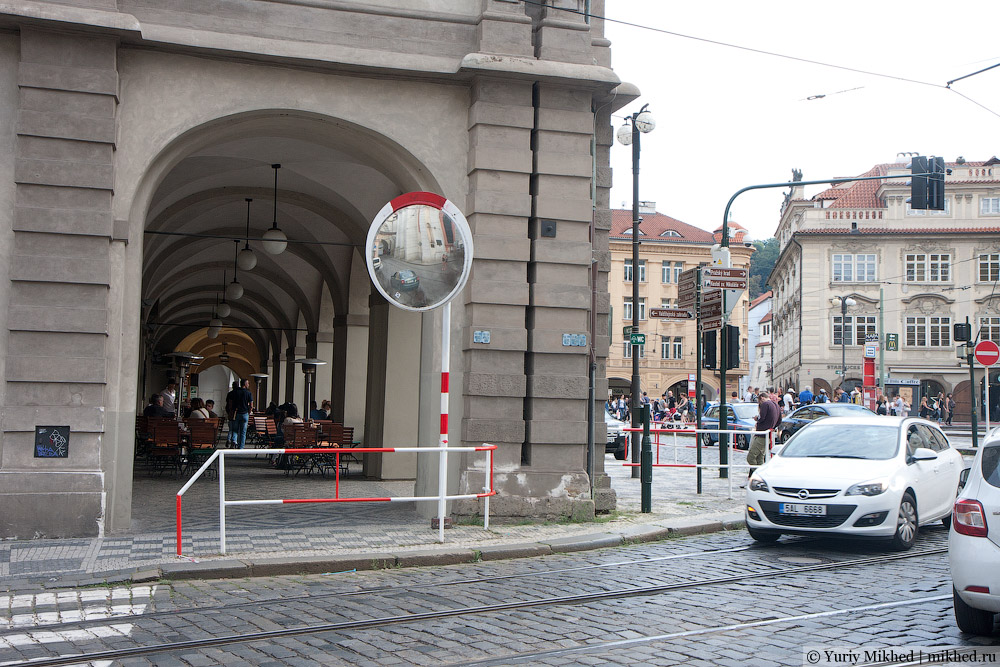
Convex mirrors are installed at difficult exits.
Parking is, as it should be, paid, but I didn't see any ticket machines. Perhaps payment is made some other way.
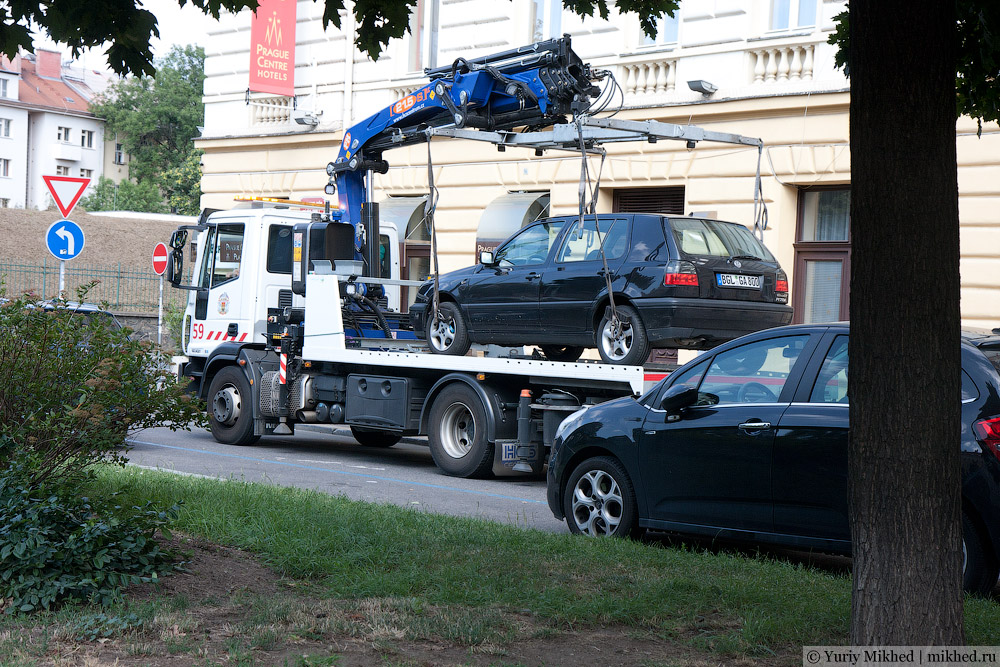
A violator is being towed away.
Public transport is very well developed—there is an underground, tram, bus, and more exotic types. The fastest way to get around is the underground. The Prague metro is the 5th busiest in Europe, carrying about 600 million people annually. A single trip costs 24 korunas On that day — 64 ₽
64 ₽ 24,92 ₴
 1,94 Br
 0,99 $
 0,89 €
. It immediately brings to mind Copenhagen, where the underground also cost 24 kroner On that day — 233 ₽ 92,11 ₴ 7,05 Br 3,66 $ 3,23 €
. But considering that the Czech koruna is 3.6 times cheaper than the Danish one, this is much cheaper. Only cash is accepted for a single underground fare (you can't buy a ticket with a card), which in 2016 feels like a terrible relic of the past.
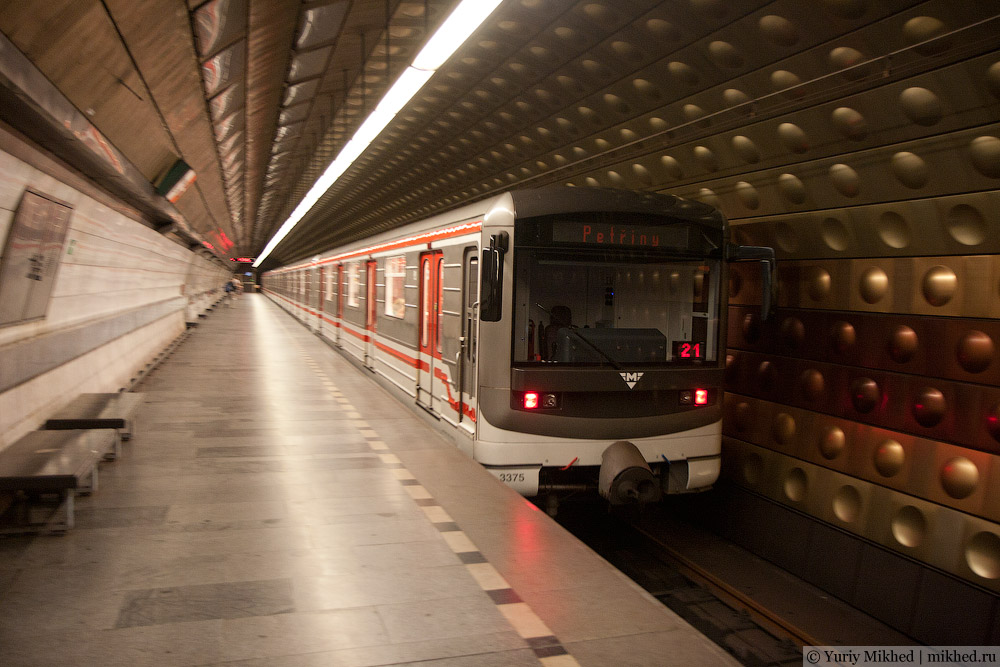
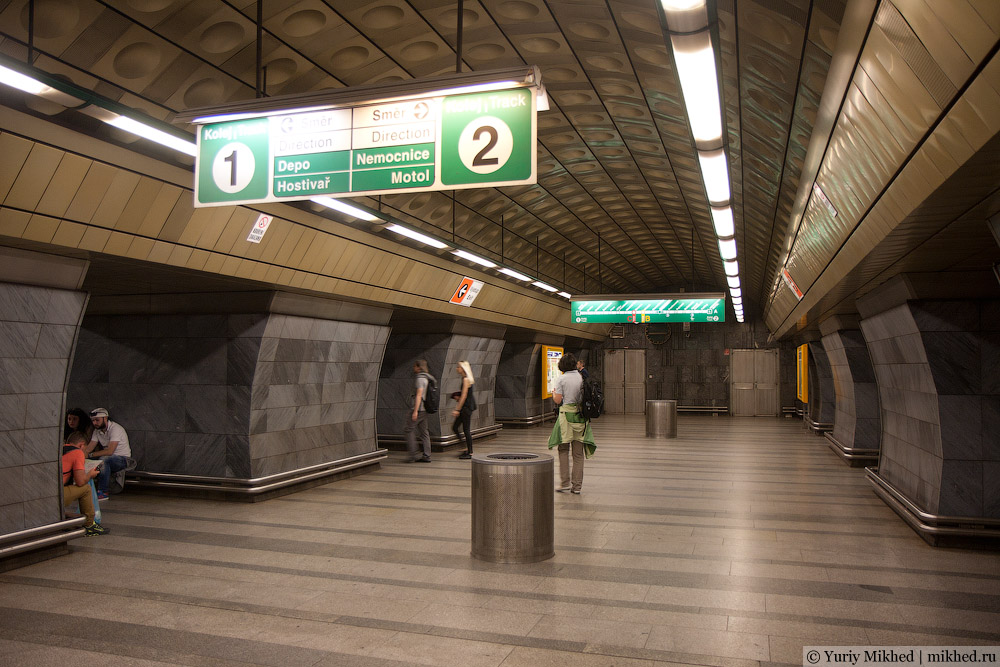
In terms of their layout, the stations are exactly the same as in Moscow, Kyiv, and other cities of the former USSR, which is not surprising considering that construction was carried out with the extensive involvement of Soviet specialists and using Soviet technologies and materials. If not for the cosmetic design, you might think you were in some post-Soviet town.
Escalator. The central stations are deep-level.
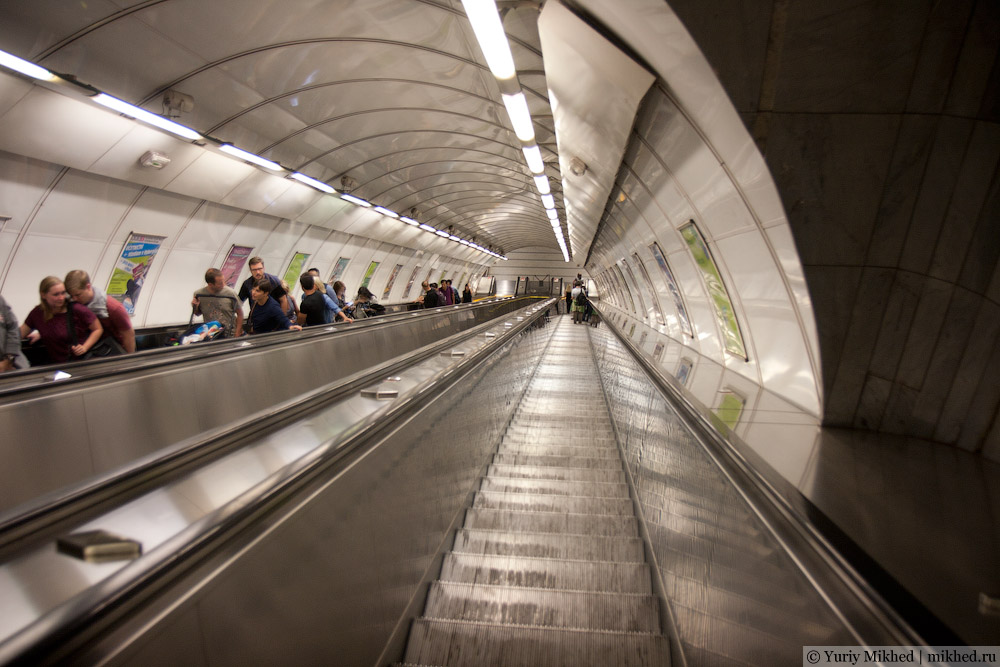
However, the layout of the carriages is different. Instead of long bench seats, there are individual seats arranged so that you don't have to sit with your back to the window.
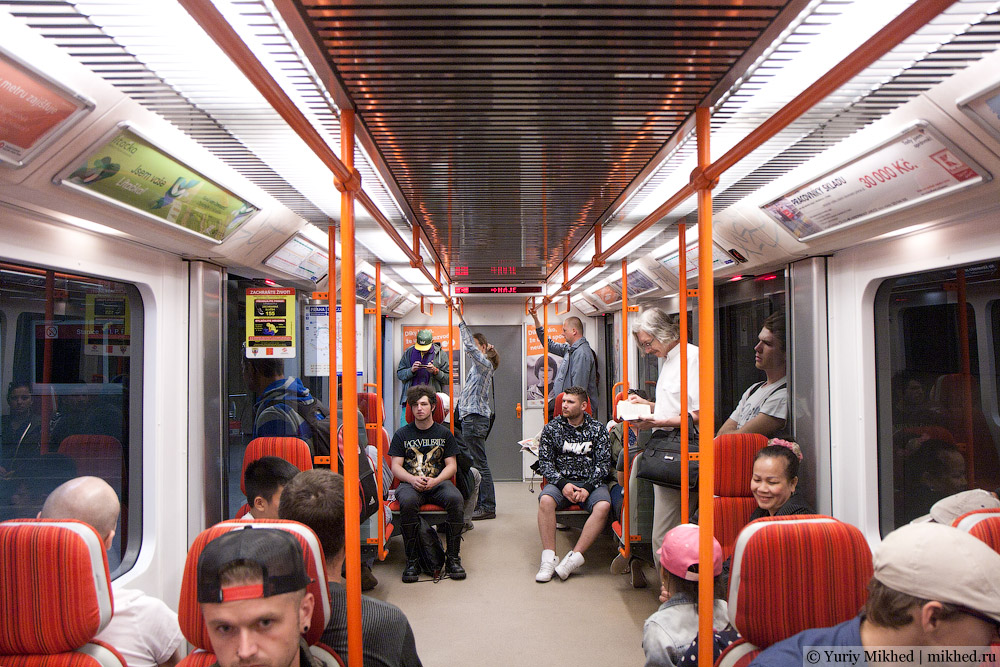
The signature livery (it is the same for all modes of transport) resembles the colours of Russian Railways (RZD).
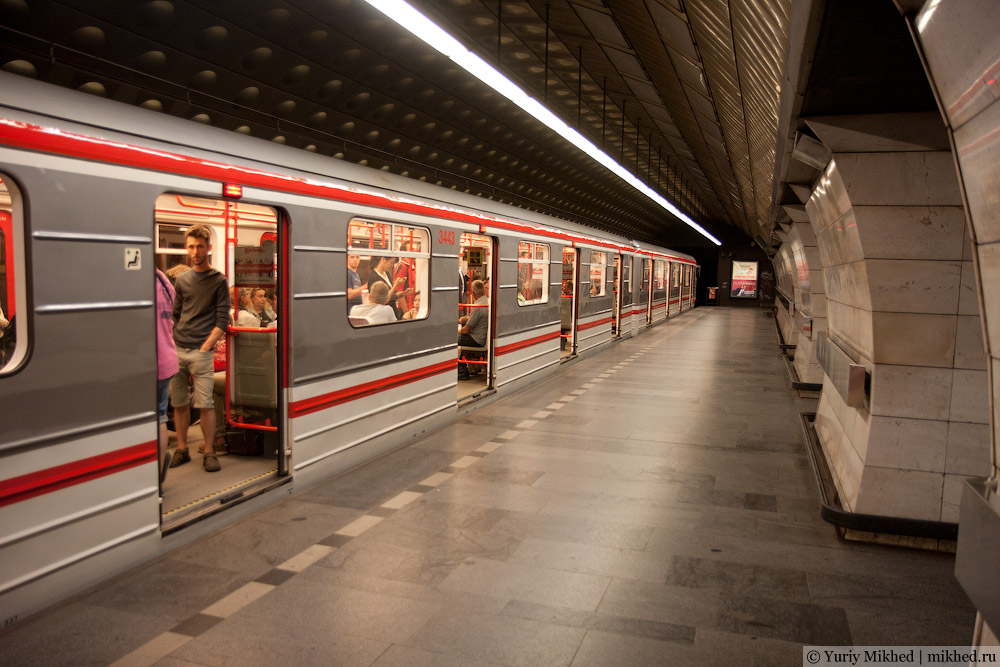
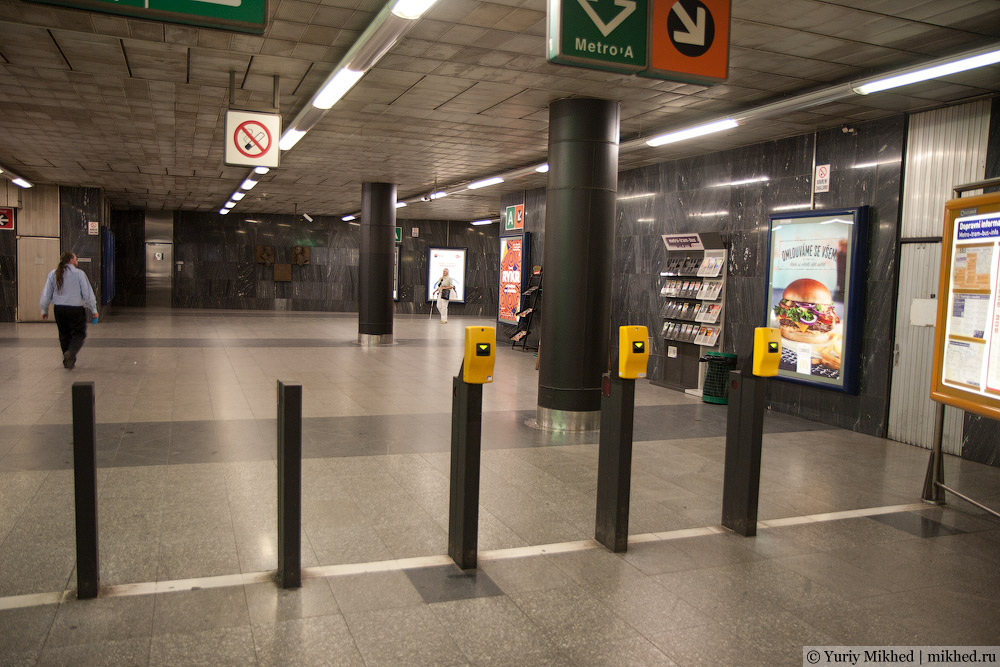
Like in many European countries, there are no turnstiles in the underground (they slow down throughput because they create queues during peak hours). Instead, there are validators for transit cards at the entrance, and the network is periodically patrolled by ticket inspectors. If they catch you without a paid fare, the fine will be so high that you could ride for a couple of months for that amount. You can be checked not only on the train but also at the station—if you have passed the validators without paying the fare, it is already a violation.
About two-thirds of the stations are equipped with lifts that can be used by passengers with reduced mobility.
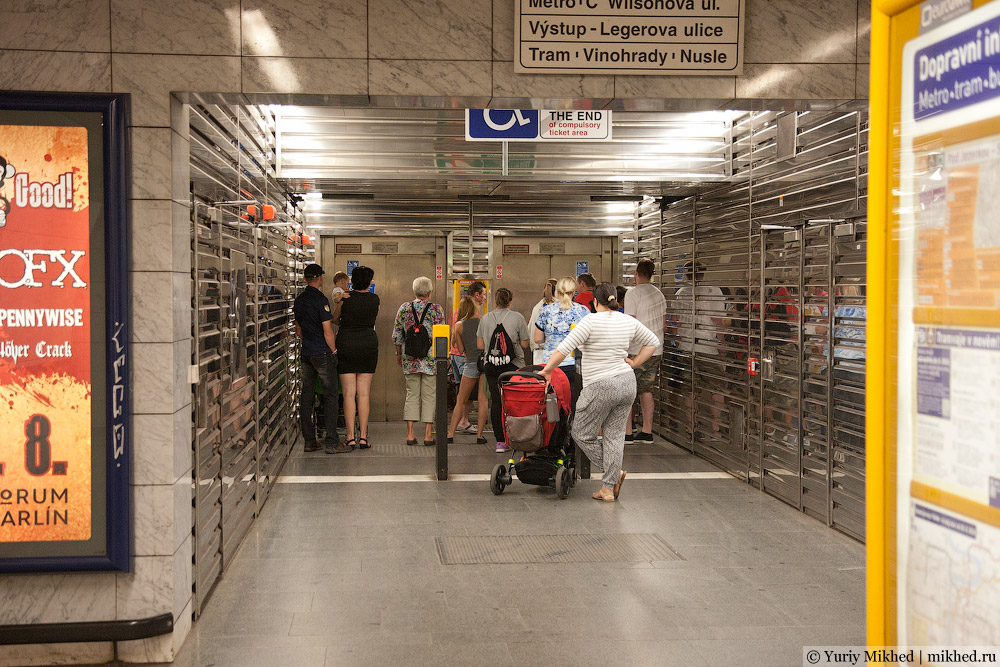
The underground consists of 3 lines, each of which intersects with the other two in the centre.

As in any good city, Prague has a tram system. It would be strange if the Tatra T3 carriages, so familiar to us, didn't appear in their homeland. These trams were made by the ČKD company right here in Prague. Their name "Tatra" came from the name of a mountain range in Slovakia, just like the name of another Czech company of the same name (ČKD and Tatra were different enterprises, although they cooperated in the field of mechanical engineering). Thanks to exports to the USSR and other socialist countries, the Tatra T3 became ČKD's most mass-produced model—in total, between 1962 and 1999, more than 14,000 carriages of this brand were built.
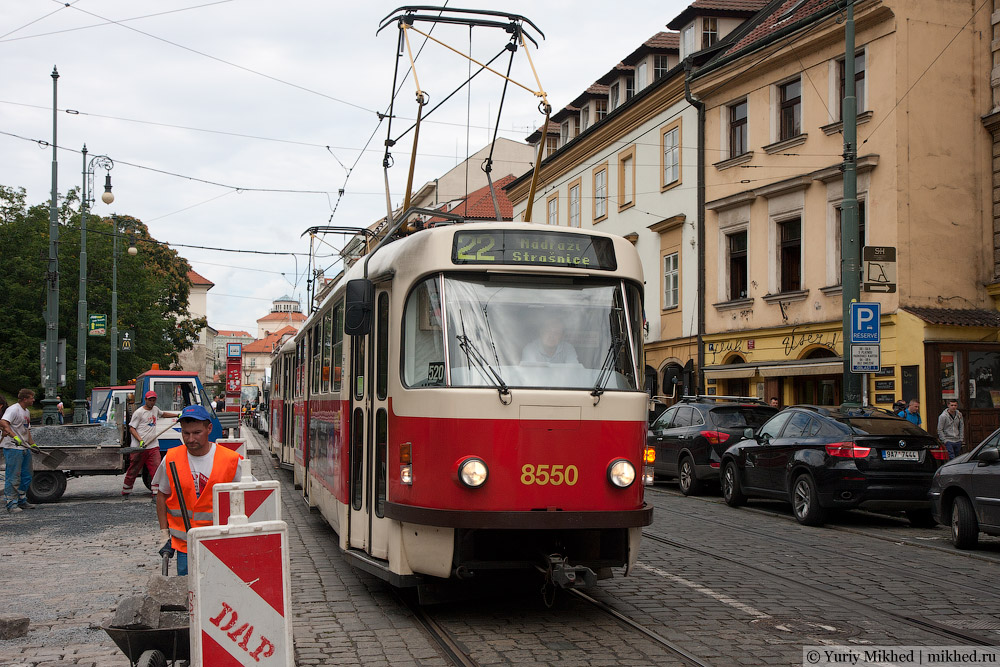
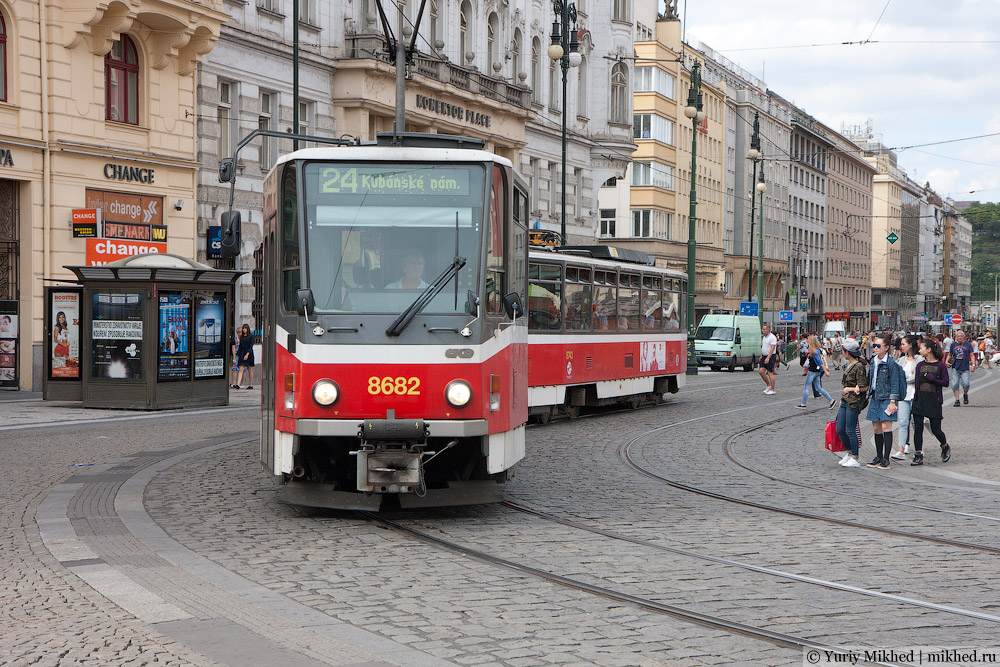
The fleet also includes other ČKD models, for example, the Tatra T6A5. About 300 of these trams were built between 1991 and 1998. They were no longer exported to the countries of the former USSR, but in 2016, several carriages retired in Prague were purchased by Ukraine for Kharkiv. As for the ČKD company, it ceased to exist in 1998.
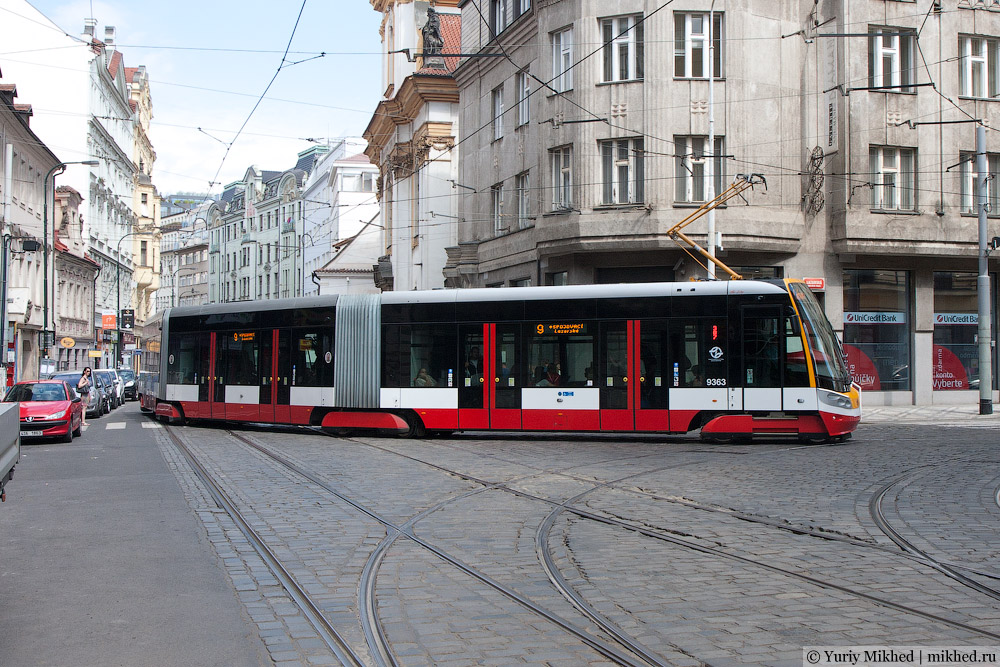
The most modern carriages are also Czech—long, low-floor Škoda 15T models, which have been produced since 2008.
On Wenceslas Square, there is a cafe built inside two old tram carriages.
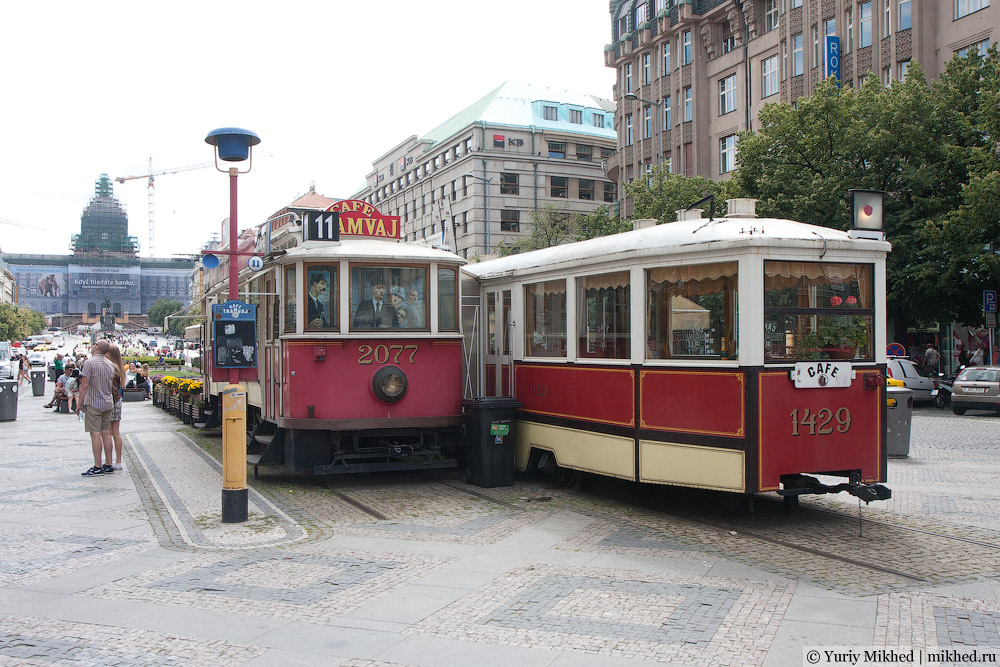
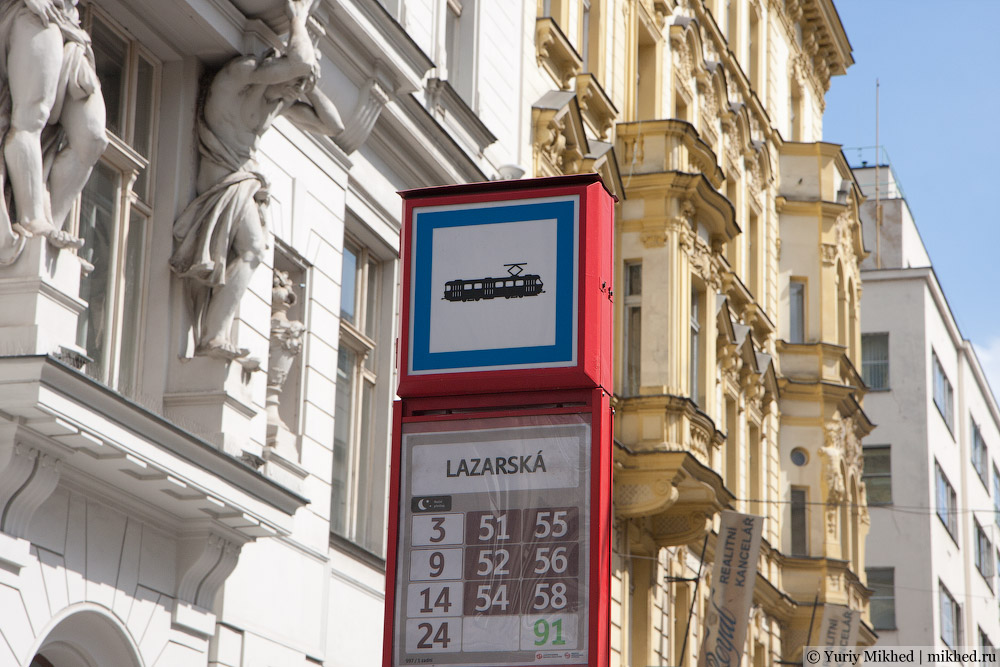
Tram stop.
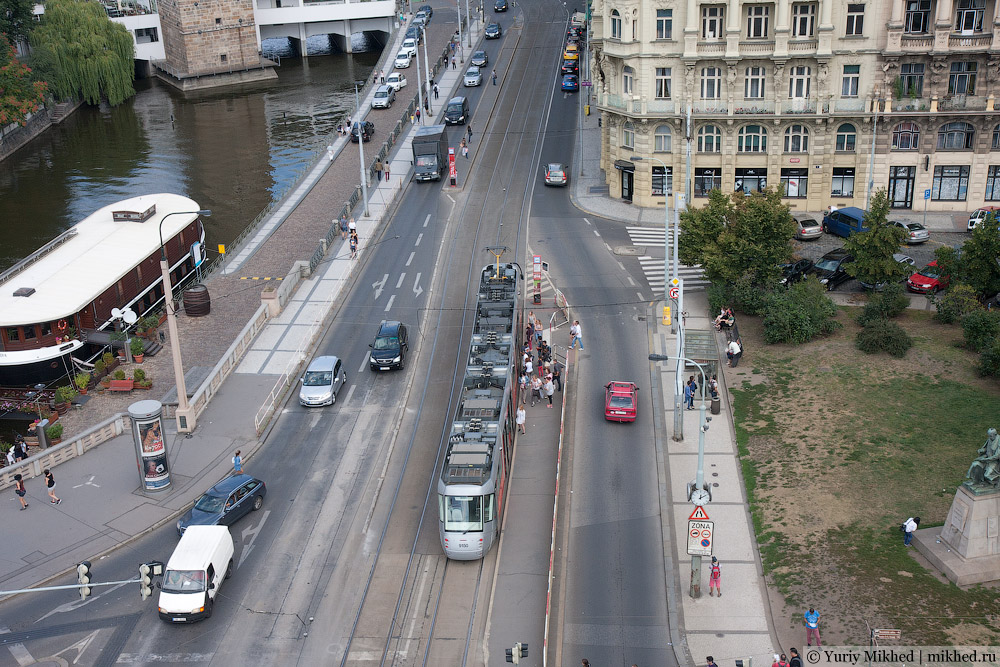
The street infrastructure as a whole is very good, focusing on the safety and convenience of pedestrians.
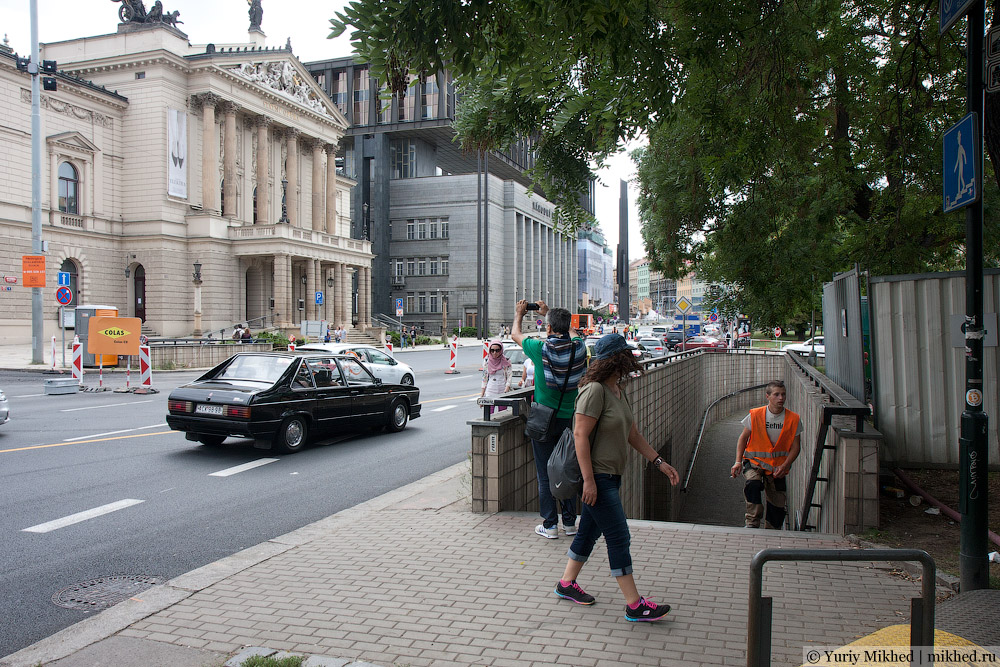
Although there are remnants of socialist urban planning in the form of underpasses (which shouldn't exist in a normal city). But at least they have a gentle, stepless ramp.
Buses are also locally produced. Heavy industry was very well developed in Czechoslovakia; many companies produced everything from cars to aeroplanes (the well-known "L-ka", the Let L-410 Turbolet aircraft, is still manufactured in the Czech Republic), and after the collapse of socialism, many firms managed to survive. In the photo is a Czech 4-door city bus, the SOR NB 12. An articulated version, the SOR NB 18, can also be found. There are no trolleybuses in Prague—the system was eliminated in 1972.
UPDATE: In 2017, the Prague trolleybus system began to be resurrected. A test route was opened, featuring Czech SOR TNB 12 and Škoda 30 Tr trolleybuses, as well as SOR ENS electric buses.
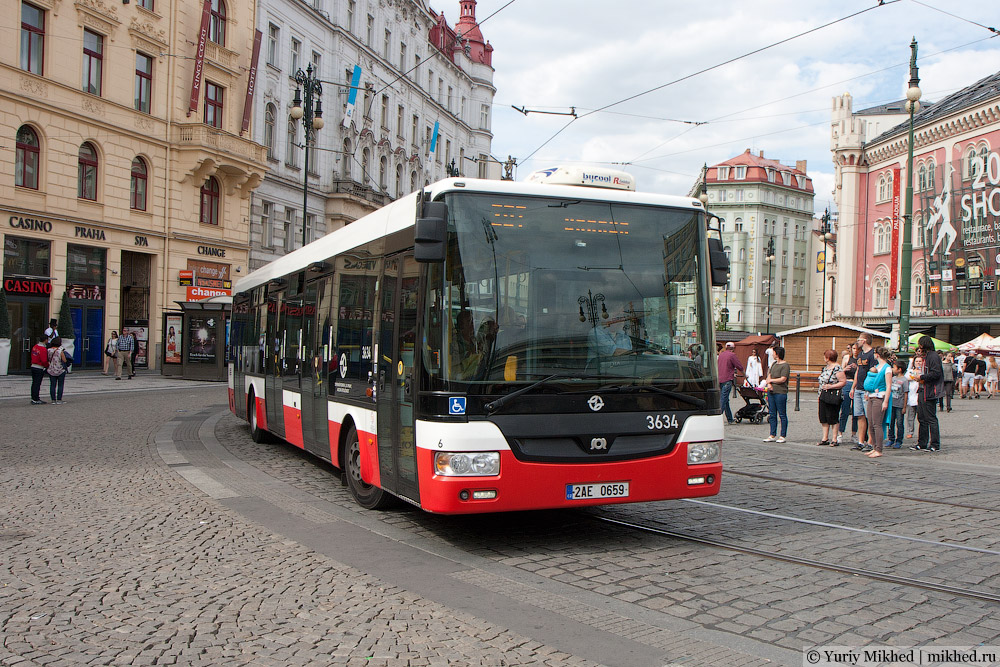
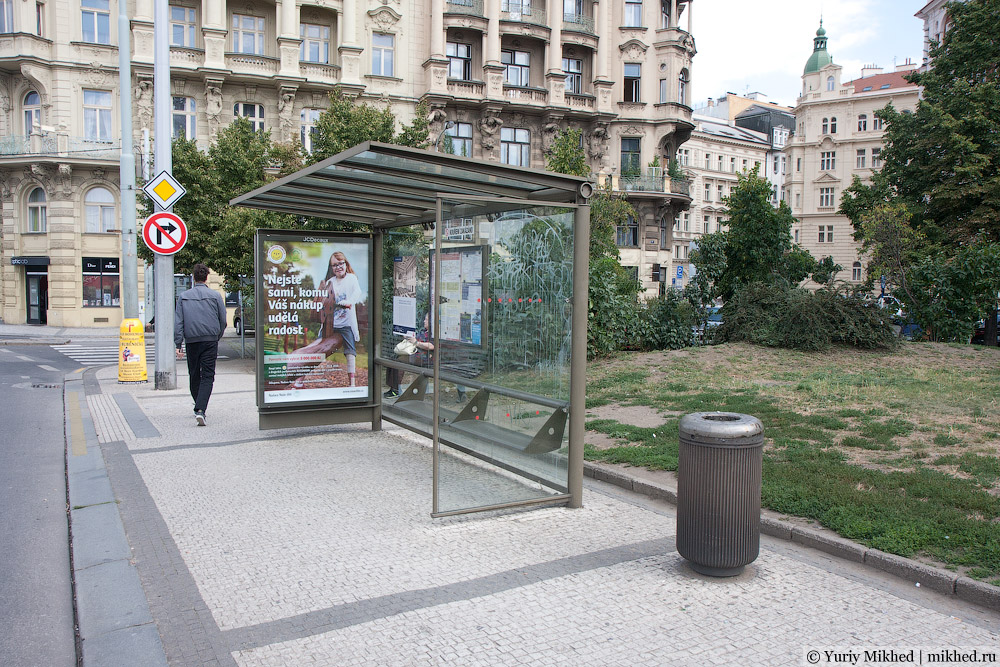
Bus stop.
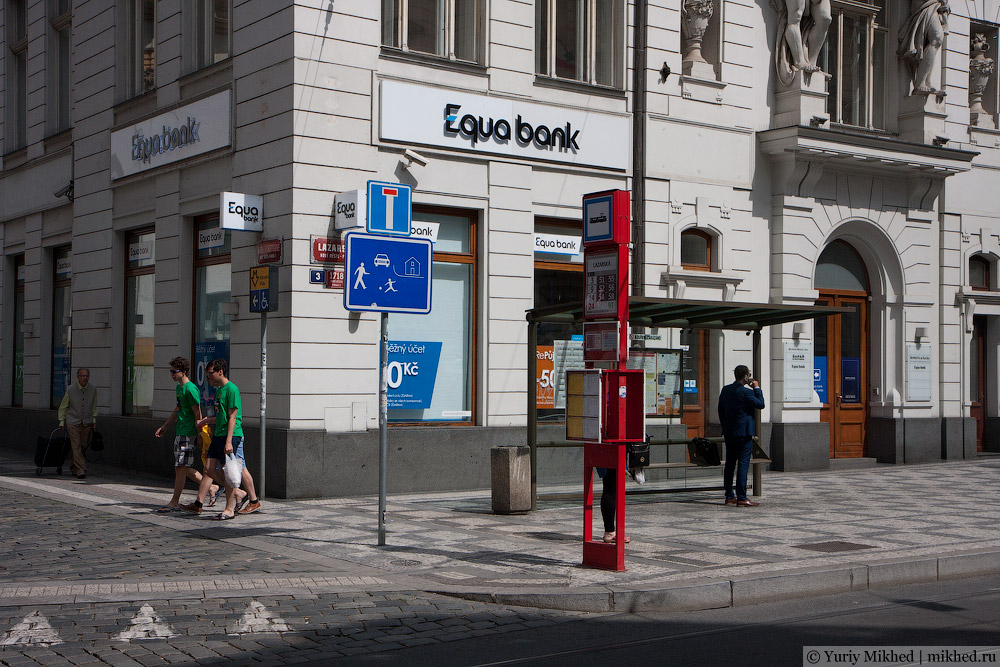
A post indicating the routes.
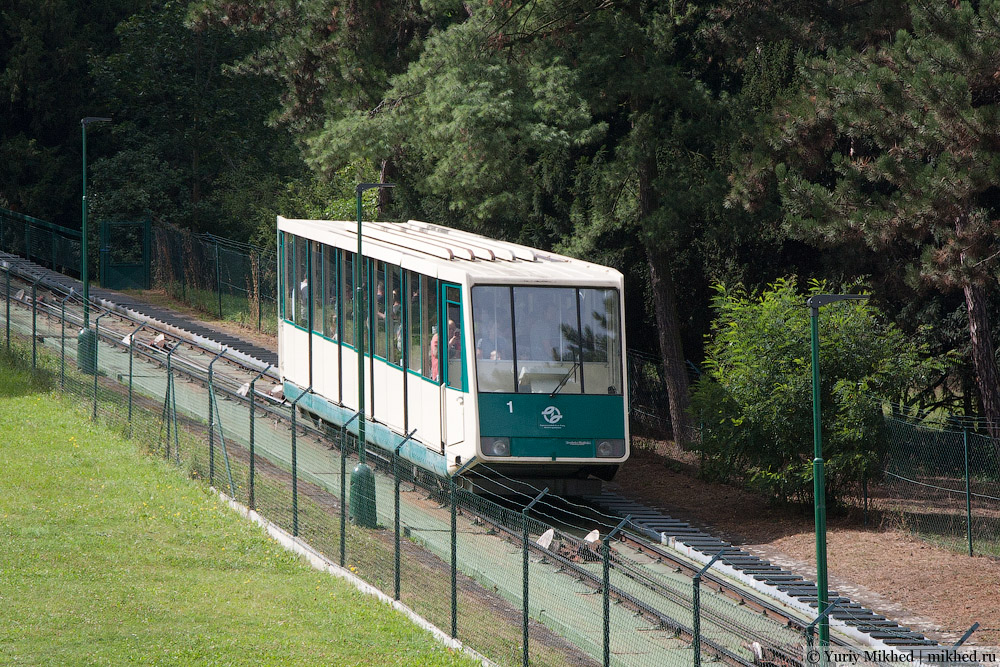
And there is also a funicular here.
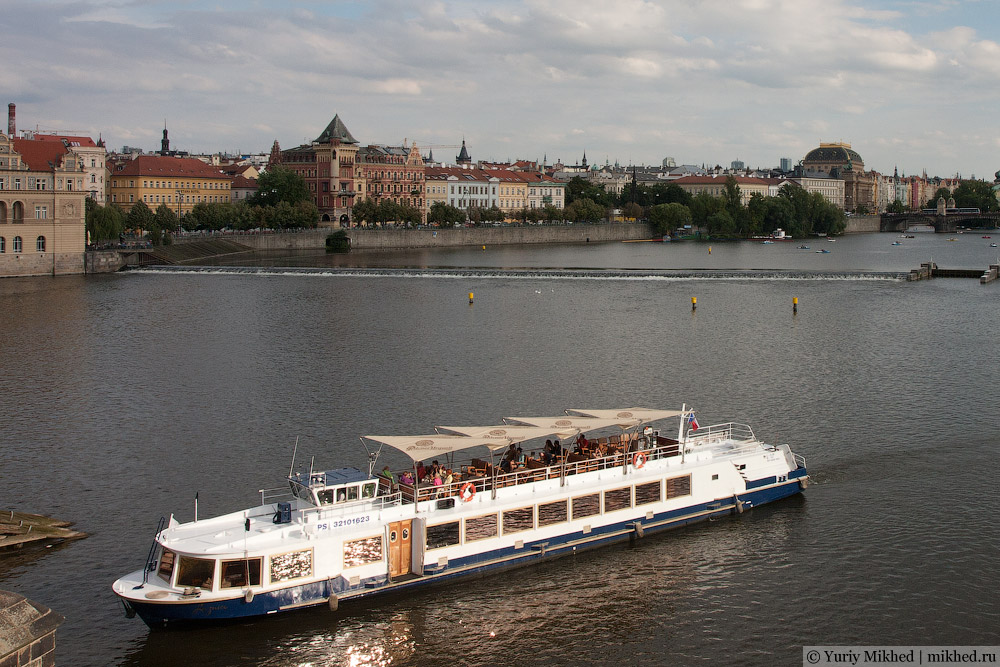
And boats.
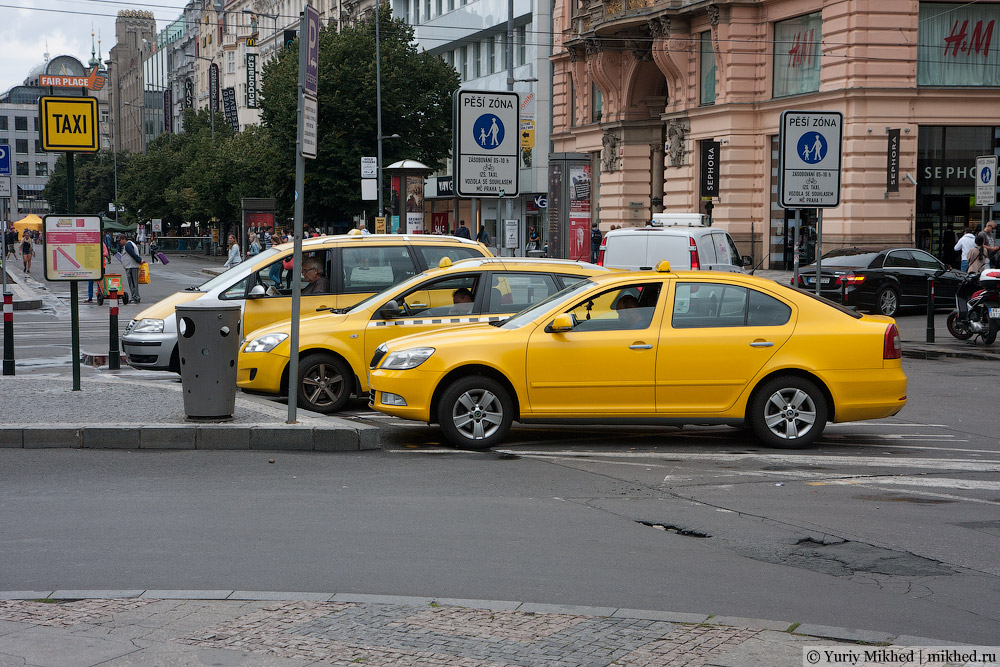
The city taxi is painted yellow.
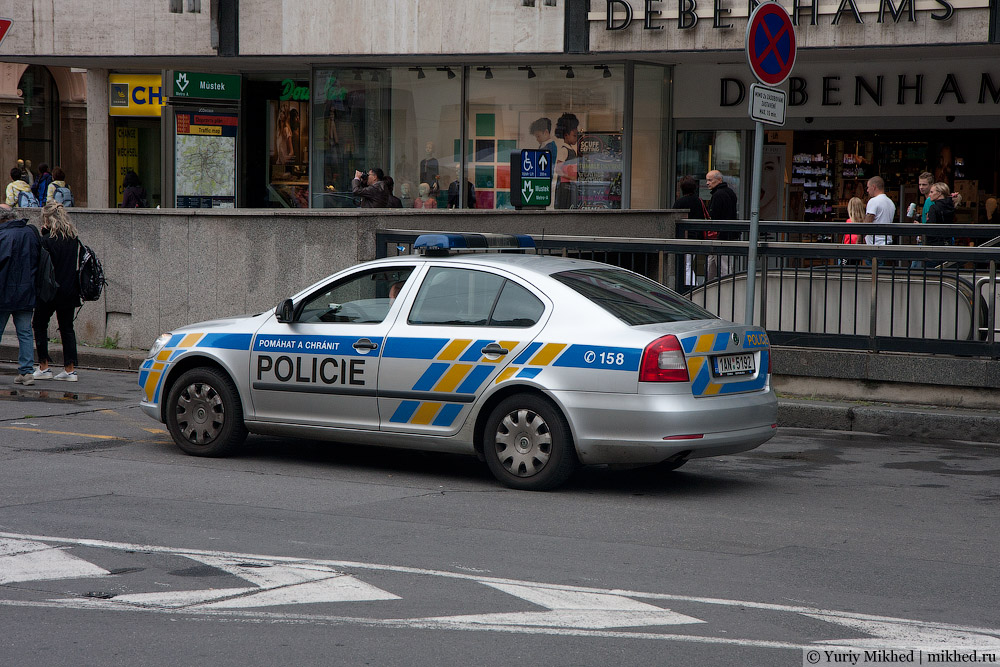
A police car (Czech Škoda cars are most commonly used). The phrase "Pomáhat a chránit" ("to help and protect") is written on all vehicles. The tradition of writing something like this on police cars was started by Americans—in 1963, the words "To protect and to serve" began to appear on Los Angeles police cars, and it has since been adapted in many countries.
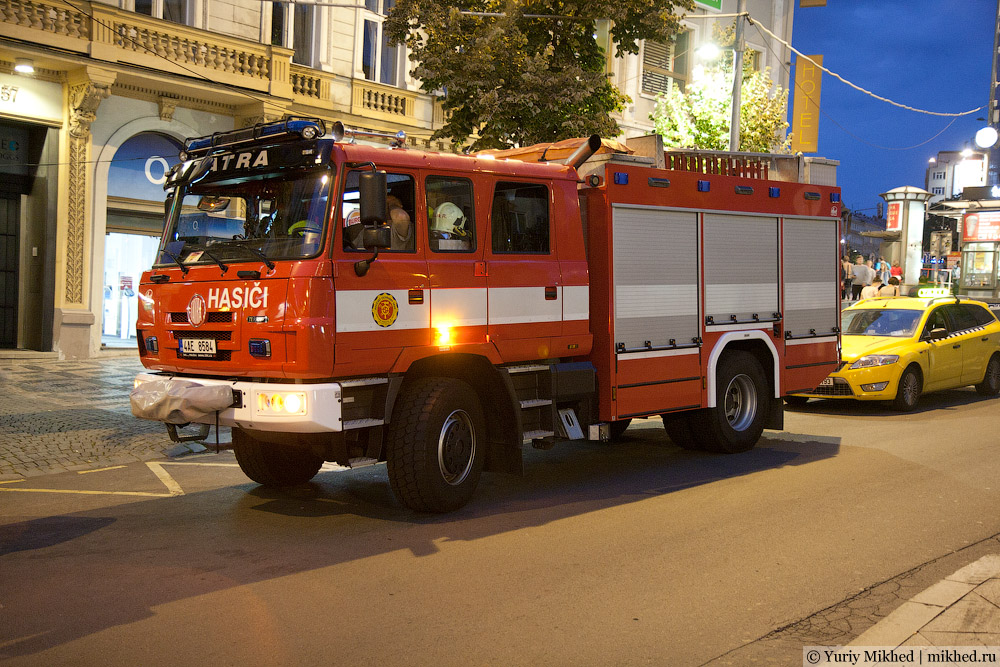
A fire engine (produced by the Czech company "Tatra"). Firefighters in Czech are called "hasiči" because they extinguish (gasit).
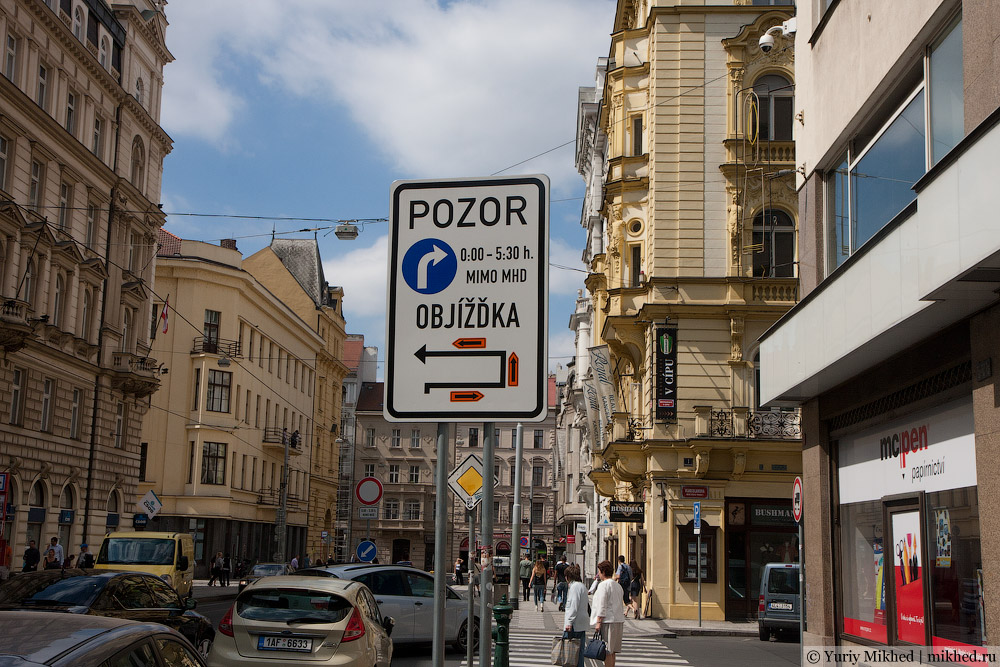
The Czech language is generally quite easy to read since it belongs to the Slavic group. Many words can be understood or their meaning guessed. There are also false friends of the translator; for example, "pozor" means "attention" rather than "disgrace" (pozor in Russian). The words, however, share the same root, and with a basic knowledge of linguistics, one can guess the reasons for this similarity.
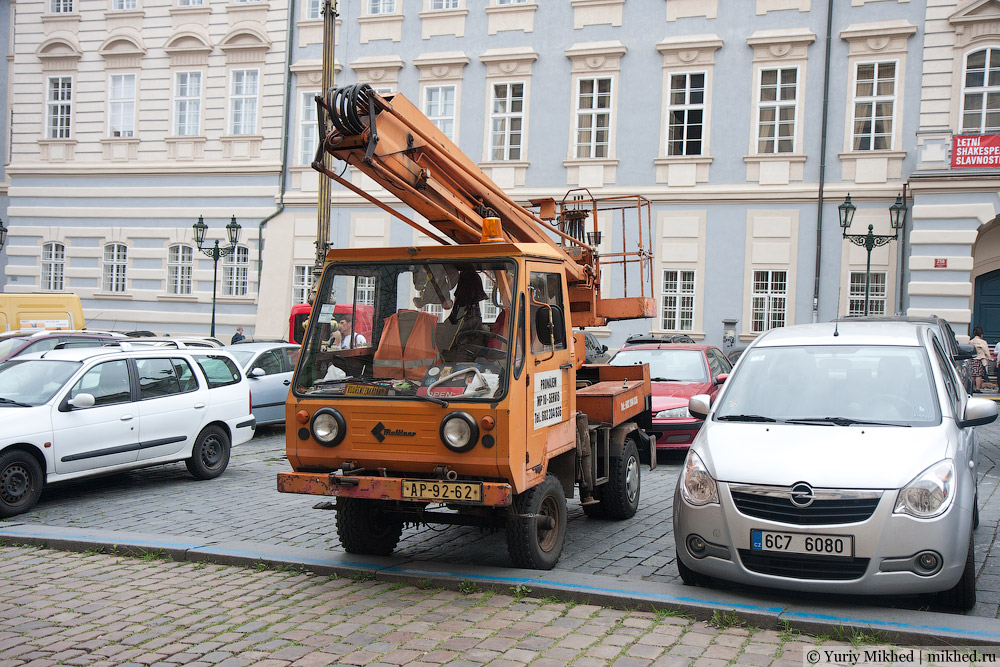
A few times I came across the Multicar M25 multi-purpose trucks produced in the GDR, which are completely forgotten in our country. This company, by the way, still exists, which is a rarity for large enterprises of the former GDR (most went bankrupt in the 1990s).
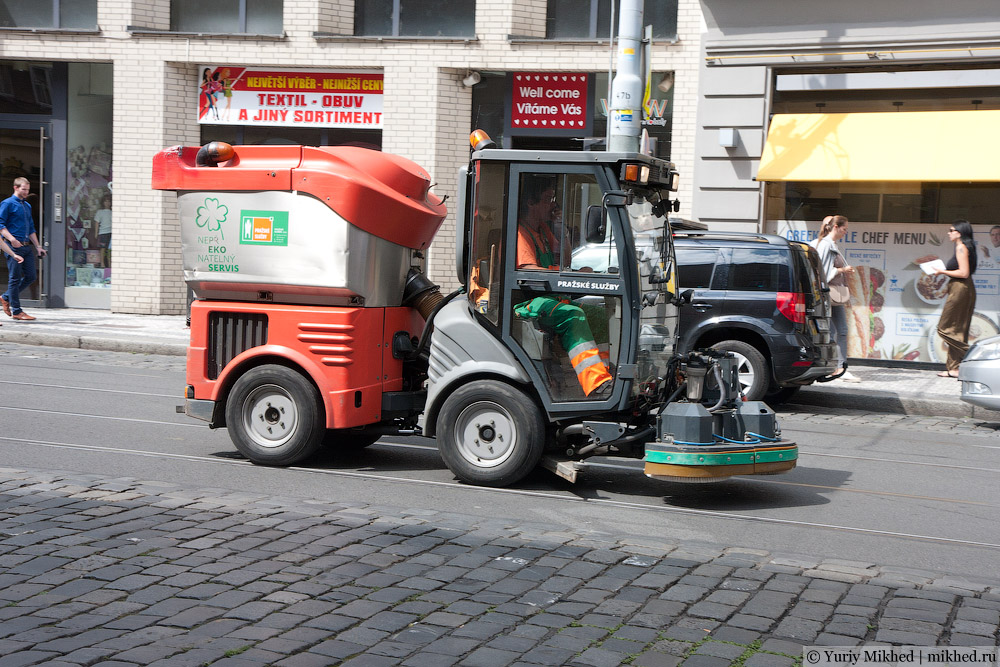
Street cleaner.
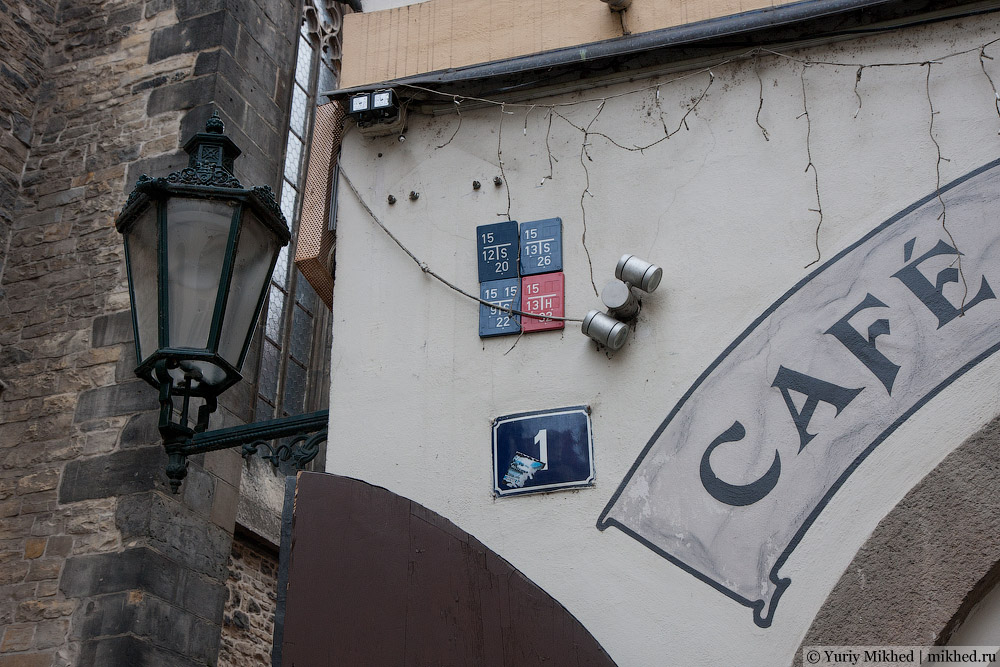
The nameplates and number plates are very beautiful and embossed.
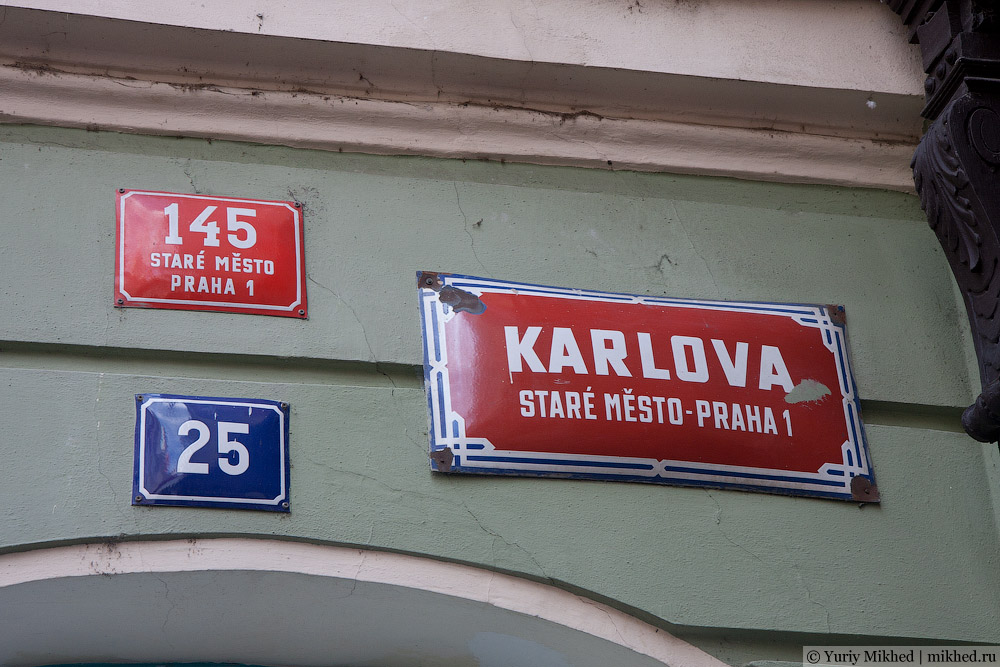
Utility plates are as well.
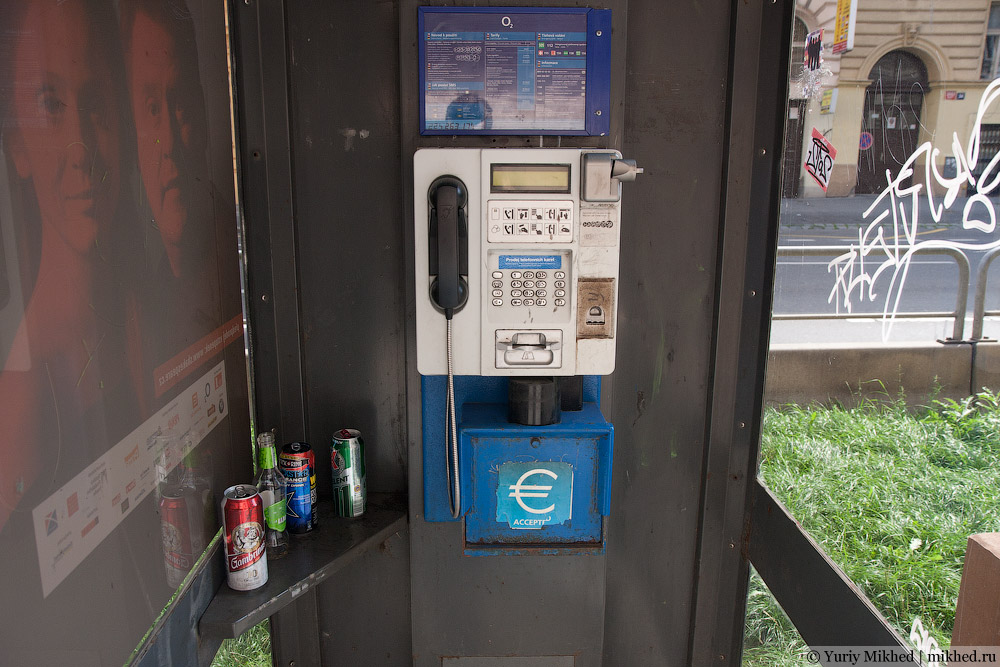
Payphones can still be found, but it's clear they are a dying breed.
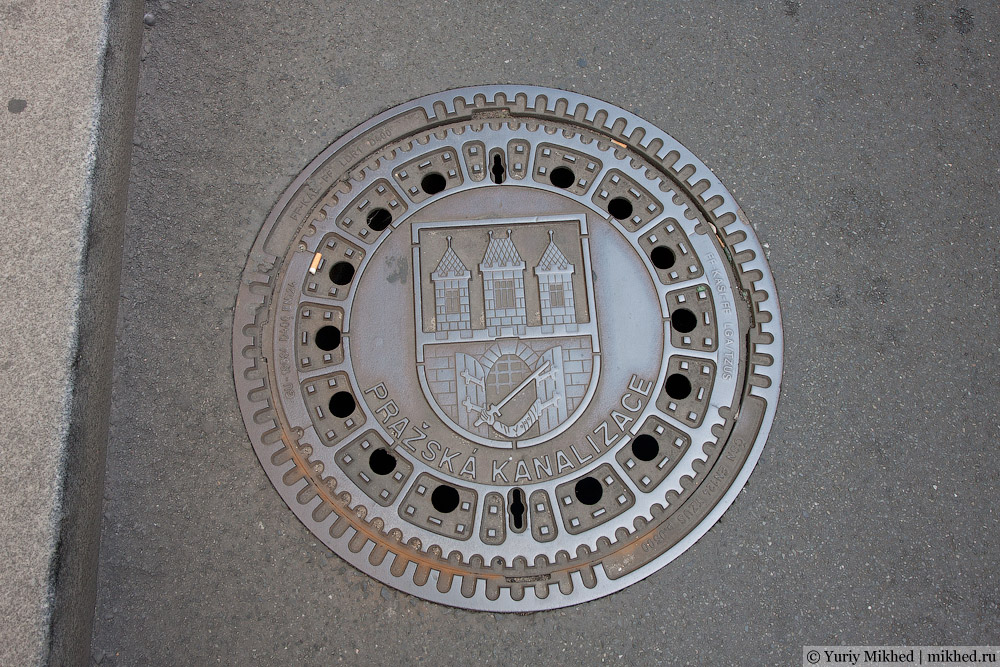
Manhole cover.
Streetlights of various types, sometimes suspended ones can be found.
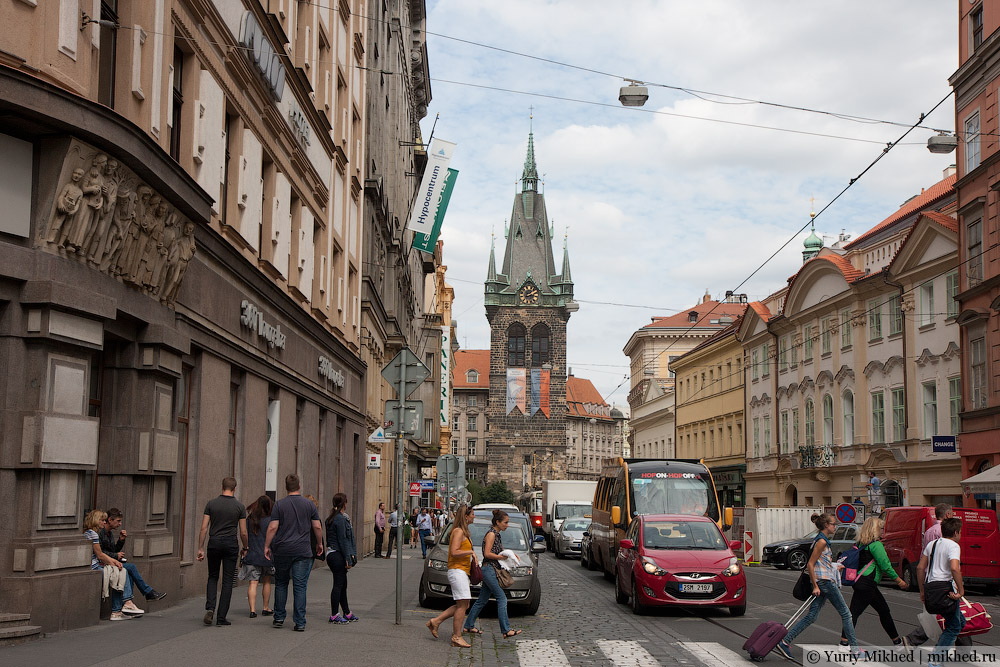
The entire centre is paved with cobblestones.
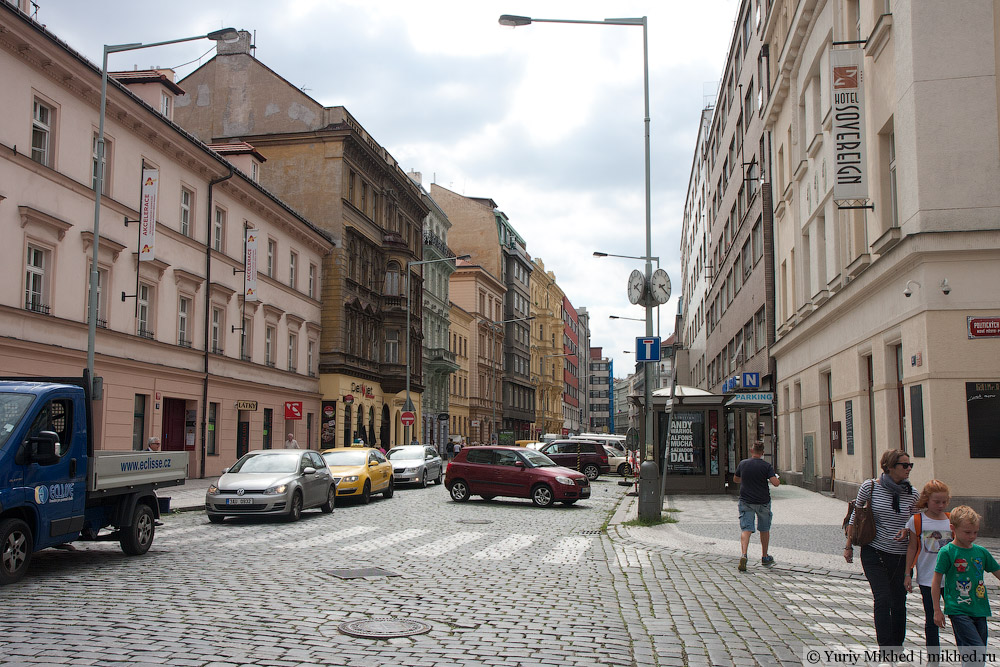
Many pedestrian zones.
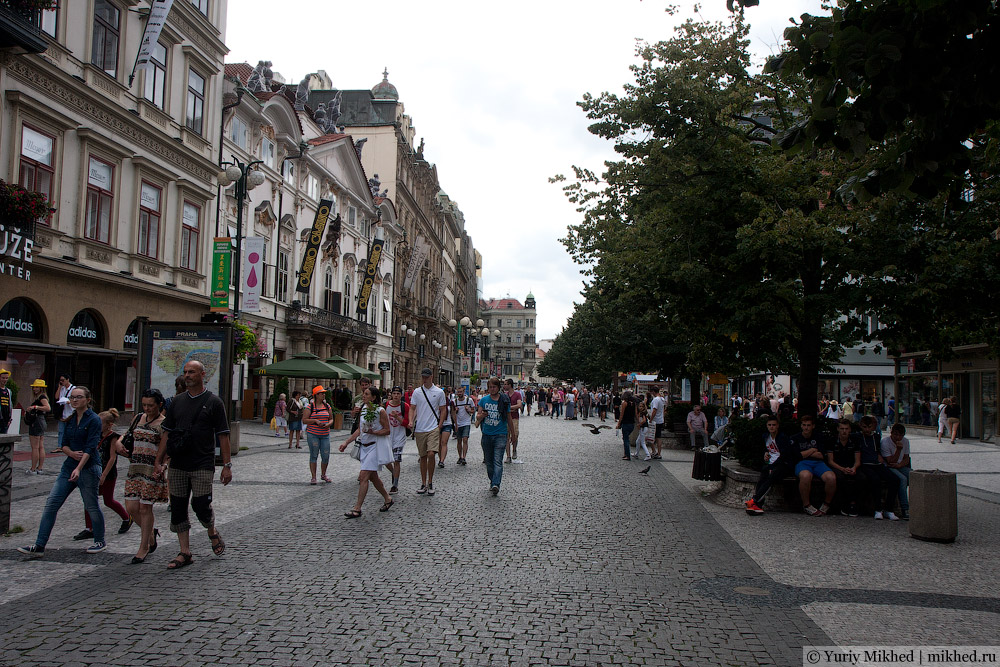
Playground.
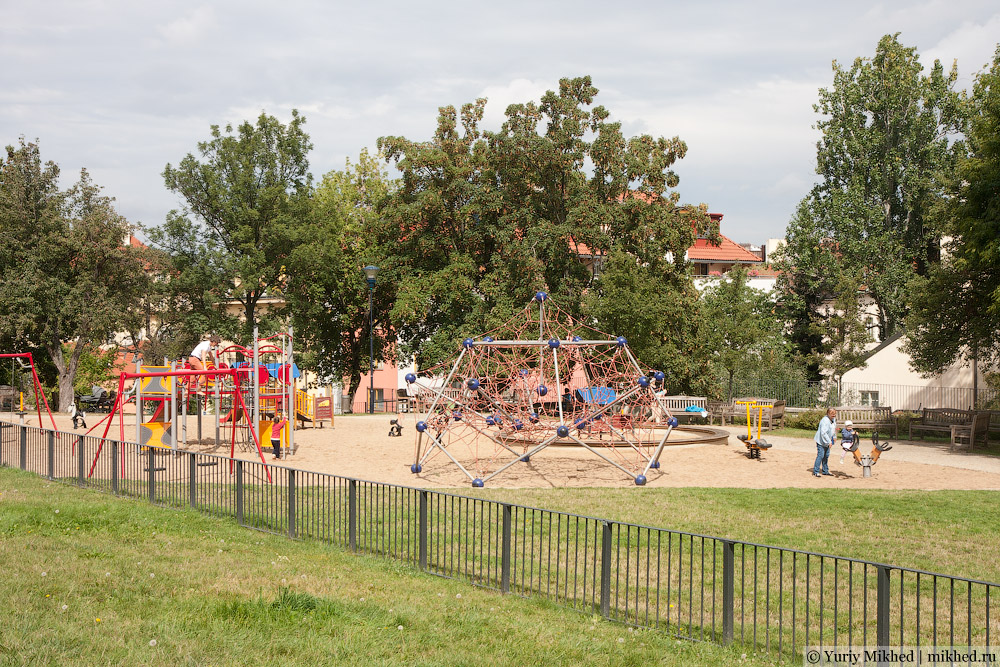
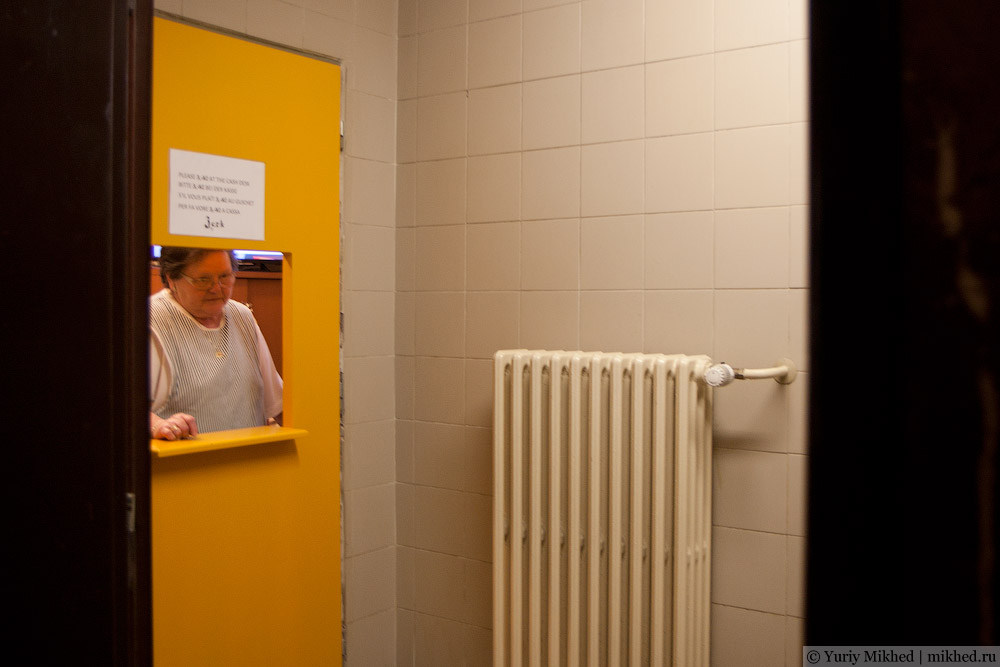
Like in Germany, toilets are paid everywhere. Characteristically, they are always attended by specific elderly women who look exactly like the ones in Russian paid toilets.
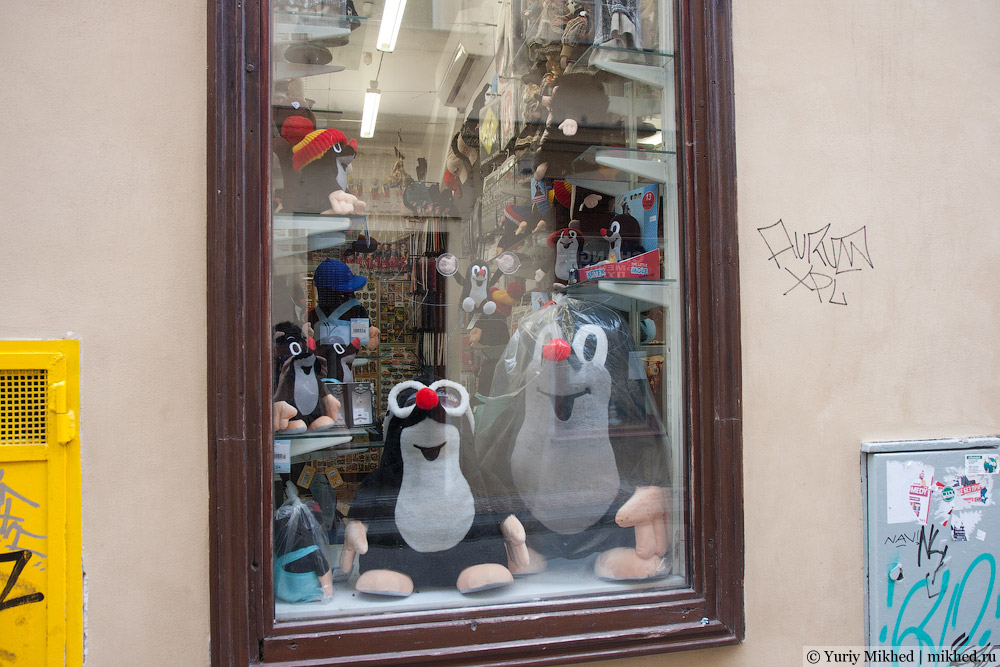
One of the most internationally famous symbols of the Czech Republic is the Little Mole (Krtek) from the animated series of the same name, which aired from 1957 to 2002. The character was created by artist Zdeněk Miler (1921–2011).
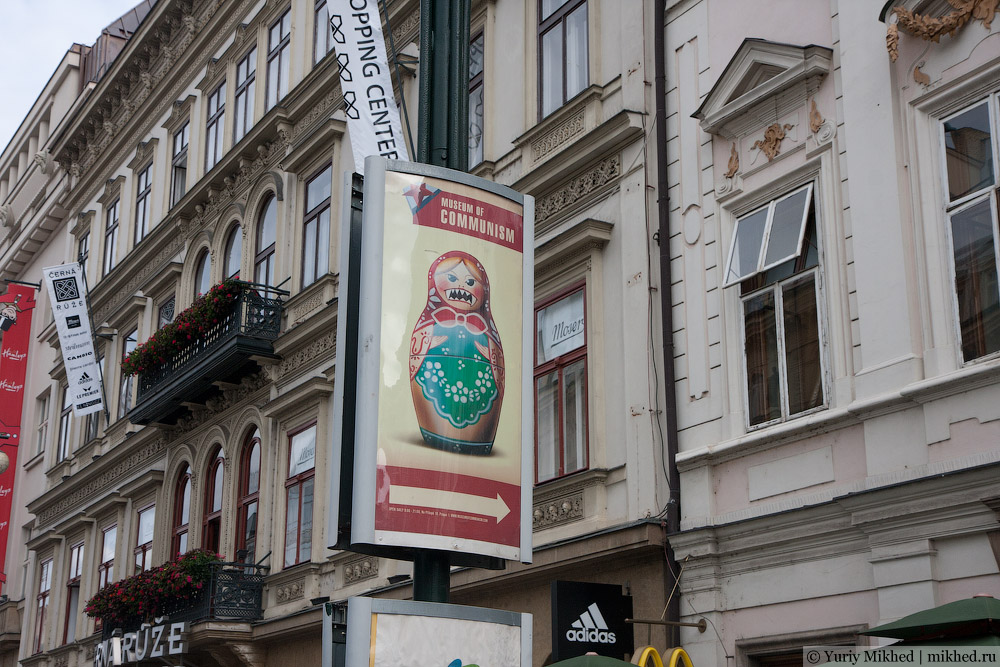
There is a Museum of Communism in Prague, which will definitely trigger current Russian patriots of all stripes. By coincidence, I happened to be here just during the days when the Czechs were marking the anniversary of the "Prague Spring"—in 1968, the government of Czechoslovakia began democratic reforms that were soon brutally suppressed by Soviet troops. Because of this, Czechs still treat Russians with a certain coldness. There will be a separate story about all of this.
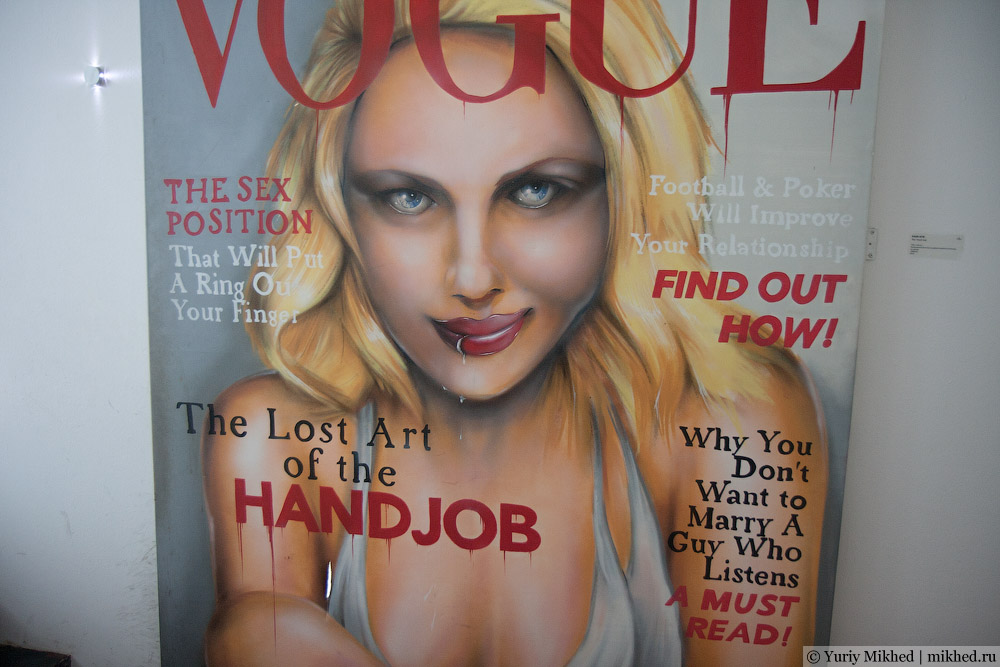
Truthful headlines of a women's magazine.
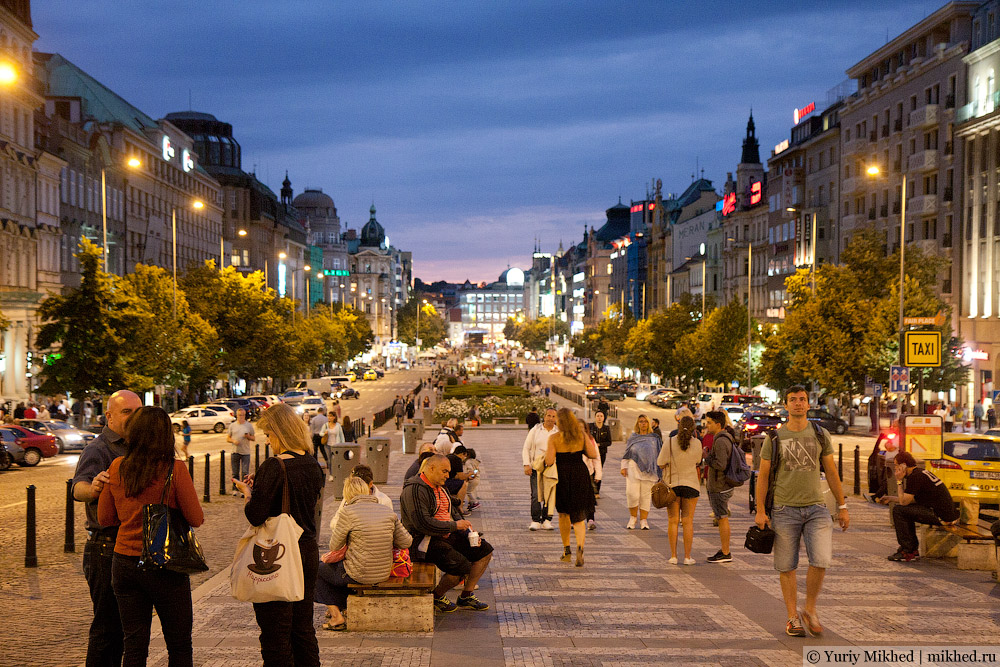
Prague is a very beautiful, large, and lively city.
There will be a few more stories about it on this website.