Jelgava — Town of Childhood
Jelgava Municipality, Latvia, November 2017
Google Maps, Yandex.Maps
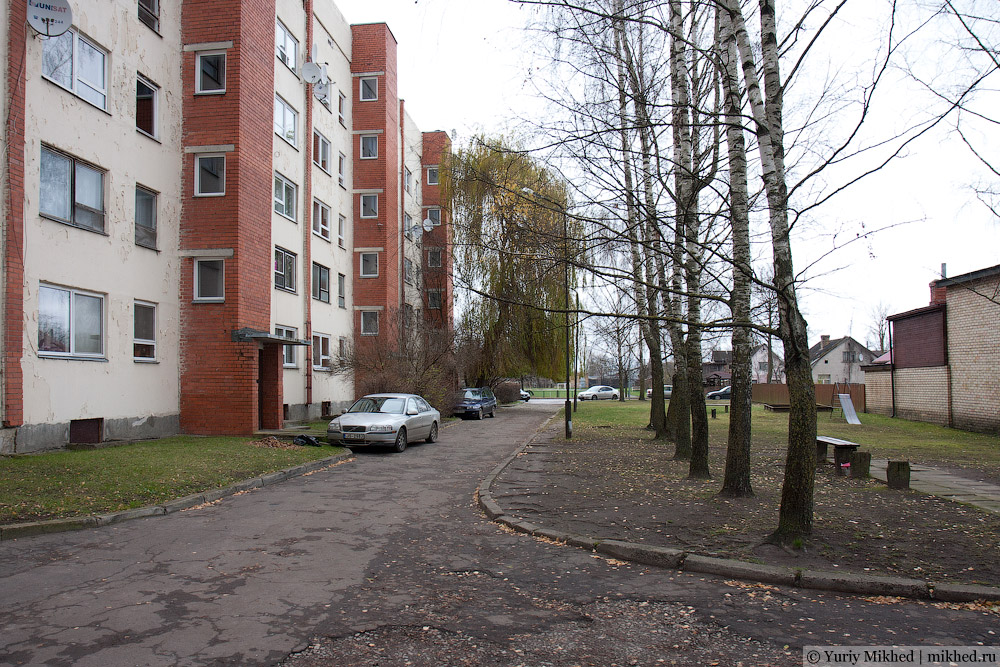
Today's story will be dedicated to the places of my childhood, so most visitors will most likely find it uninteresting to read. However, those who lived on our street will surely want to look at familiar places, especially since most of the people who lived here were somehow connected to the Soviet army and were therefore forced to leave back in the early-to-mid nineties.
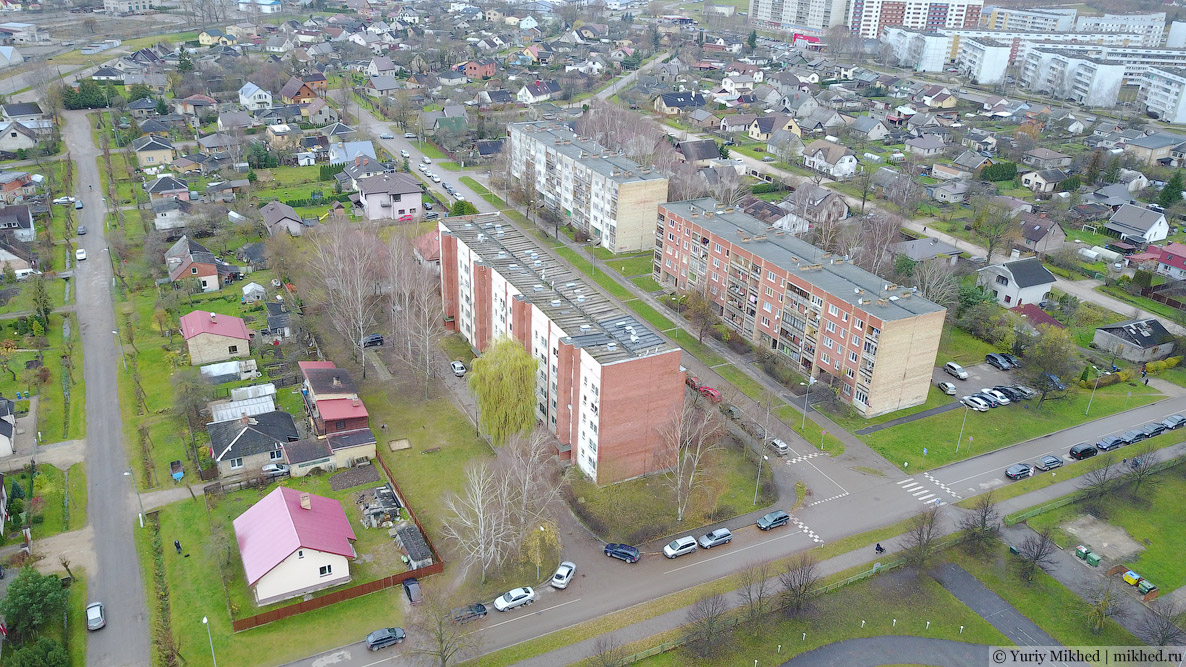
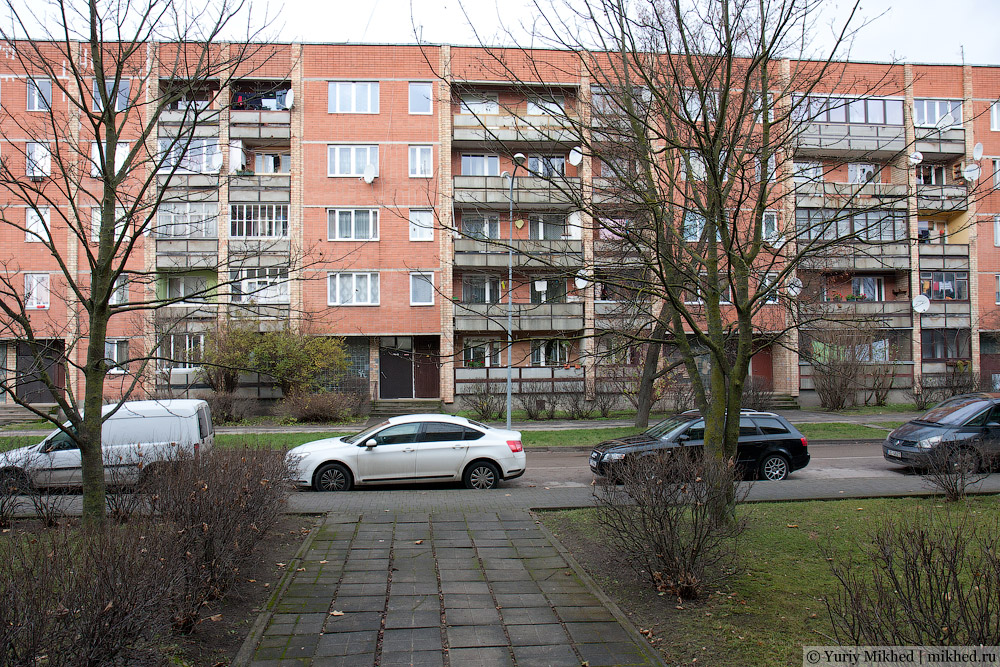
As mentioned in the previous story, the name of our street—"Lidotāju iela"—translates as "Pilots' Street". Mostly families of military personnel lived here, many of whom, including my dad, served at the Jelgava military airfield. From 1983 to 1986 we lived in the red building, then, when the five-storey block on the left was built, we moved into it. In January 1993, the squadron was withdrawn, and over the next couple of years, almost everyone who lived here left. My mother, sister, and I, however, effectively lived here until September 1996.
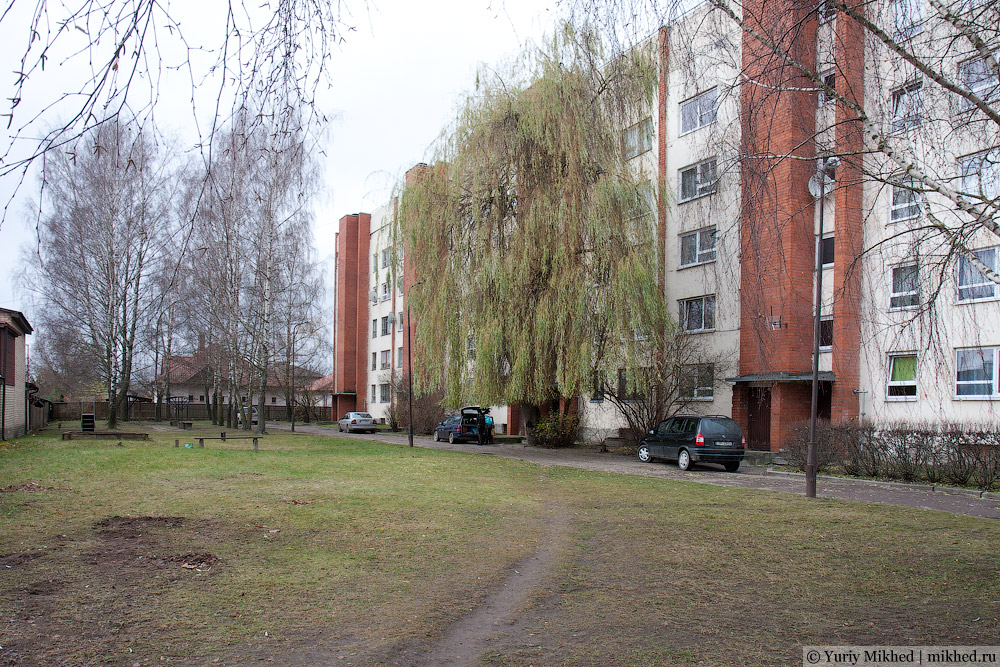
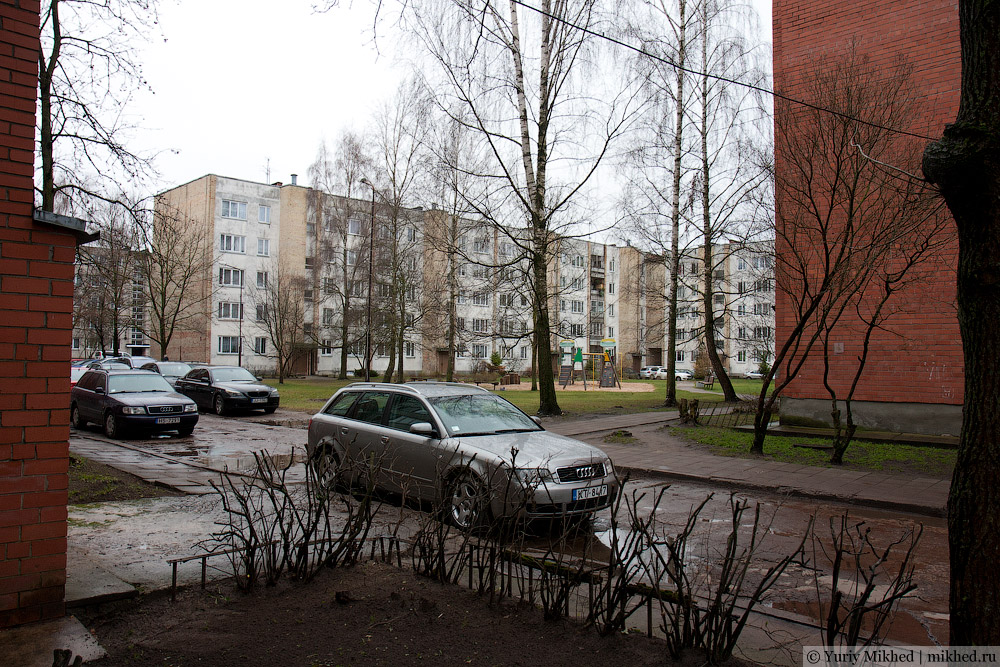
In our courtyard, almost nothing has changed, except that some trees are gone while others have grown. The birches were planted as saplings in the year the house was built; the willow was also still very small in my time. But the big tree that stood by the sandbox is no longer there.
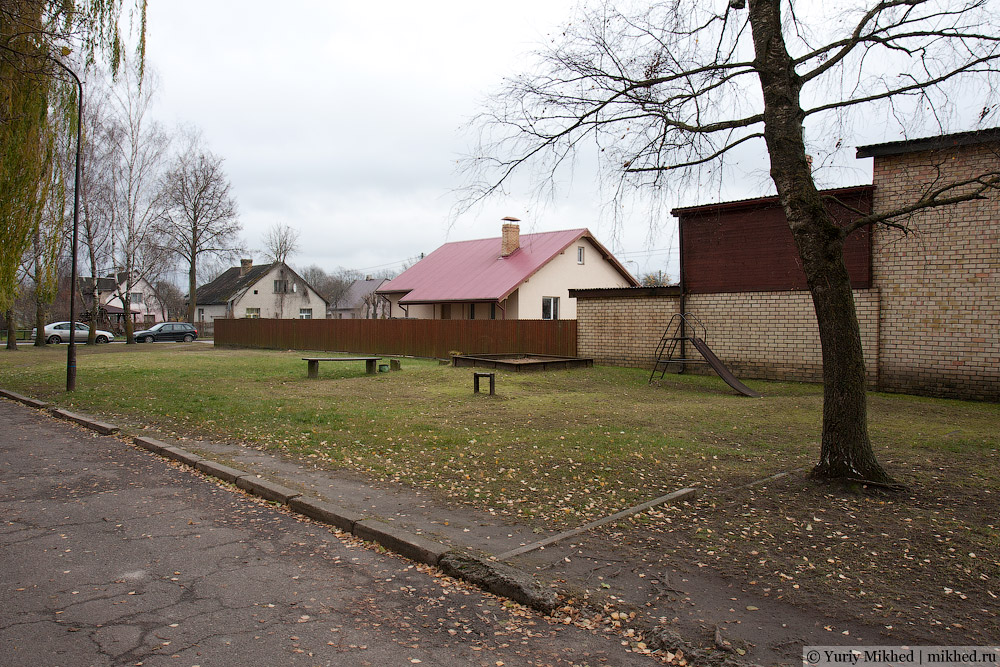
But the sandbox, the slide—everything is in its place. The broken swing has disappeared somewhere, but its crossbar stands as if nothing had happened. Along the fences, there used to be thickets of nettles and some other tall grass, and the fence itself was always covered in snails; now the grass is cut periodically.
The slate from the laundry drying shelters flew off long ago, but no one removes or repairs them. Once upon a time, in the cul-de-sac next to them, stood a yellow Zaporozhets belonging to uncle Seryozha, my dad's fellow serviceman who lived in the far entranceway. He was constantly lying under it, repairing something (it felt as if this Zaporozhets was not for driving, but exclusively for repairing). Behind the house was a large wasteland that we called "the swamp," and we often hung out there. Previously, there were private houses on that spot, which were gradually cleared and demolished because they were planning to build another five-storey block. But the plans were not meant to be, so the place stood empty for many years, and between 2002 and 2008 it has been built over with cottages again.
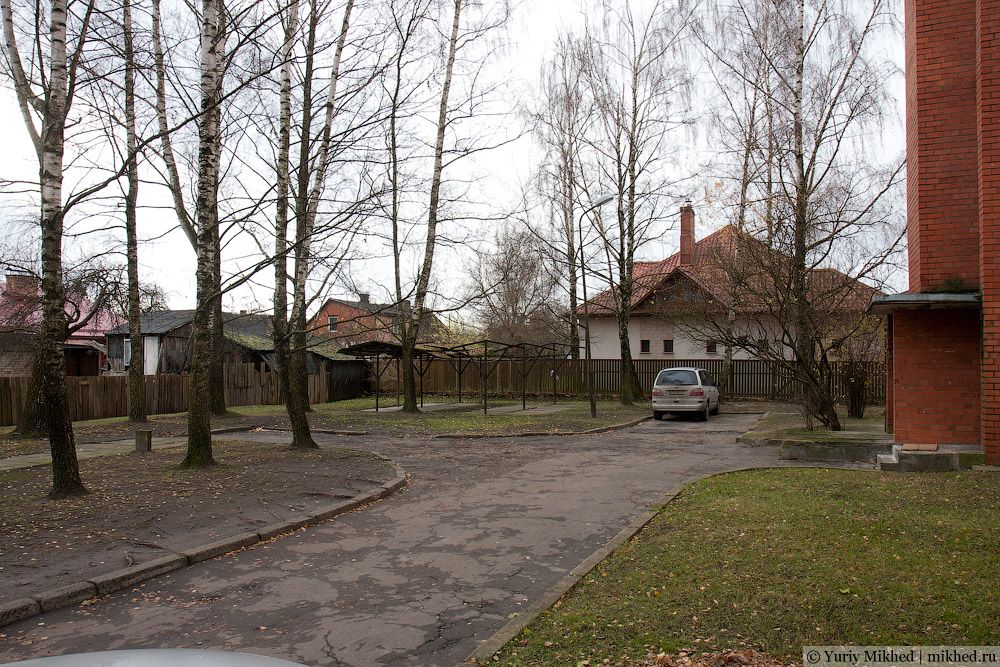
We lived on the 2nd floor in the 3rd entranceway (there's a car parked near it), first in a two-room flat (on the right), and in 1991 we moved into a three-room flat opposite (on the left).
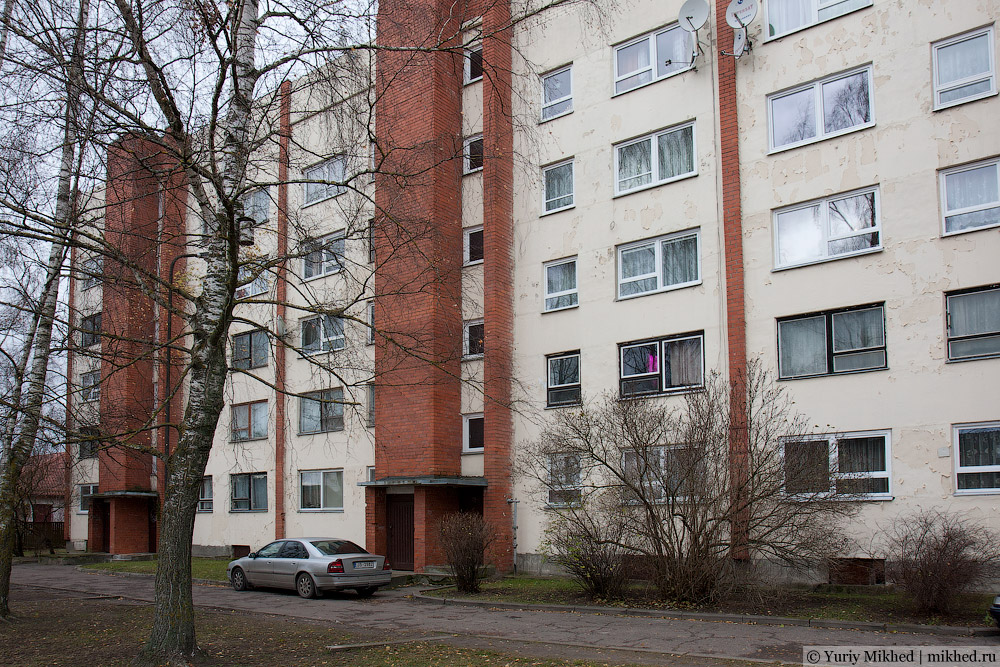
There were no locks on the entrance door (intercoms are a rarity in Latvia), so getting into the entranceway was not difficult. The entranceway looks rather shabby because in all its 30 years of existence, the building has never been renovated. All the familiar childhood graffiti on the walls are perfectly preserved. In the flat on the left (just below us) lived aunt Regina, whom I once flooded.
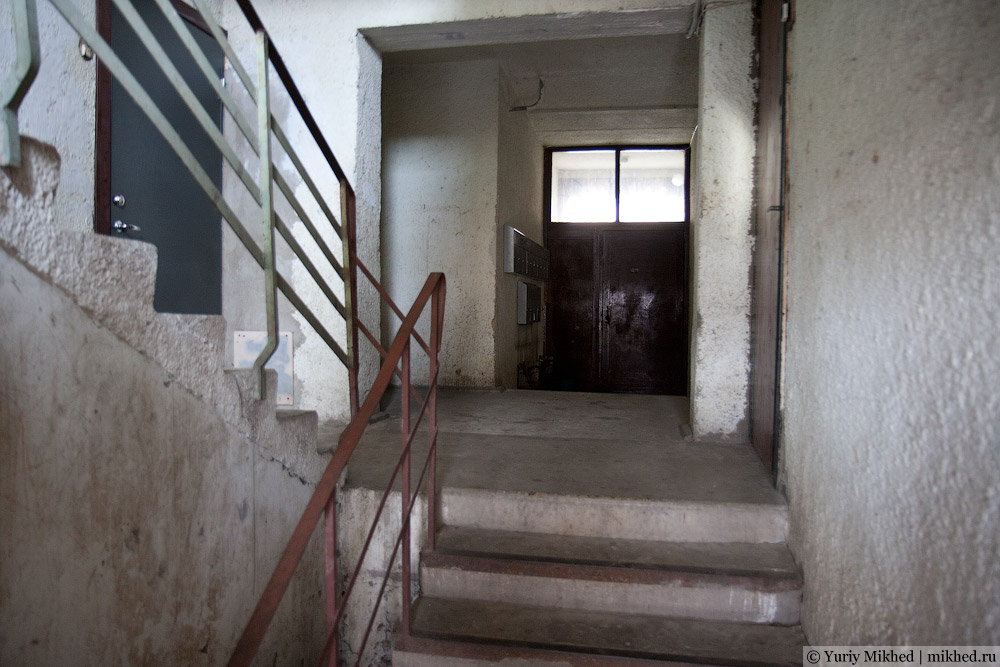
The second floor. On the left is the door of flat No. 31, where we lived from 1991 to 1996. The parachute pattern made of pins on the upholstery was done by my dad, and the new owner hasn't changed anything. On the right is the door of flat No. 33 (where we lived from 1986 to 1991). The neighbours in the middle had a son, Andrey (a bit younger than me), with whom I occasionally interacted, though we weren't close friends, and later they had a daughter.
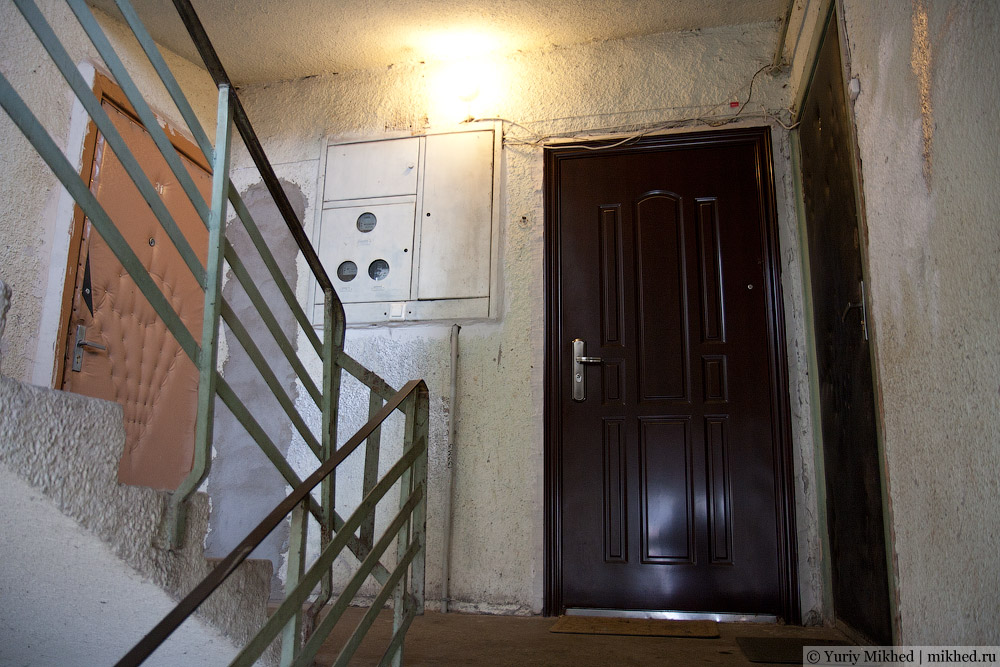
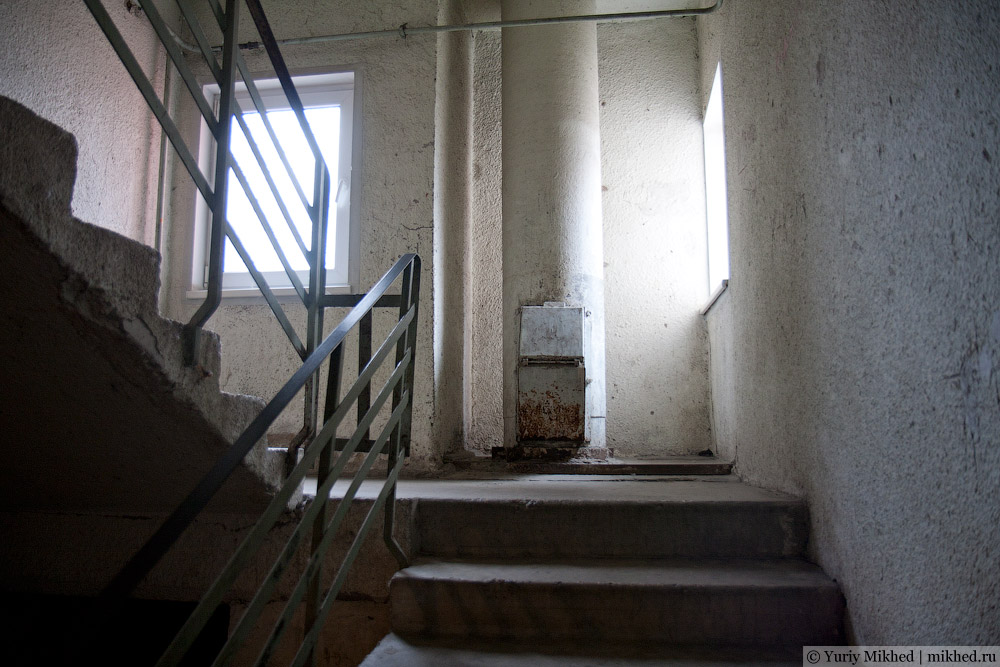
The rubbish chute in our entranceway never worked (which, by the way, is normal; a rubbish chute is a poor structural design that breeds unsanitary conditions in the entranceway). The window frames are new—that's the only thing changed here.
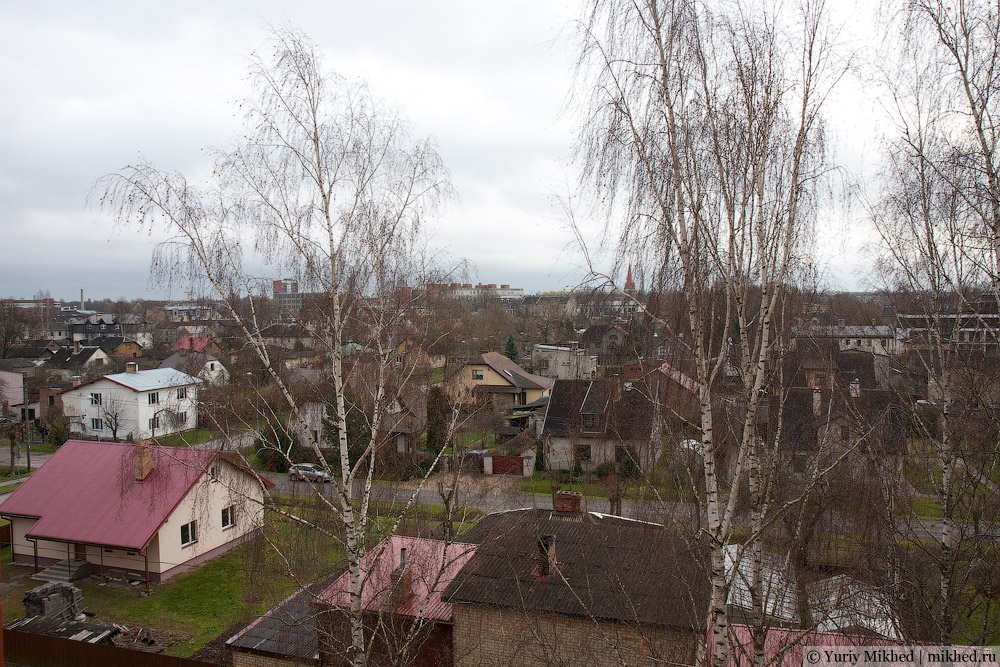
My friend Vanya lived on the 5th floor (now he lives in Kursk, and in the noughties I occasionally visited him, but now we hardly see each other). A good view opened up from here; the tower of St Anna's Church could be seen in the distance. Now, during the warm season, the view is blocked by the grown birches. On the left, you can see the unfinished house of uncle Austris, with whom I stayed during this visit (though I didn't live here, but outside the town, and he is building this house for sale). In those days, they had a very small wooden structure; Vanya and I sometimes visited uncle Austris's mother, a kind elderly woman whom we called Grandma Ausma.
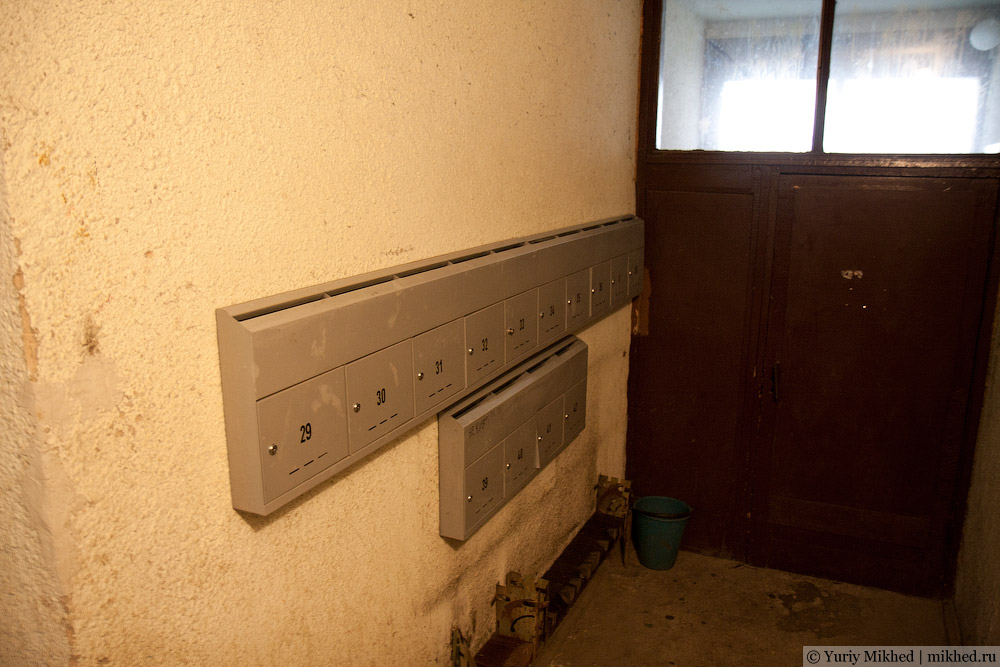
The entranceway had 2 entrances. Near the one facing the street itself, there was a pram storage room. According to the designers' plan, prams and bicycles were supposed to be kept there, but they were constantly stolen, so the pram room stood empty, and in the early nineties, it housed a small shop for a while. I really liked looking at the letterboxes in my childhood; they were identical in all entranceways, but each acquired unique features over its service life—one was burnt out, another had curses or declarations of love written on it, some were smashed or wouldn't close. In our entranceway, box No. 36 was the burnt one, and there were also extra boxes 43 and 44 (the boxes were hung in sections of 4, while there were only 14 flats in the entranceway; however, besides the 5 residential floors, there was another attic floor, and there were precisely 2 doors leading to the attic, so the number of boxes still matched the number of doors, and my sense of perfectionism was satisfied).
Instead of the old boxes, new ones have been hung in the entranceway, and now their number matches the number of flats.
On the other side was building No. 2. Our first flat (No. 35) was located in this very building (the second entranceway from the left, 3rd floor, the section above the entrance door). Our acquaintances lived on the floor above; I was friends with their son Sergey and often visited them (now Sergey and his younger brother Alexey live in Moscow and work in aircraft manufacturing; I have met with them several times already in our time). The design of the building was generally the same, but it differed by the absence of an attic.
My sister's friends, sister-girls named Yulia and Zhenya, also lived in the red building. They are remembered because when they played outside or came to visit us, Yulia and my sister would always team up against me and begin to terrorise me in every possible way, while Zhenya was always on my side, supported me, and tried to be friends with me.
Another girl with whom my sister was friends lived in the same entranceway (I think her name was Katya), as well as the family of my mother's friend, who had a son, Sergey, about my age (we later swapped game cartridges with him), and a younger daughter, Marina. I didn't communicate with Sergey after they left, but Marina and I got to know each other better over the internet 15 years later, and although we haven't met in real life, we still occasionally exchange a couple of sentences online.
In general, there were a lot of children on the street—how can one not recall that the eighties saw a birth rate peak. We interacted with some, studied together with others, some I forgot, others I remembered very well; however, after everyone scattered, I haven't seen any of them, and in most cases, I know nothing of their subsequent fate. I talked a little online with a few people (Kostik from the 5th floor of our entranceway, Sasha from the 4th, my sister's friend Nelya also from the 4th, and Pavlik from the 2nd entranceway), but, as usually happens in such cases, the communication didn't go beyond a short dialogue with recollections.
I dropped in to visit aunt Lyuda, the wife of uncle Arnold from the 4th floor. Unfortunately, uncle Arnold himself had passed away a few months earlier.
Large poplars used to grow on the strip of grass; now the trees are completely different.
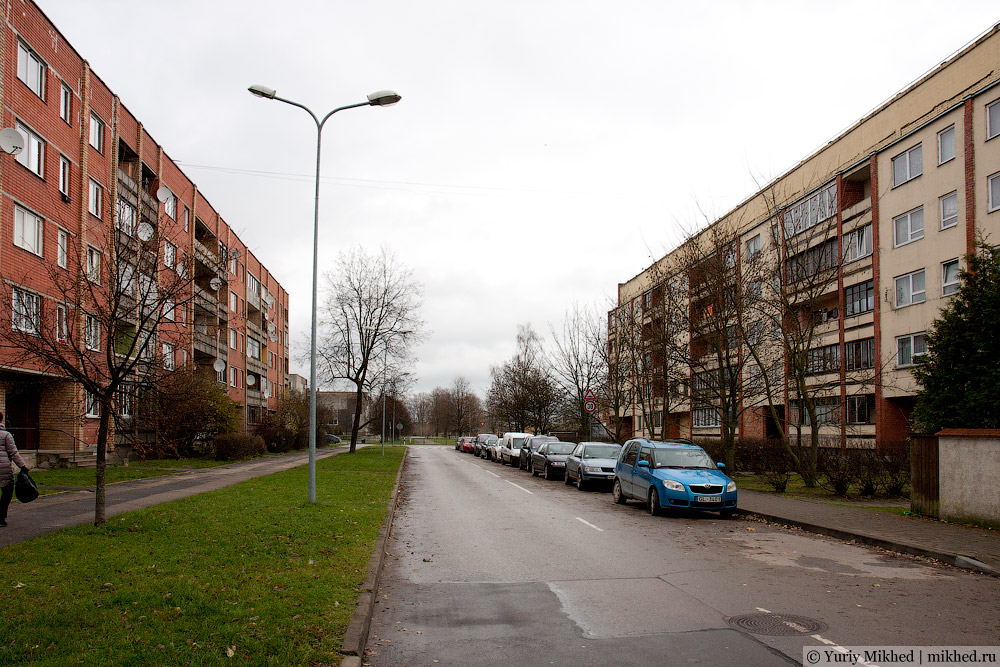
The "white" building (No. 4) was built according to the same design as the "red" one. One girl who lived here, Katya, went to nursery with me and studied in the first grade, and is now among my online friends; the rest I have already forgotten.
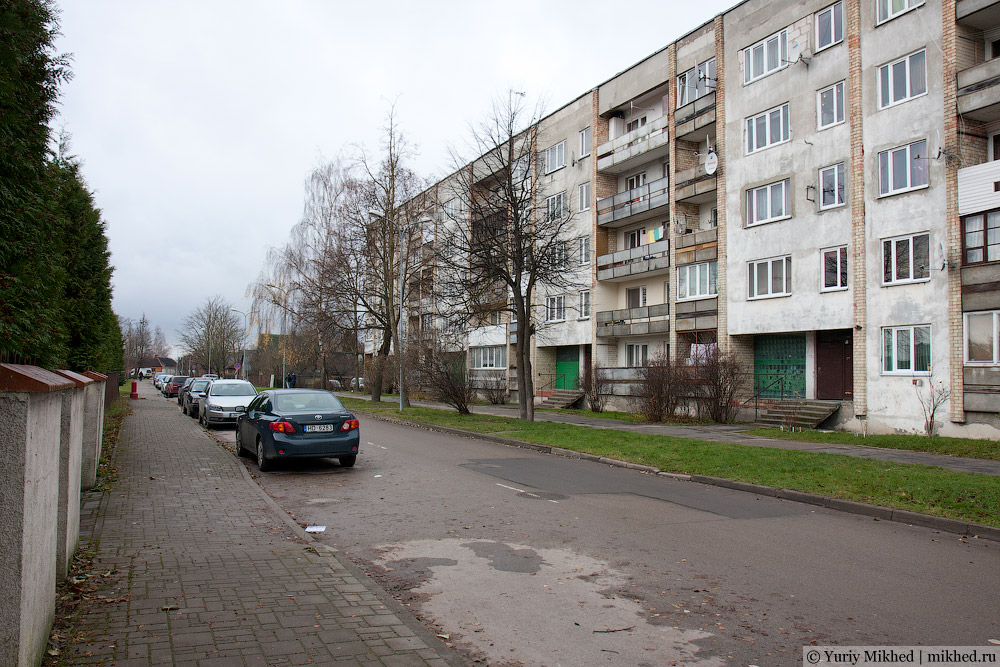
Though no, I remembered someone else. A girl named Ira once lived in the white building, whom Vanya and I in the 2nd grade used to call the "swamp hag". In reality, she was very pretty and, as it turned out later, we both fancied her. Generally, Vanich was very cunning in this regard—in front of me he called girls hags and ugly, but behind my back, he carried out separate courtships. I, being a straightforward person, always stayed away from them and didn't try to be friends, and this continued until... it still continues. Though I'm no longer glad about it, try changing your habits in the middle of your fourth decade of life. As for Ira, her subsequent fate is unknown to me.
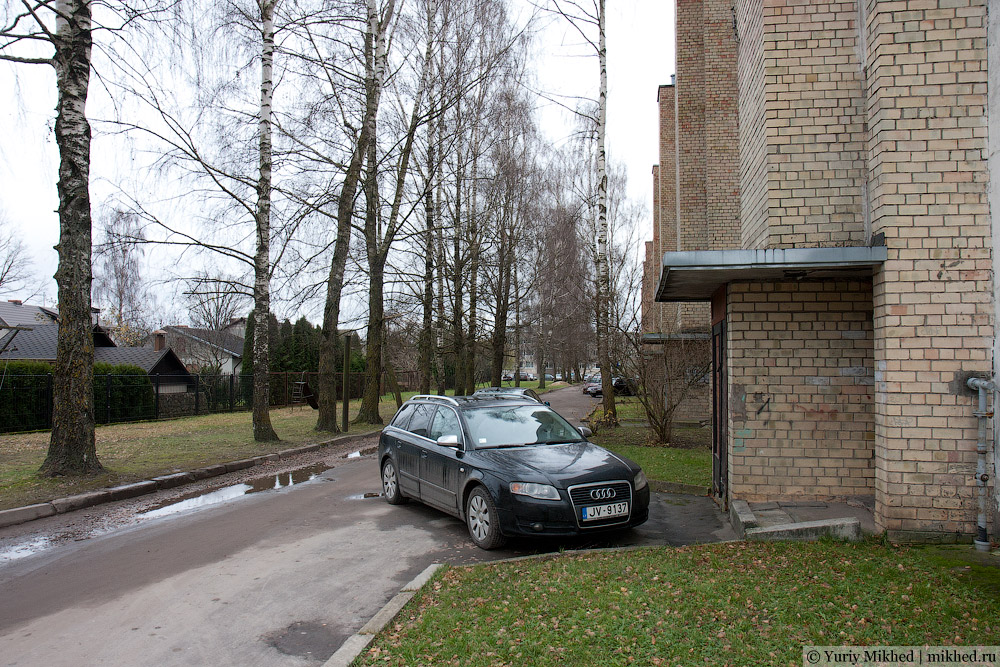
Behind it was a puddle that we called the "Black Sea" (as opposed to the puddle near our building, which was called the "Baltic Sea"). The puddle was deep, so we often played in it. As you can see, the "Black Sea" is alive and well, while the "Baltic Sea" ceased to exist due to the repaired road.
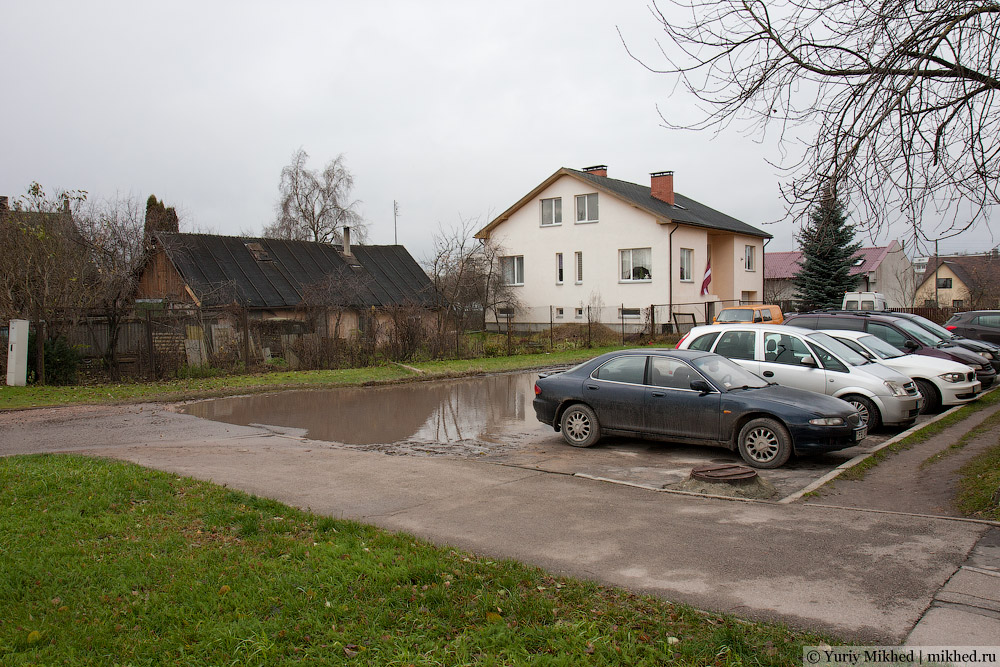
The former "swamp" behind the fence.
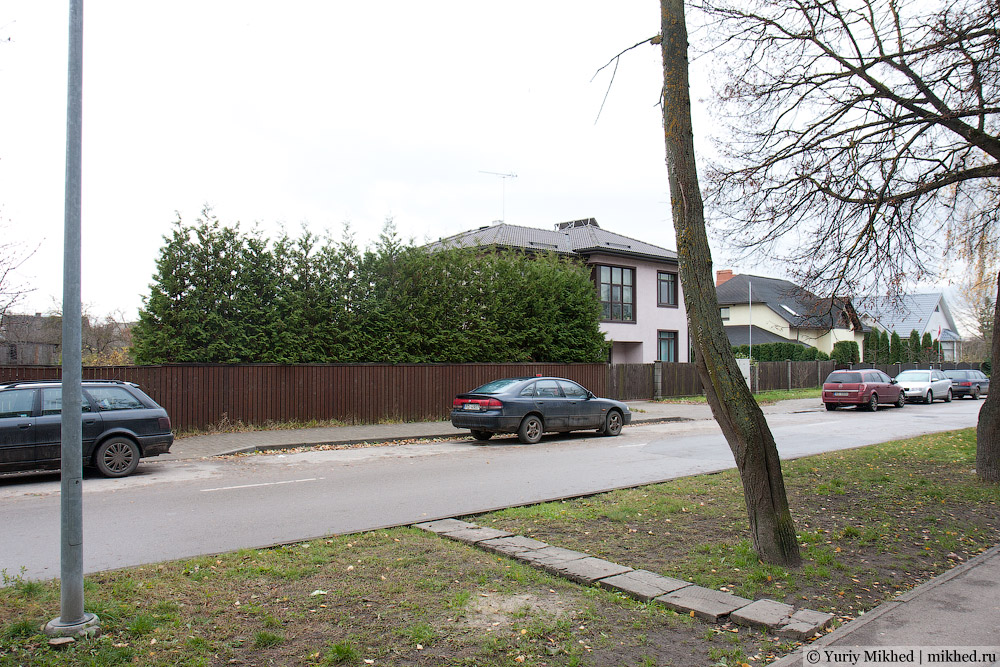
Civilisation!
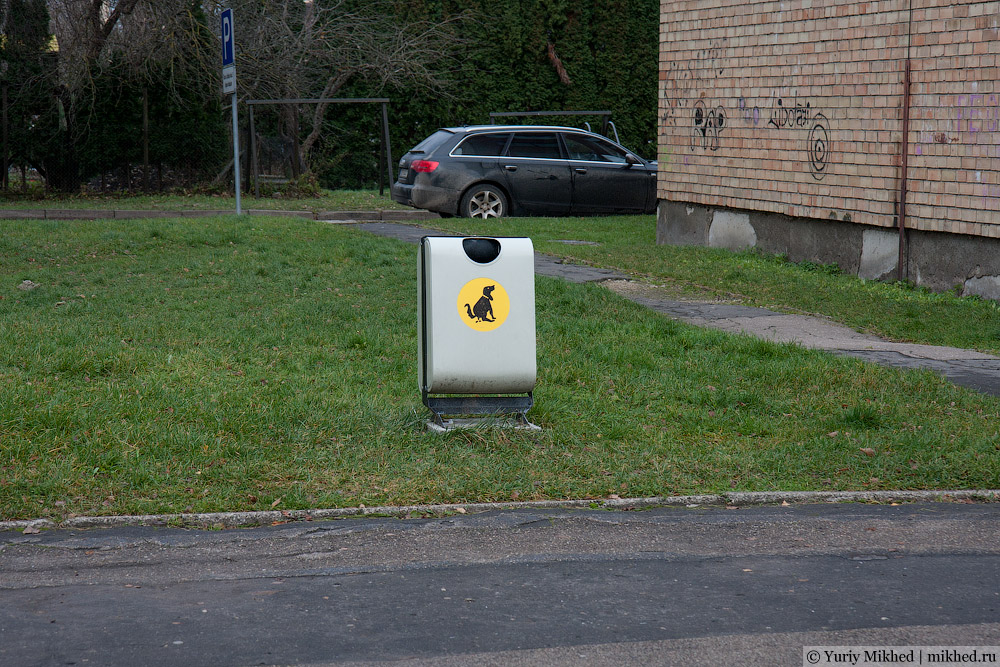
To the north of our neighbourhood ran Satiksmes Street, behind which lay a large panel block district. The post office (a small building) was also located there, with 2 dormitories standing on its sides. My sister's nursery school friend named Dasha lived in the dorm on the left. My sister later tried to find her, but without success.
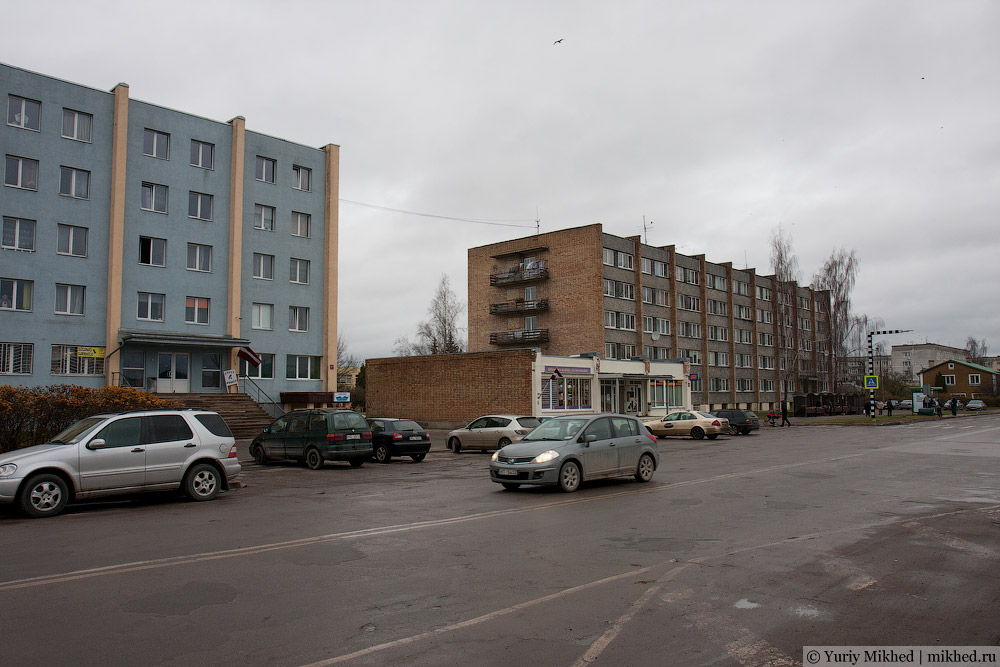
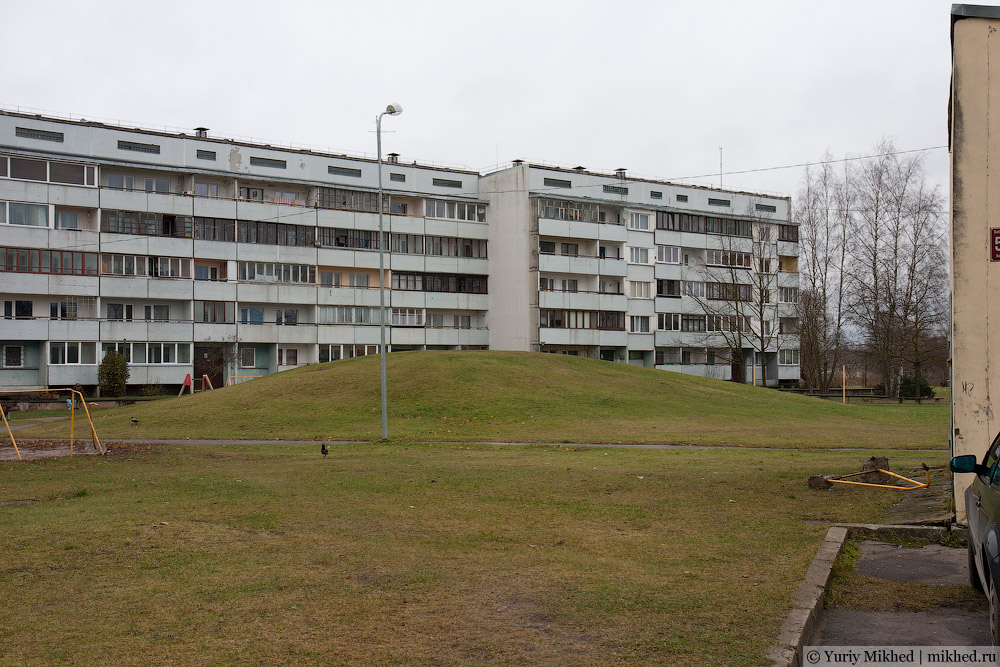
The hill in the courtyards behind this dorm was one of our points of attraction during snowy winters.
Our street opened onto the stadium of the First Latvian Secondary School (now the Jelgava Secondary School of Technologies). As already written in the previous story, it was in this school in 1989 that the famous Latvian rock band "Brainstorm" was formed.
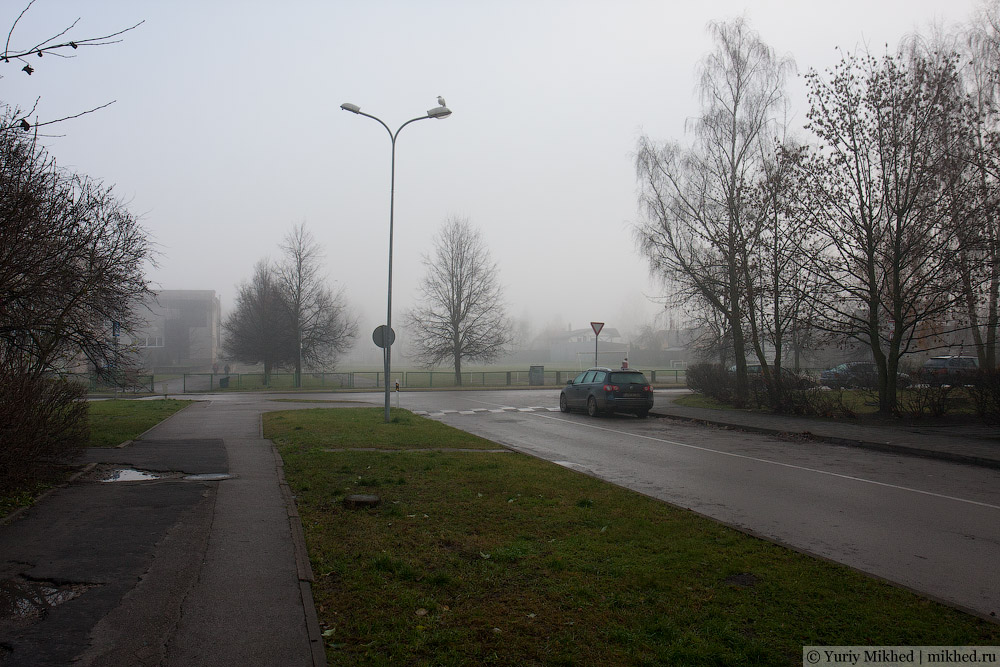
The same old tyres are sticking out at the school stadium. We also spent a huge amount of time hanging out here. A mass of memories is connected with this stadium, for instance, how I learned to ride a two-wheeled bicycle here. I couldn't overcome the fear of lifting my feet off the ground and struggled until late in the evening until my mother came out to look for me. Seeing that there was no progress, she sat me on the bike and gave me a hard push from behind; in a panic, I worked my legs and rode forward without falling until I steered into the sandbox and tumbled there. After that, the fear was conquered, and I started riding. Another time, a crowd of soldiers from the nearby military construction unit was brought out to the stadium (for those not aware of Soviet realities, the construction troops in the USSR were considered the least prestigious, taking in the most backward individuals), and I just happened to be walking around with a toy gun that looked very much like a real one. So one of these soldiers spotted it and took it from me. Upon learning about the loss of the gun, my dad, who was an officer himself, turned up at the unit that very evening to sort things out. All the soldiers were lined up for identification. In the end, the gun was returned, and problems awaited the lawbreaker.
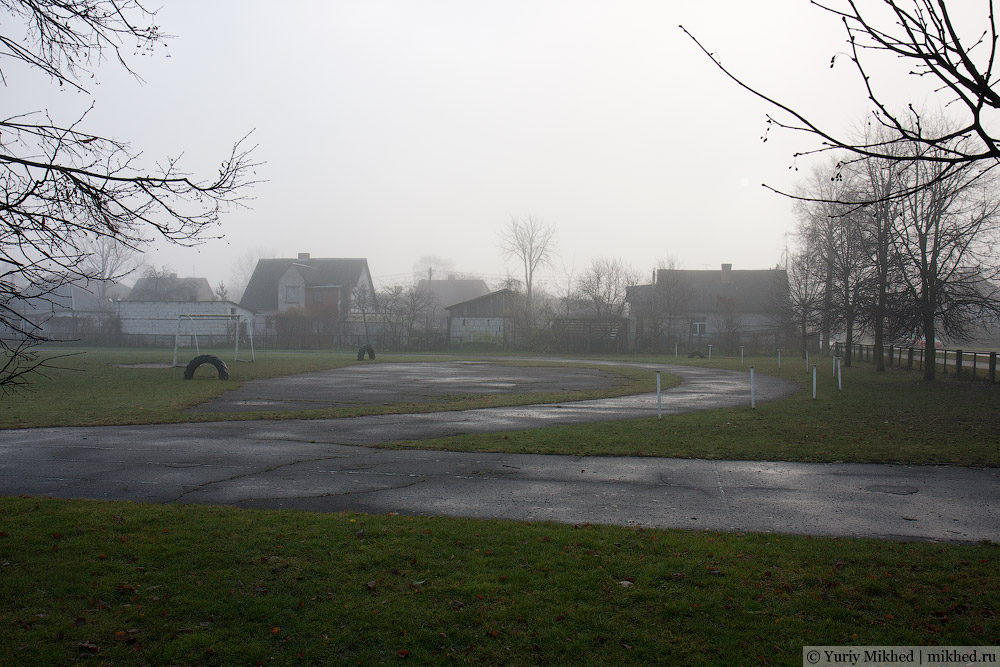
There was also a large frame for tying ropes at the stadium. There were never any ropes there, but instead, you could climb up the ladder to a height of about the 2nd floor and slide down the pipe, just like firefighters do. I never did this in my childhood—I was afraid, and often thought that if I returned here, I would definitely slide down the pipe, no matter how old I was. Alas, it didn't work out—the frame is no longer there. Metal posts resembling giant nails are placed around the track. To this day, it's a mystery what their purpose is.
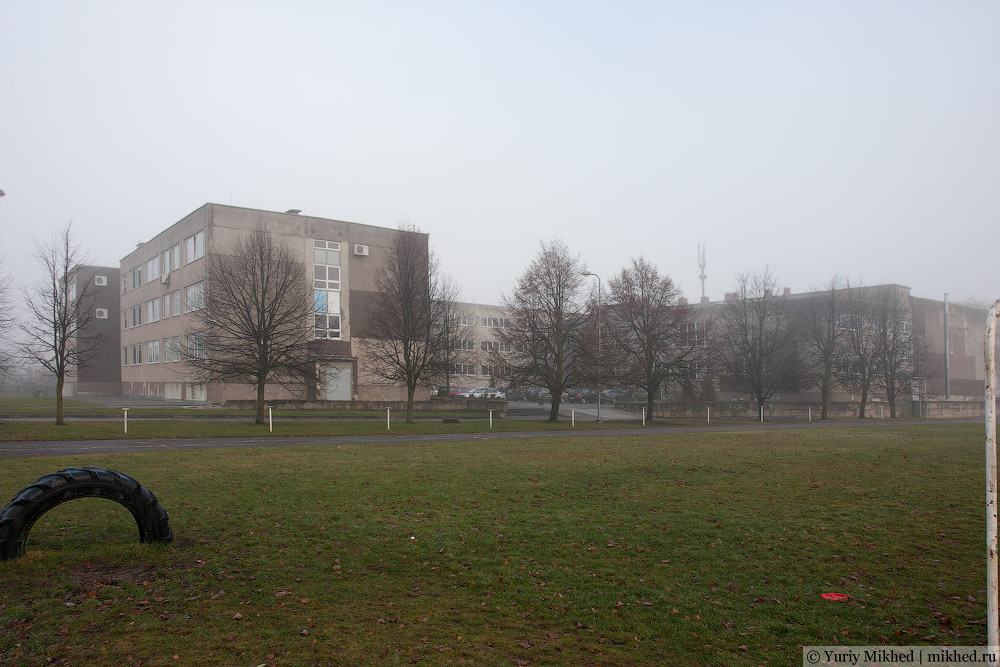
The bins stand in their former place, but the brick shed for storing equipment that stood behind them has been demolished. We used to climb onto the shed using loose bricks like rock climbers, and then jump off it.
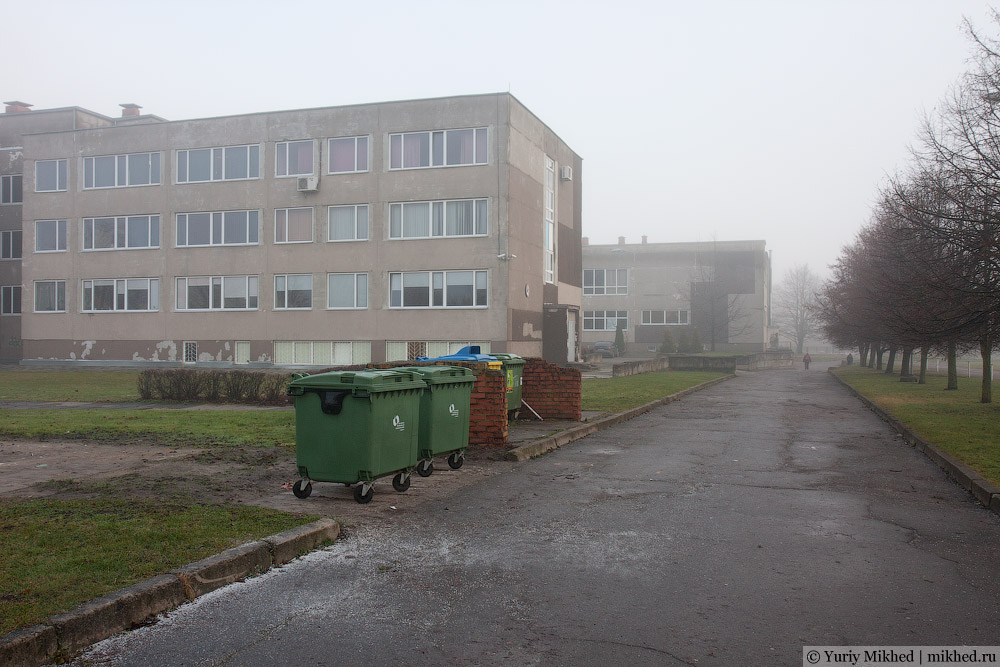
Most of the parallel bars on the other side of the stadium are preserved.
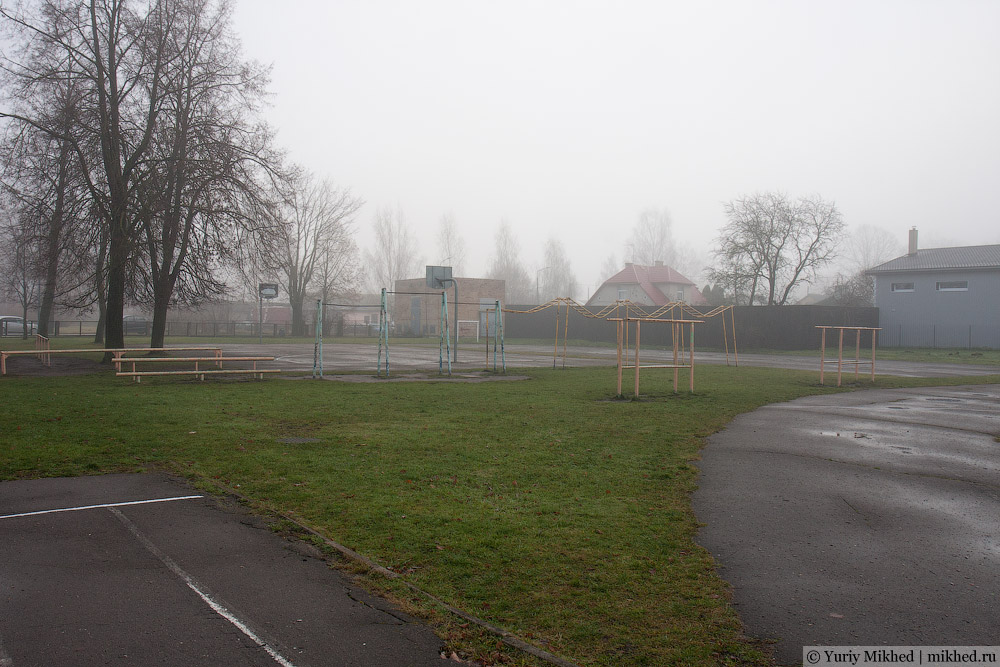
On the other side of the school, behind this fence, lay that very military construction unit. Right at the exit was the PARM (regimental auto repair workshop), because of which the name "parm" was applied by us to the entire territory of the unit. We sometimes sneaked into the "parm" territory and then bolted from the guards. When the unit was withdrawn and the structures were abandoned, we came here too, and once caught lovers who were trying to find privacy there. The guy whose vibe we ruined also tried to catch us, but we feared him much less than the military guards. Later, a small market opened here, where I went for draft milk. The fence along the road that enclosed the unit is gone now.
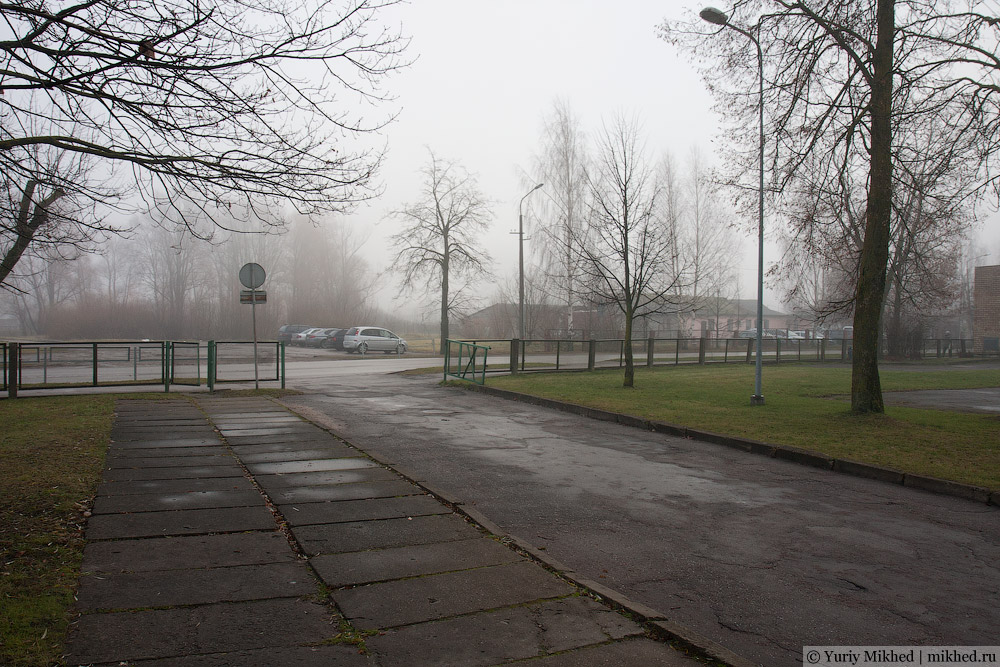
This street is Meiju ceļš, formerly called Dzilnas iela.
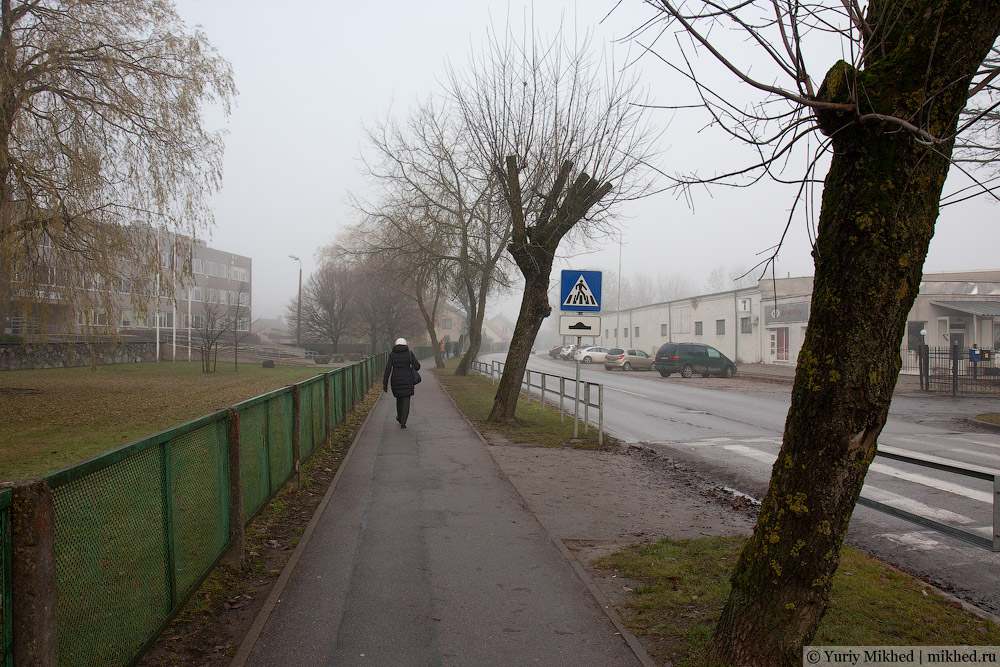
At its intersection with Satiksmes Street, there is a Maxima chain supermarket, which in Soviet times was the neighbourhood grocery shop. My first ever independent trip to a shop took place right here. At the side of the shop, there was a glass container return point. Milk and kefir in the USSR were sold in special glass bottles, which we put under the sink in the kitchen cupboard. When everything was filled with bottles, it was my duty to pack them into a bag from a D-1-5U parachute, after which dad took them to be returned.
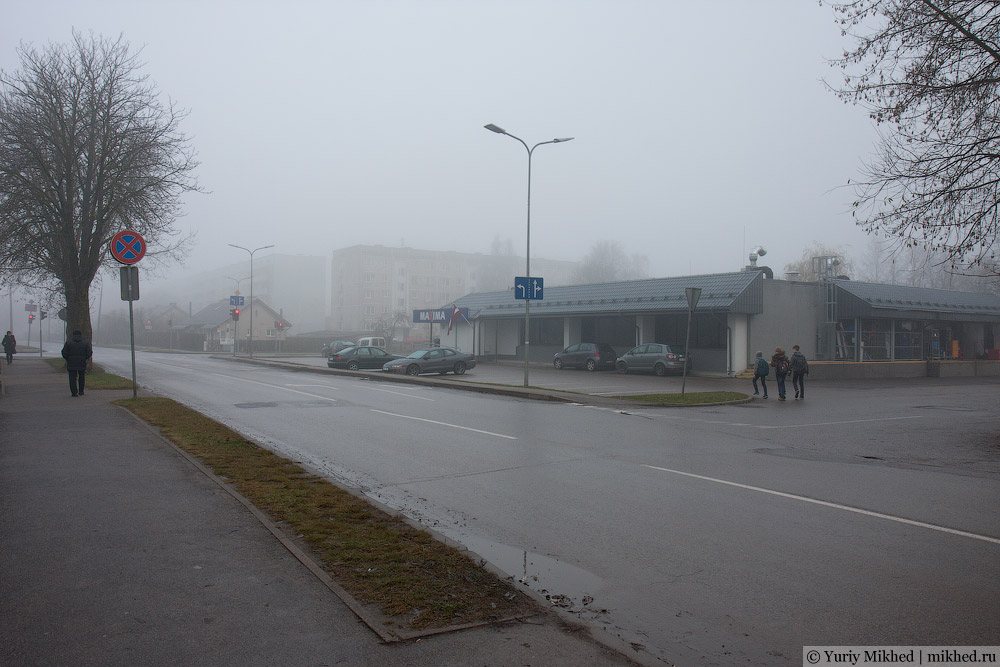
Behind the shop there was also a panel block district, and further on—a large wasteland with a swamp.
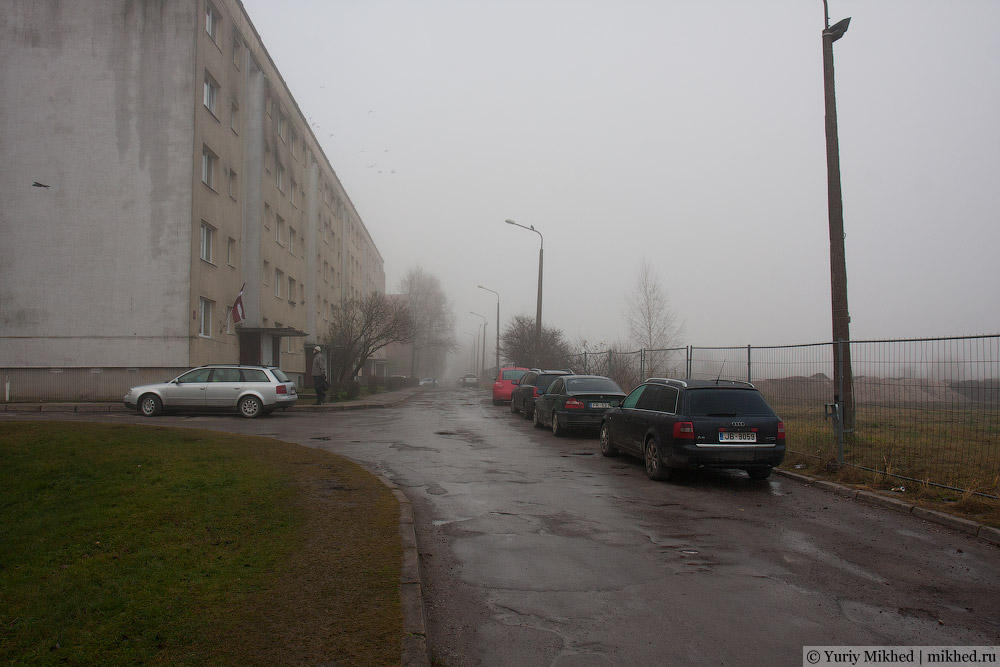
In the early nineties, a lake was dug on the site of the swamp, which came to be called the "bublik" (bagel) because of its round shape with an island in the middle. Initially, all the shores were sandy, and we came here to swim, but now everything is overgrown, and trees have grown on the island. Behind the lake was a garage complex where dad had a garage. My mother sold the garage in the hungry year of 1995; almost all the money went on food.
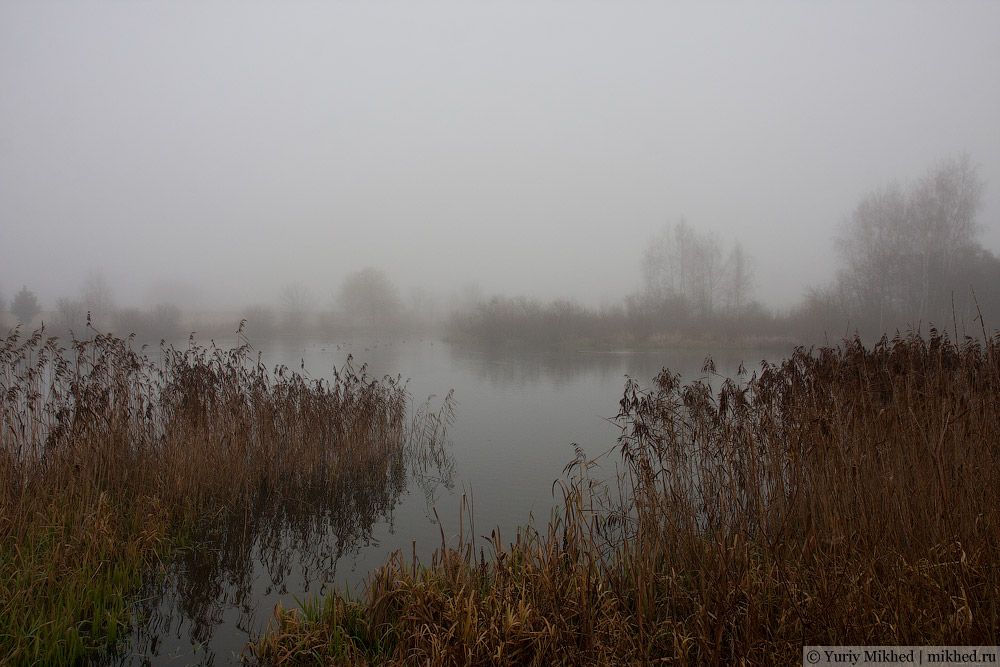
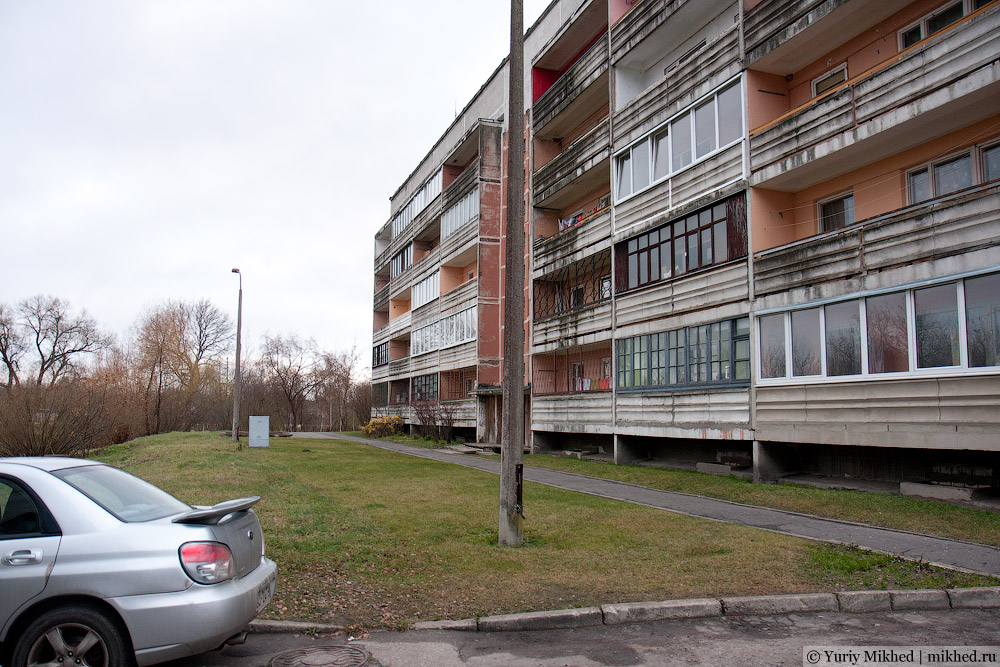
In the same area, on the very outskirts, stands the building where my sister and I lived with my mother's acquaintance from September 1996 to October 1997, when my mother went to work in the USA. This exact time is described in the story "Ayk".
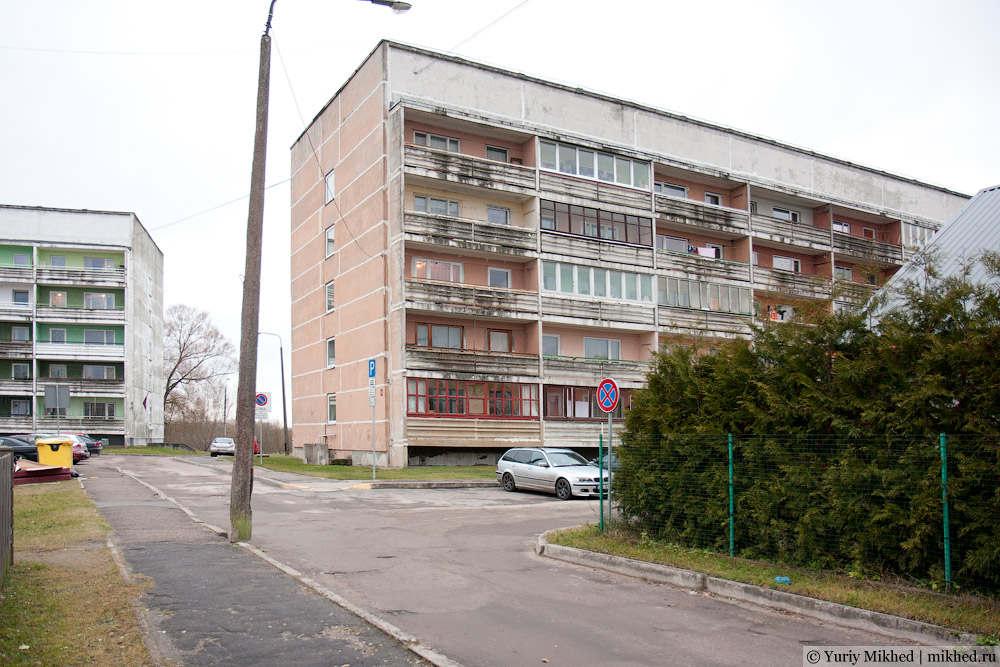
Our long walks with Ayk began here.
Now let's walk from our neighbourhood towards the centre. Traktoristu Street now has good asphalt (it used to be full of potholes), but the old house at the end of the street has been demolished.
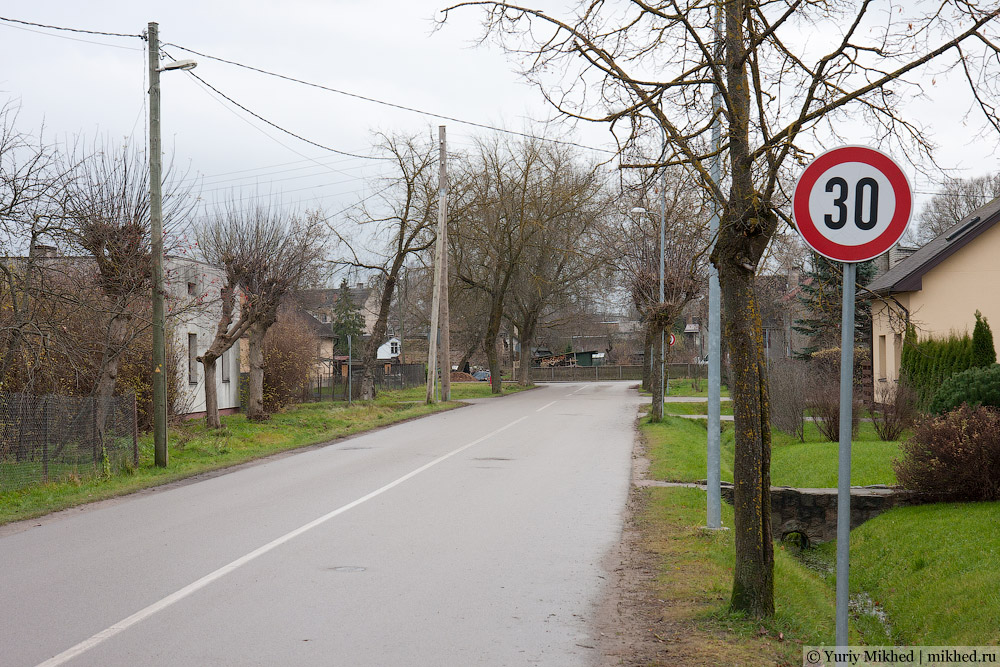
Along this road, we walked to nursery, primary school, and the lyceum. The road went through a Romani neighbourhood, which was dangerous because the Romani children were unpredictable. They both attacked us and pestered us; once they even locked us in some abandoned building. Now a new house has been built on this street (on the left, previously there was a wasteland here), but it is still unoccupied (and it was built a long time ago, judging by Google Street View).
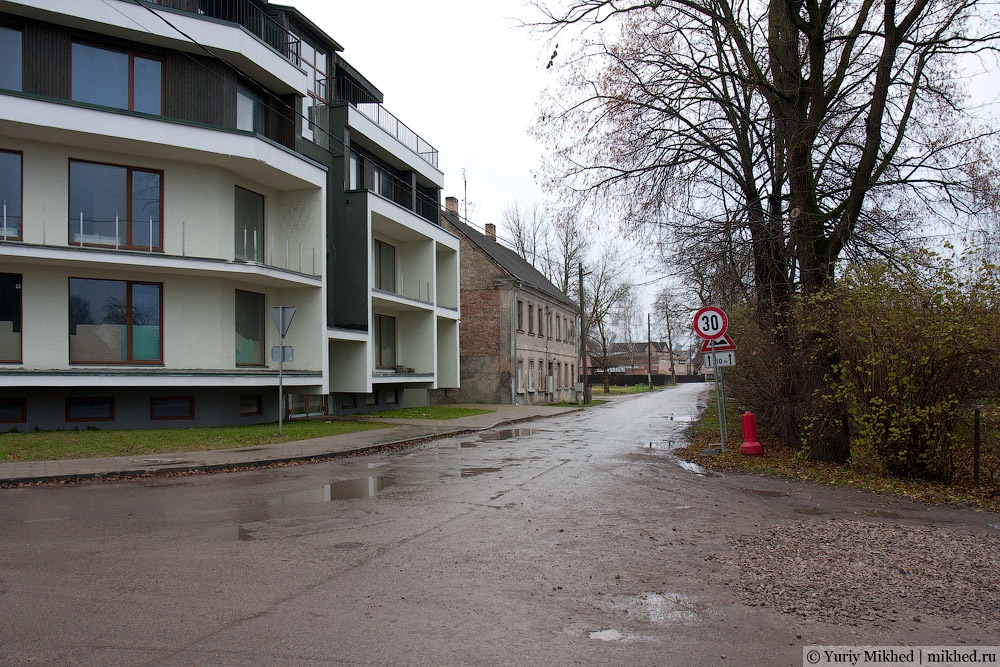
The road goes past the tannery, a historical industrial building.
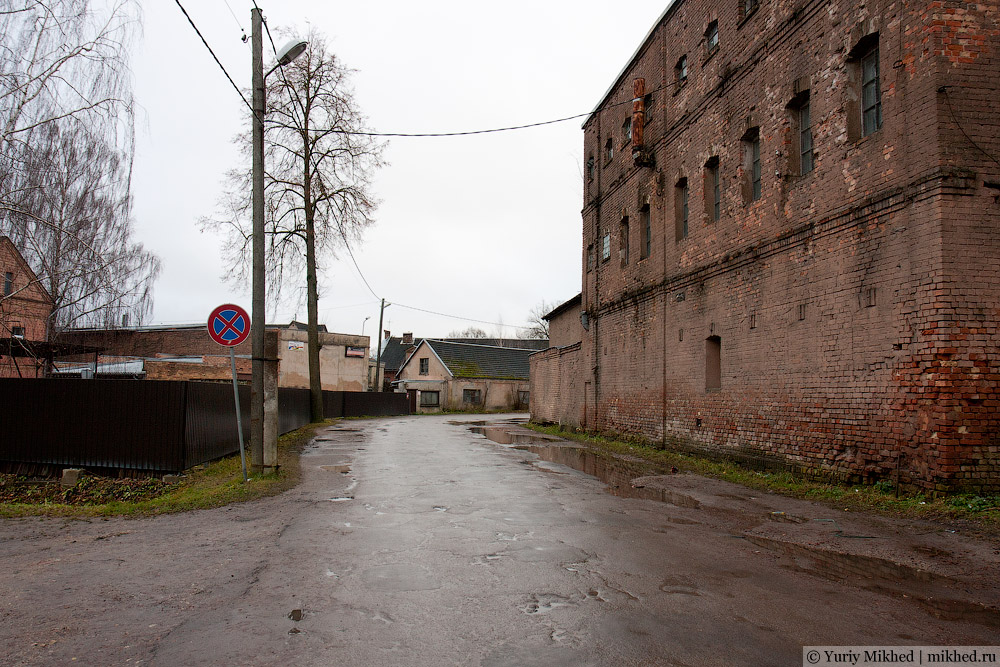
I have already shown you the historical street. Romani people lived here too. I wonder along which line it was restored—as part of the restoration of historical buildings, or as part of Euro-aid to the Romani?
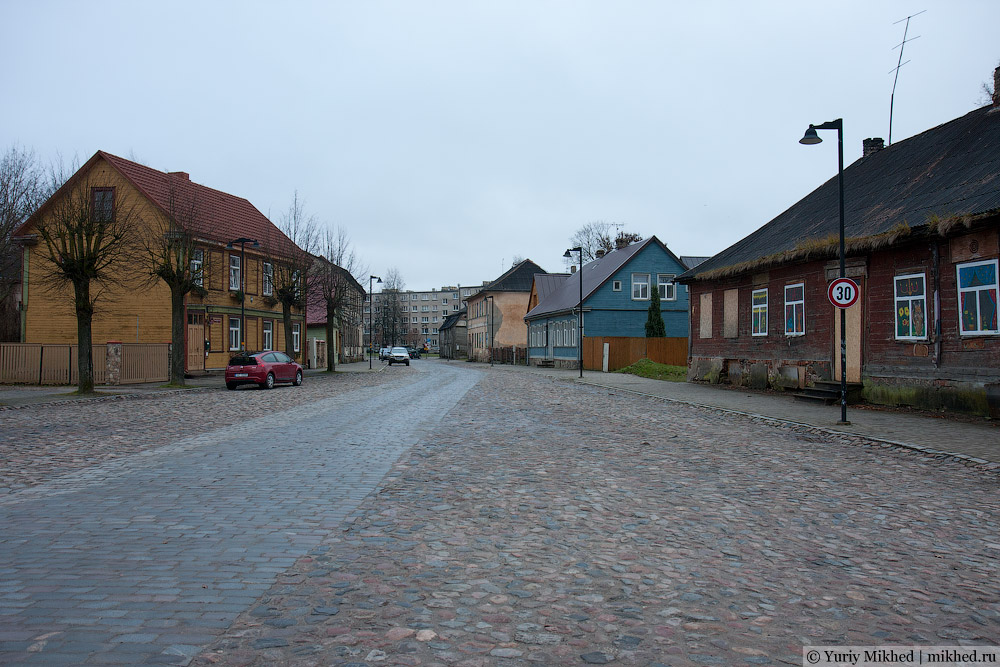
Behind it, the main street is already nearby, so everything is very well-maintained.
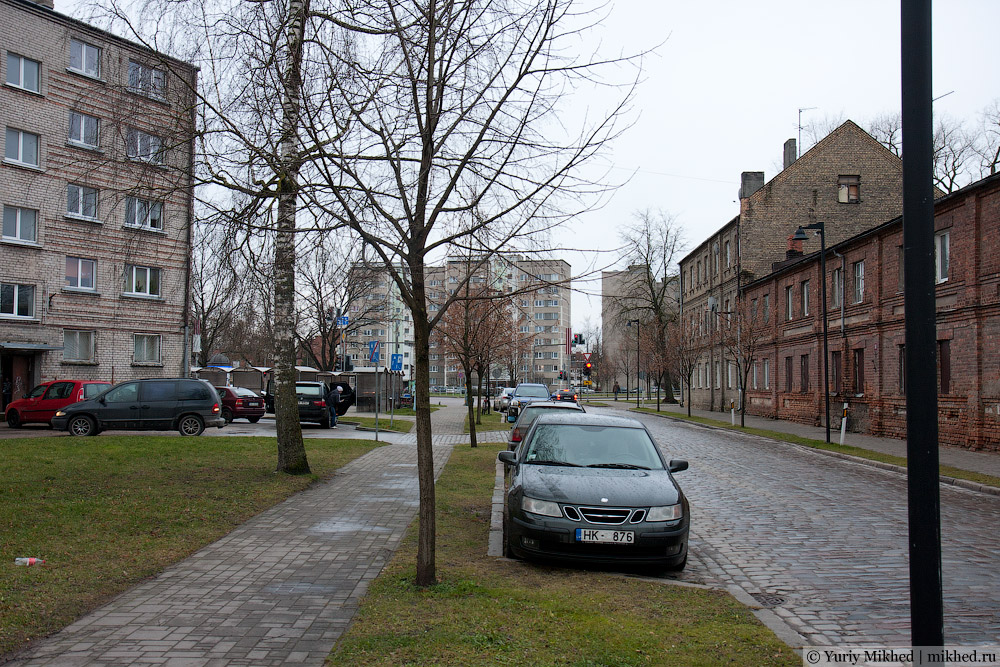
I walk along a well-familiar road to the left.
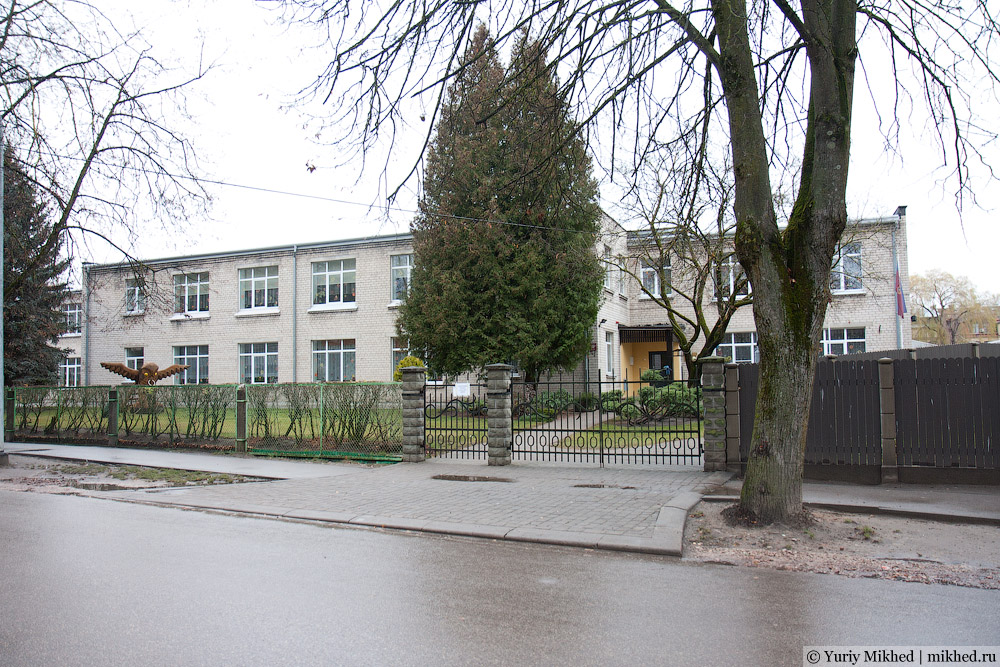
My nursery school is located there. It was called "Zvyozdochka" (Little Star) because mostly children of military personnel went there (most of the children from our street also went here). Interestingly, the name has survived to this day—"Zvaigznīte" (vigilant officials overlooked the flagrant occupational nature of this name). Of my educators, I more or less remembered Alla Alexandrovna, who taught us in the senior group—she had a low voice and was very stern herself. During walks, I really liked to play that I was an aeroplane—I would start up, copying the sounds made when starting an An-2, spread my arms, and run around the yard, and this irritated Alla Alexandrovna very much. We also went to the first grade right in this building together with our whole group (the classroom was on the 2nd floor of the right wing). The first teacher's name was Oksana Yaroslavna; she was the wife of one of the military pilots and lived on our street. Once I missed school and instead went with my parents to the parachute jumps to ride a helicopter, and one of the pilots turned out to be precisely her husband, who scolded me for playing truant)
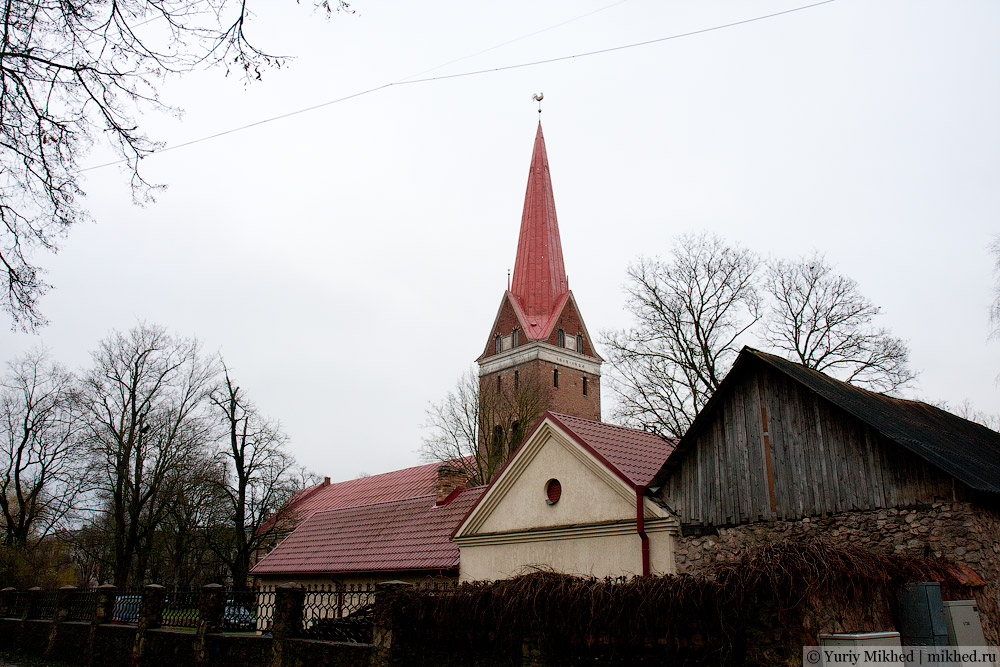
The main landmark is the "tower with a cockerel" (I have already written about the church twice in previous stories, I won't repeat myself).
Further on is the engineering plant, which underwent reconstruction and received new windows. Previously, there was one long continuous window on each floor.
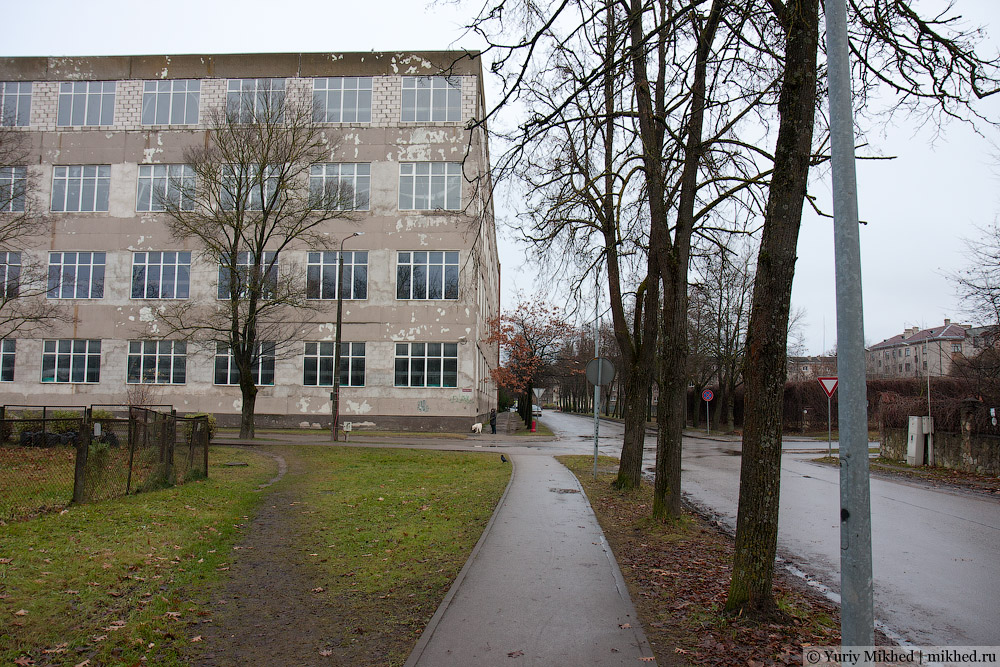
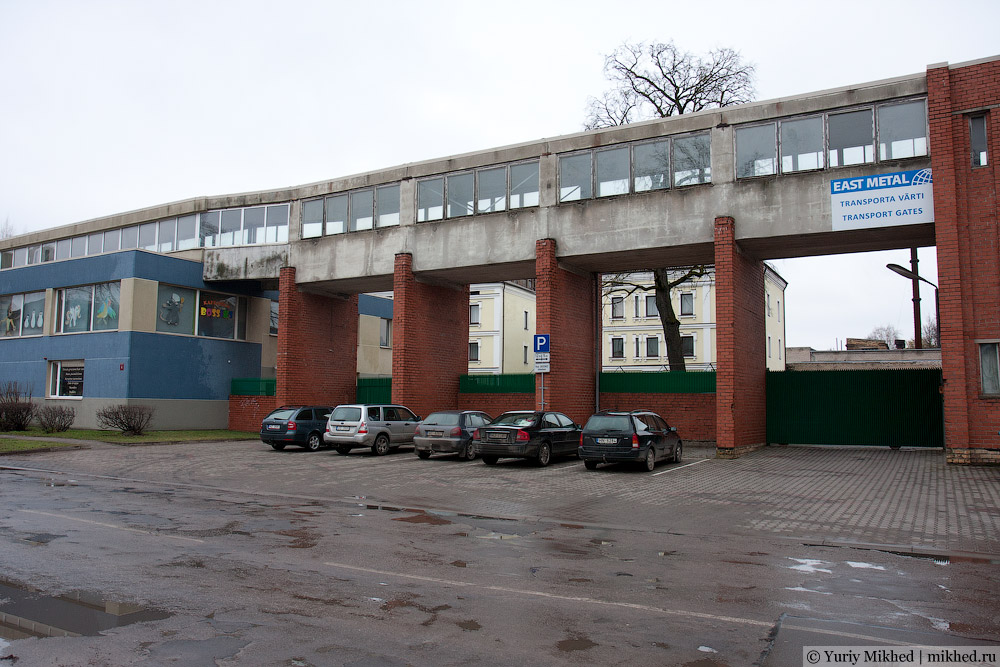
Entrance to the plant.
Let's move to the main street. Toys were sold in this shop on the corner in Soviet times, so the place was always a cherished dream. It was exactly here that I bought the toy cats mentioned in the story "From the Life of Rubber Products".
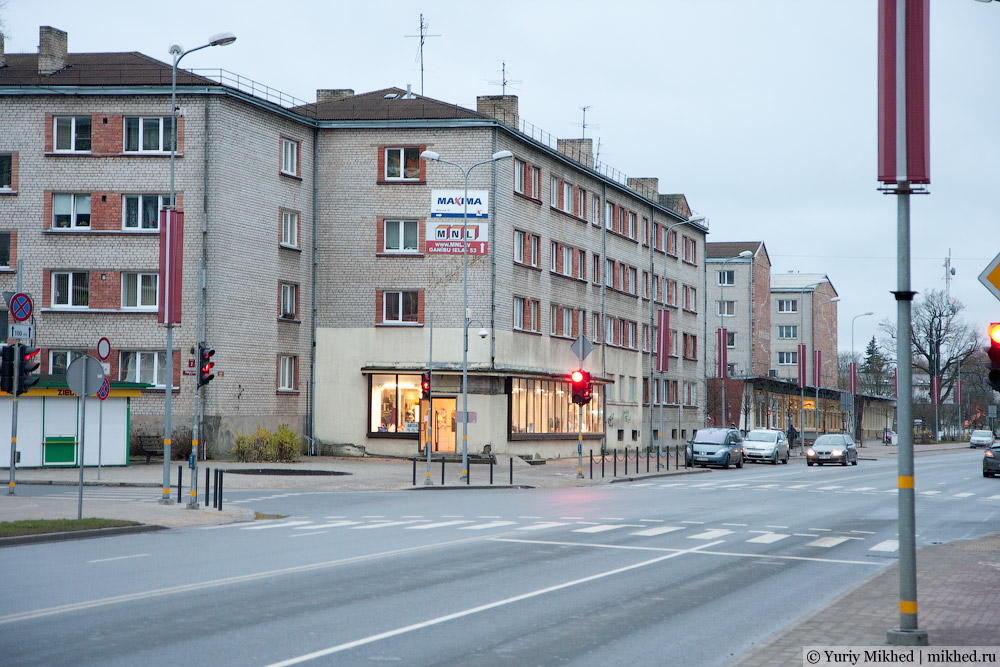
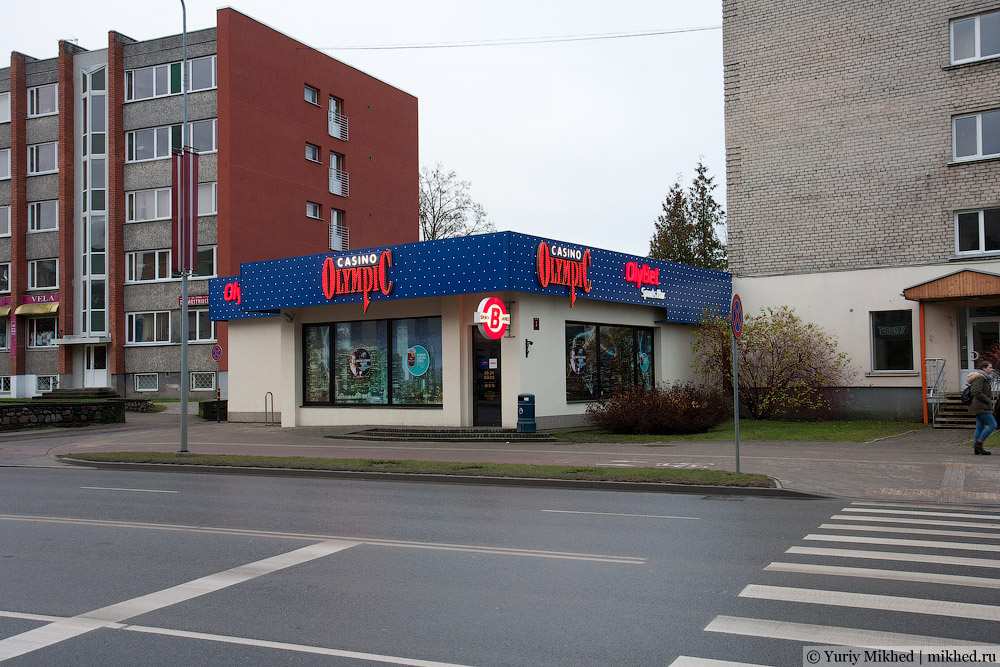
Across the road from it was a dairy shop. There was an eternal queue there, and while I waited for my mother, I liked to examine the winter frost patterns on the large windows. Now the shop has turned into a casino. An unexpected transformation. There is no ban on gambling in Latvia, so gambling houses can be found in every town.
Let's go further up the street.
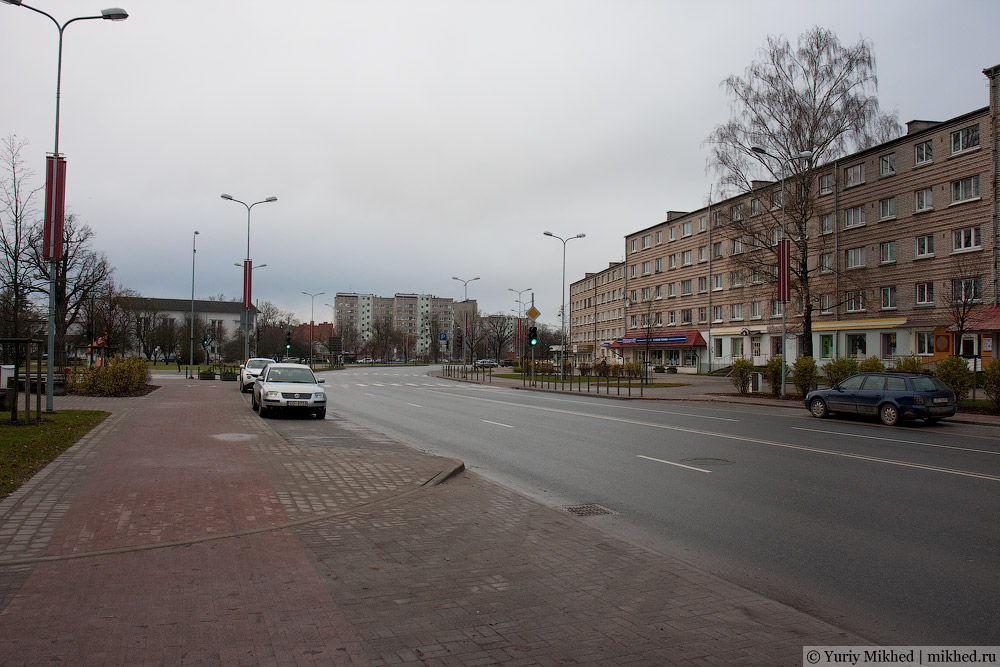
In this building there was a hairdresser's where I used to get my hair cut, and in the nineties, toys moved here. We often dropped in here to look with hungry eyes at "Lego" construction sets, for which we had no money. When my mother sold the garage, she bought me set No. 6544 for 30 lats On that day — 249 468 RUR
 9,76 mln. UAK
 633 489 Br
 55,05 $
, where one had to assemble a space shuttle and a carrier aircraft. Now that was a celebration—beyond words! The ultimate dream, however, was set No. 10159 "Airport"—but it cost 100 lats On that day — 831 560 RUR 32,55 mln. UAK 2,11 mln. Br 183 $
—by the standards of those times, this amount was simply astronomical for us. When my mother went to work in the USA, she bought it anyway and sent it over. After that, the airport stood in the most honorable place, occupying half the table. I still have it preserved, but it has been lying in its box since 1999. I keep thinking it could be sold, since there are many collectors of retro sets, but somehow it's a pity. Or maybe become a Lego hobbyist? After all, there are adult men who build entire cities.
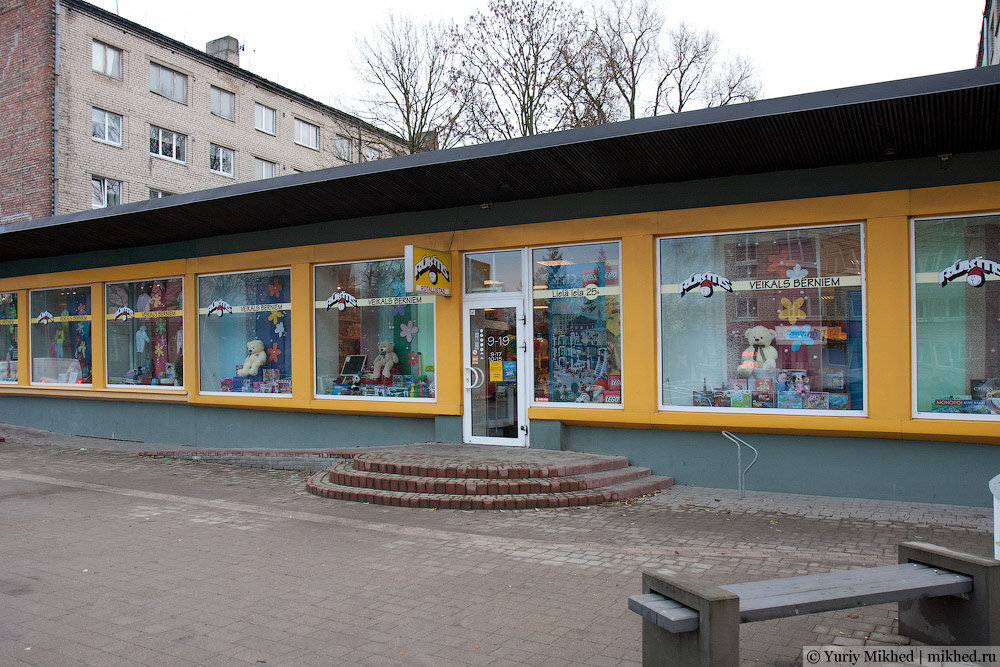
A bit further on is Oak Square. In the 6th and 8th grades, I walked past the oak to the lyceum. Now a large sculpture of an elk has appeared here—this animal is depicted on the coat of arms of Jelgava. In the background to the right of the oak, you can see the building of the Pentecostal church. Its construction began back in Soviet times, so it is unknown what was originally planned there. In about the 3rd or 4th grade, on our way from school, we climbed onto this construction site once, explored everything, and then a watchman appeared. Vanya managed to run away, but I was caught. At first, they promised heavenly punishments, but then they held an educational talk and let me go.
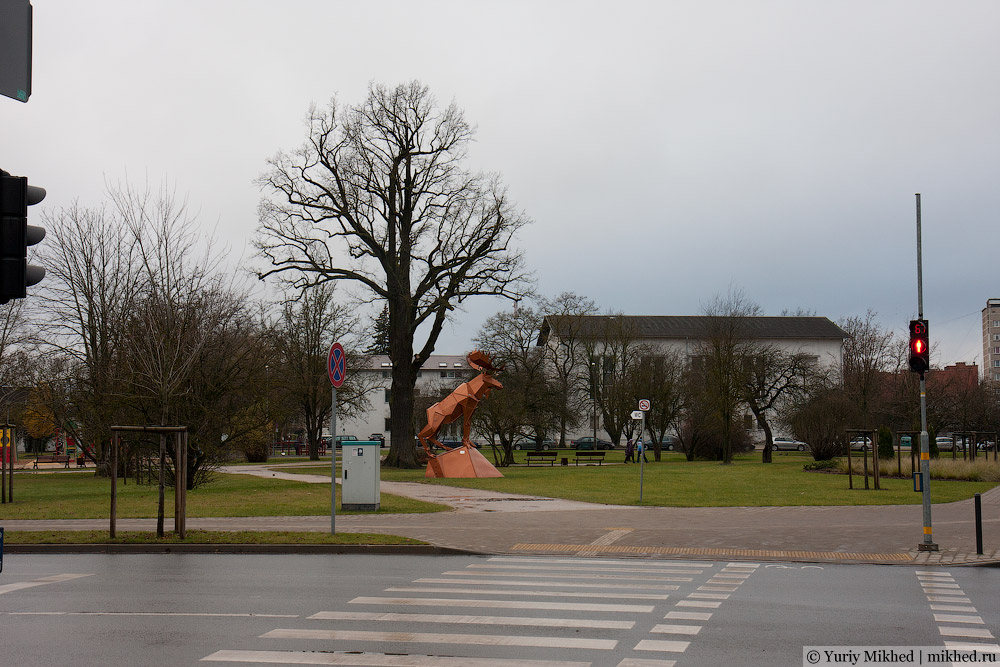
Next to it is the Jelgava Art School. In the 6th grade, my classmate from the lyceum, Andrey, used to come here, and it was on my way, so we sometimes walked from school up to here together. One of the things I regret most in life is that I wasn't sent here. In childhood, I really loved to draw, drawing through a whole album in a week; adults said I had talent. But talent alone is never enough; craftsmanship must be learned systematically. Unfortunately, instead of this, I was sent to the swimming pool. I learned to swim well, of course, but what's the use of that? One can learn to swim independently. And I turned out to be a worthless athlete—in all 5 years, my only sporting achievement was taking 2nd place in the 50-metre backstroke. I wish I had learned to draw instead. Parents, send your children where they themselves are drawn, not where you were drawn.
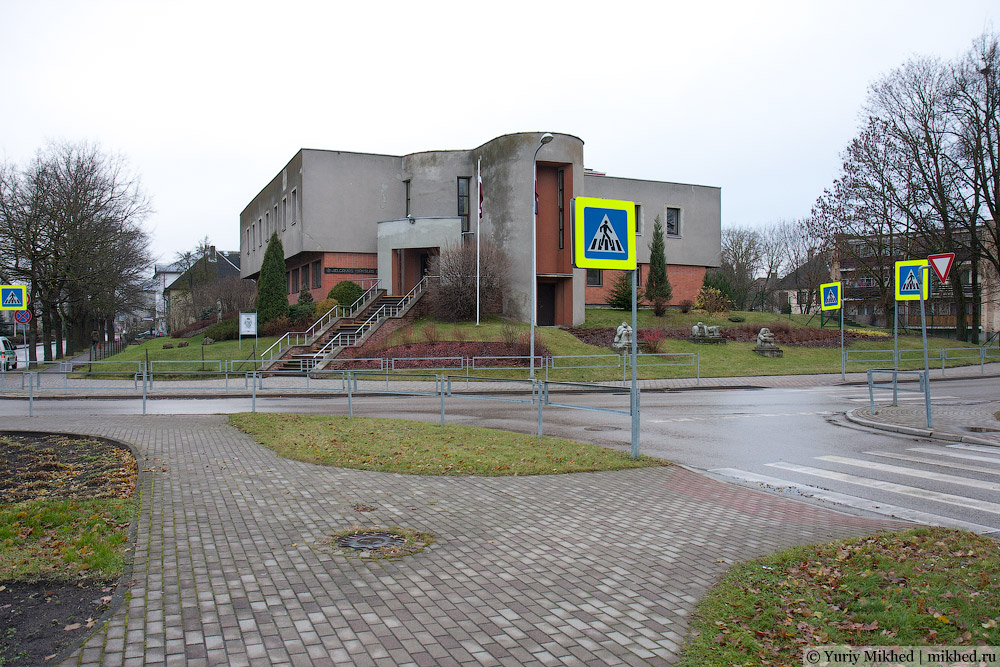
A minute's walk from the art school is the building where our 5th primary school was located. Here I studied from the 2nd to the 4th grade (September 1990–May 1993), under Aelita Moiseevna Abushaeva. Now an evening school is located in the building, and it has undergone reconstruction and changed quite a bit in appearance. Our "B" class was located on the 2nd floor, in the second window from the left.
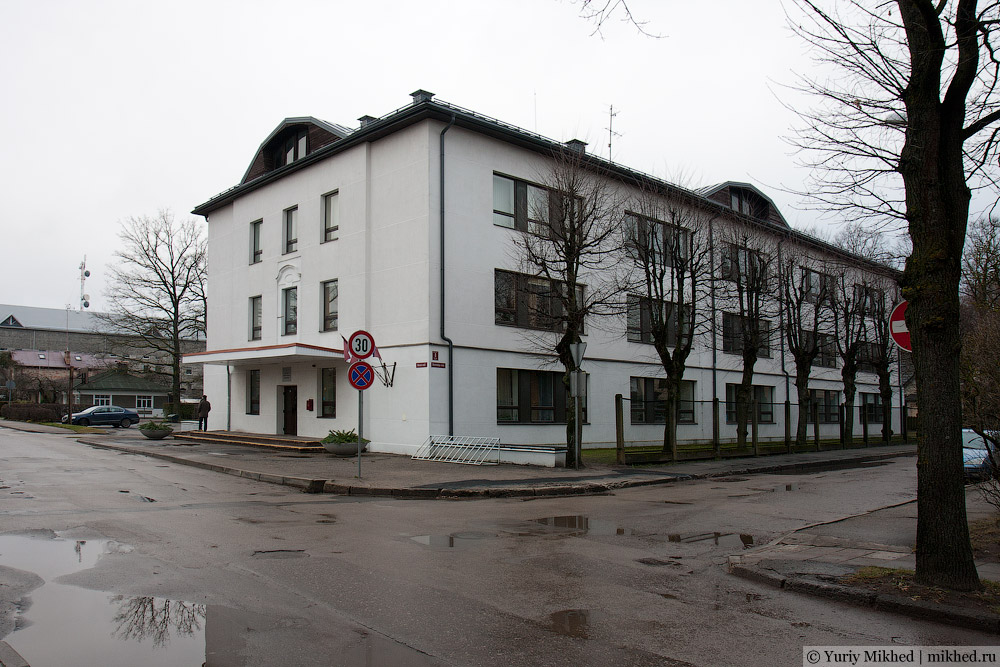
Physical education lessons took place on the grounds near the building. By the way, in PE, despite doing sports, I always showed the worst results in class—I could do a pull-up once, threw the ball in a way that made everyone laugh, and so on. In short, the foundation for complexes was laid thoroughly. Only later did I realise that I just wasn't built for it—bones that were too thin and muscles didn't allow me to achieve acceptable results even when I spent 2 hours in the gym almost every day for several years. And in general, passing physical standards for a grade is an absolute nightmare, just like the entire Soviet school PE curriculum. Do you remember these lessons? "Atten-shun! Eyes front! Comrade teacher, class 2 'B' is ready for the physical education lesson! Right turn! Quick-march!" Who needs this militarism? Who needs these pull-ups for a grade? It only created complexes in children who weren't physically strong (which, moreover, in most cases yields nothing in life). No, physical education at school must absolutely exist, but it should unobtrusively accustom children to sports and fitness (which is useful!), rather than cause a feeling of inferiority in them and teach them to march in formation.
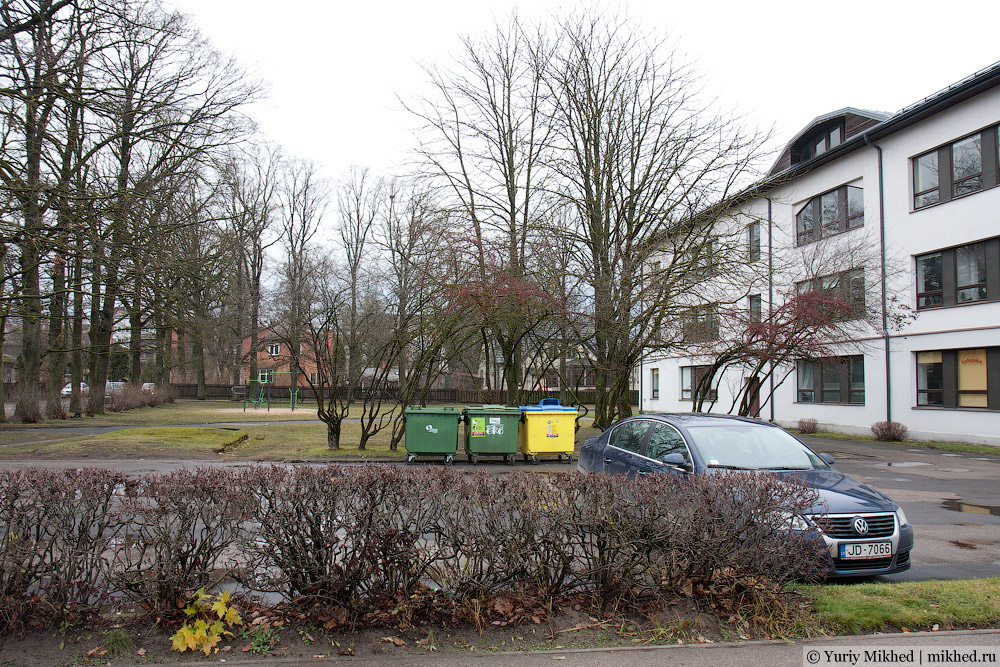
Opposite the school in Soviet times was the city military enlistment office; after the collapse of the USSR, the municipal police moved in there.
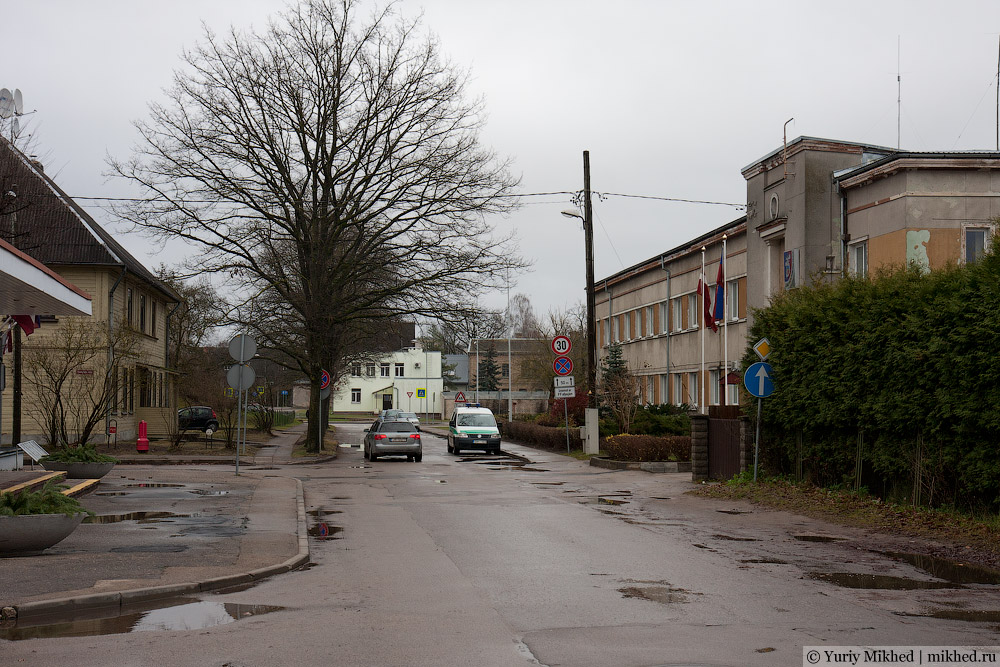
From here one can walk to our secondary school as well. In the neighbourhood through which one has to go there, lived another of dad's comrades-in-arms, uncle Slava. Previously, his family also lived on Lidotāju; I was friends with his older son Sergey and often visited them. But then they moved here, because of which Sergey and I practically stopped communicating (it's strange how in childhood moving to another street is more serious than now—moving to another continent). They left for Russia quite early, and I haven't seen them since. As far as I know, Sergey, unlike me, followed in his father's footsteps and became a pilot.
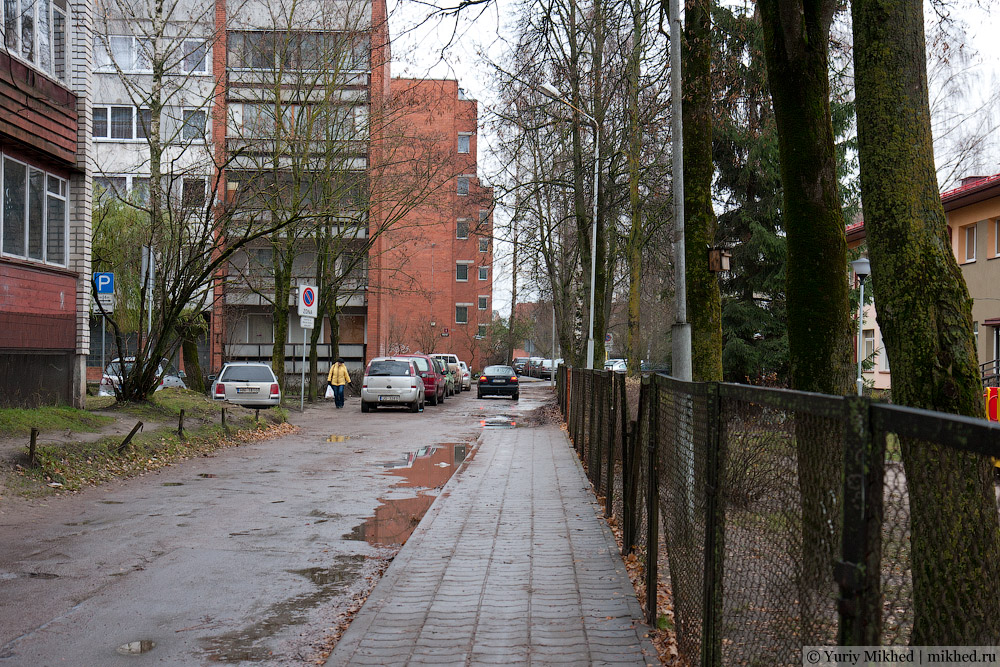
I myself managed to live in this neighbourhood, in the building located opposite (in the photo), from October 1997 to May 1998.
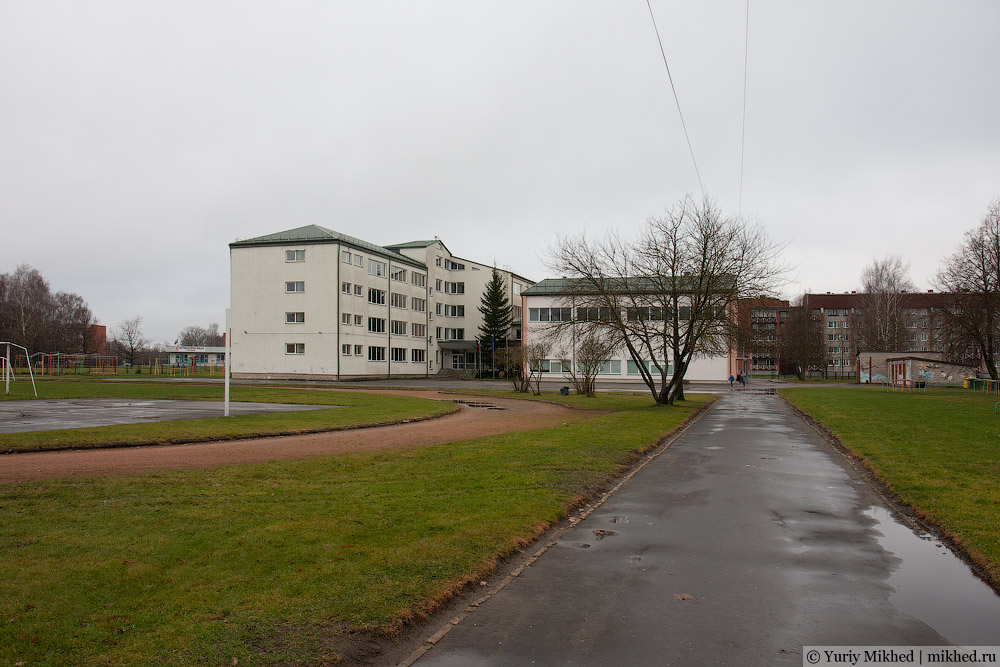
And here is the secondary school, in those days "Russian Secondary School No. 5". Here I studied in the 5th and the second half of the 7th grade. To the left of the school in Soviet times, they began to build a swimming pool, but after Latvia's exit from the USSR, the construction was frozen, and this long-term unfinished project stood there all through the nineties (we sometimes dropped in there, and smoking senior pupils ran there during every break). As can be seen, the swimming pool was not fated to be here; the extension was demolished without ever being finished.
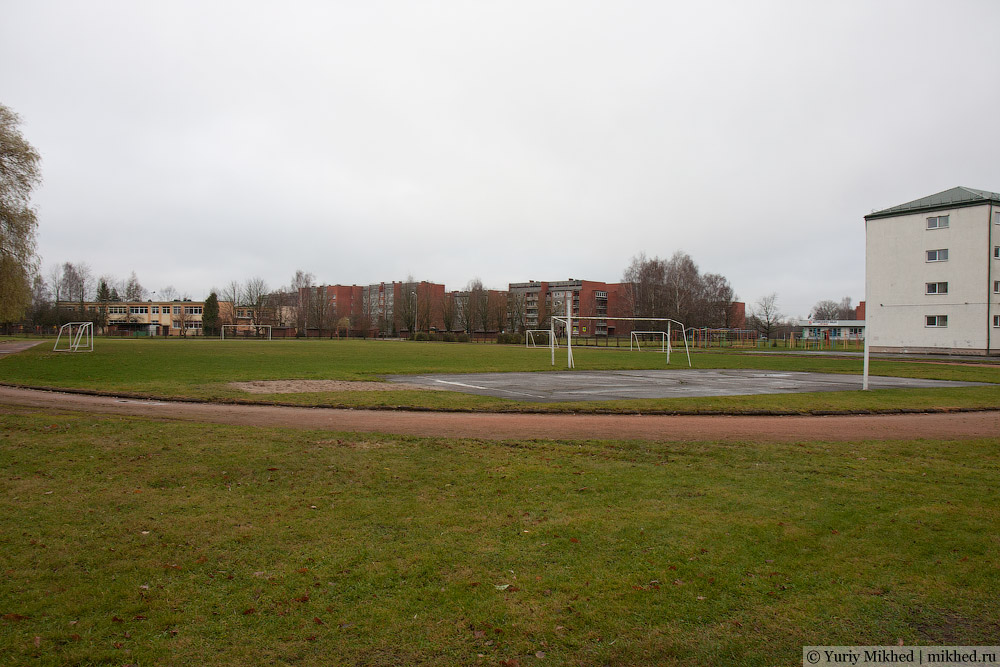
Besides PE lessons, the stadium is remembered because we underwent the so-called "summer practice" here. In the USSR, this euphemism stood for forced, free performance by schoolchildren of the duties of school maintenance staff after the end of the school year (mostly cleaning the school and its territory). And although the Union had already been gone for several years by that time, schools continued to engage in this by inertia. In our case, the "practice" consisted of us weeding the stadium track by hand. As a quick search showed, in modern Russia, things haven't shifted, schoolchildren are still forced to work for free as cleaners and sweepers, although legally this was declared illegal back in 1992. In Latvia, however, this is no longer practiced. Labour is good, but any labour must be voluntary and paid.
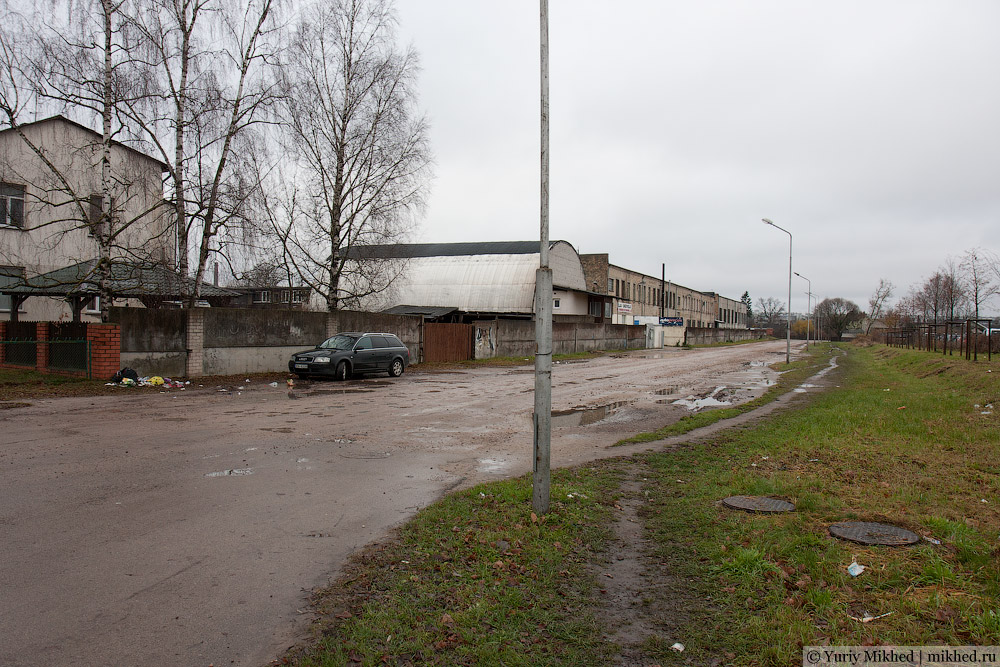
One of the streets along which lay the path to the secondary school.
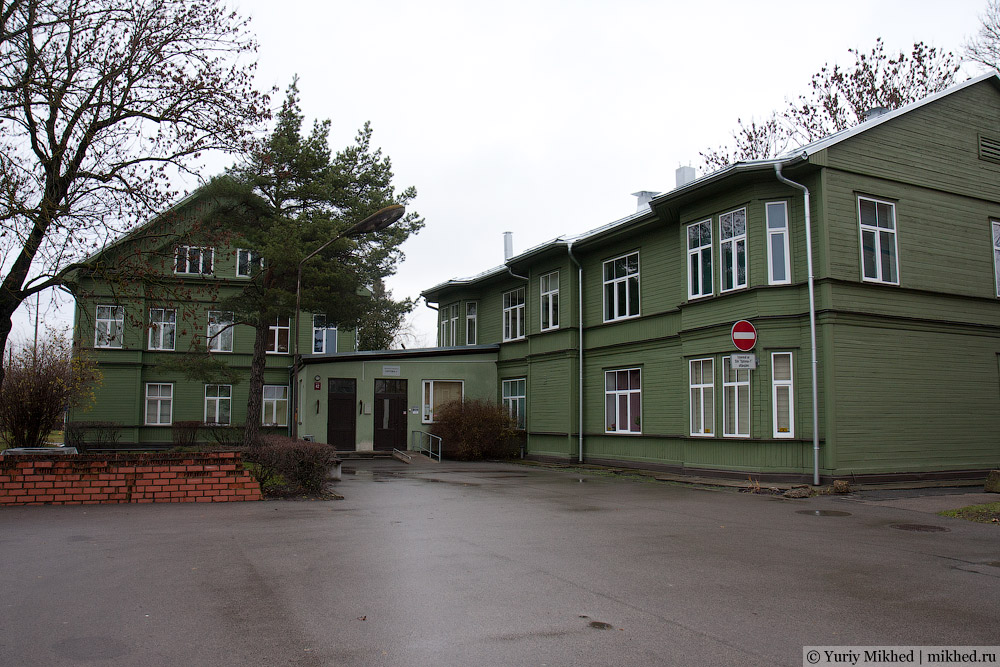
Raiņa iela, 42—this building once caused horror and fear, because the city children's hospital was here. The most terrifying was visiting the dentist, to whom I was taken at the age of 7 after the discovery of my first cavity. In front of me in the office was some little girl who screamed as if she were being tortured. Then I went in. The drill bit of the dental engine was smeared with some nasty stuff left over from the girl; the doctor simply wiped it with her fingers, after which she set to work on me. The drill was driven by a belt; there was no anesthesia whatsoever. When Americans came to the lyceum in the nineties, one of them was a dentist. Having examined the surviving equipment, he said that similar stuff was used by them 50 years ago... Look at that, soulless, but we were the first to fly into space!
The wooden building of the hospital has been well restored, though ruined by double-glazed windows. Now it is some kind of medical centre.
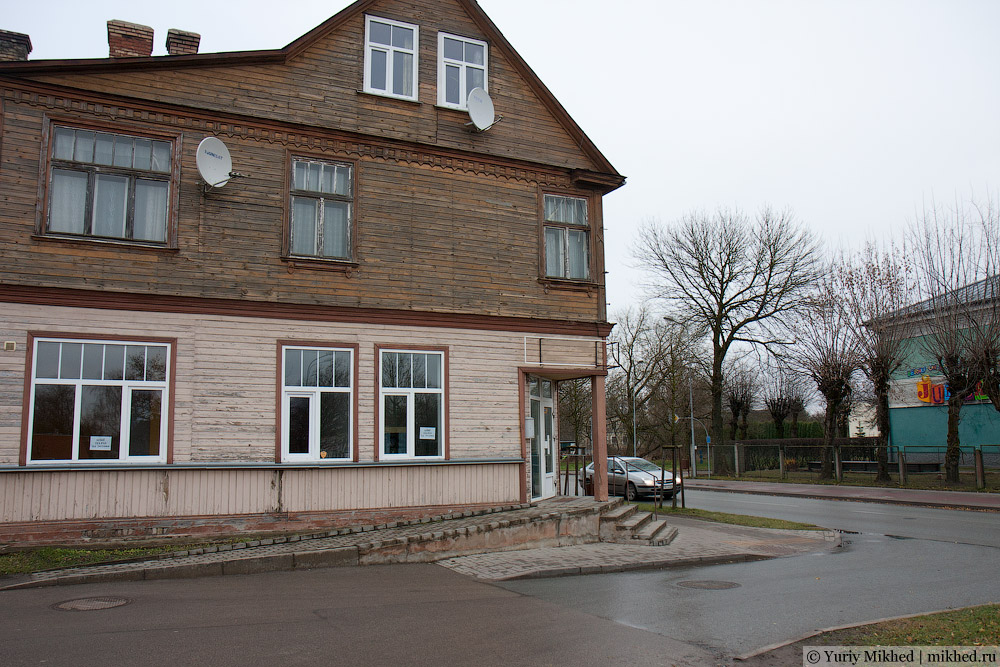
There was a pharmacy in the neighbouring building.
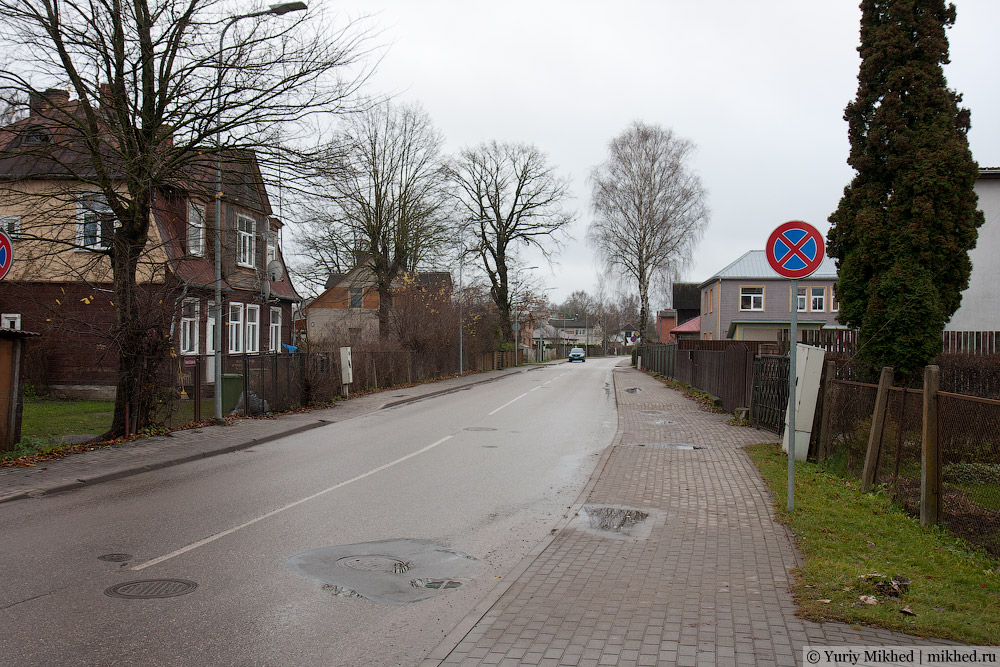
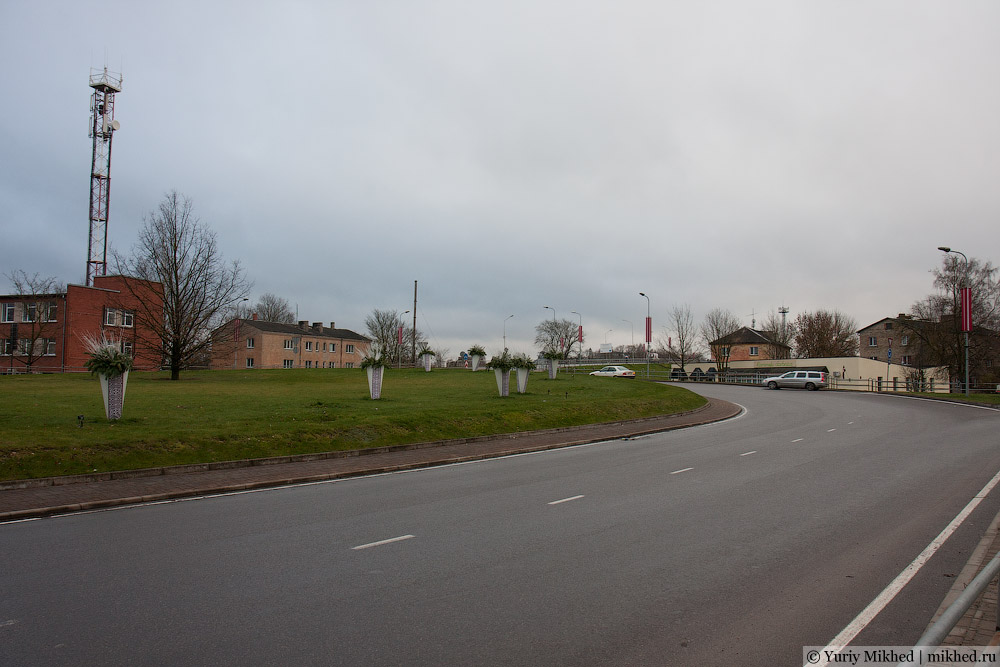
Now let's head down the street of Commander Oskars Kalpaks (pulkveža Oskara Kalpaka iela, formerly Slimnīcas, i.e. "Hospital Street"). Paved pavements run along the street (previously one had to walk on the shoulder).
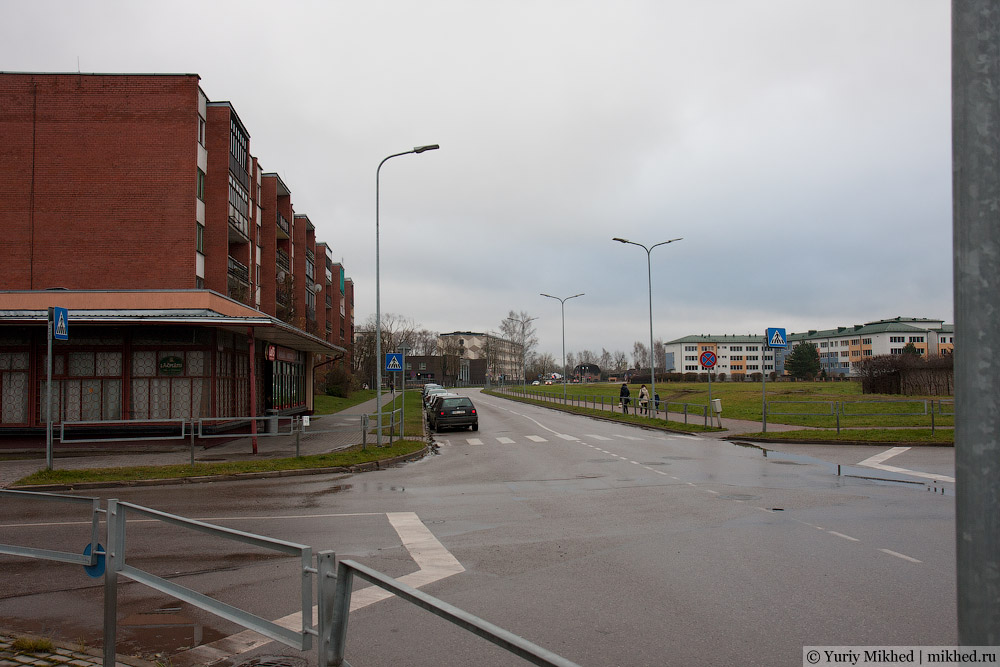
This section was not asphalted in those days.
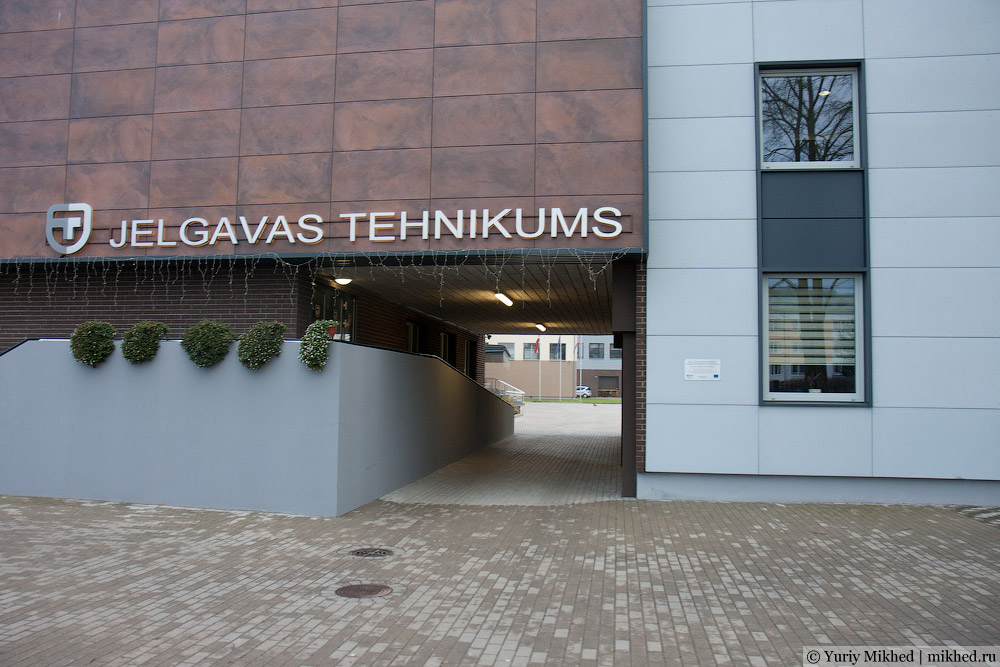
At the very end of the street is the Jelgava Technical College (in the past—the Technical Lyceum, in Soviet times—vocational school No. 45). The "forty-five" had a bad reputation for a long time until Alexander Gorodinsky was appointed director in the eighties. Gorodinsky managed to transform a "criminal vocational school" into a completely unique educational institution, which was written about and with which professors from Europe and America cooperated.
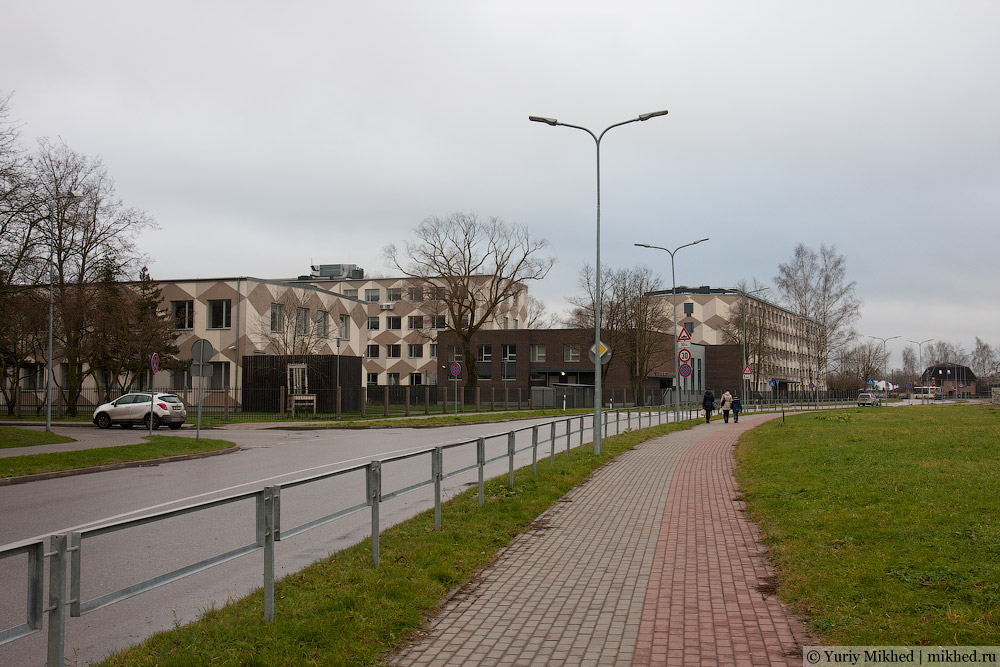
In the 1990s, Gorodinsky organised a private school under the lyceum, which received the name of the Technological Lyceum. In this school, I had the honour to study in the 6th (1994–1995) and 8th (1996–1997) grades. It was the only time when studying and attending school brought me pleasure; there were many wonderful teachers here (the history teacher, Yuri Mikhailovich Galitsky, is remembered best), a very good atmosphere, and, most importantly, an innovative curriculum aimed at nurturing a thinking individual. Unfortunately, in 1997 Gorodinsky was removed from his post as director of the Tech Lyceum, and he left to live in the USA. After that, the private school, having changed owners, slid into absolute trash within a few months. Many teachers changed, the level of education dropped below the floorboards, as did the general atmosphere, since all kinds of unhinged rich kids immediately flooded in. Sometime in the noughties, the school closed. Well, the technical college stands in the same place. The building has undergone intensive renovation and received new extensions.
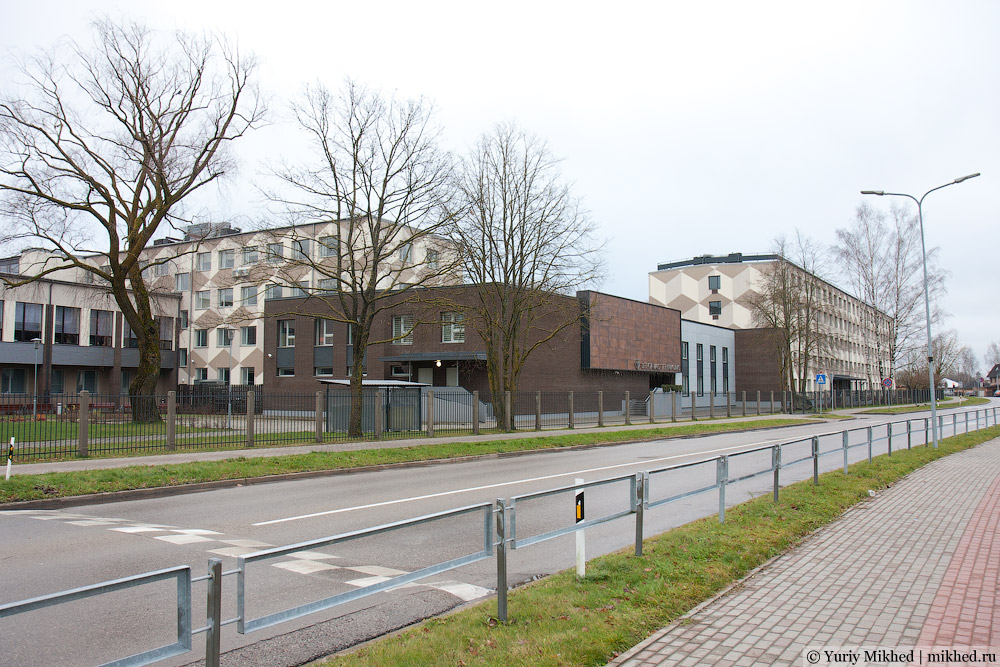
It is no longer possible to enter the territory because it is fenced off. The car entrance was eliminated, turning it into a pedestrian walkway; the car park became a courtyard square.
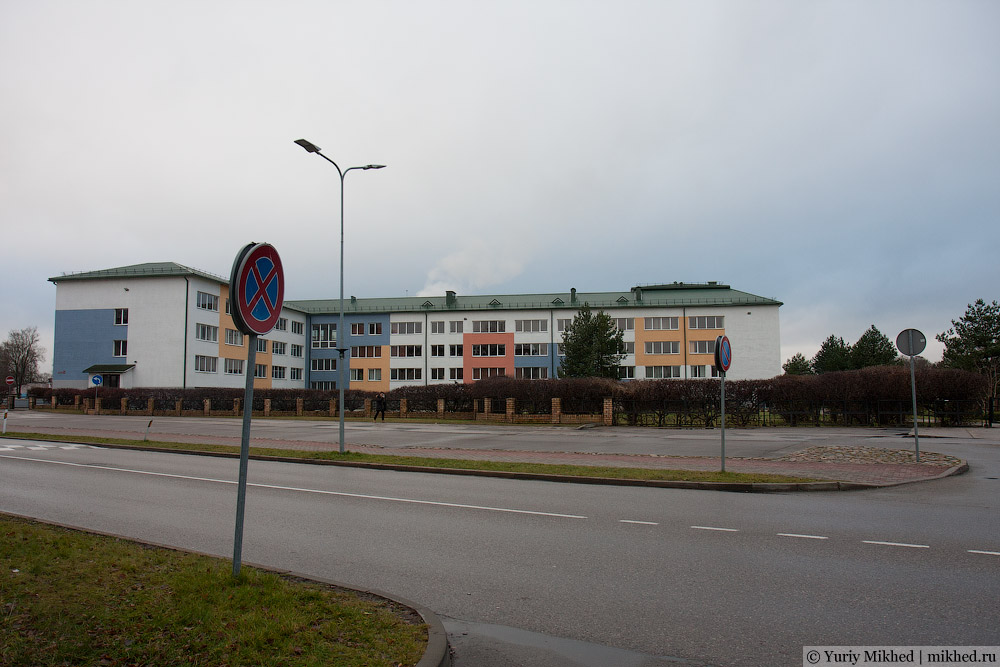
Opposite, across the road, is the current Jelgava 4th Primary School, in those days—the 3rd Russian Secondary School. I didn't study at this school, but nevertheless, it played a decisive role in my life. Since there was no computer class at the lyceum, we came here for computer science. Here I sat at a computer for the first time in my life—it was in 1994, back then old Soviet BK-0010s were still standing there. Then I started going there for a computer club and gradually got hooked on this business. In childhood I dreamed of piloting aeroplanes, then I was sure I would become a biological scientist, and resulted in becoming an IT specialist.
From the school, one can walk quite quickly to the city station, from which we often travelled on electric trains to Riga or Jurmala.
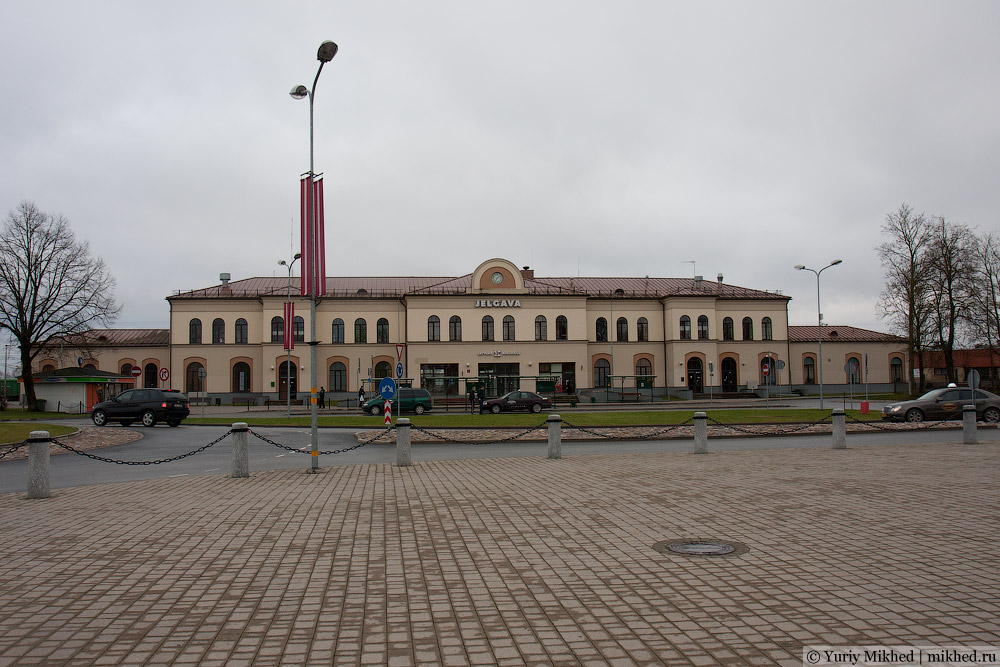
Near the station there is a footbridge over the tracks, behind which was located what was once the city's only Orthodox church (I didn't reach it), where my mother, inspired by the spirituality revived on TV, around 1990 decided to baptise us into the Orthodox faith, and at the same time get baptised herself. That evening, for some reason, I told the priest that my sister was an American because she liked to put her feet on the table. As it turned out subsequently, these words proved prophetic—my sister did indeed become an American.
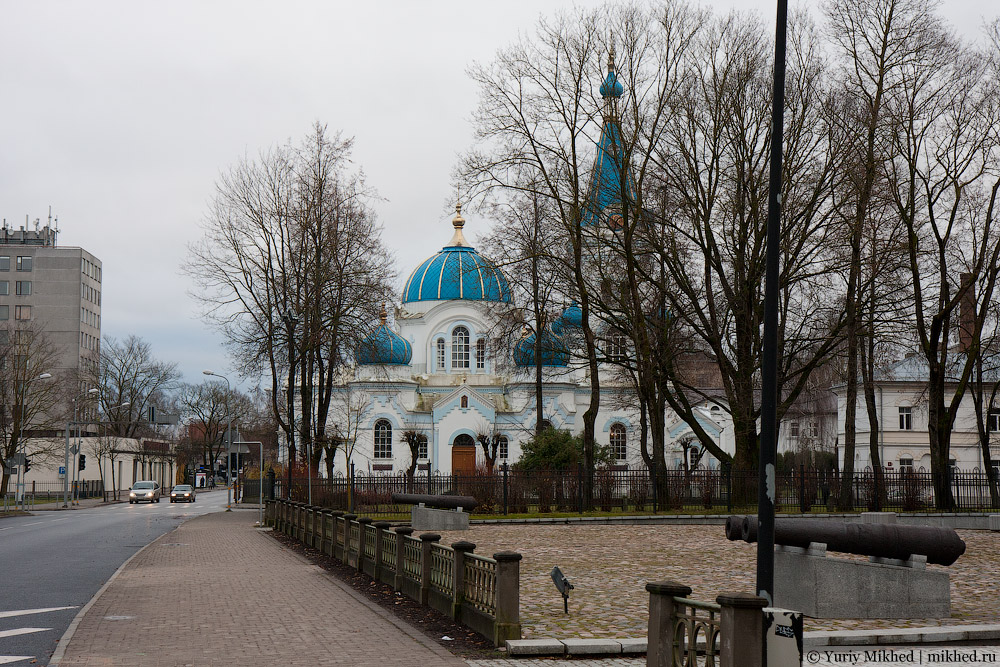
The largest Orthodox church in the city is the Cathedral of Simeon and Anna, past which I walked to the swimming pool. The building stood abandoned for several decades; in the mid-nineties, they began to restore it. In late 1997–early 1998, I lived with an elderly woman who was very religious and constantly went to church. After some time, I followed her example, and pretty soon became like that myself—at 14, a person is, on the one hand, trustful, on the other—categorical, so it is very easy to hook them on any religion or ideology whatsoever. For the next few years I was very religious—prayed, fasted, and went to church, diligently ignoring the contradictions between religion and common sense that rational thinking presented to me. But then it won anyway, I began to drift away from religion and in the end became a convinced atheist and materialist (see Marriage and Divorce with Religion, Part 1 and Part 2). However, I don't regret my teenage religiosity; it's better to get over such things in youth than in old age.
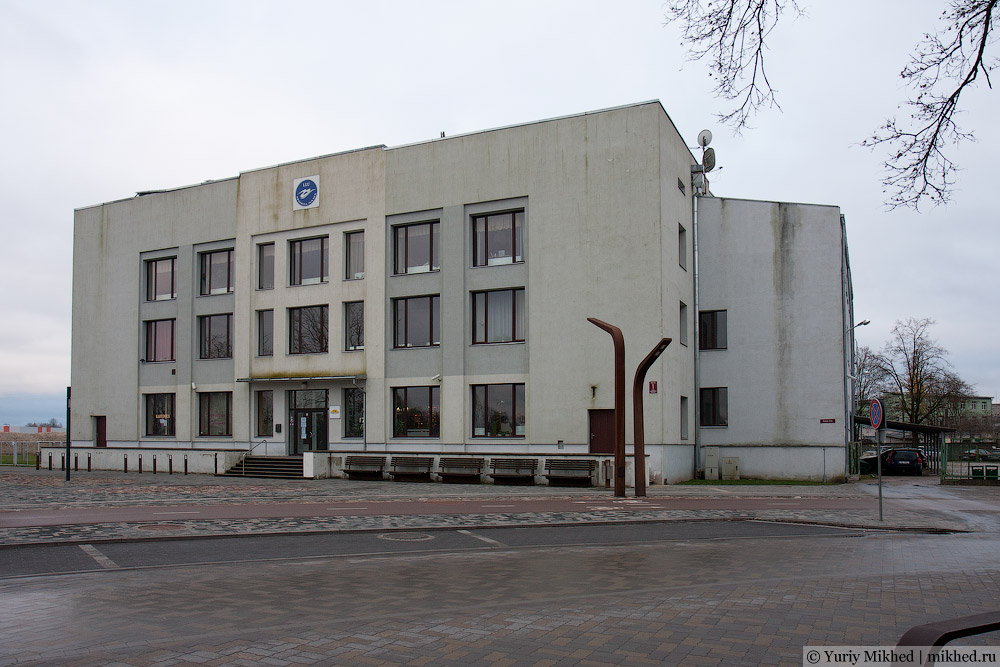
A couple of minutes' walk from the cathedral is the sports house of the Latvian University of Life Sciences and Technologies. Here I went to swimming school from the 2nd to the 5th grade, although, as mentioned above, I didn't achieve much success in the sport. The building was built according to the same design as the "Spartak" sports palace in Belgorod, where I also went (click on the photo below to compare them), and this seemed strange back then (I didn't yet know how much standard design architecture there was in the USSR).
The city's main post office used to be located in this building. A story comes to mind about how I was buying envelopes there once—"man lūdzu divus kovērtus!"—I said to the girl at the window. "Šeit ir jūsu divas aploksnes!", the girl corrected my Russian-Latvian surzhyk, but did it somehow kindly and with a smile. But I still felt ashamed, even though there was seemingly nothing to be ashamed of.
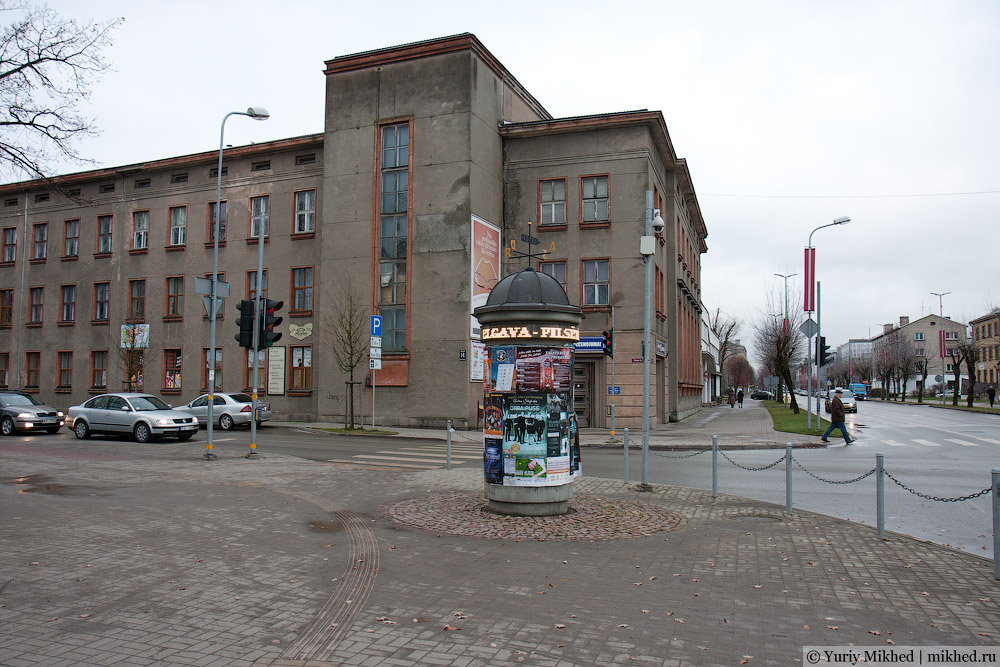
What else to show? Here is the city market. I used to visit here every weekend—needed to help mum carry the purchases.
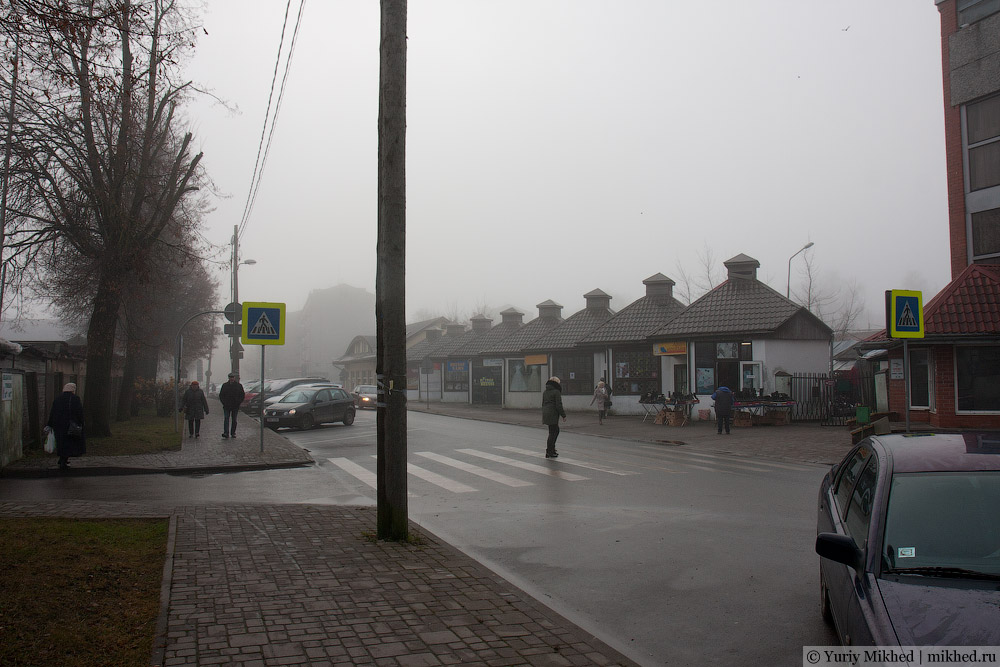
The "Rosme" department store nearby hasn't changed a bit, nor has the market itself. A kind of island of the nineties. As already written, some anti-social type attacked me here during this visit.
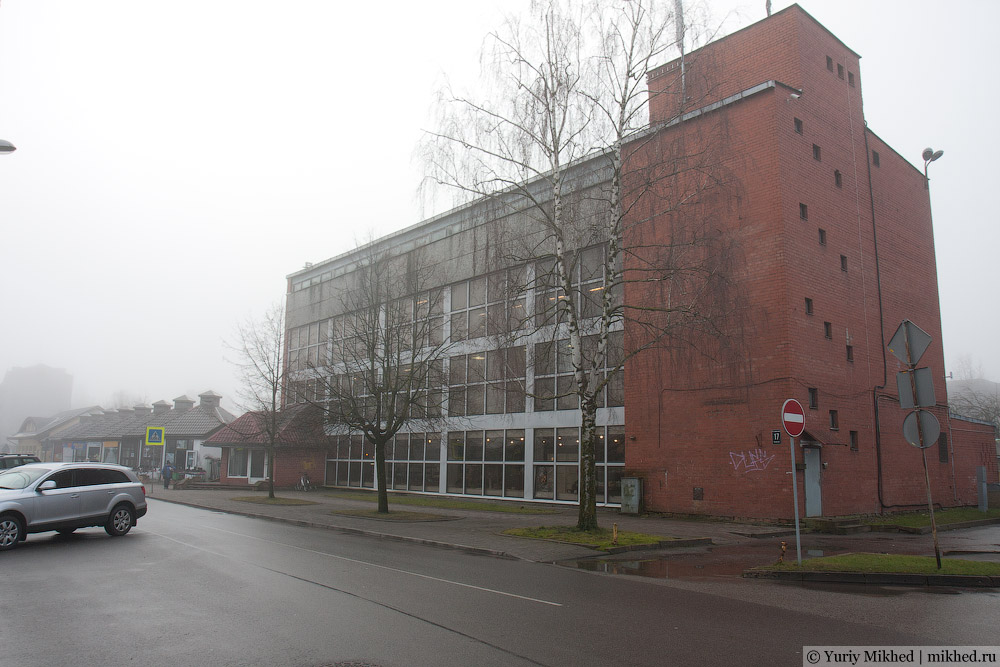
Near the market is the "Tonuss" shopping mall, built in the 1980s as a sports and health centre. My dad and I came here to the sauna, and here passed my first year of swimming lessons with the now late coach Vitya Manishev. In the nineties, the building was converted for trade, and stalls were placed in the pool recess. In one of these stalls in the spring of 1997, I bought a cartridge with the game "Super Mario Bros. 3".
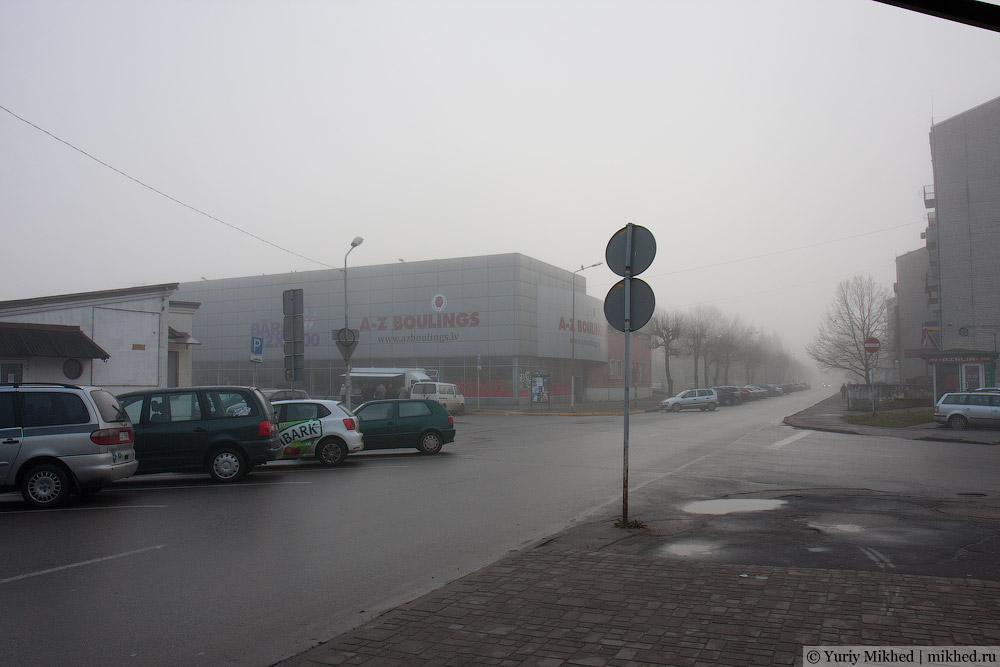
The story with this game began in 1994, when my mother bought me a UFO game console (a Chinese clone of Nintendo). I used to borrow the cartridge from a boy from the building opposite, and I just incredibly liked this game. But then they left for Russia, and the opportunity to play Mario 3 disappeared. Where did I not look for it after that! My mother, heading to the market in Vilnius, was always given a task to find this game, and she always failed to do so. I looked for the cartridge in Moscow, in Belgorod, but it was nowhere to be found. And then in the spring of 1997, I came across it in a "Tonuss" stall selling video games. The cartridge cost a whole 8 lats On that day — 84 385 RUR 26,83 ₴ 5,30 mln. Br 14,68 $
, but I parted with this huge sum without regret—after several years of searching, I was ready to give all my savings at that time for it.
Oh well, I have already tired you out with these stories from childhood, it's time to know when to stop. The most important thing—what did I feel when I walked through these places? Well, to be honest, nothing special. It all seems familiar, yet it's no longer the same, somehow foreign. After all, you can return to a place, but you will never be able to return to a time.