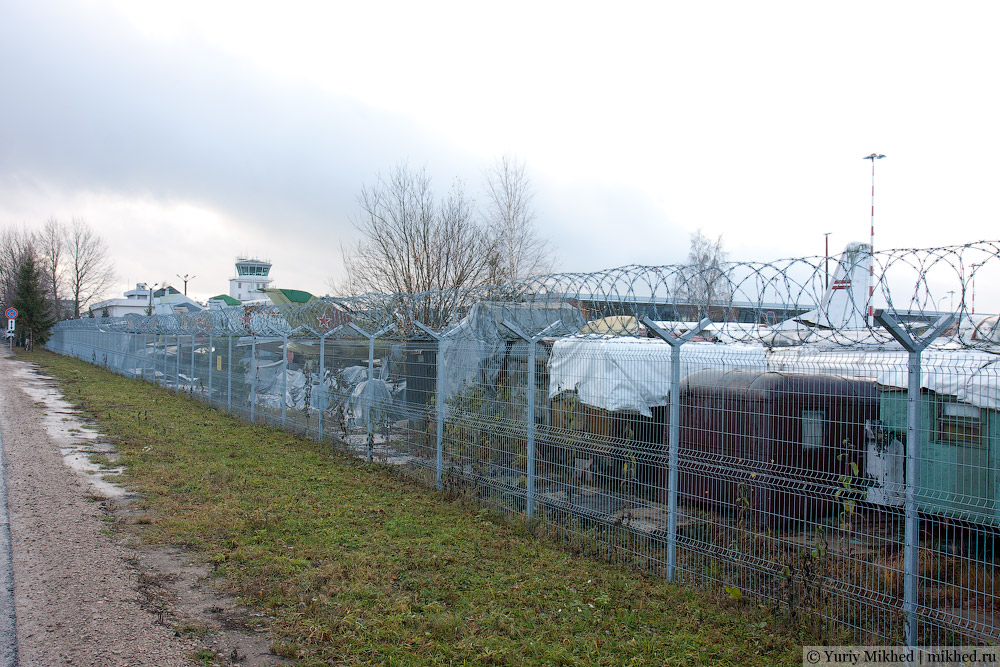
Riga Aviation Museum
Mārupe Municipality, Latvia, November 2017
Google Maps, Yandex.Maps
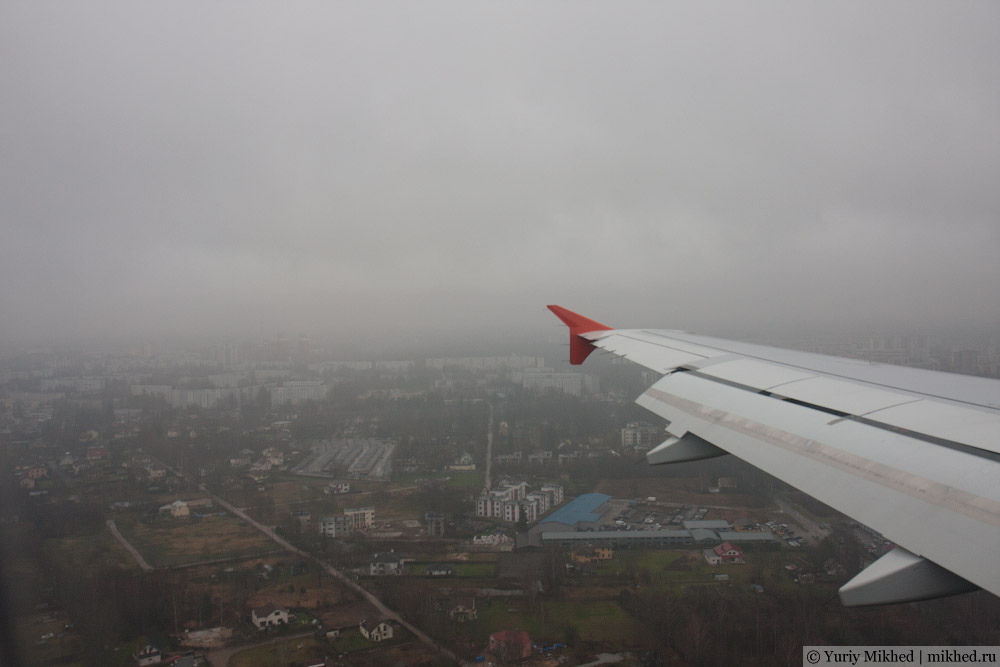
Falling just a little short of the 20th anniversary of my departure from Latvia, I decided to check out how the country of my childhood and youth was doing. As it turned out, I was separated from it not by years, but by just over an hour of flight. Aircraft usually approach Rīga Skulte Airport from the sea, and when approaching from the left side, you can get an excellent view of Rīga. But it would be naive to expect good views from a Baltic November — a thick fog covered everything. A320-214 VQ-BKT is preparing to land.
At passport control in Rīga, I was thoroughly questioned about why I had come and where I intended to stay (for the first time in the entire history of my trips to the Schengen area). Then, customs officers carefully searched my belongings for undeclared currency (also a first). They say Russian corrupt officials have taken a liking to Latvian banks for storing their illegal income, and now they have started fighting this. I don't know how much I look like a typical United Russia member, but Latvian customs was in for a disappointment — I didn't have any bundles of corrupt Euros or Dollars.
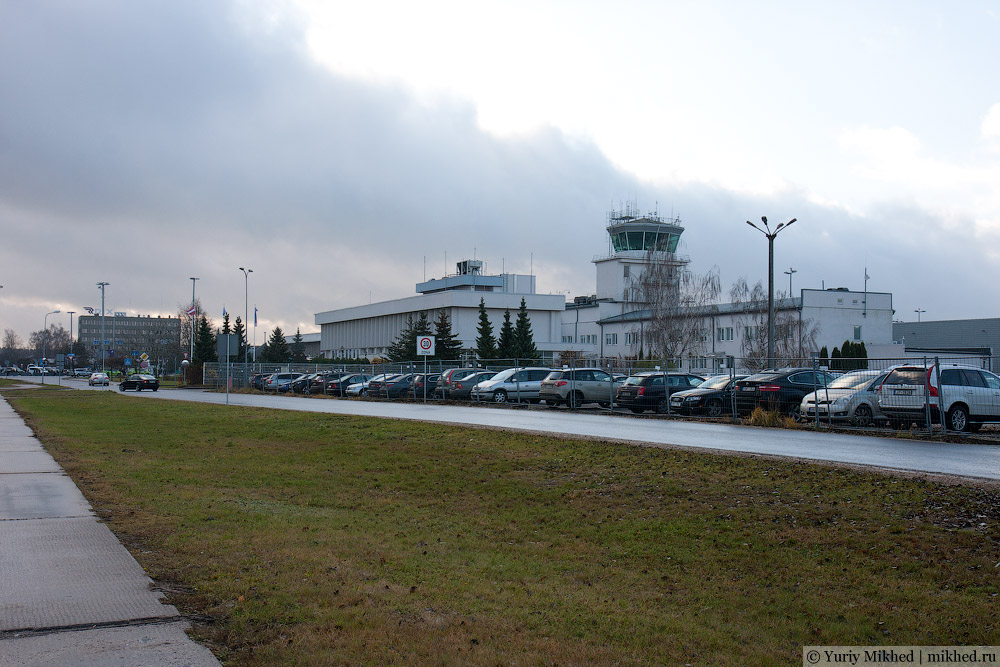
When I finally left the airport, the first thing I decided to do was to visit the nearby aviation museum. The museum is within walking distance of the terminal building and the rental car parking lot, and features the largest collection of Soviet aviation technology outside of Russia. The museum relies mostly on the enthusiasm of its creator and long-time head, Viktor Petrovich Talpa. Entry for residents of Latvia costs 5 Euro On that day — 354 ₽
354 ₽ 156 ₴
156 ₴ 12 Br
12 Br 5,89 $
, for foreigners — 7 Euro On that day — 495 ₽ 218 ₴ 17 Br 8,25 $
(a bit much, but this amount should be seen as a donation for the maintenance of the museum, which receives no other funding).
Especially since even this money is frankly not enough. As far as possible, the exhibits are painted and repaired, but open-air storage in the damp Baltic climate does not help preservation.
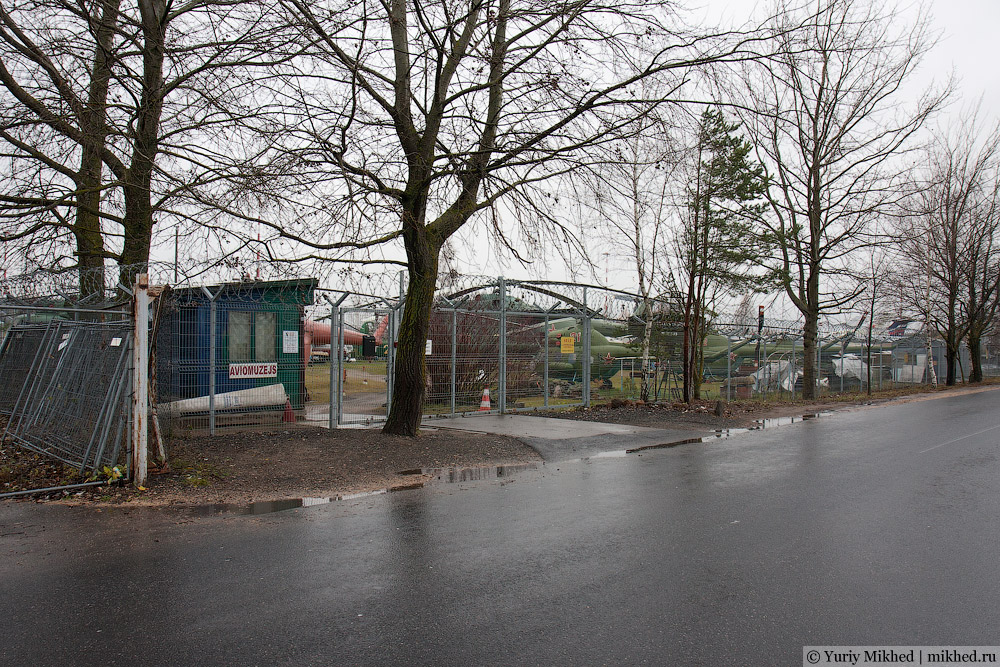
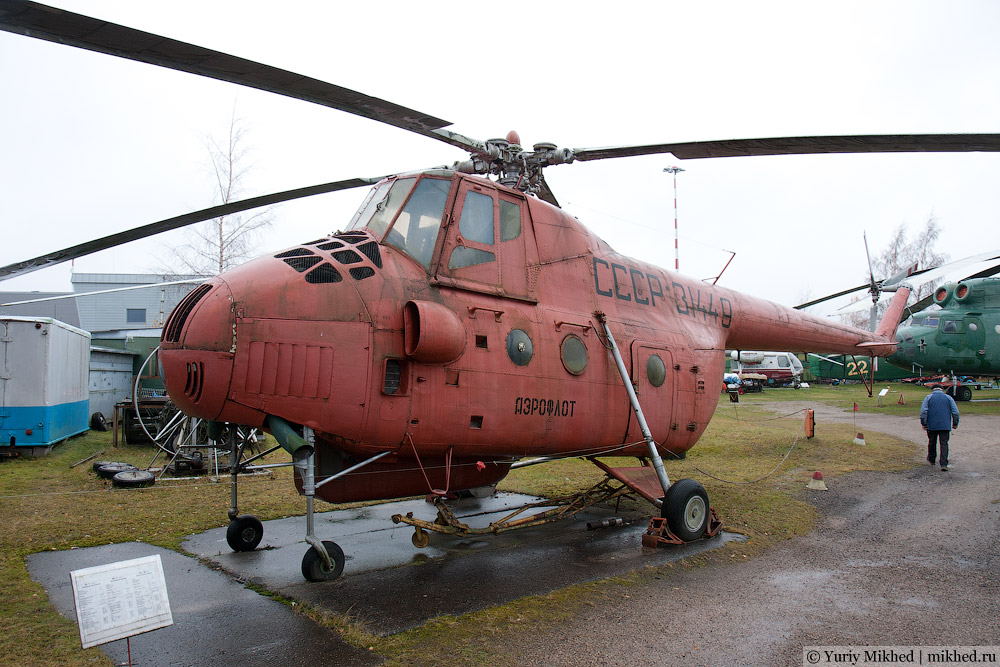
At the entrance, you are greeted by a Mi-4 multipurpose helicopter in polar livery. When my dad entered helicopter military school, they were trained to fly exactly these machines. A distinctive feature of the Mi-4 is the engine layout — it is located in the front part of the aircraft (like the American Sikorsky S-55/H-19 helicopter, which the Mi-4 closely resembled), while the cockpit is at the top. The helicopter is equipped with an ASh-82V piston engine (a modification of the engine used on the Il-12 and Il-14).
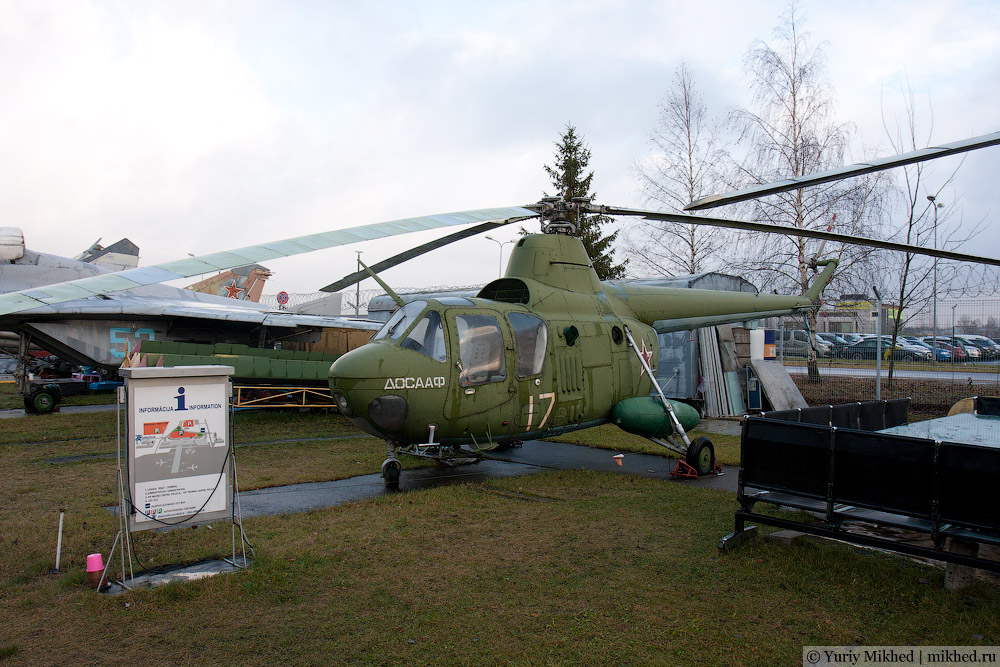
Not far away stands an even older helicopter — the Mi-1. This type, which first took to the air back in 1948, became the very first Soviet series-produced helicopter. The Mi-1 was also equipped with a piston engine (M-13), so its rattling sound was nothing like how modern helicopters with turbines sound.
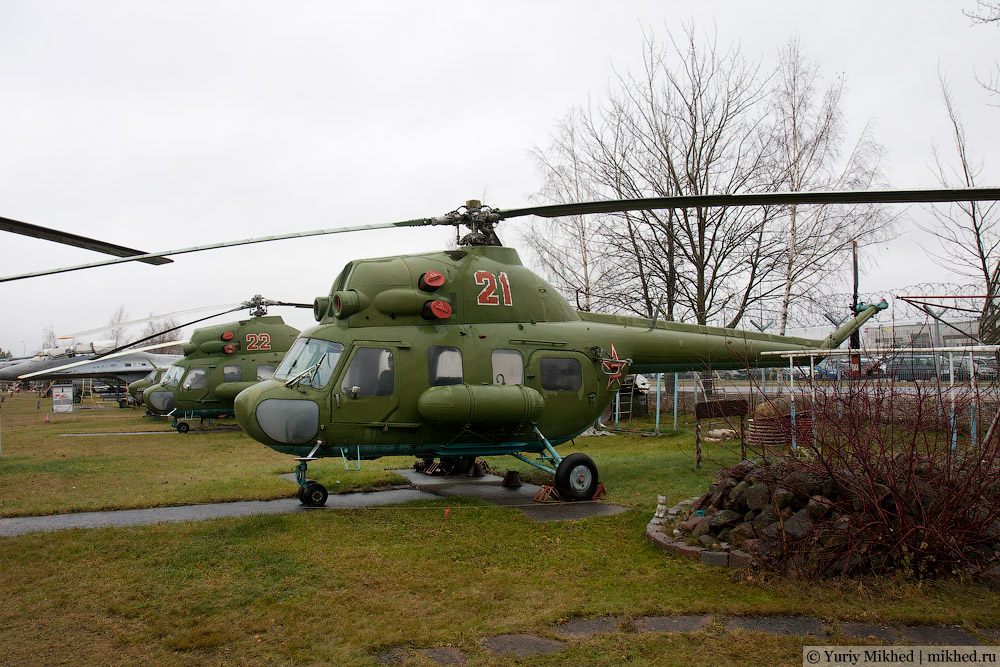
The main Soviet light helicopter, the Mi-2 (1961), was equipped with two GTD-350 gas turbine engines. These machines were produced until 2006 and are still flying today.
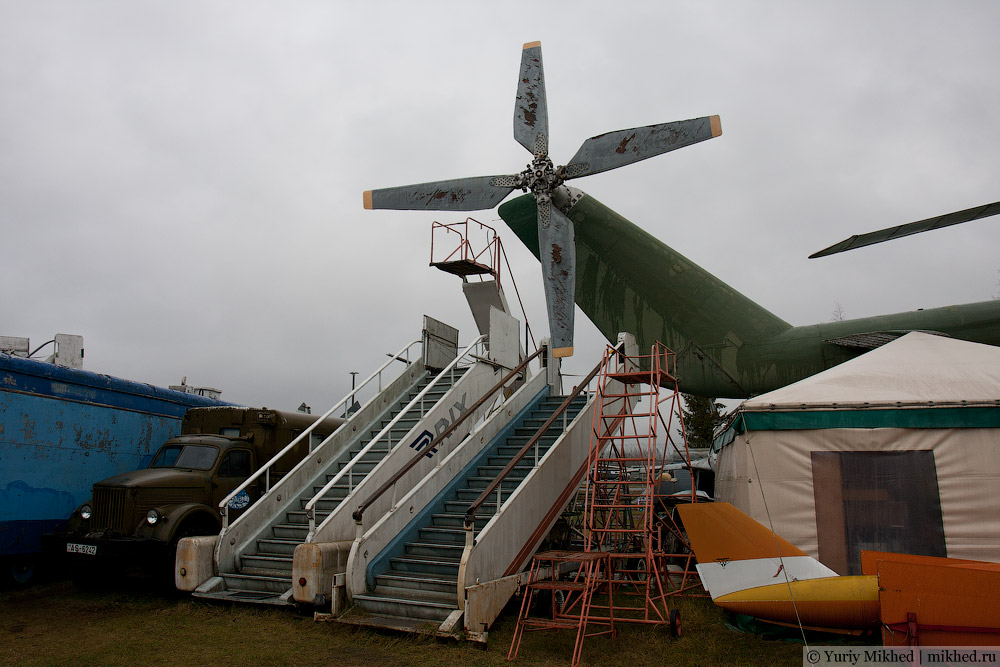
Right in the center stands a heavy Mi-6 (1957), once one of the largest helicopters in the world. The operation of these helicopters ceased in 2004; now, even larger Mi-26s are used instead.
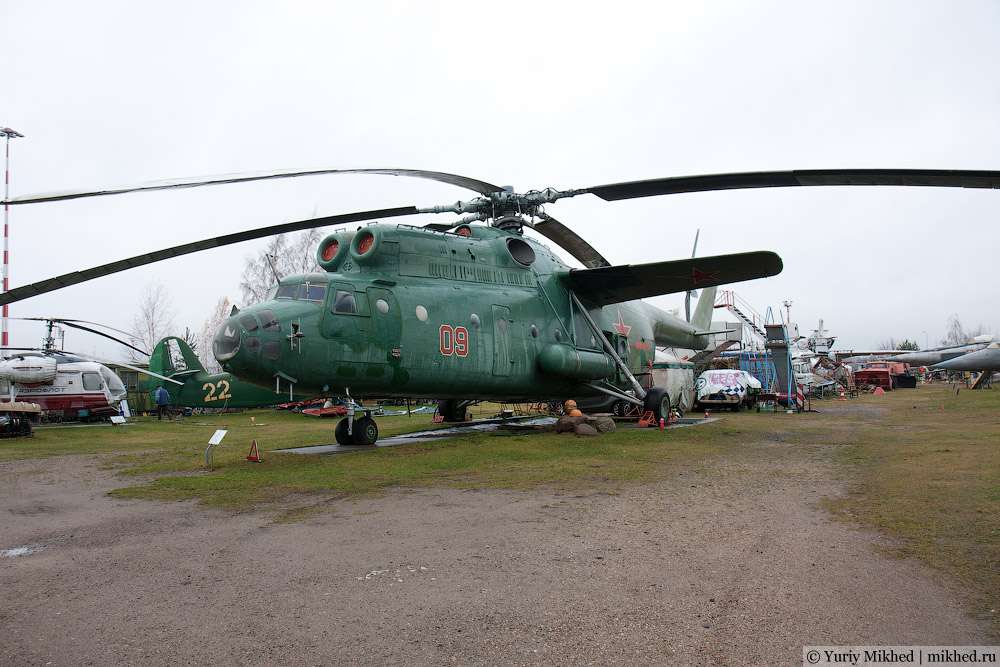
It's hard to judge its size from the photo, but you can see how large its tail rotor is compared to the passenger stairs.
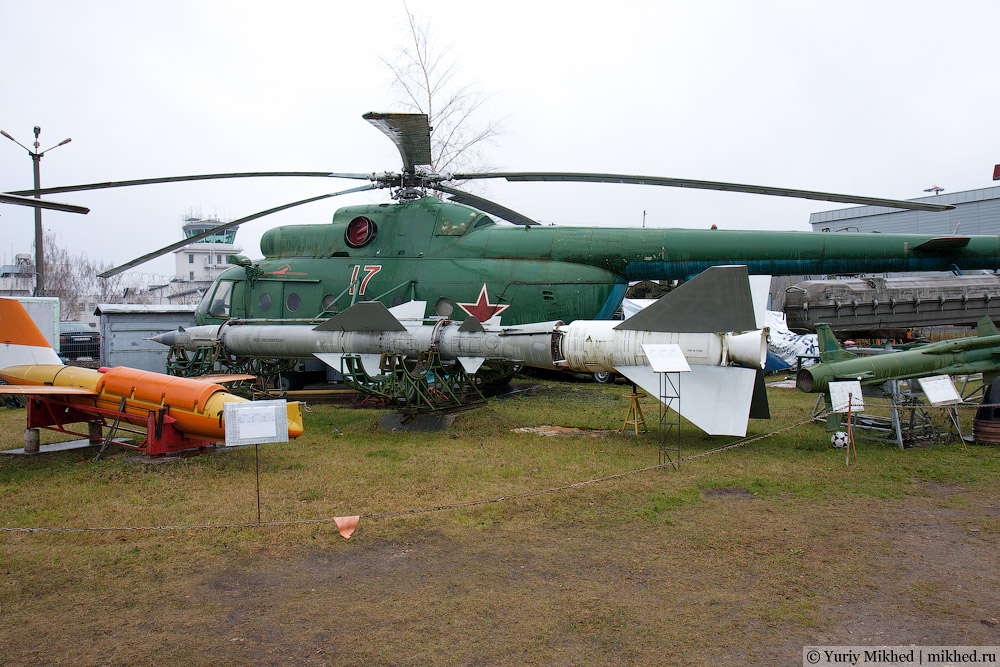
The Mi-8T has been pushed somewhere into a corner. During his several decades of service in the Air Force, my dad flew mostly on helicopters of this type. In addition to this helicopter, another cockpit from a Mi-8 has been preserved in the museum.
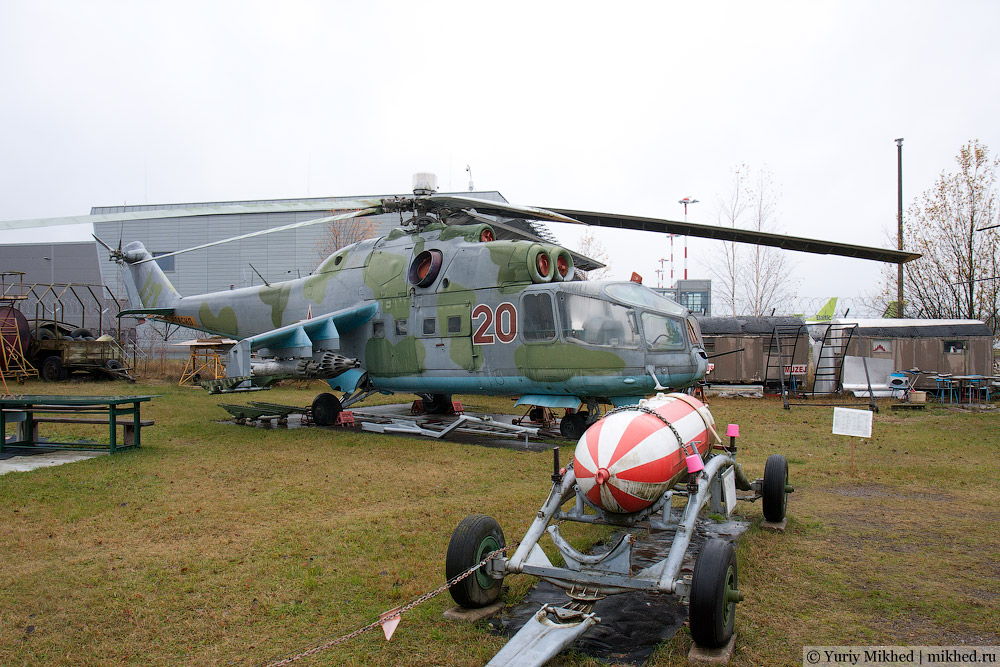
A rare exhibit, the Mi-24A. This is the initial version of the main Soviet attack helicopter. A distinctive feature is its large glass cockpit. Later, a redesigned and much more famous version, the Mi-24B, was released, where the cockpits are arranged in tandem (one behind the other).
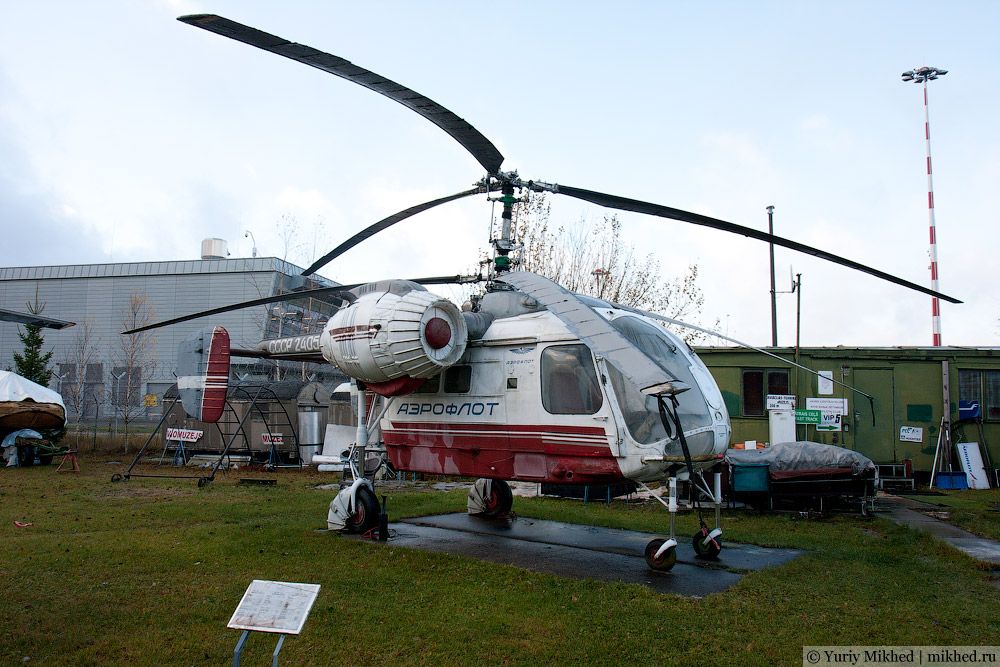
Ka-26. Unlike the products of the Mil Design Bureau, which mostly used a single-rotor scheme with a tail rotor (a large rotor on top, a small one at the back), the signature of the Kamov Design Bureau is a coaxial scheme (two large rotors rotating in opposite directions).
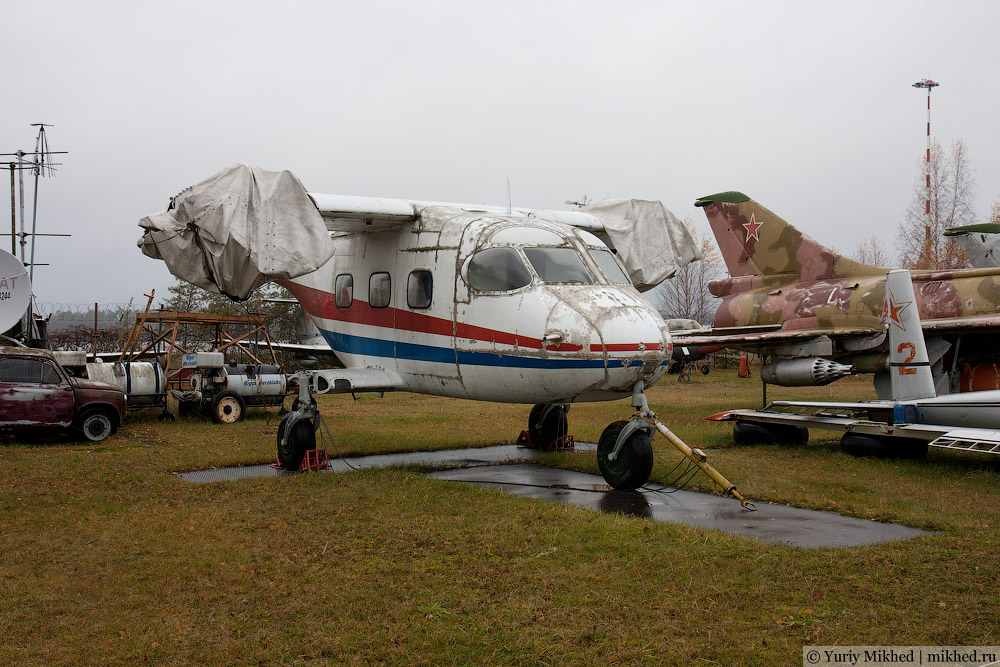
The An-14A "Pchelka" (Little Bee) light aircraft stands with its wings removed. This type was developed to replace the An-2, but failed to do so. Later, a larger An-28 was created based on it, but it wasn't particularly popular either, possibly because within the Comecon framework, the USSR had an obligation to support the Czechoslovak aviation industry, which produced its closest competitor, the L-410.
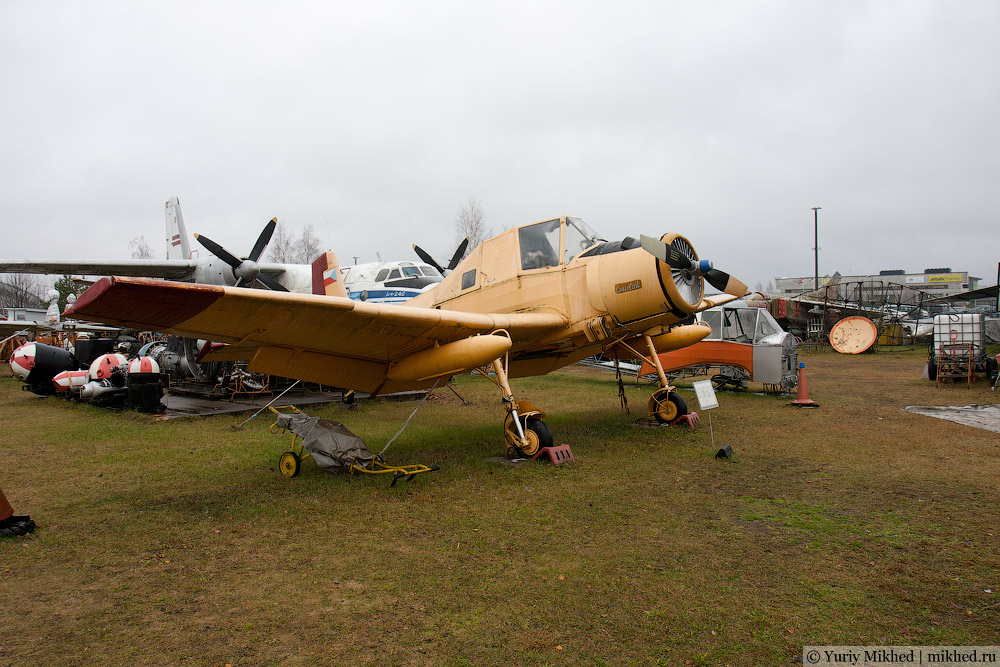
The Czech Zlín Z-37A Čmelák (Bumblebee). I always confuse it with the Polish PZL M-18.
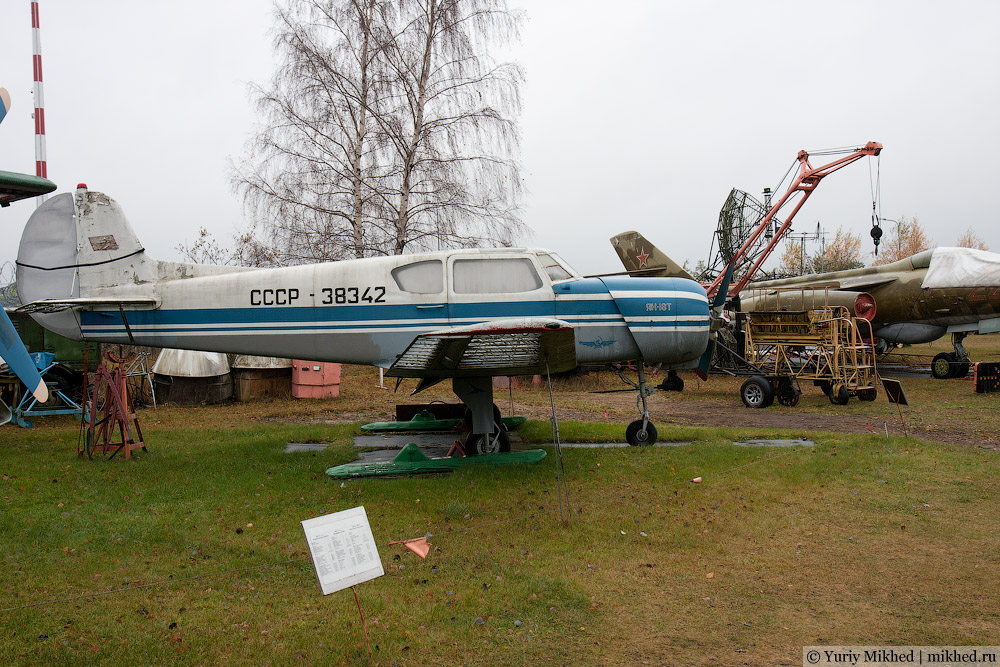
The Yak-18T primary trainer or light passenger aircraft seats 4 people, appeared in 1969, and is still in production.
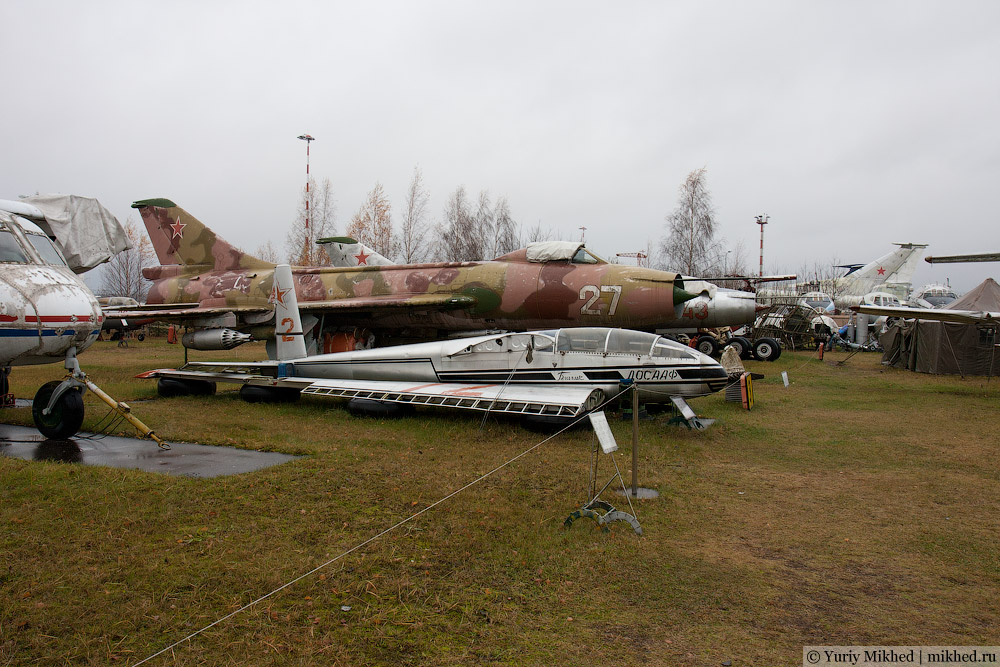
The main aircraft of Soviet glider pilots, the Czech glider LET L-13 Blaník (specifically "planor" [glider], since "plane'r" refers to the structural supporting frame of any airplane or helicopter [airframe], while the specific type of unpowered aircraft is a glider). Behind the glider is a Su-7BKL fighter-bomber (more on it just below).
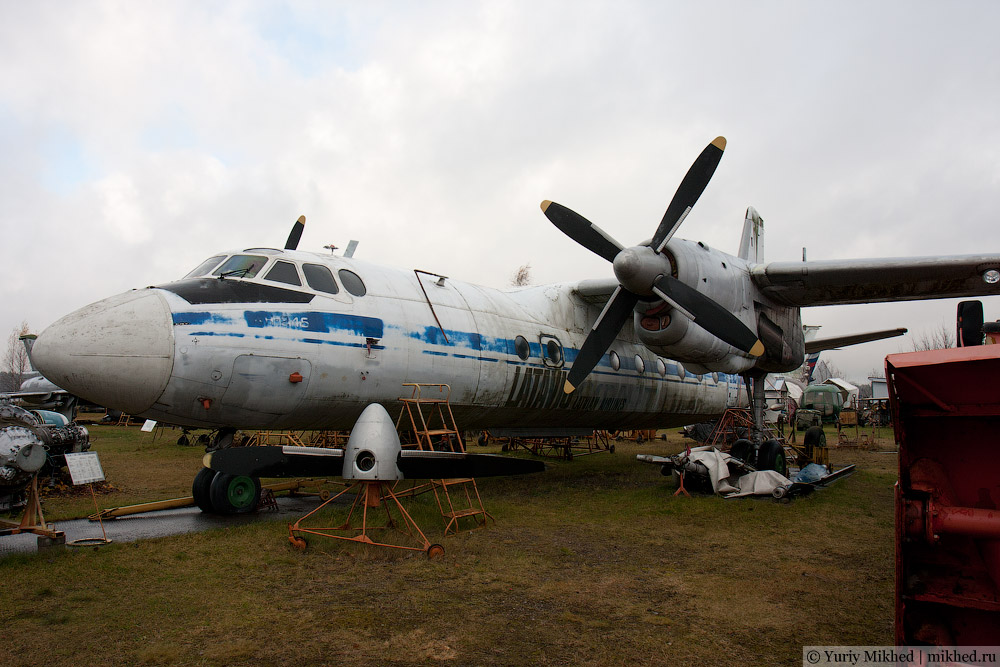
Right in the center stands an An-24B. The An-24 was one of the 2 main Soviet regional aircraft (the second was the Yak-40). As a child, I loved flying on them the most (after all, you could watch the propellers and how the landing gear retracted), and I even dreamed of becoming a pilot who would fly exactly this type of aircraft. The An-24 is very unpretentious about airfield quality and continues to fly today (mostly in the north and in Siberia). It had a transport version, the An-26, and its modification, the An-32 (distinguished from the An-26 by engines raised higher). In front of the plane lies a removed propeller for another An-24 (the 2 remaining blades on it are feathered).
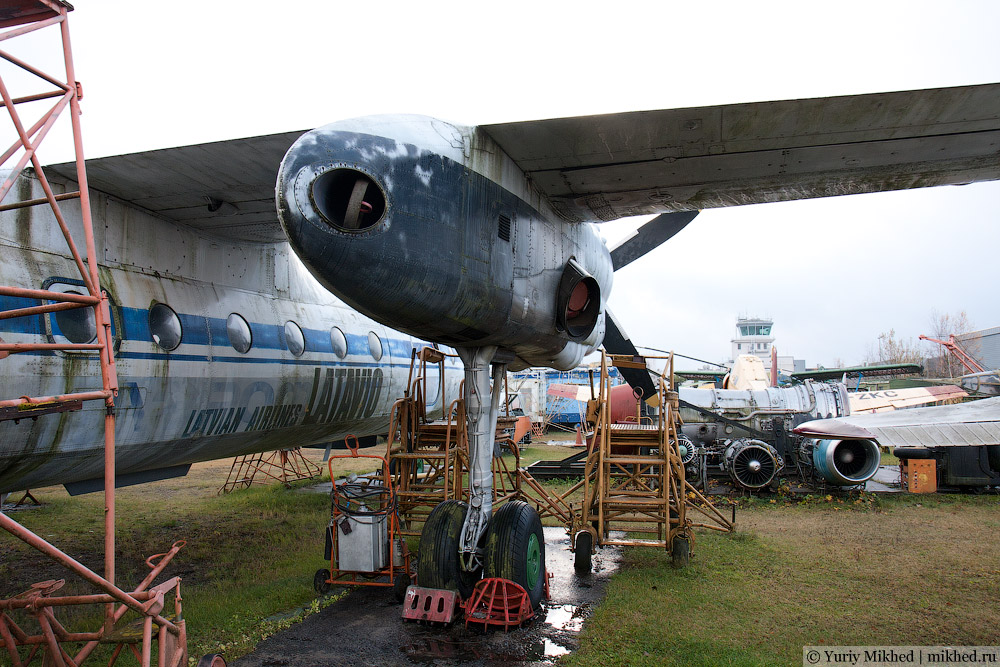
Behind the right engine nacelle, there is another nozzle. This is the exhaust of the APU turbine. Usually, it is placed in the tail section of the aircraft, but on the An-24, it is located behind the second engine. There is no second pipe in the left nacelle.
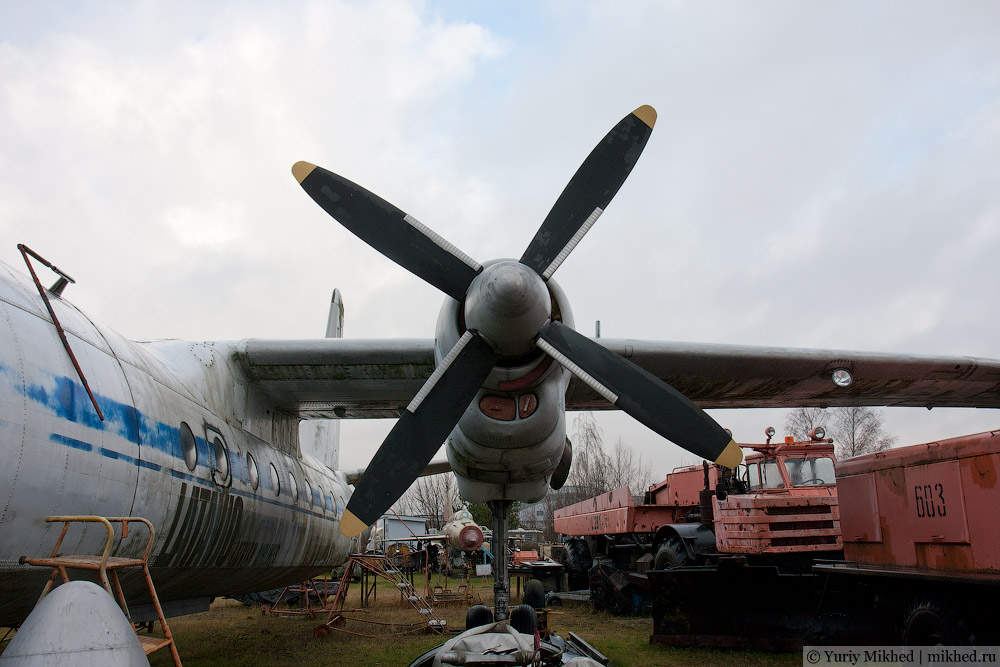
Propeller of the first engine.
The aircraft carries Latavio markings. The company Latavio (short for Latvijas aviolīnijas) was formed on the basis of the Latvian Civil Aviation Administration squadrons after the collapse of the Soviet Aeroflot. The company was in no way connected to the modern Latvian national carrier AirBaltic, which was formed separately in 1995 by the Latvian government and several European and American companies. In 1996, Latavio went bankrupt and ceased to exist.
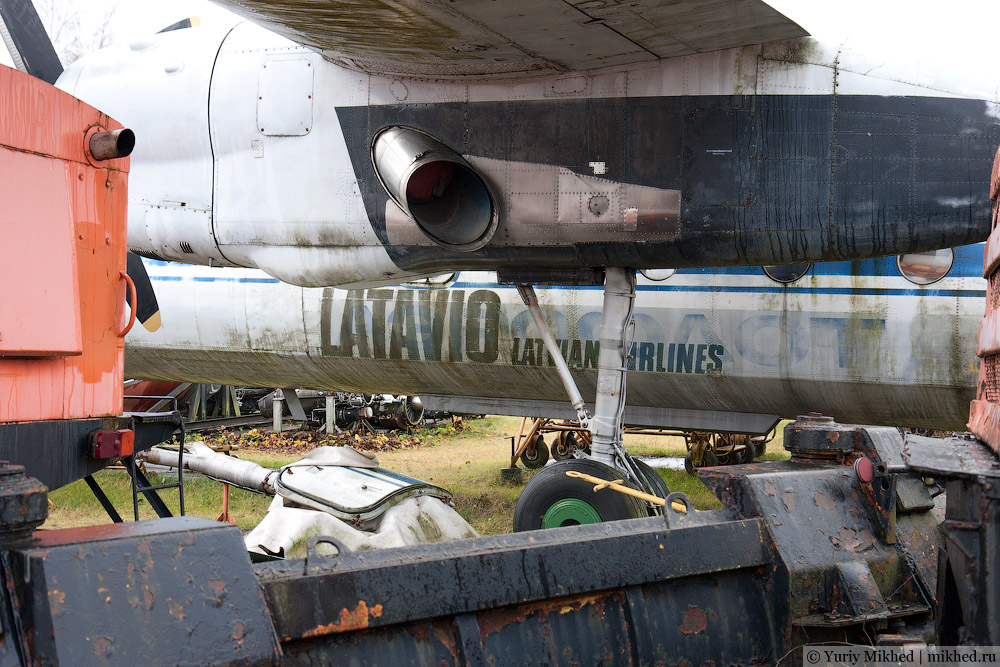
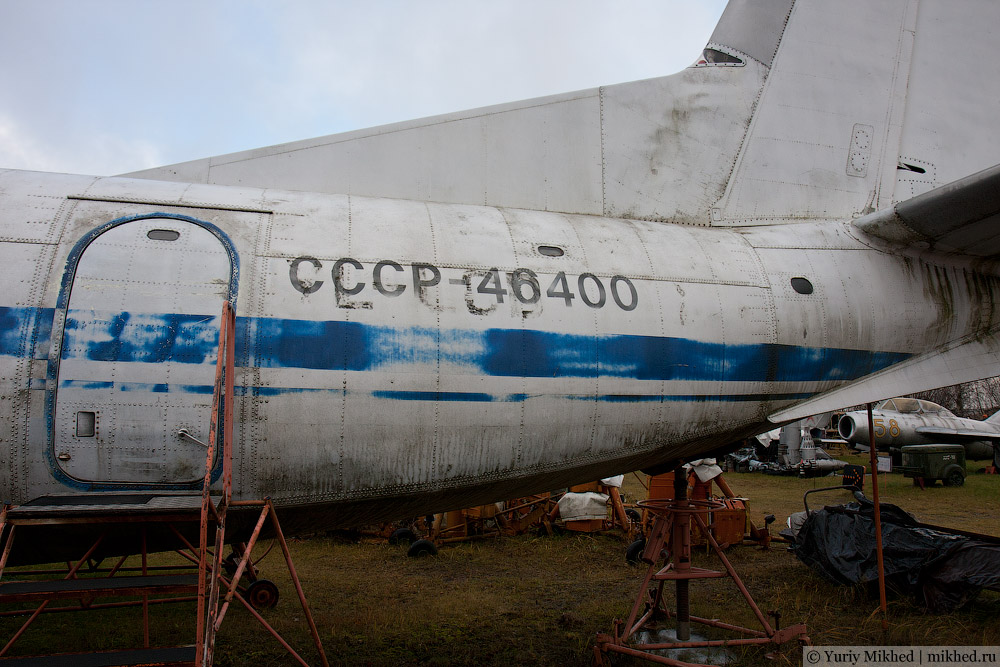
The paint is peeling, the Latvian registration YL-LCD is almost completely gone, but the Soviet CCCP-46400 hidden beneath it is very well visible. The plane is supported by a jack from behind — without fuel in the tanks, the An-24 tips onto its tail.
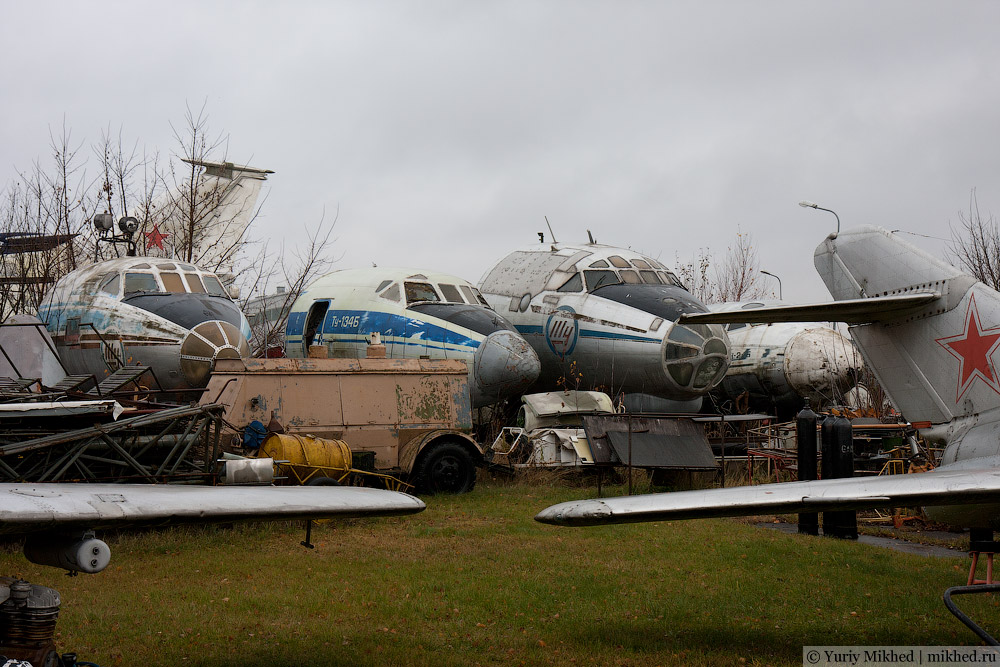
Severed cockpits from a Tu-124 (or early versions of the Tu-134), a Tu-134B, a Tu-104A, and an An-24B.
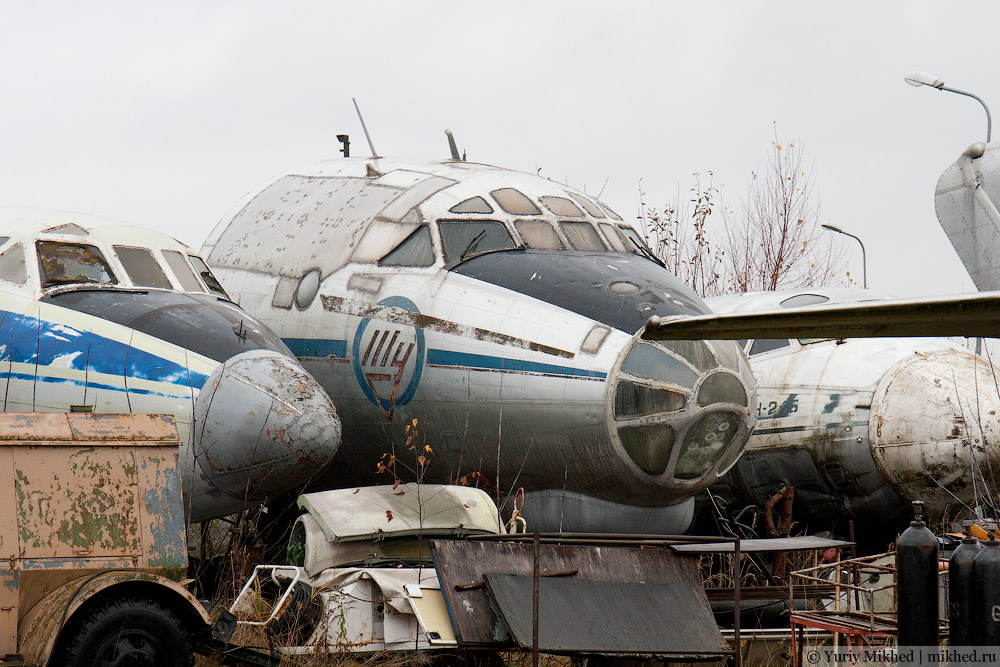
The Tu-104A is not just any plane, but an old acquaintance from my distant childhood. It was this specific aircraft with registration CCCP-42328 that was once installed at the DOSAAF airfield in Nākotne. The aircraft, which had luxury cabin layout for carrying high-ranking officials, was in very good condition until they started letting sportsmen inside, who broke everything. Sometime around 1989, one of the skydivers decided to smoke inside, and this led to a fire. They managed to extinguish the plane, but the first cabin completely burned out. In the early nineties, the "tushka" was scrapped for metal; only this cockpit survived, which Viktor Talpa brought here.
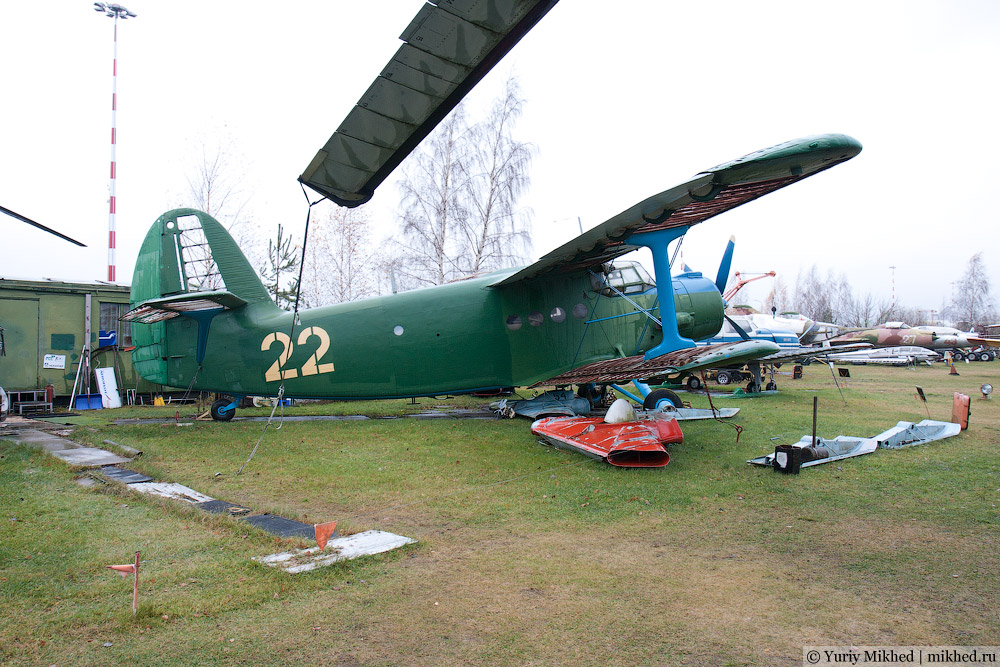
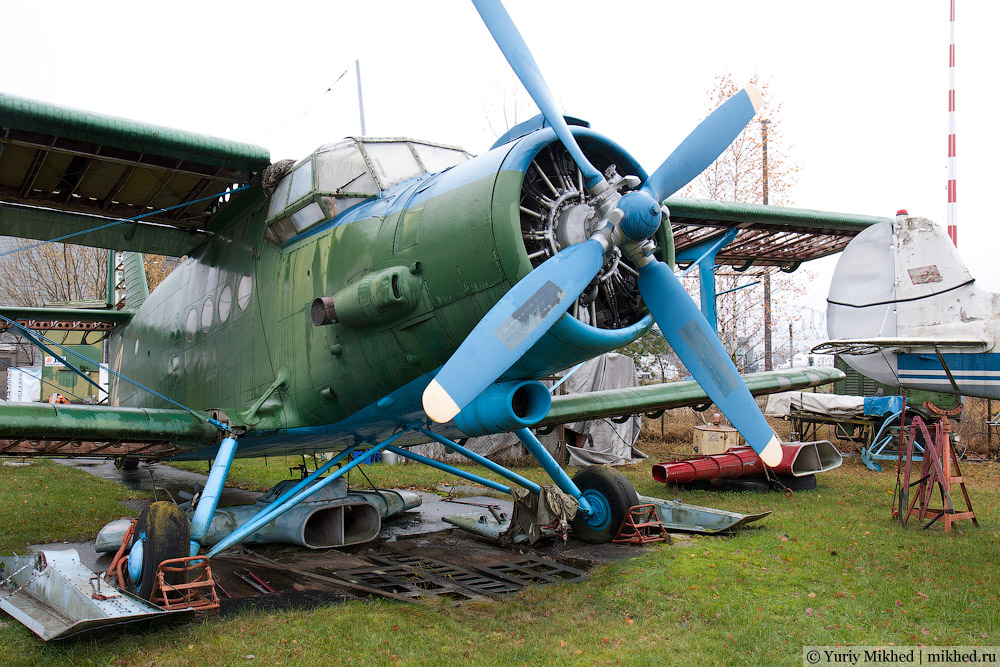
There is another old acquaintance in the museum. Viktor Talpa also brought this An-2T from Nākotne, so it is very likely that this is one of those three aircraft of ours on which I flew a countless number of hours as a joyriding passenger. The tail number 22 is confusing — the An-2s in Nākotne had numbers 20, 01, and 05, but it can be assumed that the plane was repainted and the number was applied arbitrarily. If this is indeed the Nākotne An-2, then it is definitely 01 — "number twenty" was destroyed in 1990 by a pilot from a Rīga aeroclub who crashed it during landing, and "zero-five" had a couple of special design features missing on this airframe (here I rely not on my memory, but on archival photos). Having the serial number of this An-2 could finally dispel all doubts, but unfortunately, no information on it could be found.
Front view. Below lie skis for the An-2, as well as agricultural rigs for spraying fertilizers.
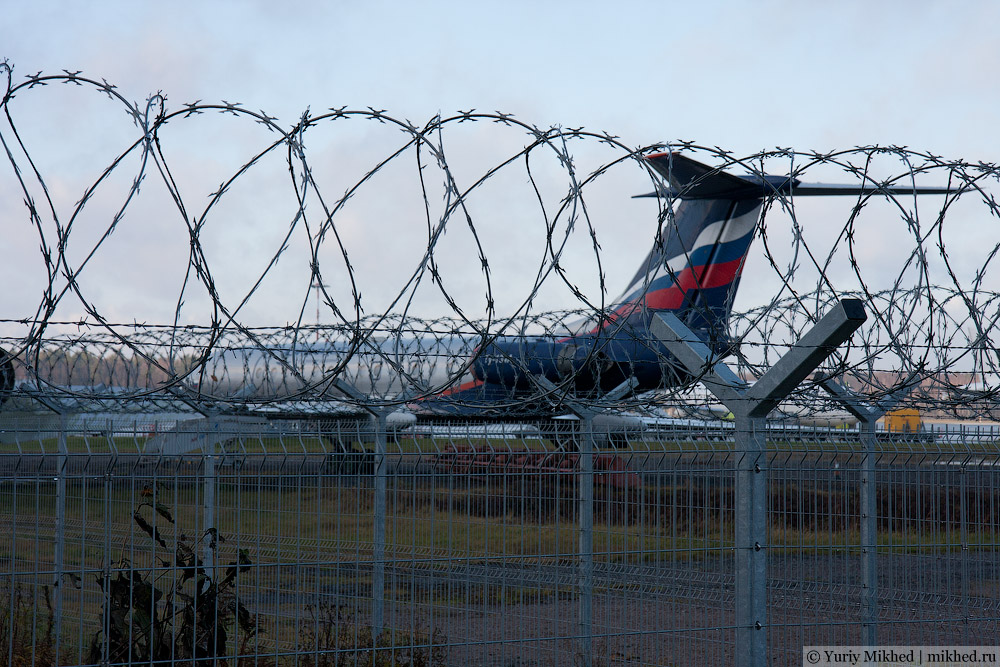
A tail fin in the modern livery of Aeroflot peeks out from behind. But this is not the plane that brought me from Moscow.
This is a decommissioned Tu-134A-3 with registration number RA-65717. Unfortunately, you can neither approach it nor even take a proper photo. In 2007, Aeroflot retired all aircraft of the Tu-134 type from its fleet, after which they were put up for sale. The Rīga Museum bought this plane in 2009 for a symbolic price, also paying the considerable costs of ferrying the aircraft from SVO to Rīga. Now the Tu-134 is a museum exhibit that you cannot view up close.
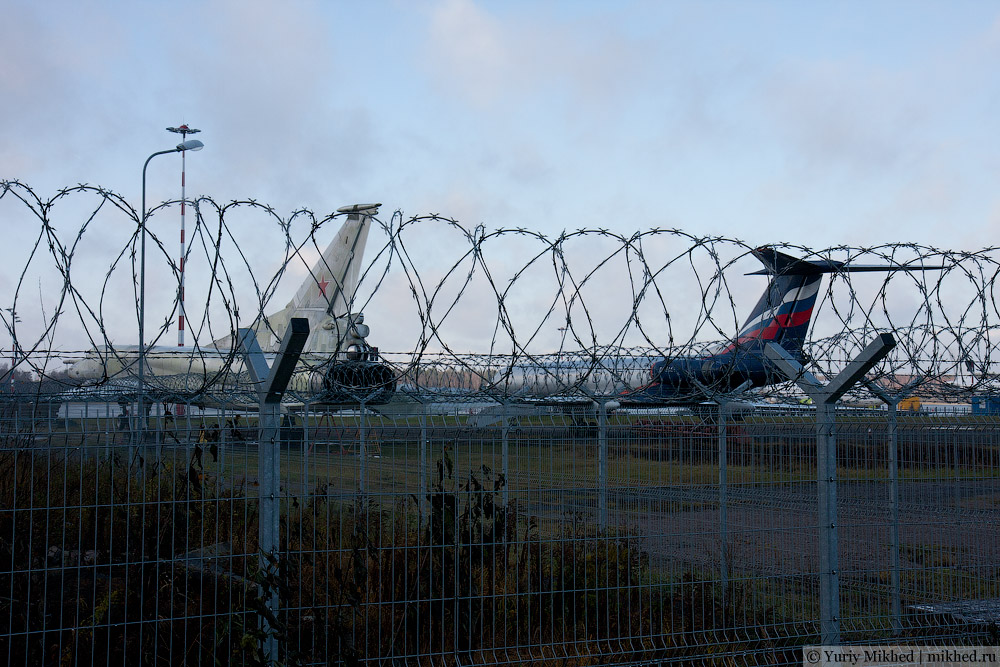
Next to the Tu-134 stands its military brother, the Tu-22M bomber. It also belongs to the museum and also cannot be approached.
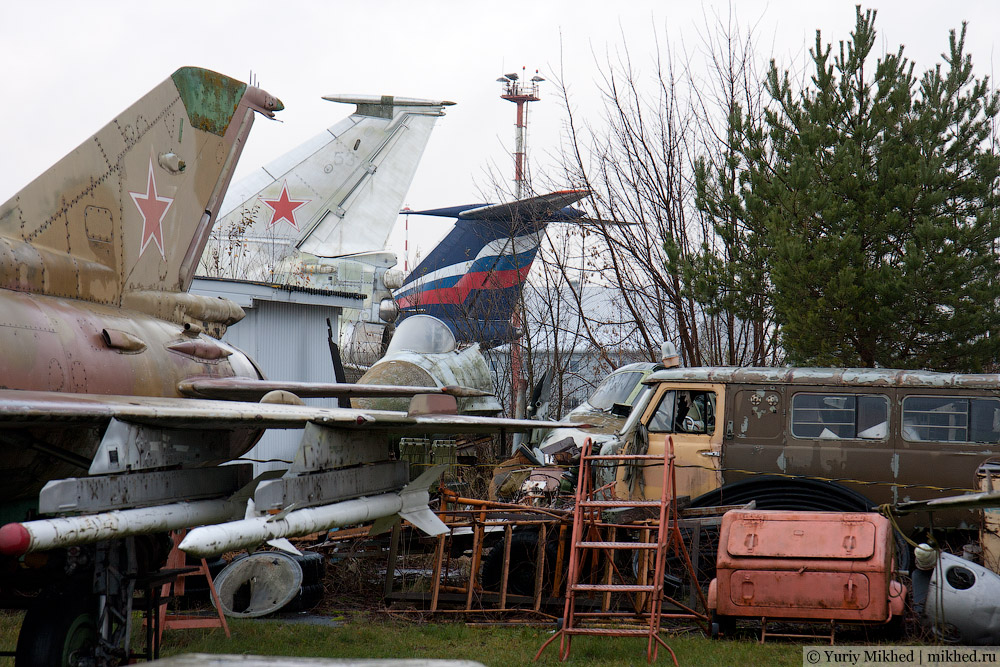
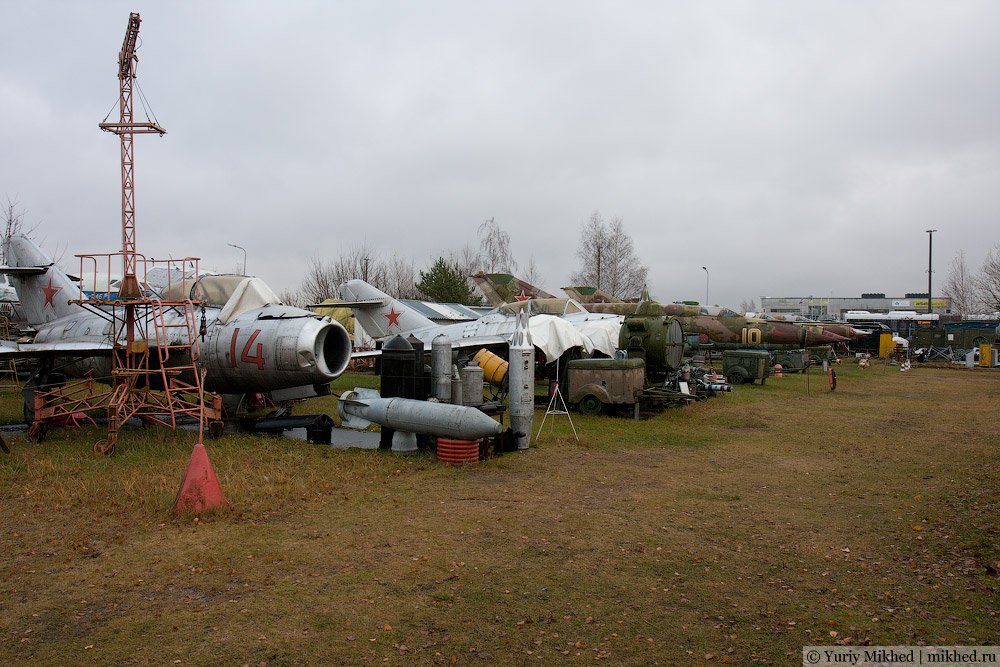
The museum has several examples of military hardware, but I must confess to one sin — I have never had an increased interest in military aviation. While civil aviation has evoked admiration and genuine interest since childhood, my attitude towards military aviation has always been on the level of "well cool, I guess". Therefore, I still get confused by types of military aircraft.
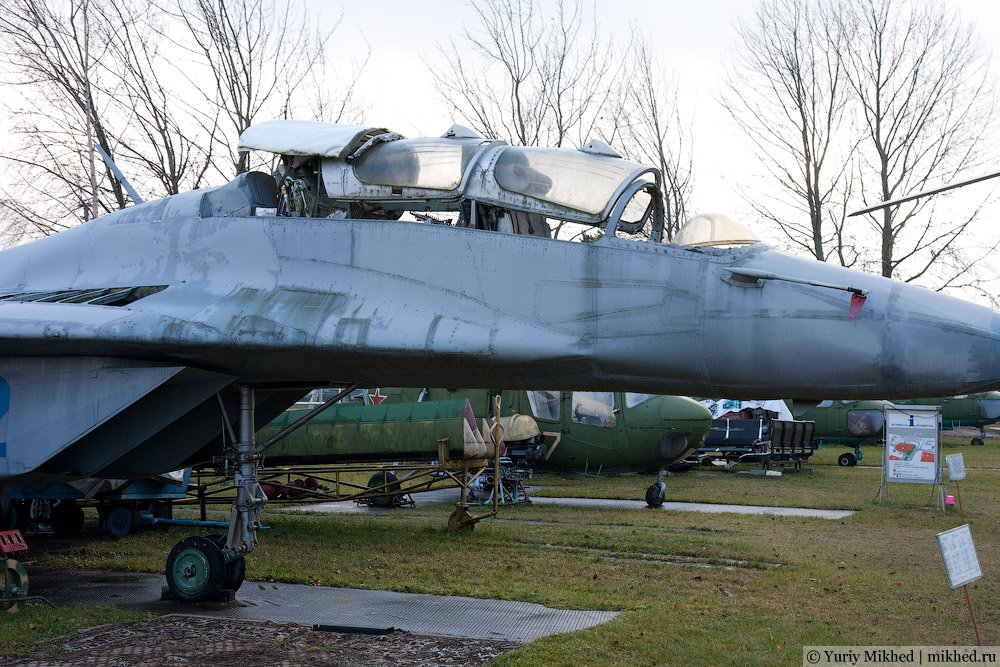
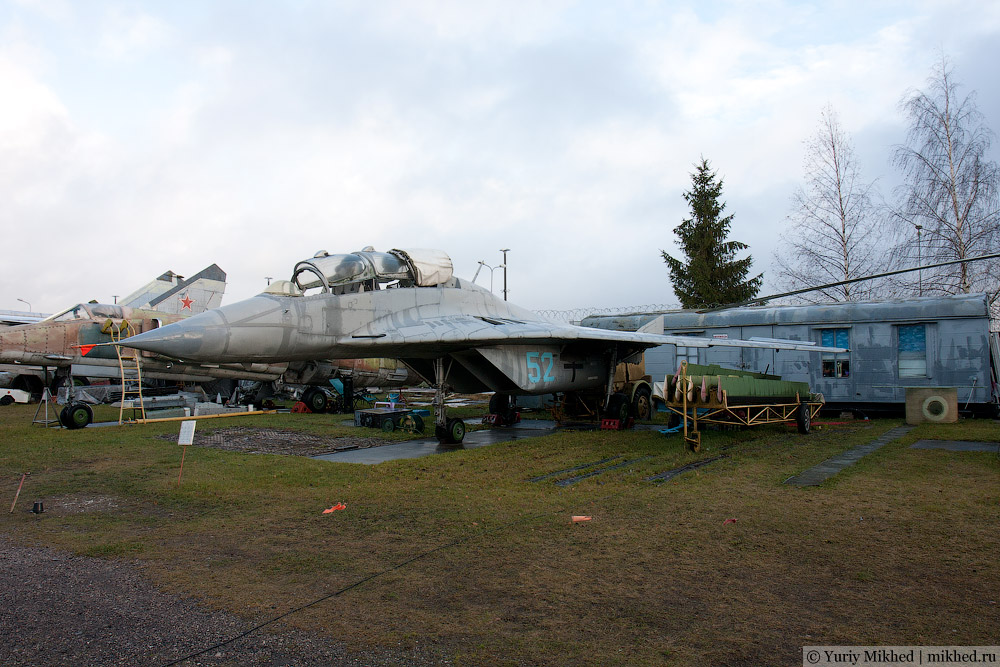
Here we have a MiG-29UB, where UB stands for "учебной боевой", meaning "trainer-combat". It provides an additional seat for an instructor. At the same time, it can also be easily used for combat missions.
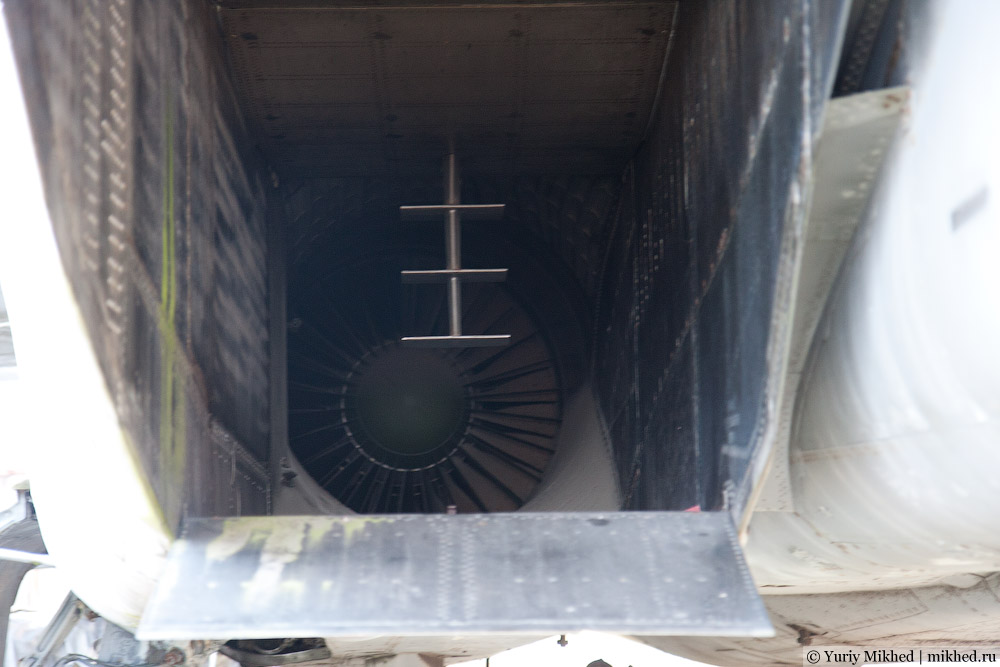
A MiG-25RBS, a reconnaissance-bomber. It was equipped with photographic and radar equipment, and simultaneously carried a bomb load (including nuclear weapons). The "S" index denoted the presence of the "Sablya" (Sabre) radar. It entered service in the 1970s and is still used today.
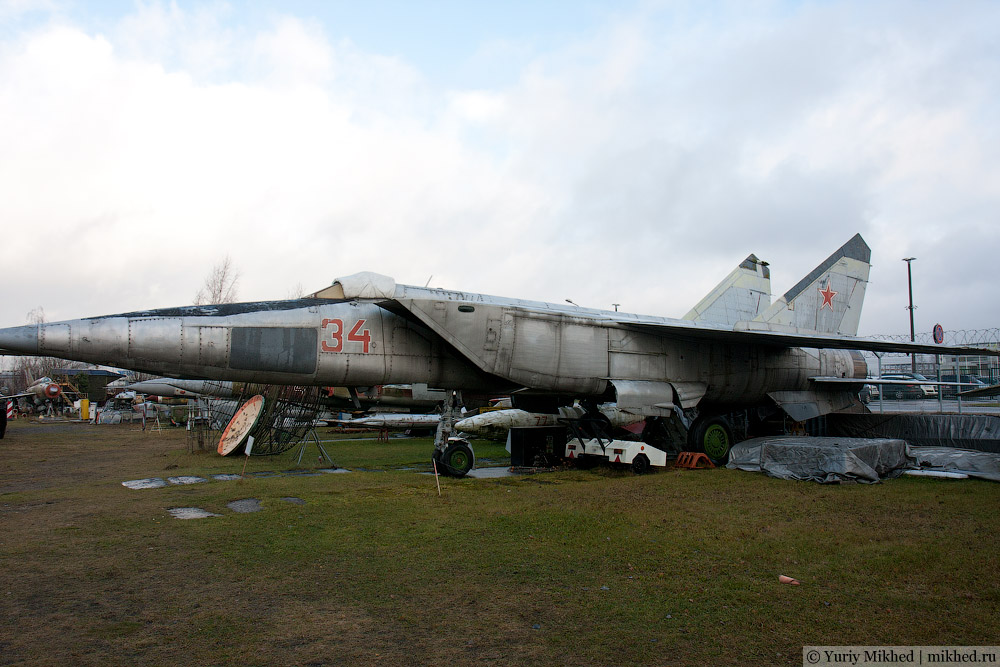
R-15B-300 turbojets with an afterburner were installed on this aircraft.
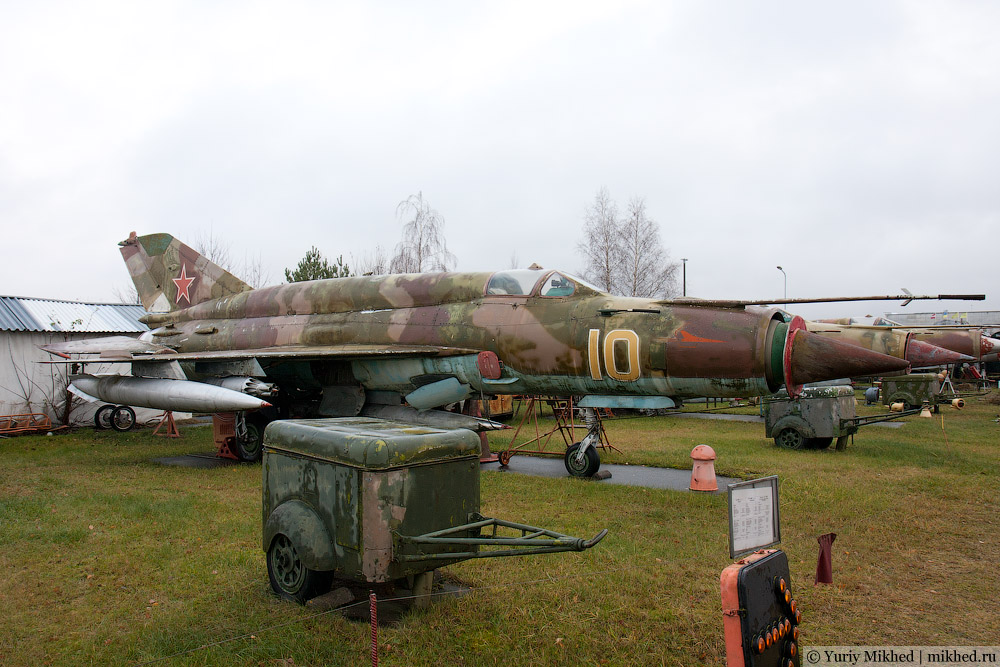
MiG-21SMT fighter. 1960s – 1970s. There are 4 MiG-21s of different modifications in the museum.
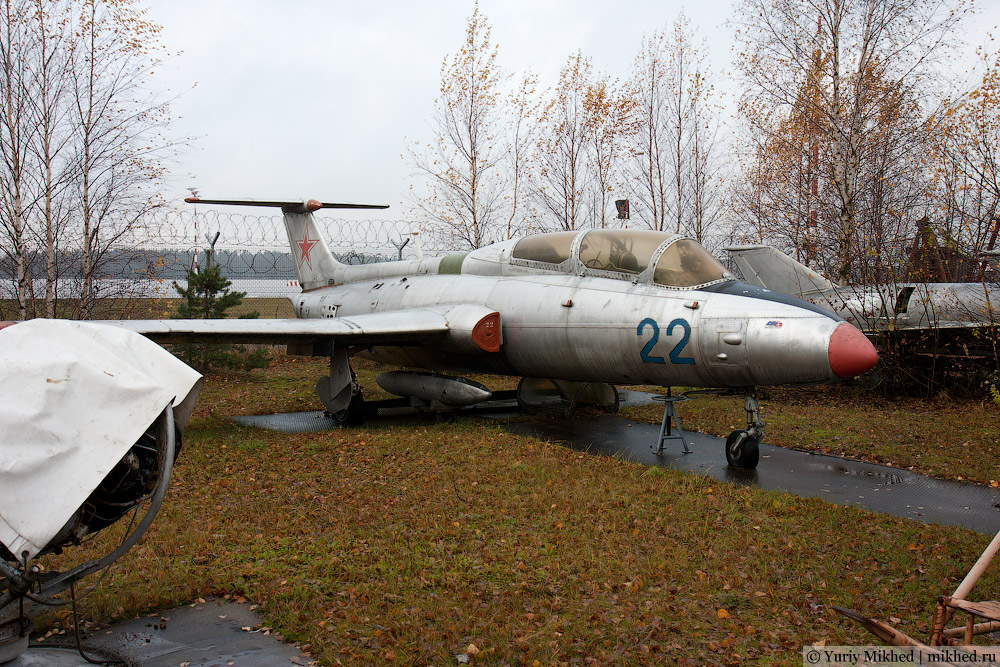
The Aero L-29 Delfin trainer (exactly the same one we saw in Arizona). Produced in Czechoslovakia from 1963 to 1973, it is still used today. There are also 4 of these machines in the museum.
MiG-15UTI, a trainer version of the MiG-15 with an additional seat for an instructor. Developed in the second half of the 1940s, the MiG-15 was the first Soviet jet fighter.

The Yak-28R, a multirole military aircraft, in this modification — a reconnaissance plane, but it was also used as a bomber, interceptor, EW aircraft, and trainer. It has an engine layout unusual for modern combat aircraft. It was in service from 1960 to 1994.
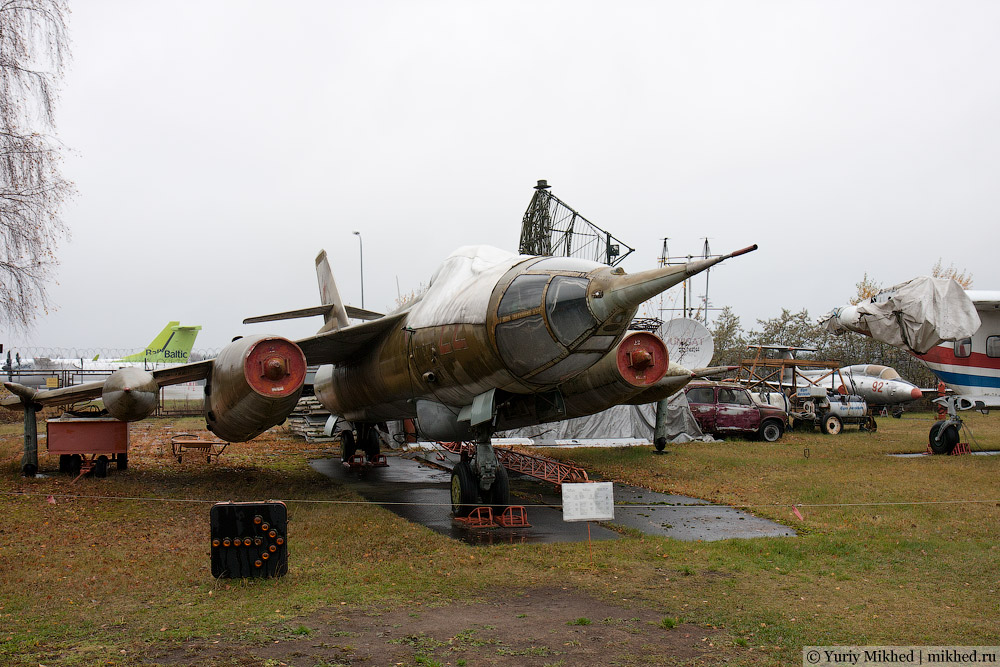
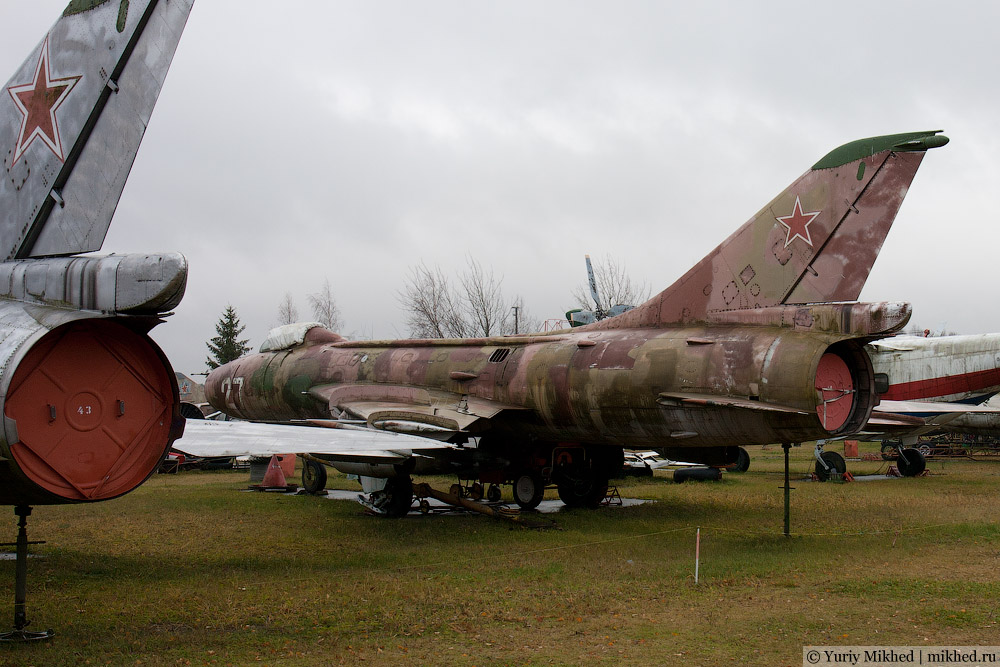
Su-7BKL fighter-bomber. "KL" stands for "колёсно-лыжный" ("wheel-ski" — pay attention to the rear left gear), as it could land on unpaved runways and snow. Su-7s were operated from the 1960s to the 1980s.
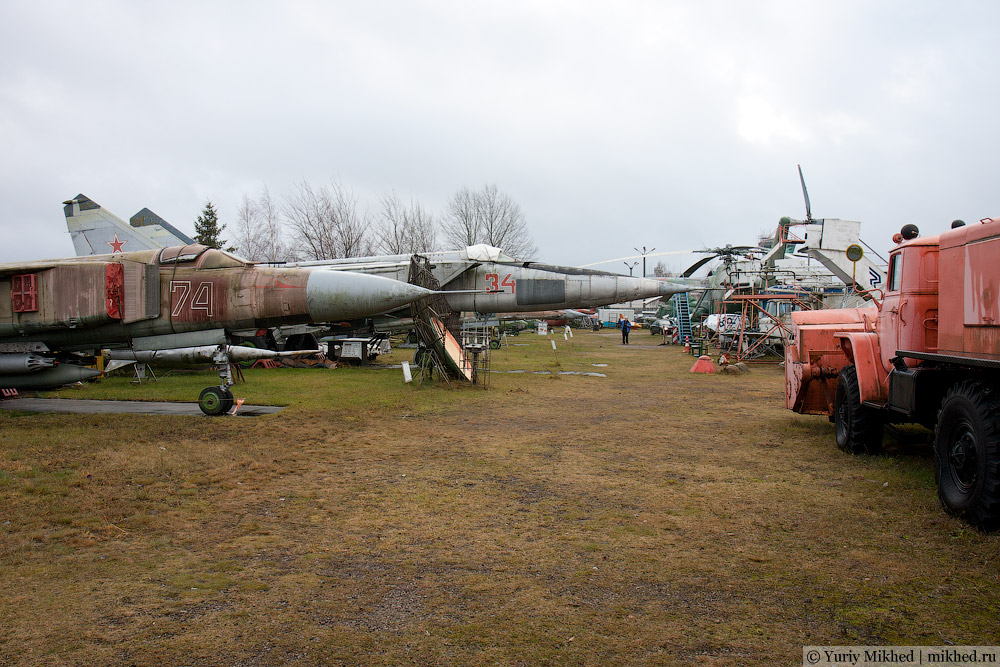
General overview. On the left is a MiG-23M interceptor fighter, operated from 1969 to this day.
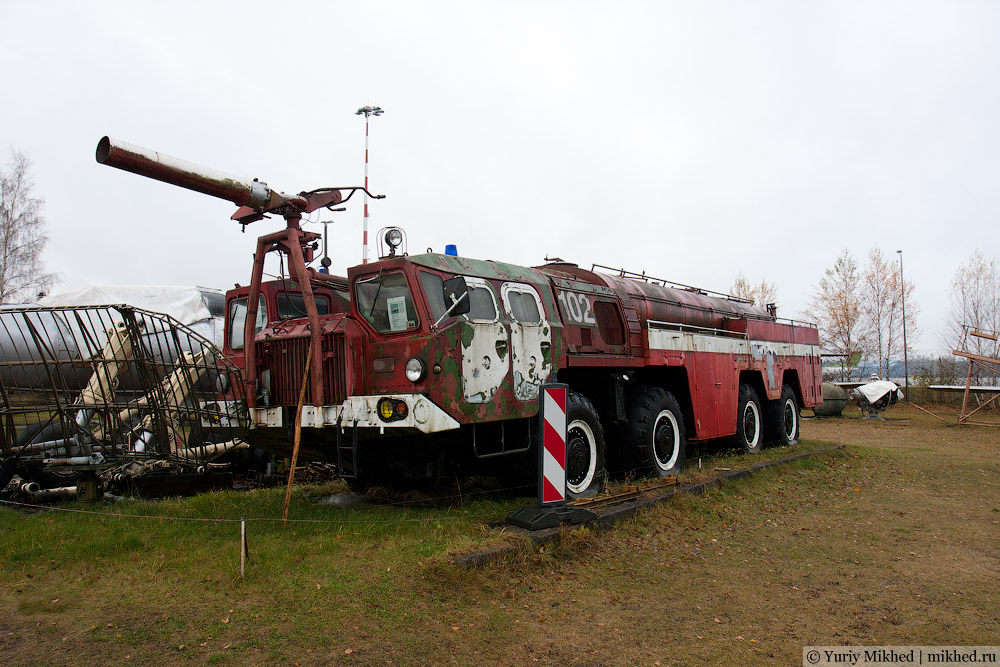
In addition to airplanes, in the museum you can look at individual assemblies, devices, and examples of airfield equipment. AA-60 airfield crash tender (MZKT 7310).
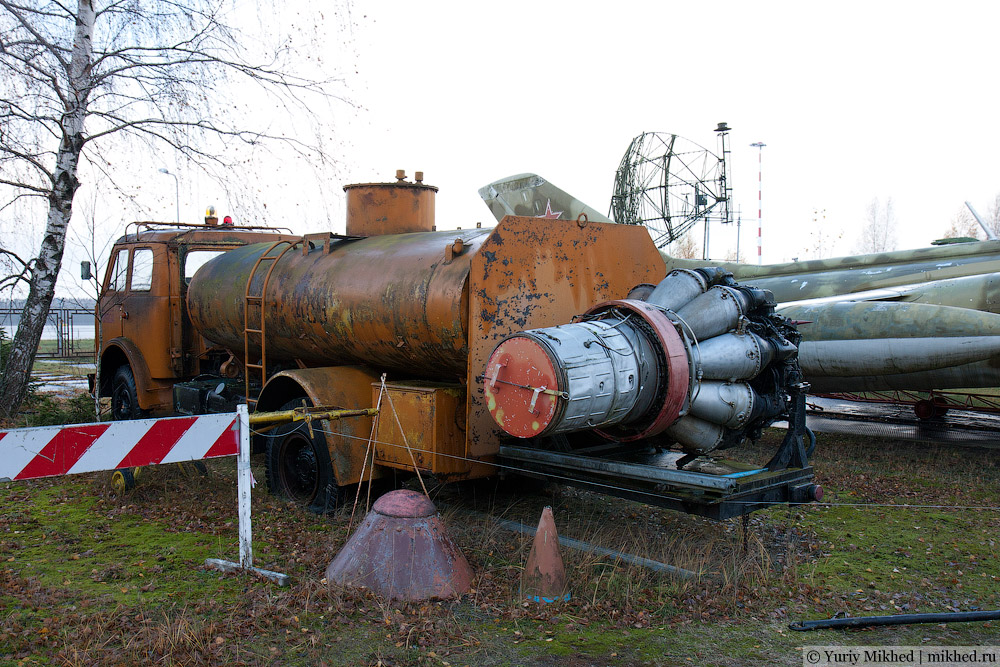
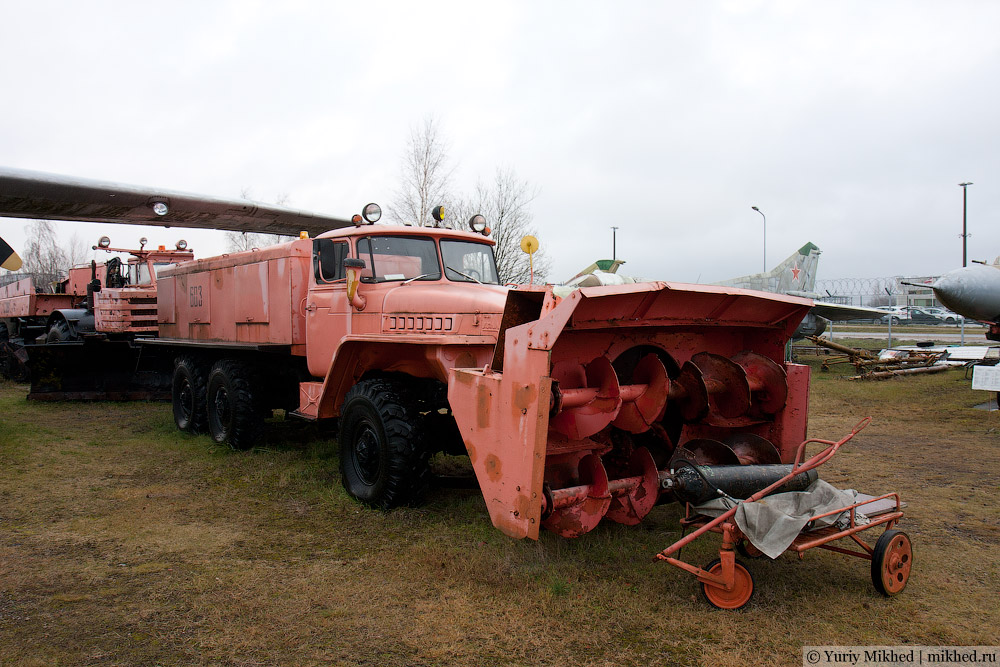
A thermal runway clearance machine based on a MAZ truck. I read somewhere that they are called "Zmey Gorynych" (Slavic dragon) or "big hair dryer", but I do not guarantee the authenticity of these terms. Decommissioned VK-1 engines were installed on the machines (due to the mass production of the MiG-15 fighter, after these fighters became obsolete and were decommissioned, the USSR was left with mountains of these engines). During heavy snow and rain, the machine clears the runway simply by melting the snow and blowing away the water. Jet fuel for the engine was poured into the tank.
More snow removal machines.
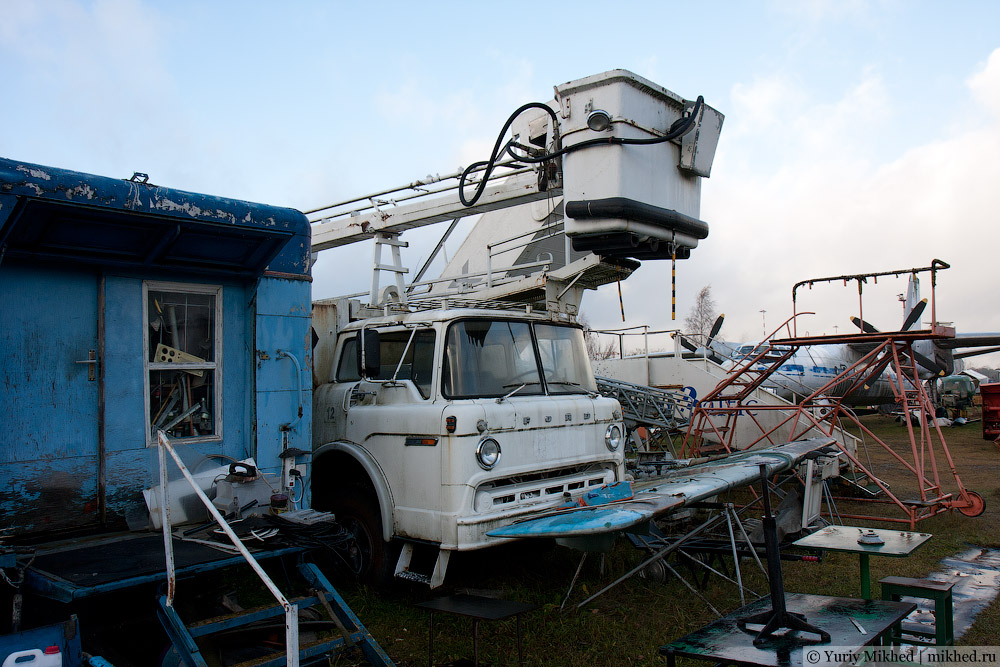
Trump D40-D on Ford truck chassis, an US-made aircraft de-icing vehicle (the company has nothing to do with Donald Trump, it was just founded by his namesake). Produced in 1975, it was used at Rīga Airport from 1993 to 2007.
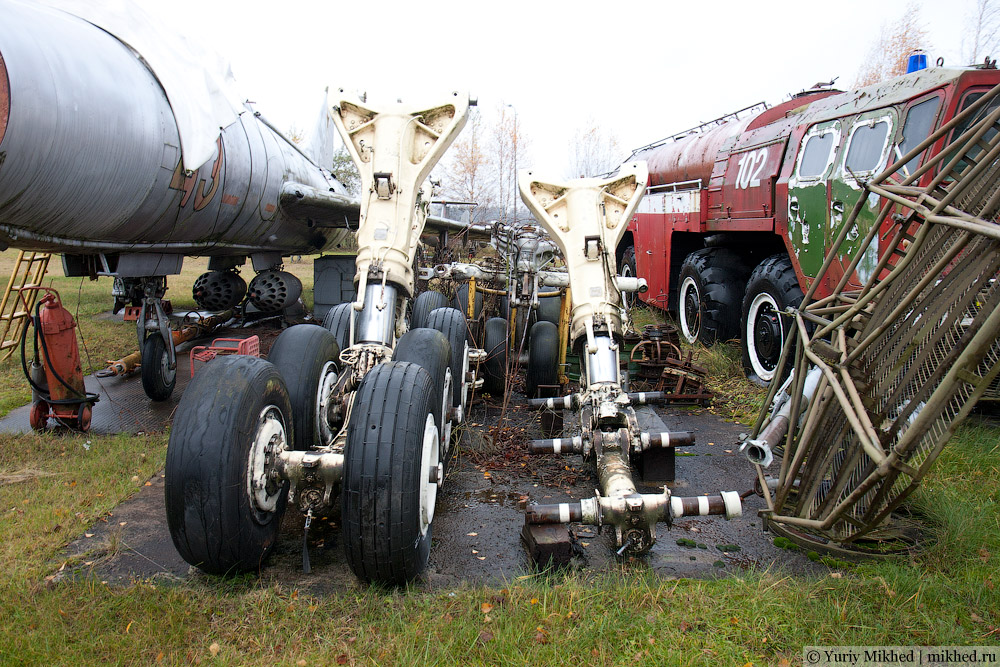
Tu-154 landing gear bogies.
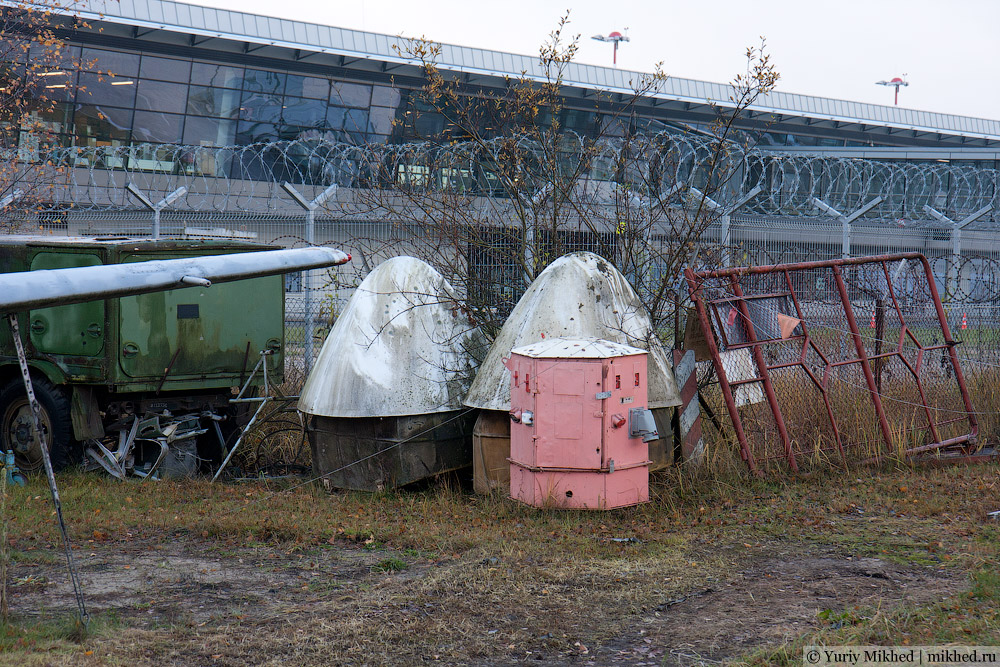
Nose cones.
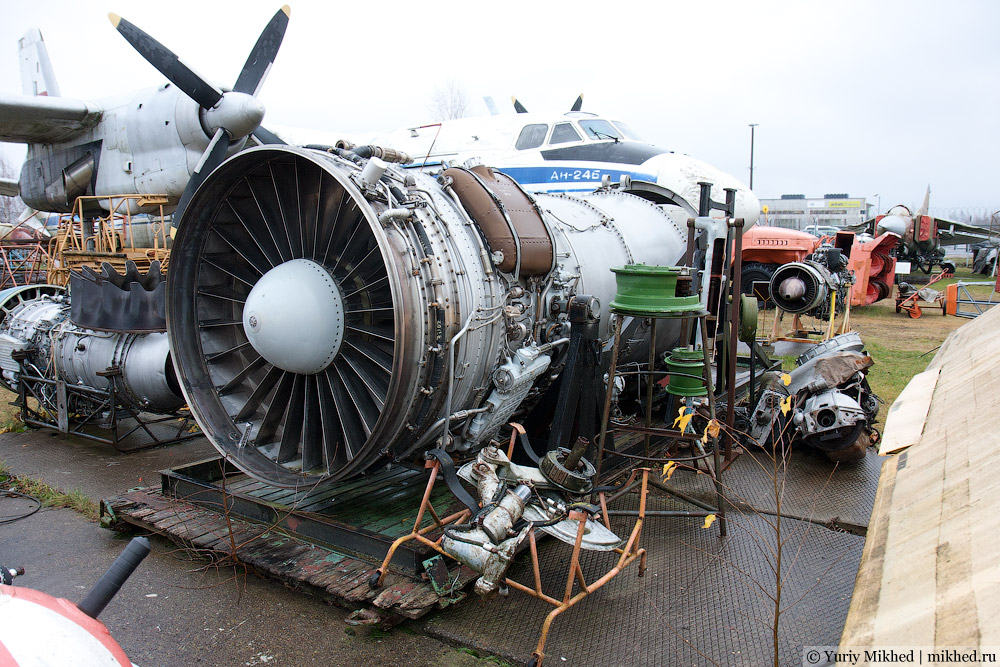
Several removed aircraft engines are displayed in the museum. Unfortunately, they are not labeled in any way. If I am not mistaken, the largest one is the D-30 turbojet, which was installed on the Tu-134, Tu-154, and Il-62.
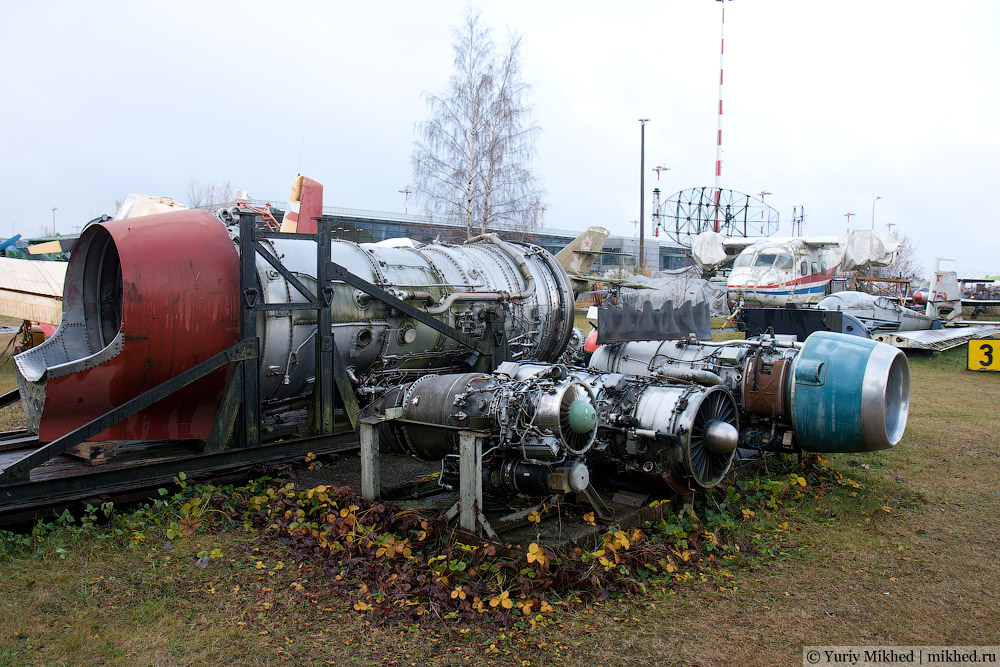
The same one (from behind); judging by the burgundy livery, it was one of the Latavio Tu-134s. Among the three smaller units, the tiny one on the left is a RU-19A-300 (an auxiliary power unit from an An-24), the other two are AI-25s from a Yak-40. Click on the photo to zoom in.
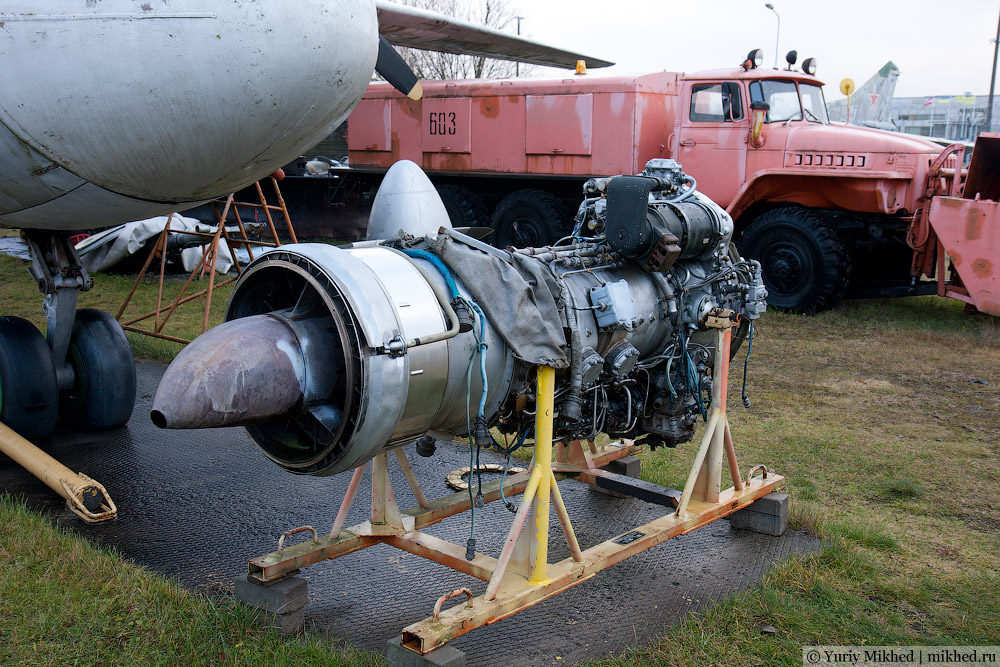
Also some kind of APU. An APU is a special turbine designed to start the main engine, provide the aircraft with power while parked, run hydraulics, etc. When you board a plane, you probably hear some humming inside, even though the engines are off. It is the APU that creates this humming, usually located at the very end of the aircraft. Take a close look at any passenger airliner — a small pipe always sticks out at the back (even if the engines are on the wings), that is the exhaust of the auxiliary unit.
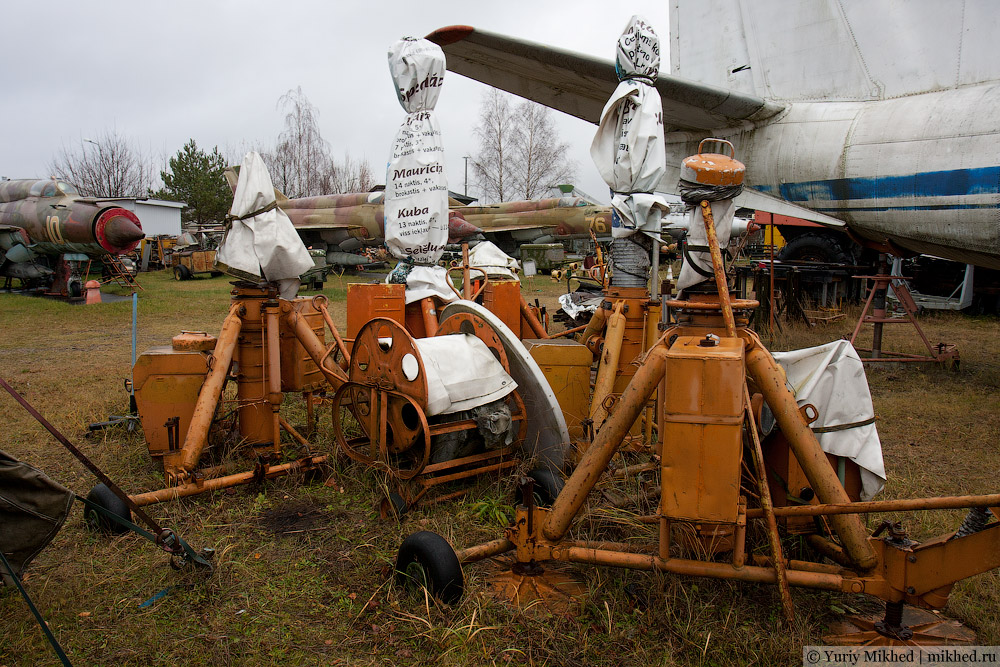
Aircraft jacks.
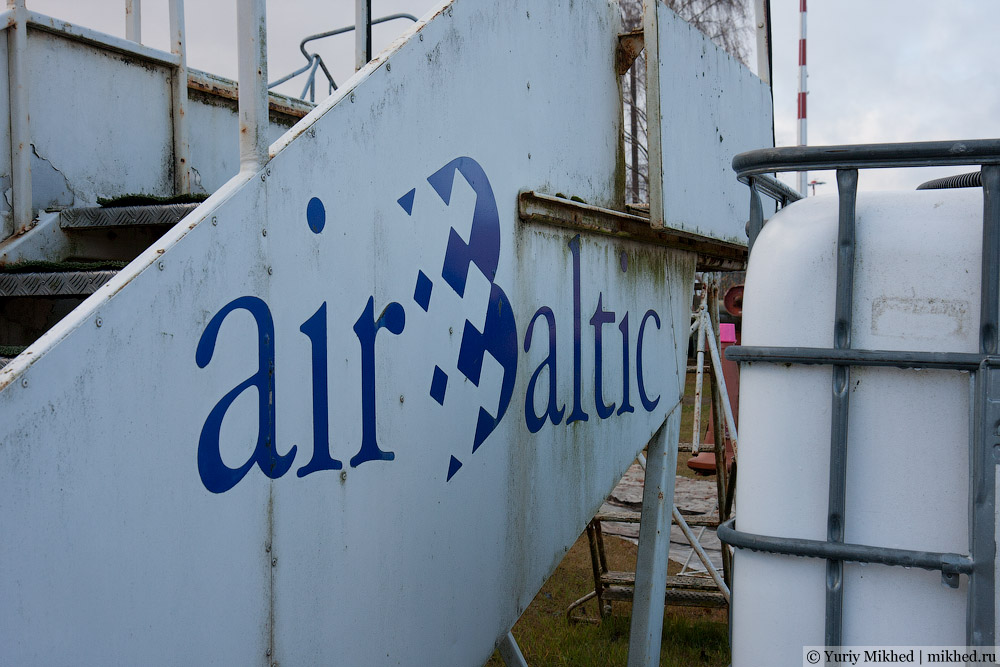
A passenger stair with the old airBaltic logo. Before the rebranding, this checkered pattern was applied to the vertical stabilizers of the company's aircraft.
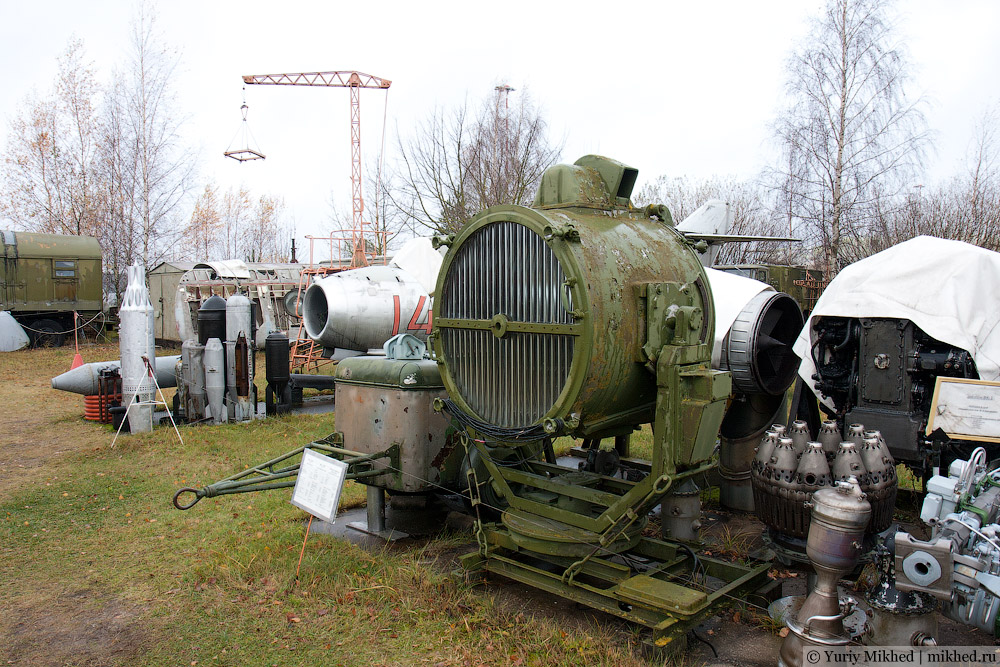
An airfield landing searchlight.
External store racks and bombs.
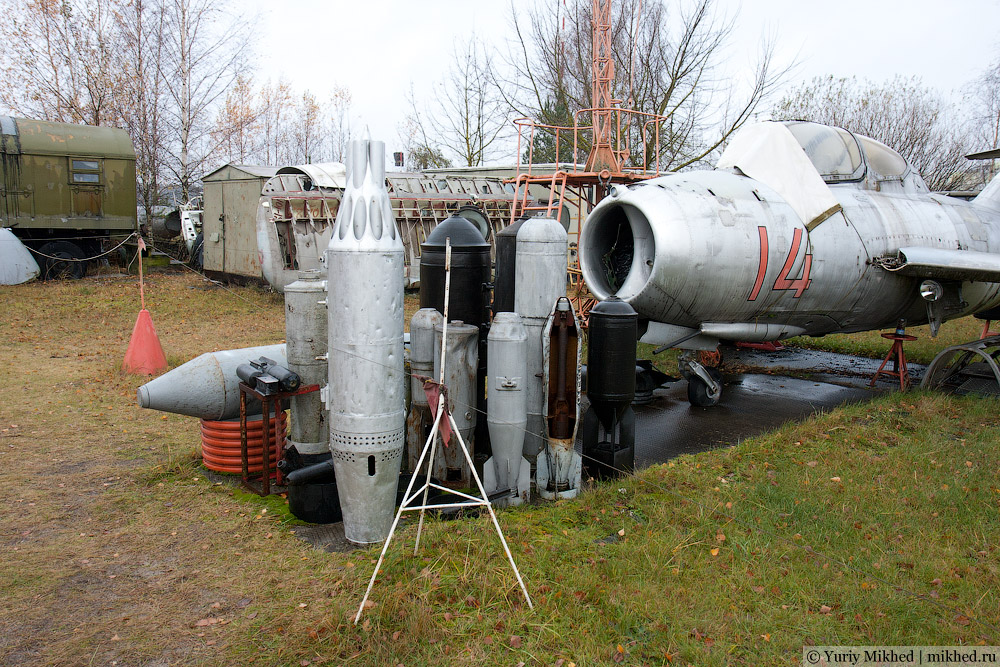
The museum has a good selection of various aerial bombs, missiles, and other ammunition.
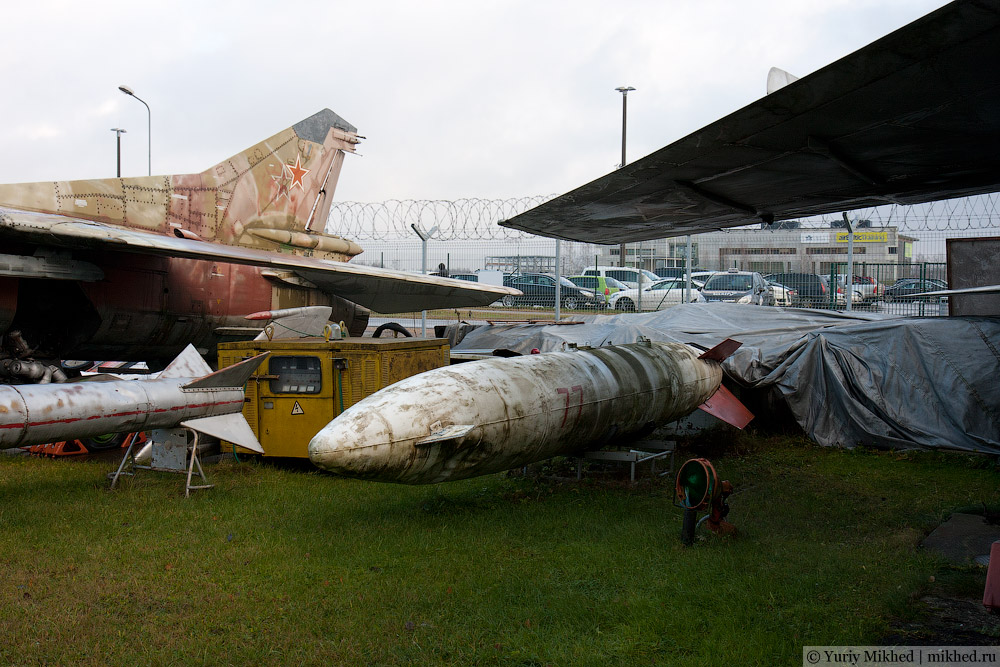
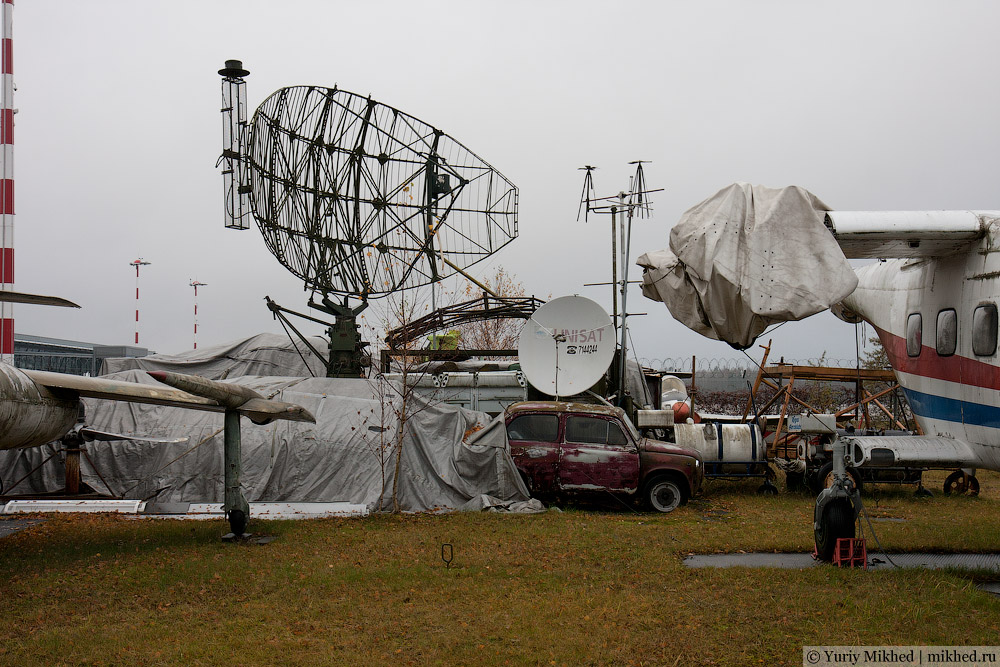
A radar station, meteorological instruments, and an old Zaporozhets car.
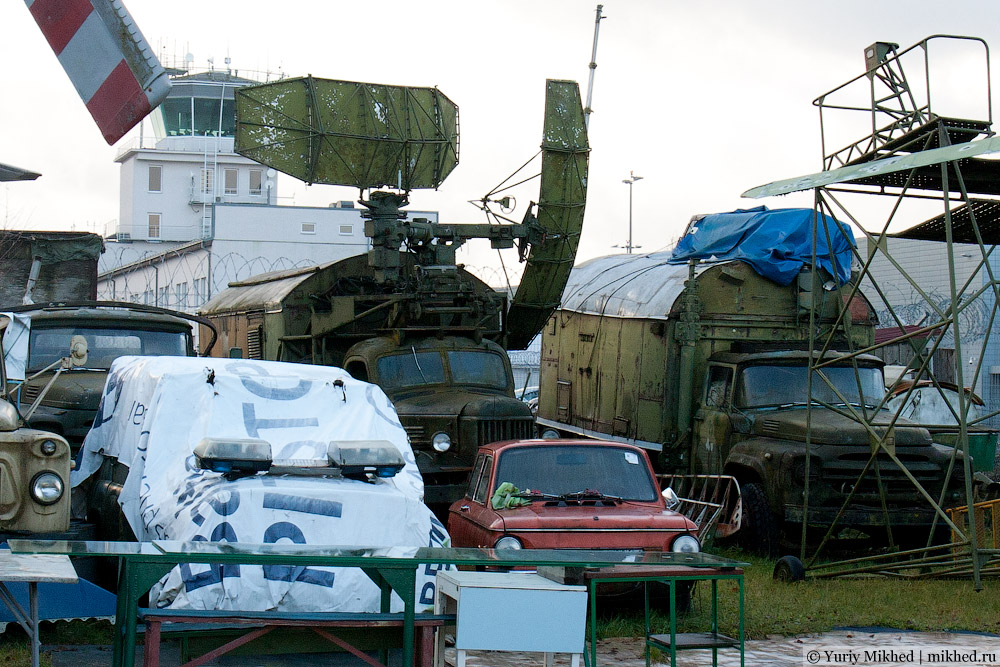
RSP-7T landing radar system and SKP-9MV mobile air traffic control tower.
So that's the little museum. If you are interested in aviation and have an extra hour at Rīga airport, don't be lazy to go here.